 photoartflight
Blackwater NWR Panoramas
Posted on August 23, 2019

Here are a few panoramas from the Blackwater National Wildlife Refuge in Cambridge, Maryland. The featured Sunrise image is a panorama image made with 5 horizontal overlapping images, each shot at 24mm and assembled in Photoshop. This is an image of the Little Blackwater River along the entrance to the Wildlife Drive. The final size for the featured sunrise image is 95 inches long x 18 inches high @ 300ppi. Sunrises & Sunsets are usually very colorful at the Blackwater National Wildlife Refuge which is one of my favorite photo destinations.
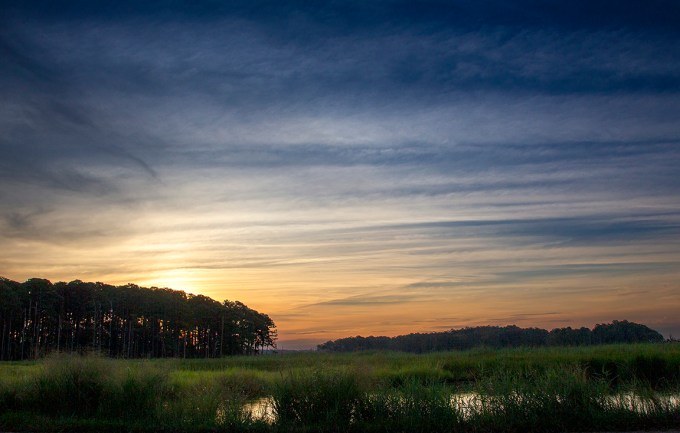
Blackwater NWR Sunrise across from the lookout platform along the Wildlife Drive. ( 2 image Pano)
Image below is a multi-image vertical panorama. Sometimes it is fun to try different format orientations instead of ones you usually see. Most panoramas are Horizontal.

2 vertical images blended for vertical Sunrise panorama shoot @ 24mm
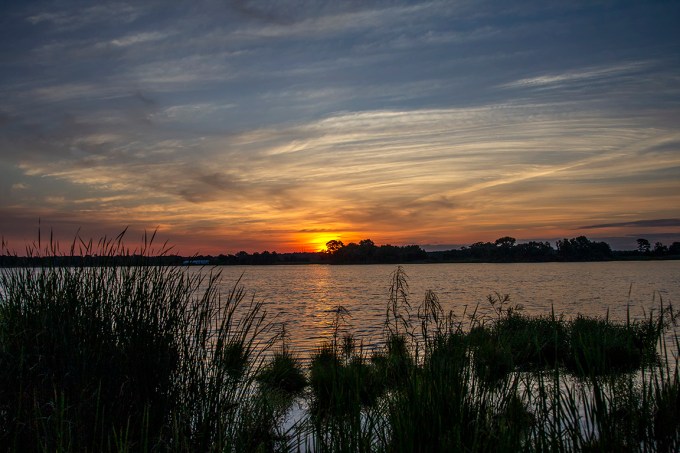
Single 12mm Sunrise Image

Dusk Panorama Further Down The Wildlife Drive. 10 vertical images @ 24mm combined for panorama
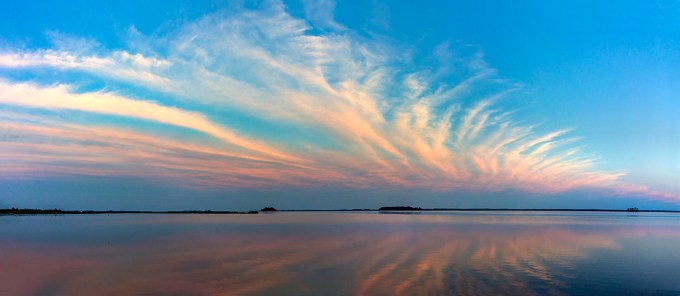
Dusk Panorama Along Wildlife Drive. 6 vertical images @ 12mm for panorama.
Black Skimmer Panoramas
Posted on July 30, 2019

It is a challenge to photograph flying birds for a panorama. After some practice the success rate goes up (hopefully). Basically you shoot a burst of images as you try to cover the area of birds flying you want. Also panning as you shoot, going in the direction they are flying. I found that shooting with a wide angle lens for a large group of birds flying does not give you as much detail as shooting them with a telephoto lens for a panorama. A pretty high shutter speed is also helpful. You might have a few touch-up areas or overlaps to fix once you assemble the base Panorama.
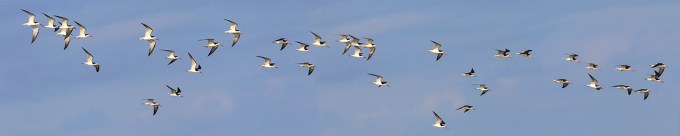 The panoramas below are a group of Black Skimmers on or close to the shoreline. This is a little easier because most of them are not moving, but again you might need a few touch-ups here or there.

Black Skimmers, 4 images, 400mm f/4 DO lens
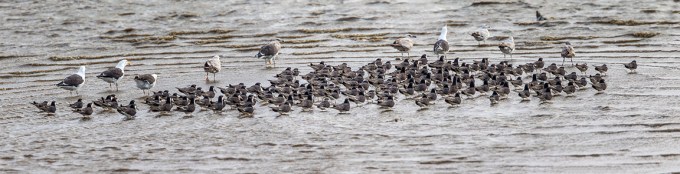
Black Skimmer Panorama, 7 images @ 400mm & 1.4X Teleconverter
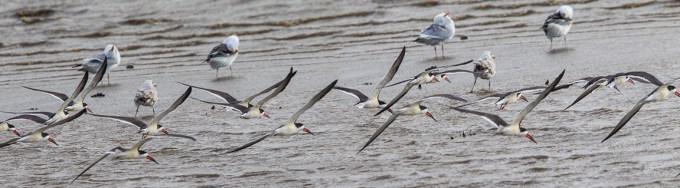
Black Skimmer Panorama, Early Morning, Bad Light, 2 images @ 400mm w/ 1.4X Teleconverter
Great Blue Herons At Blackwater NWR
Posted on February 15, 2019

It seems that a few Great Blue Herons always hang around at Blackwater NWR through the Winter. Usually most migrate out of the area but a few seem to stay in the area on the Refuge. On this trip I saw 3 Great Blues along the Wildlife Drive.
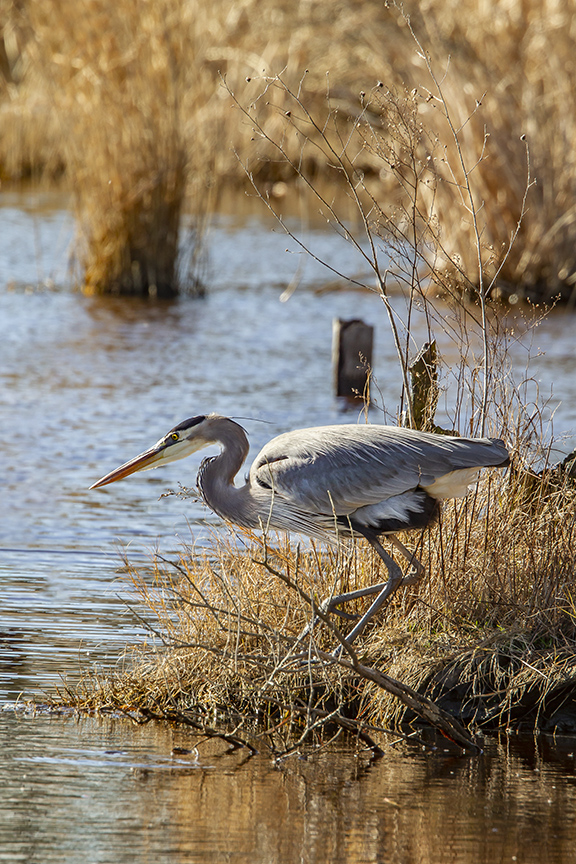
Great Blue Heron watching for a meal. As I was watching he tried a few times with no luck. (400mm w/ 1.4x teleconverter)
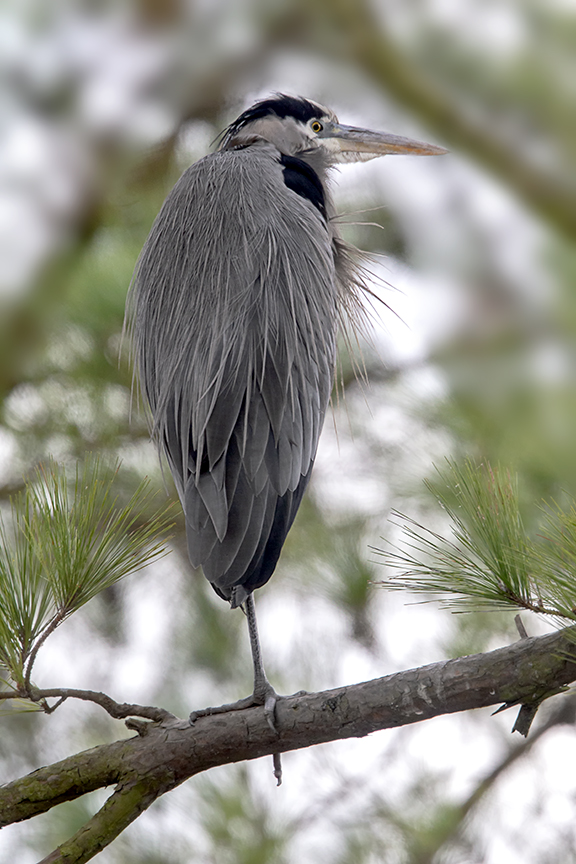
I stopped to photograph some Tundra Swans in the water and turned around and noticed this GBH in the tree behind and above me. (m43 Olympus @ 140mm)
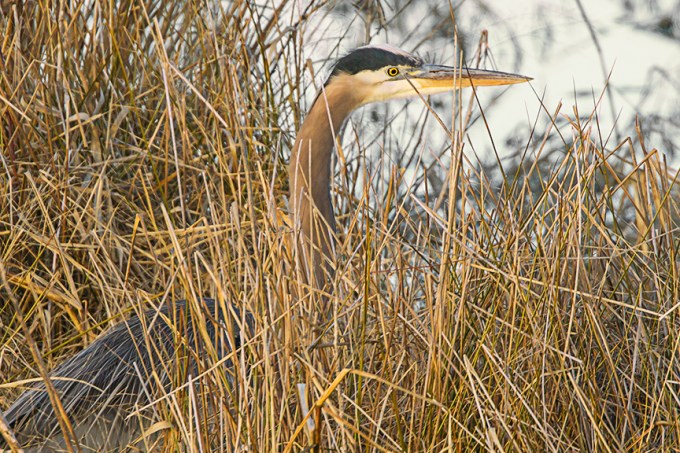
Great Blue Heron foraging in the dried grasses @ 400mm w/ 1.4x teleconverter.
Early Morning Landscapes Along BWR Wildlife Drive
Posted on February 13, 2019
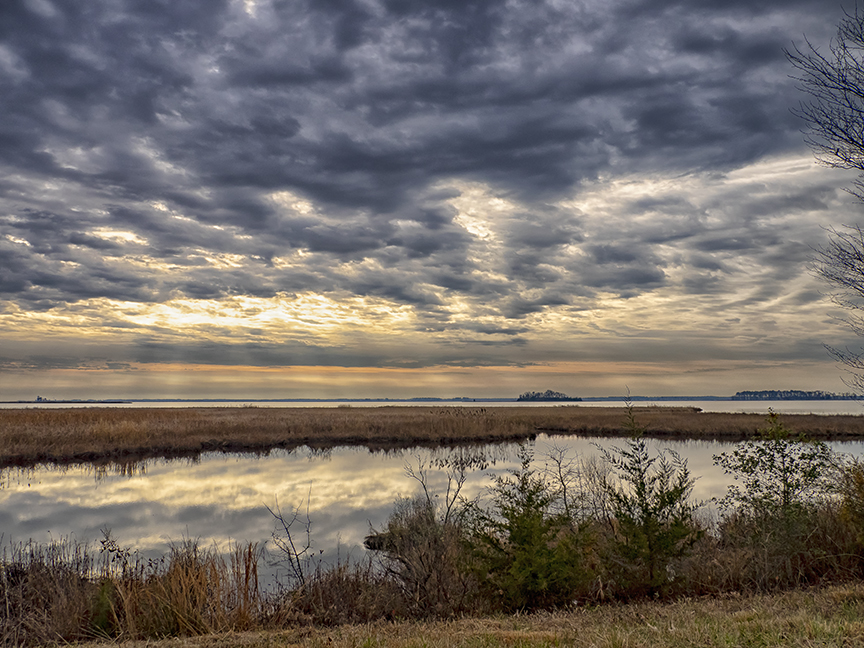
Here is a series of early morning landscapes from the Blackwater National Wildlife Refuge along the Wildlife Drive. The clouds this day were amazing in a dark kind of way. Blackwater NWR is one of my favorite places to photograph. It is great for birds & Wildlife, but also fun for landscapes! On this morning the clouds and sky were amazing. These were all shot with an Olympus m43 Camera with a 14-140mm lens at 14mm (full frame FOV equivalent 28mm). Some are 2 image panoramas to add height or length to the image.
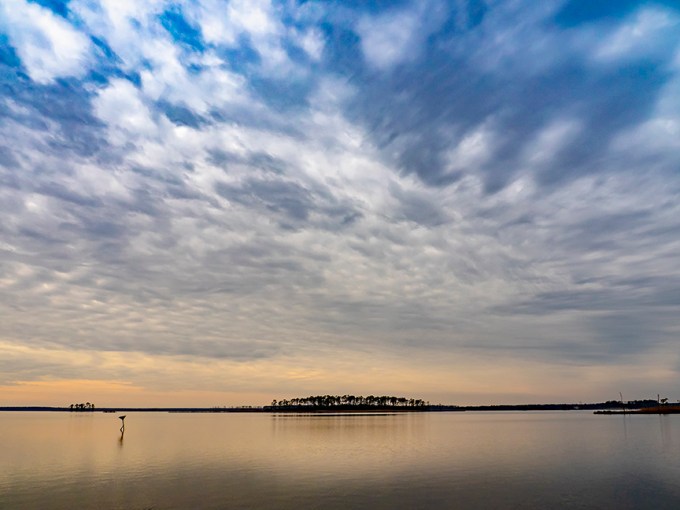
2 image panorama to include more height for showing clouds @ 14mm

Early Morning Landscape from Wildlife Drive @ 14mm

Early Morning Landscape Concentrating On Clouds @ 14mm

2 Horizonal images (Panorama) to Add Vertical Height for Showing More Clouds – 14mm

Another Panorama with 2 Horizontal Images @14mm to Add Height for Showing Clouds. (Eagle flying in top left corner)

Last Image in my Early Morning Clouds Series showing the clorful clouds we saw on this session along the Blackwater Wildlife Drive. 14mm
Snow Geese Flight At Noon
Posted on February 12, 2019

As we were wandering around the Blackwater NWR looking for photo subjects I saw these Snow Geese taking off, but stayed low close to the water. The sun was really bright on the water so the white Snow Geese sort of disappeared against the bright reflections in the water, but I still liked the Snow Geese that stood out against the darker tree line.
Canada Geese Flyout At Sunset
Posted on February 11, 2019
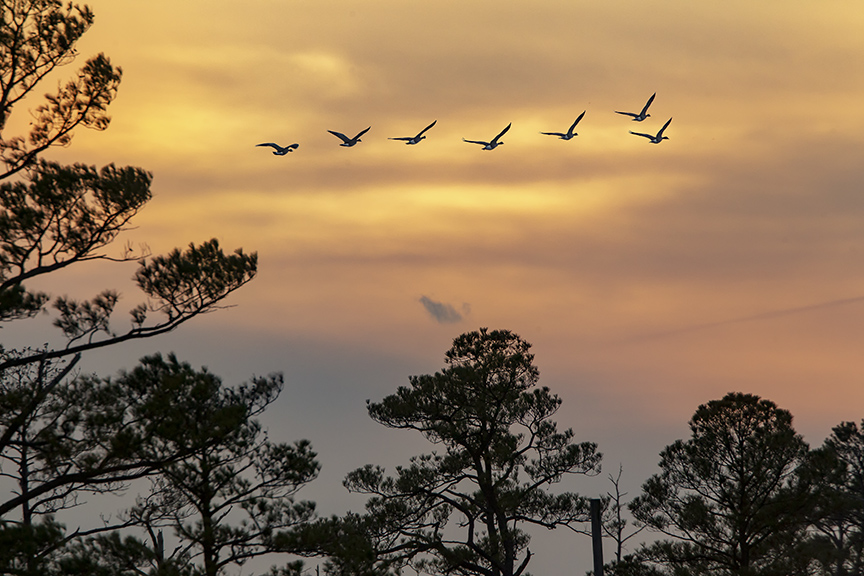
While photographing the Bald Eagles along the Wildlife Drive at Blackwater NWR at dusk, I noticed this group of Canada Geese winging away into the colorful sunset sky. I liked the color and the dark silhouettes of the Geese and was able to get a few images of them. The featured image was my favorite of the series because they all had their wings in an “up” position. Somehow they looked more like a “precision formation” instead of a scattered flock of geese flying away. I used to photograph a lot of Military Aviation Display Teams years ago so it brought back memories.
Iridescent Cloud
Posted on February 7, 2019

This colorful cloud is called an iridescent cloud. When you see a cloud like this, you know there are tiny ice crystals or water droplets in the air. Larger ice crystals produce solar or lunar halos, but tiny ice crystals or water droplets cause light to be diffracted spread out creating this rainbow like effect in the clouds. We photographed these clouds when we were at the Blackwater National Wildlife Refuge in Cambridge, Maryland.
Sunrise At Blackwater
Posted on February 3, 2019

While we were at Blackwater NWR, I enjoyed shooting some landscapes besides the usual wildife. The featured image was on the morning of the second day there, by the entrance to the Wildlife Drive by pool 1. I was using a 12-24mm zoom lens @12mm. This image is a multi-image blend for the effect I wanted to capture. One exposure for the brighter sky and sunburst and others for the darker water and foreground. For the sky I was shooting @ f/22 to get a dramatic starburst on the sun. Then I opened up and shot a few bracketed shots for the darker water and ground so I could choose the areas I needed to use to blend into my final image. Then aligned them all in Photoshop and blended the series with soft masks. Depending on the lens or camera format I am using and the strength of the starburst I want determines what f/stop I use to get the final shot. It is usually f/11, f/16 or f/22.

Setting sun, 12mm @ f/11
Blackwater Bald Eagles
Posted on January 20, 2019
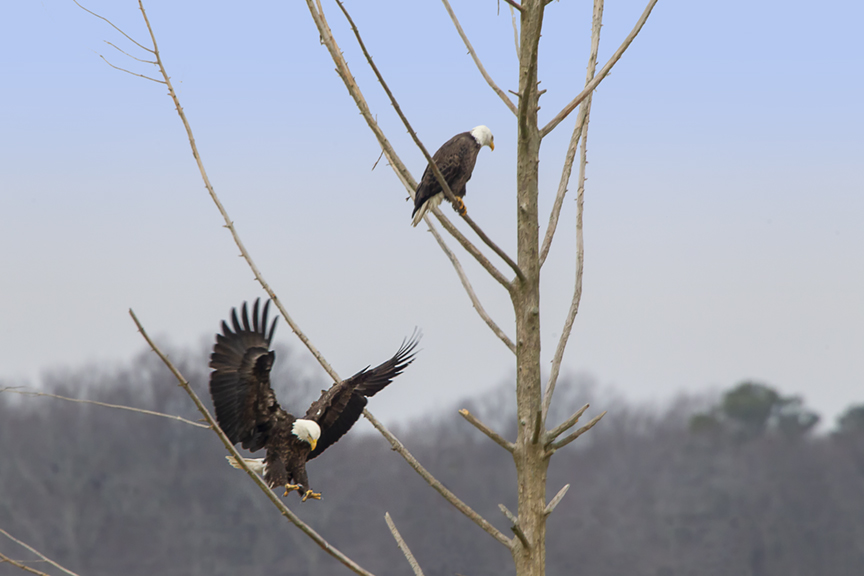
On our photo trip to Blackwater NWR we were hoping to see a lot of Eagles. Winter is when they have the largest concentrations of Bald Eagles, so we were hoping for the best. We saw quite a few in the distance but not many close by. I saw one on the ground across from pool 3a, looking around with some feathers around so I assume it had a meal. This Eagle then flew into a nearby tree. Then, I believe the mate, joined him. This Eagle was on a snag in the water, on the other side of the Wildlife Drive. They were now a little closer, but I still needed to change my 1.4x teleconverter to a 2x to get even closer. Then I got my tripod and stacked the 1.4x teleconverter with the 2x teleconverter to try to get even closer. I was using a Canon 1D MkIV with a 1.3x crop factor (from full frame DSLRs) so with this combination I had a field of view equivalent to 1120mm @ f/11 wide open, so I stopped down to f/16 & f /22 for a series of shots to see what I could get sharpness wise. Luckily my subjects cooperated and were fairly static movement wise. It was a somewhat dull day so I had to up my ISO more than I like to use. They cooperated for quite a while and they attracted quite a few other photographers, so we moved on.


Tundra Swans Along The Wildlife Drive
Posted on January 19, 2019

Along the Wildlife Drive at Blackwater NWR there are many large & small pools of water, besides the main bodies of water, the Blackwater River and the Little Blackwater River. These pools of water have various large groups of birds swimming, feeding and interacting. If you have long lenses it is fun to photograph the interactions of the birds. Also it is a good spot to shoot panoramas of them with a longer lens to get more detail instead of a wide angle lens with the birds looking like little dots. Sometimes there are very large groups of Tundra Swans, Snow Geese or Canada Geese with various ducks and other birds thrown in. If you are lucky you can also get mass takeoffs of a flock of Snow Geese or Swans taking flight. The images below are just showing a small section of the long pools of water. I included an image at the end of the Blackwater NWR map showing the pools and the pool names. The map also shows the Tubman Road Trail down the road, which is also an interesting area for photography.

3 image panorama, handheld, Tundra Swans, Canada Geese & various ducks, etc. at Pools 5a & b on Wildlife Drive. 400mm with 1.4x teleconverter.

5 image Panorama, handheld, Tundra Swans, Canada Geese and various ducks, etc. at Pools 5a & 5b On Wildlife Drive, 400mm with 1.4x teleconverter.
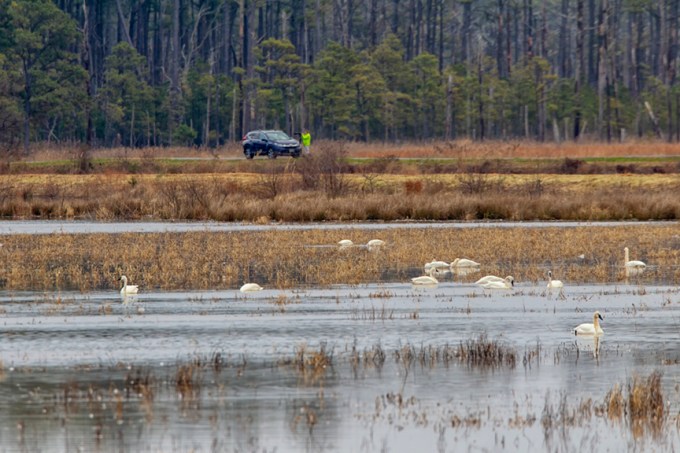
Photographer phototographing Tundra Swans On other side of pool 5c. 400mm with 1.4x teleconverter.

Blackwater NWR map showing the water pools & Tubman Road Trail.
 photoartflight