 photoartflight
Original X-Wing Fighter.
Posted on April 19, 2018

While I was photographing this Slaty Skimmer, it reminded me of the X-Wing fighter in the original Star War movies. I wonder if the Star Wars X-Wing fighter was drafted from dragonflies. I guess we will never know.
Blue Moon March 30th, 2018
Posted on March 31, 2018
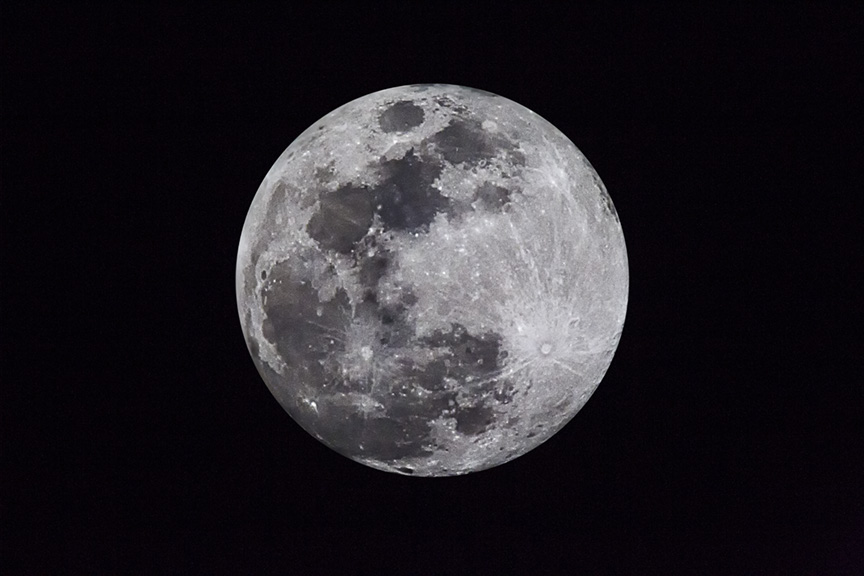
Last Night we had a Full Moon for a second time in March. Whenever two full moons appear in one month, which happens about once every 2.66 years, the second is christened a “Blue Moon.”
And yet, this is the Second Blue Moon since the beginning of the year. The second time in three months that two full moons have occurred in a calendar month. What is the reason for this anomaly? The length of time for the moon to cycle from one full moon to the next (29.53 days, on average) is called a “synodic” month. February is the only calendar month that is shorter than a synodic month, and this year, it did not have a full moon. So, to make up for this lack, March ended up with an extra full moon. There were also two full moons in January, thus giving us two Blue Moons over just 60 days, though Saturday’s Blue Moon will be the last one until 2020.
I tried a variety of setups to photograph this Blue Moon. I was using a 400mm f/4 lens. The 400mm by itself would not have enough reach, So I tried the following combinations. 400mm with a 1.4X Teleconverter, 400mm with a 2X teleconverter and finished with 2x Teleconverter with a 1.4X teleconverter stacked together. Sometimes the stacked teleconverters work, sometimes it does not. Stacking the teleconverters, I was worried about sharpness so I used a combination of a very high ISO and an f/stop of f/25 with a high shutter speed. Stacking teleconverters for Wildlife is tricky and does not always work well, but I thought it would work for the moon.

Image showing moon sizes with different teleconverters and combinations.
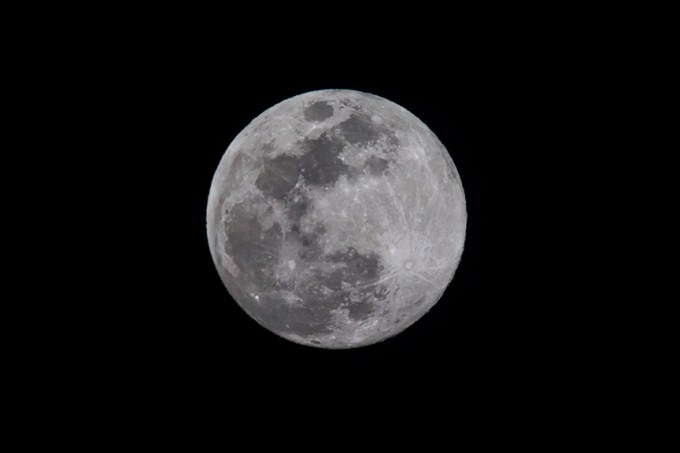
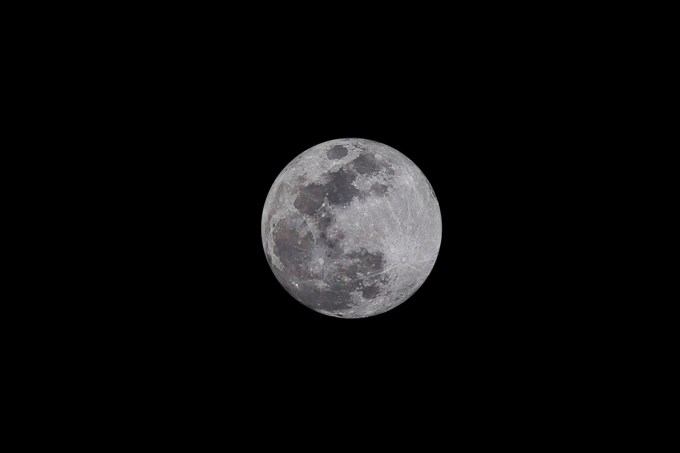

There was a glow around the moon, but the moon was so bright, I exposed for the bright moon and forced the glow to show a little.
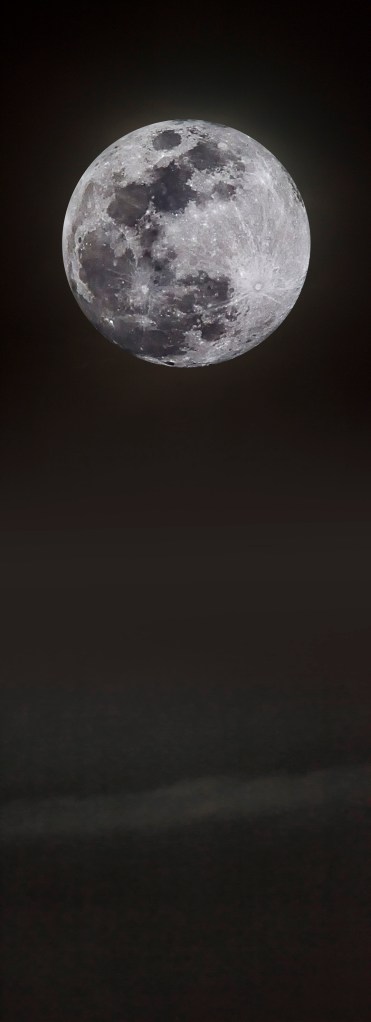
3 image vertical panorama showing Blue Moon with cloud formation below the moon. To expose for the cloud below the moon would just be a white blown out circle. I just brought up the brightness a little so the clouds below the moon were somewhat visible.
Ring-billed Gull Stacked Teleconverter test
Posted on March 3, 2016

When it is a slow day finding subjects, sometimes I try different ways to photograph my subjects. This day was very quiet and the Ducks were really far out on the lake. Not to much was flying by and even the Canada Geese were gone. Quite often the wildlife is quite far out in the water or on the far shore. This Ring-billed Gull landed on a duck box giving me a subject. It stayed for a while so I thought I would try stacking teleconverters. I used 1.4x and a 2x teleconverter on my 300mm f/4 lens. The 1.4x adds 1 stop. The 2x adds 2 more stops. So that combination brought me up to f/11 at 840mm and with a 1.3x crop body, 35mm equivalent is 1092mm. Being a photographer for so long, using teleconverters in the early days, I always used to add 1 or 2 stops when shooting with teleconverters. Now with teleconverters being much better I usually only add 1 stop, so I was shooting at f/16 with this combo. But using stacked teleconverters I probably should have added 2 stops to go to f/16. Even so it came out quite sharp. Good for static subjects.
Canada Goose on Ice
Posted on March 13, 2014

I found this Canada Goose on its own little Ice Island. It was sleeping, not noticing all the other activity around him. The image seemed colorful with the blue water and white ice, plus interesting with the broken reeds reflecting in the water. Soon the other activities surrounded him and he still did not seem to care. This duck walked into the shot and stopped in front of the Goose. I kept my focus on the Goose, not realizing the Mallard entering. If I had noticed and thought of it, I would have focused on the Mallard also and blended them together, but this was an afterthought.
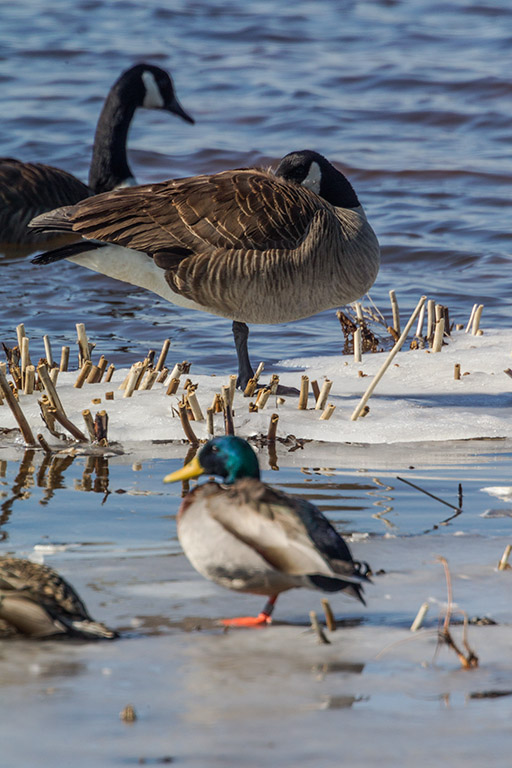
Mallard Enters stage Right
Canon EOS 1D MkIV, 400mm DO IS lens, 2X Canon Teleconverter for 800mm,
f/11, 1/1000 sec, ISO 800

Mallard Dozes Off
Canon EOS 1D MkIV, 400mm DO IS lens, 2X Canon Teleconverter for 800mm,
f/11, 1/1000 sec, ISO 800
Snowy Owls
Posted on March 10, 2014

We had heard that there was a Snowy Owl at the Brigantine Division of the Edwin B. Forsythe National Wildlife Refuge in Oceanville NJ, but we thought it had moved on or that we never could find it, if it was still even there. We mainly went to see the large flocks of Snow Geese. To our surprise we found 2 Snowy owls there. 1 around the bend from the other one, near the end of the Wildlife Drive before the wooded area. They were quite far out, but we were still surprised they were still there and we actually saw them throughout the rest of our time there. It was hard to spot them because it was warm and a lot of the snow had disappeared, leaving small clumps of snow out in the fields, so you were basically looking for a small “more vertical clump of white” out in the fields. They seemed to keep getting farther out in the fields as the day progressed. They are not great shots, but what I could get with what we had. I wish I had a tripod with me, which would have helped, but we were traveling light that day. I tried a few with stacked Teleconverters also. So with a 1.4X Canon Teleconverter, with a 2X Canon Teleconverter, giving me with the 1.3 crop of the Canon MkIV about a 1456mm. Not really a 1456mm, but equivalent to that field of view as a 35mm format. These were also handheld, but with that combination I had a max f/stop of f/11, so I stopped down one more stop to f/16 and raised my ISO to 1250. I was surprised the MkIV still auto focused with all that added on. After a series I then went back to just the 2X Teleconverter. With the 400mm DO, stacking that much with the Diffractive Optics took it’s toll a little. The 400mm DO works great with a 1.4X Teleconverter at all distances. With a 2X it works well unless your subject is pretty far out, then the DO optics get softer and a little gritty, so the Stacking teleconverters was pushing it. Anyway we still had fun seeing them. Thanks for looking.
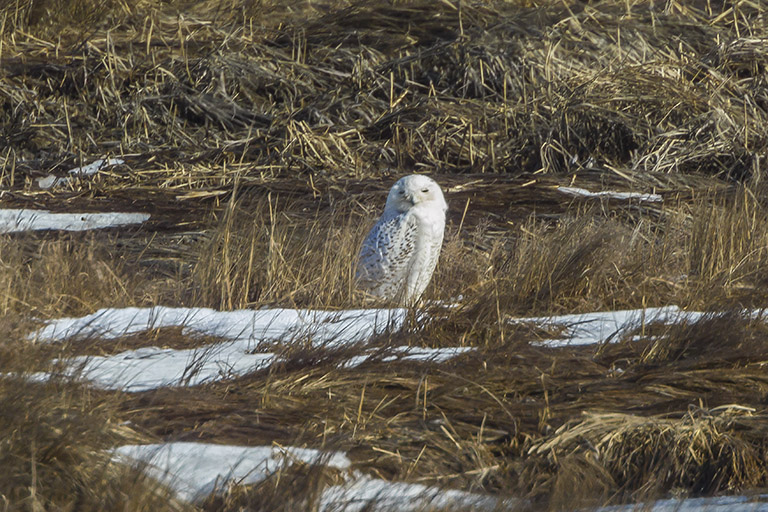
Snowy Owl – cropped
Canon EOS 1D MkIV, Canon 400mm DO IS lens, Canon 1.4X Series III Teleconverter, Canon 2X Series II Teleconverter, f/16 @ 1/250 sec, -0.33 exposure compensation, ISO 1250

Snowy Owl – Full Frame Image
Canon EOS 1D MkIV, Canon 400mm DO IS lens, Canon 1.4X Series III Teleconverter, Canon 2X Series II Teleconverter, f/16 @ 1/250 sec, -0.33 exposure compensation, ISO 1250
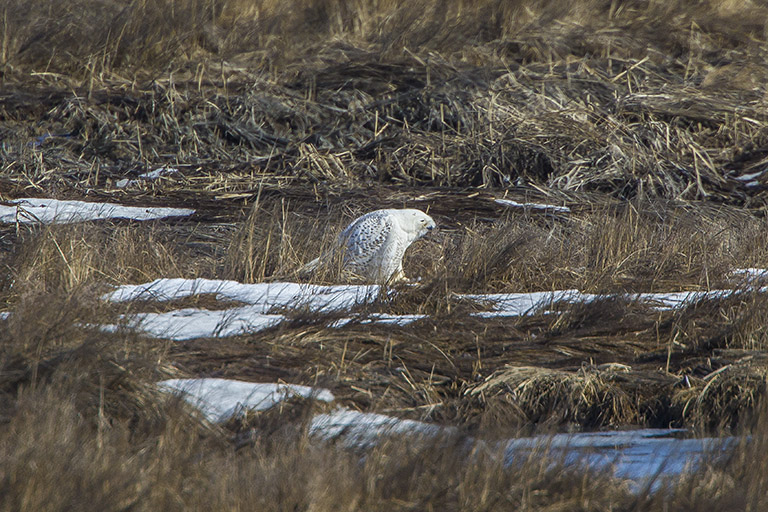
Snowy Owl – Full Frame Image
Canon EOS 1D MkIV, Canon 400mm DO IS lens, Canon 2X Series II Teleconverter, f/11 @ 1/1000 sec, -0.67 exposure compensation, ISO 800

Snowy Owl – Cropped Image
Canon EOS 1D MkIV, Canon 400mm DO IS lens, Canon 2X Series II Teleconverter, f/11 @ 1/1000 sec, -0.67 exposure compensation, ISO 800

Snowy Owl – Cropped Image
Canon EOS 1D MkIV, Canon 400mm DO IS lens, Canon 2X Series II Teleconverter, f/11 @ 1/1000 sec, -0.67 exposure compensation, ISO 800

Snowy Owl – Cropped Image
Canon EOS 1D MkIV, Canon 400mm DO IS lens, Canon 2X Series II Teleconverter, f/11 @ 1/1250 sec, -0.67 exposure compensation, ISO 800
Snowy Owl – Cropped Image
Canon EOS 1D MkIV, Canon 400mm DO IS lens, Canon 2X Series II Teleconverter, f/11 @ 1/1000 sec, -0.67 exposure compensation, ISO 800
 photoartflight