 photoartflight
Lady Bug On Thistle
Posted on July 28, 2020
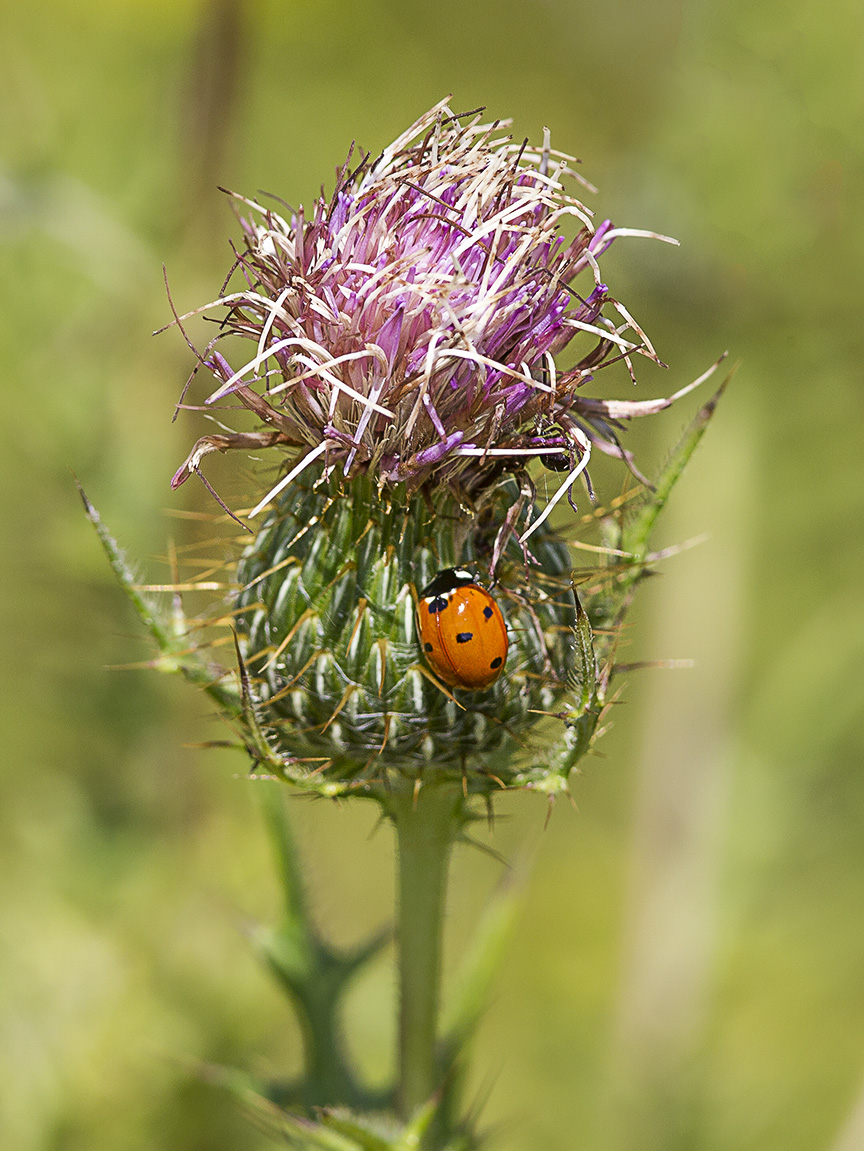
During a walk at Davidsons Mill Pond Park we noticed this Lady Bug on a Thistle. I thought it looked interesting against the textures on the Thistle. Also it sort of had the same roundish shape as the Thistle. I was traveling light with a 300mm f/4 lens on a Canon 1D mkIV.
Blue Dasher Dragonfly Focus Stacks
Posted on July 19, 2020
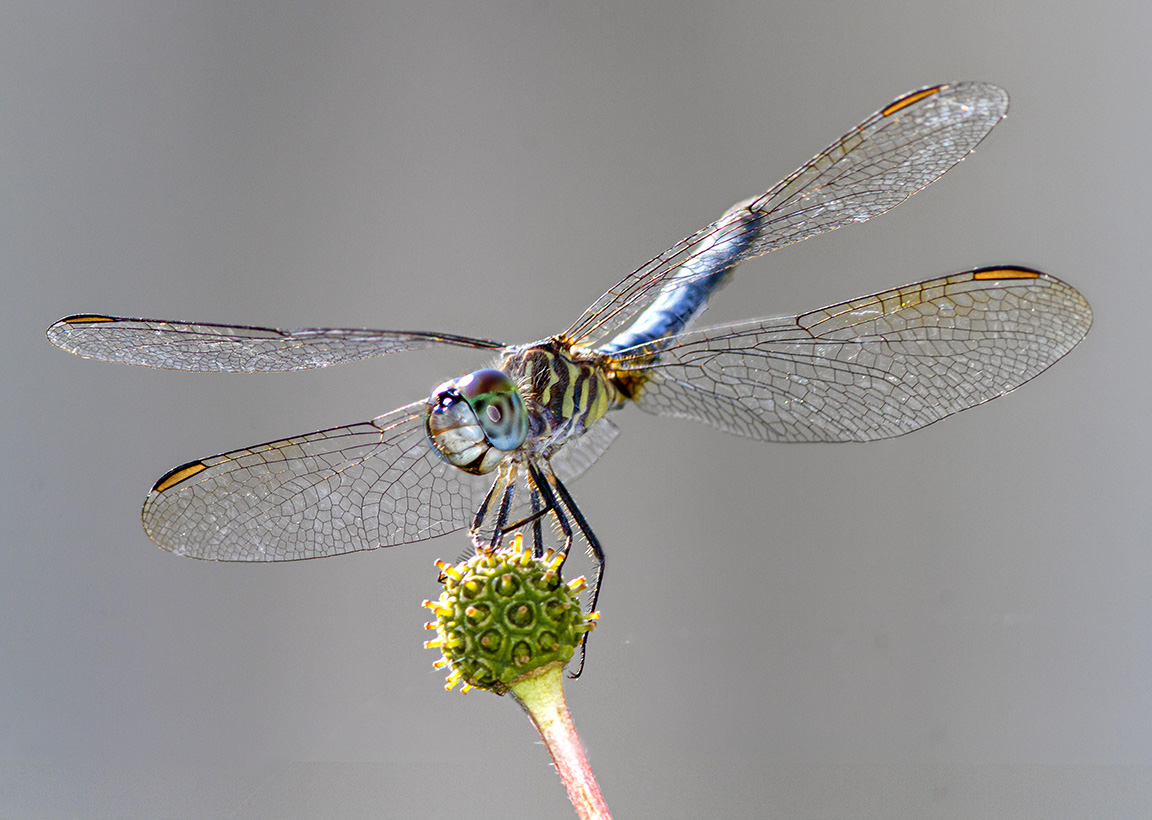
Here are two different Blue Dasher focus stacks. The featured image is made with 3 images. First image is focused on the head, then fore wings & then front of the hind wings. I was using a 300mm f/4 lens on a Canon 7D with a 1.4x teleconverter. I loaded each image into a layered Photoshop file and let a Photoshop align & blend the sharpest areas. The second image I wanted to mainly focus on the face but the plant was in the same focus plane as the face. I thought that might reinforce the roundness of the dragonfly head because of the roundness of the plant. I was shooting @ f/ 5.6 for a shallow depth of field. I then focused on the fore wing because I wanted a sharp edge on the fore wing and let the rest go softer into the darker background.

Blue Dasher Thorax & Wing Detail
Posted on June 10, 2020

I thought it was interesting to see the details of where the wings attach to the thorax on this Blue Dasher dragonfly’s body. I was using a 300mm f/4 lens with a 2x teleconverter and an extension tube to get a closer view. I usually carry extension tubes or closeup filters with me in case I come upon an interesting closeup photo opportunity. But I usually use extension tubes more than closeup filters because you are adding another glass element that might degrade the image. You can also experiment with the placement of the extension tube. Placing the extension tube before or after the teleconverter gives you different “focus zones.” Also the width of the extension tube gives you different focus zones. So it is best to see what combination works best for you and the lenses you are using. But it is fun to try different ways to get the image you want. Plus you never know when it will come in handy. Images below are a series of images using extension tubes & teleconverters with 300mm & 400mm lenses.
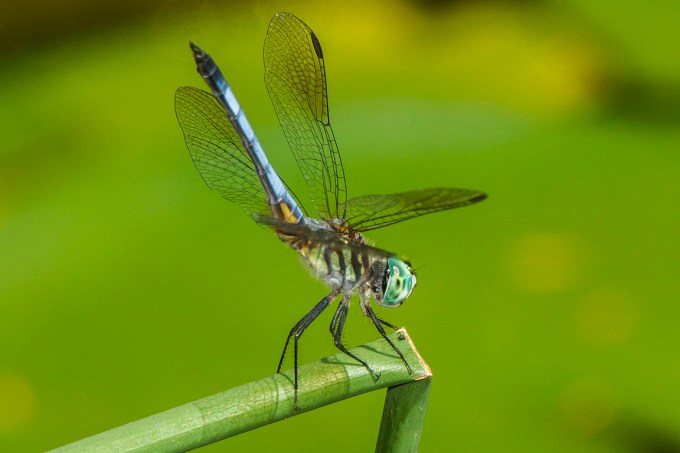

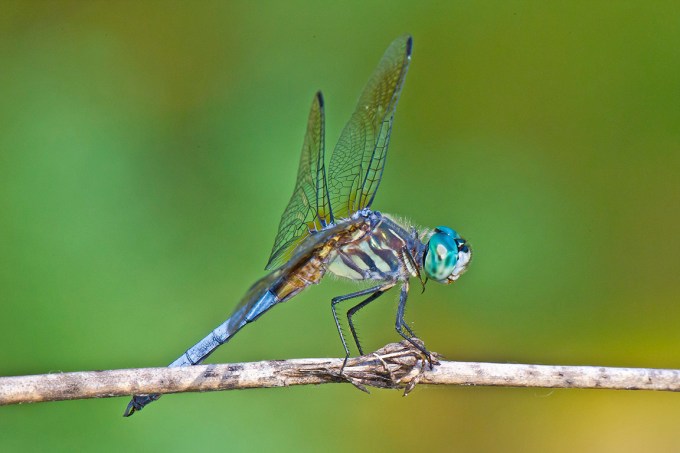
Blue Dasher Dragonfly- 400mm f/4 DO Lens, extension tube, 1.4x teleconverter
New Growth On Evergreen Trees
Posted on June 1, 2020

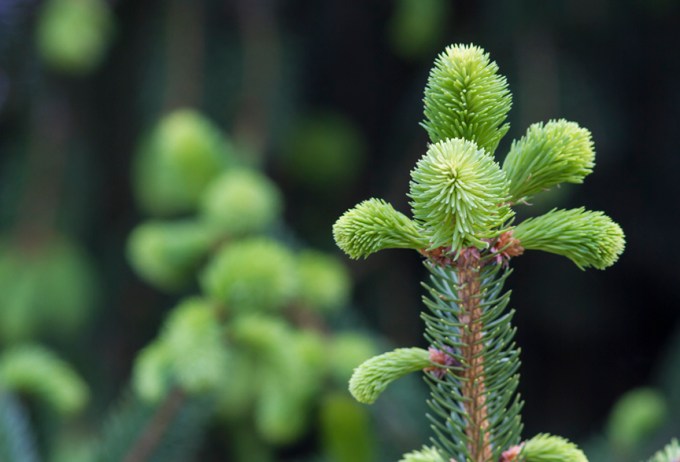
It is interesting to see Spring’s Bright Green new growth on the evergreen trees by our sidewalk. The bright growth really stands out from the older branches. Also our flowers in the garden are starting to bloom. It is nice to see new growth and a new beginning with all that has been going on in the country lately. We seem to also have a semi-permanent resident Garter Snake in our garden now.
Female Anhinga Reflection Panorama
Posted on March 9, 2020

We were photographing this female Anhinga at J. N. Ding Darling National Wildlife Refuge and I really liked the Anhinga’s reflection and wanted to include it in the final image. So I shot 2 images to combine in Photoshop. I manually aligned the 2 images (300mm) and did a soft edge mask to blend the 2 images into the final image. Sometimes when you blend 2 images automatically in Photoshop, it distorts or greatly skews one of the layers so it looks strange. So manual alignment sometimes works best.

Closer Image, Single Female Cormorant Image with 400mm Canon DO lens with 1.4x Teleconverter , Canon 7D
Great Egret Landing
Posted on February 23, 2020
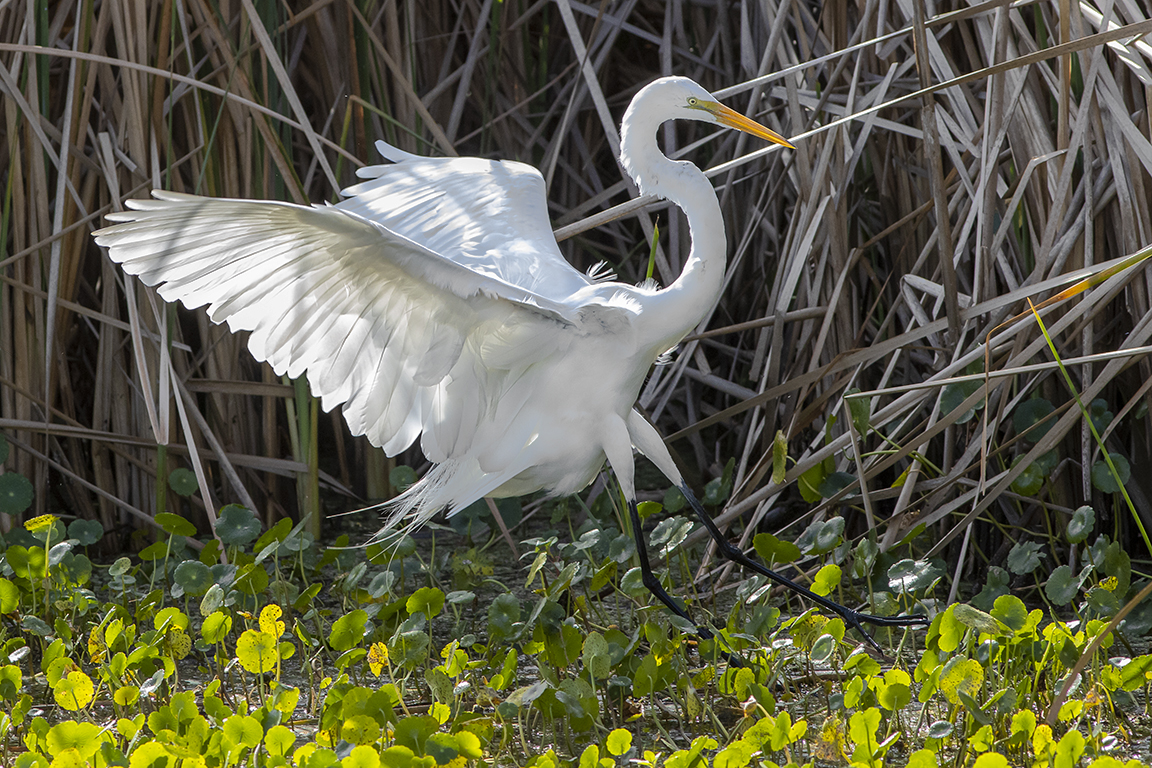
When we were photographing the Otters at Lake Woodruff NWR, this Great Egret flew in by the Otters. I liked the sunlight highlighting the feathers in the wing as it was landing. I was using a Canon R with a 300mm lens. The Canon R holds the highlight details much better than my other Canon cameras and has better shadow detail also.
Anhinga Drying Wings
Posted on February 16, 2020

We saw quite a few Anhingas at Lake Woodruff_NWR and got quite a few images of them for the couple of days we were there. This one had been fishing in the water and you can see it is shaking off some water drops above the beak on the featured image. It seems amazing they can hold on to branches with those large webbed feet. When they look right at you they seem to have a small head for such a large body. When fishing they use that sharp beak to spear their pray. Most of these images are of the female Anhinga.


Male Anhinga that was off to one side


Sandhill Crane 5 Image Panorama
Posted on February 6, 2020

Another panorama from Lake Woodruff NWR. This time is a 5 horizontal image panorama, stacked for a vertical image. I was using a 300mm Canon f/4 lens. It was strange on this trip that they seemed to not be wary of people. They would walk right near you as they were feeding in the grasses or walking by. It was definitely a fun trip!
Sandhill Crane Portrait
Posted on January 29, 2020

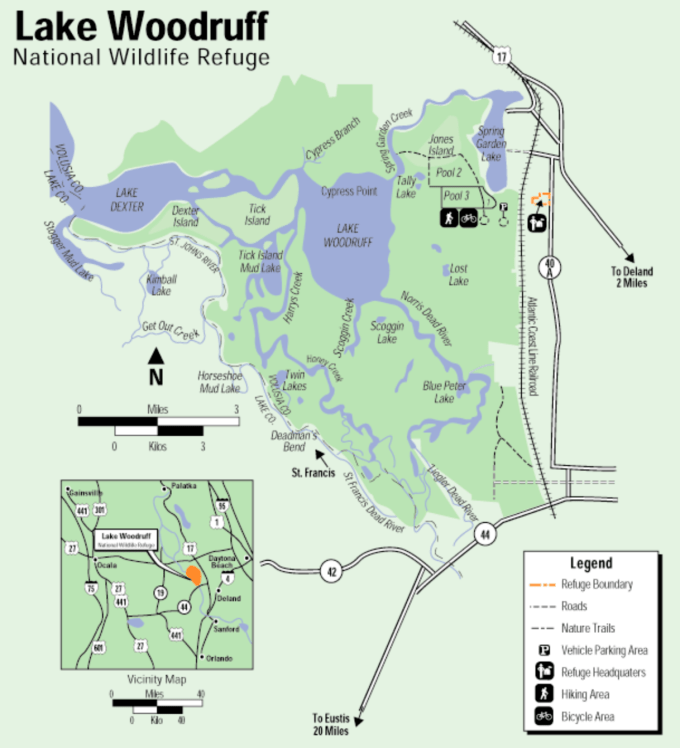
We decided to go on a quick trip to Florida to one of our favorite NWRs, Lake Woodruff National Wildlife Refuge in DeLeon Springs, Florida. We were only there for a few days, but it was an amazing spot for photos of wildlife and landscapes. The Sandhill Cranes and River Otters were not disappointing! As we were walking the trails, Sandhill Cranes would land right in front of us giving us fantastic photo opportunities. Sometimes it was strange to have them land & walk right up to you. They would just stare at you checking you out! We were traveling light and most of the time I was using a 300mm or a 150-600mm lens. For detail or landscapes I used my iPhone 11Pro. Since I was traveling light, a lot of my images of Sandhill Cranes I had to shoot a series of images for a panorama to get the whole Crane in. Lake Woodruff National Wildlife Refuge is not one of the NWRs that gets a lot of visitors or attention. You are pretty much on your own except for a few locals walking or birding there. But for us it is one of our favorite NWRs to visit. It does not have a visitor center and has a small parking lot down a small road that is only wide enough for 1 car. So if you meet someone going the other way you have to pull over so 1 can pass. The 22,000-acre refuge contains a myriad habitats: among them are marshes, swamps, creeks, hammocks and uplands. We only found it years ago because there was an accident on Route 95 that closed the highway overnight. So we had to stay at a motel and at breakfast the waitress asked where we were going. We said we were going to Ding Darling NWR for photography and she said we should go to Lake Woodruff NWR and might like it better. She was right! Sometimes you really feel quite alone when walking the trails, except for the wildlife.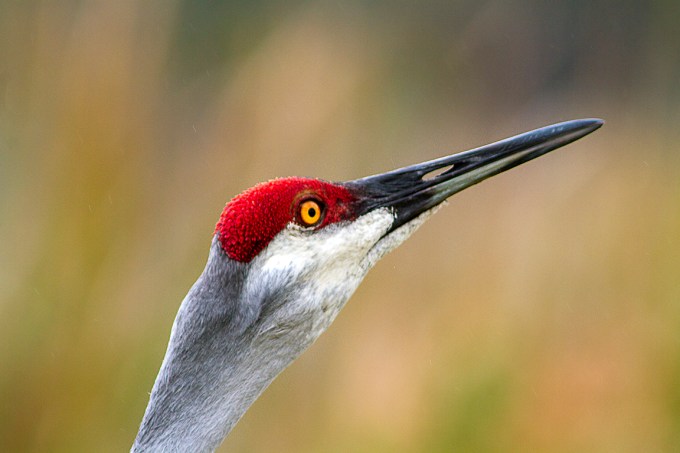
Anhingas In Trees
Posted on January 7, 2020

I was walking along the Wildlife Drive at the J.N. Ding Darling National Wildlife Refuge when I came upon this Anhinga. We tend to like walking along the Drive because you see more wildlife and have more opportunities for getting interesting photos. Plus you are not in the middle of large groups of photographers photographing the same subject at some of the main photo hotspots there.

 photoartflight