 photoartflight
Reddish Egret Looking For A Meal
Posted on January 6, 2020

I saw this Reddish Egret looking for a meal as it was strolling along in the water in front of me. Usually you see them darting around with their wings raised casting a shadow for the fish to swarm to. Images taken with 300mm lens with 1.4X Teleconverter.


Recent Dragonfly Images
Posted on September 1, 2019
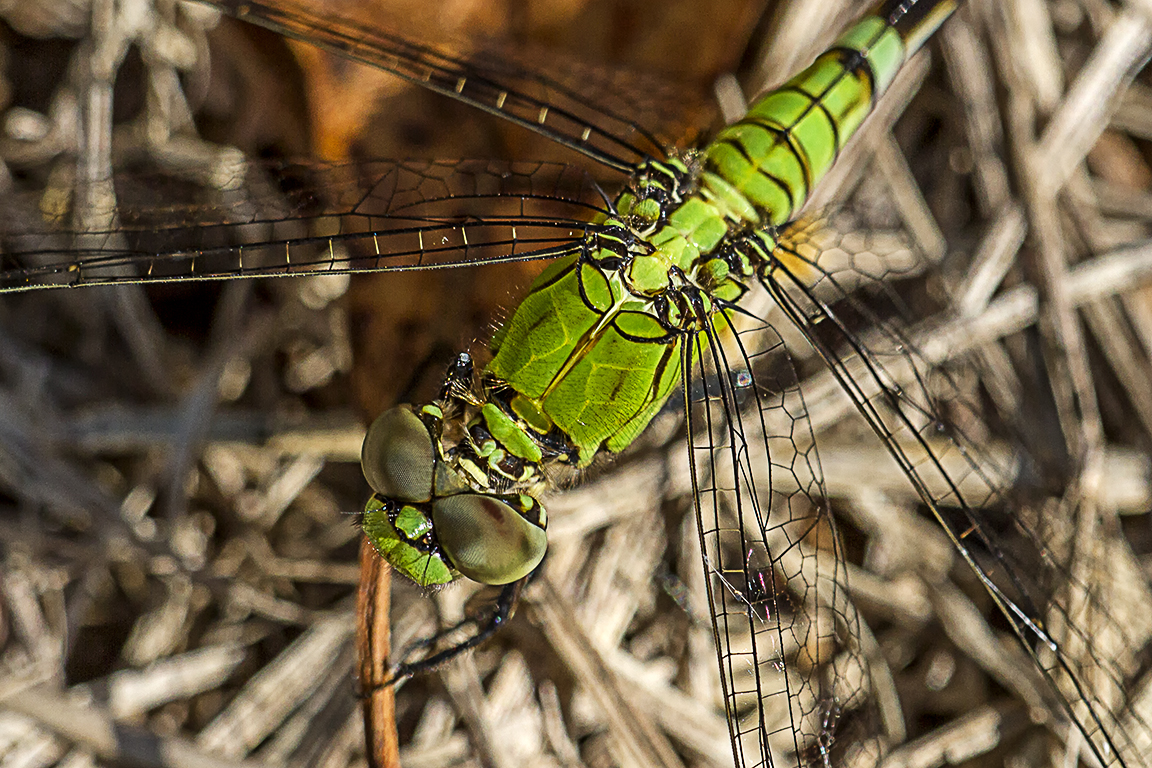
Here are a few images of Dragonflies and a Damselfly from a few local parks in our area. Most were shot with a close focusing 300mm f/4 lens with either extension tubes to get closer or 1.4X or 2X teleconverter. A few I used a Canon 400mm f/4 DO with Extension tubes and 1.4X teleconverter. The featured image is a female Eastern Pondhawk that was quite cooperative for extreme closeups. Image taken with Canon 7D, handheld, 300mm @ f/8, 1/1000 sec, ISO 400.

Blue Dasher extreme closeup – 2 image focus stack Canon 7D, Canon 300mm f/4 IS, 1.4X teleconverter, w/extension tubes
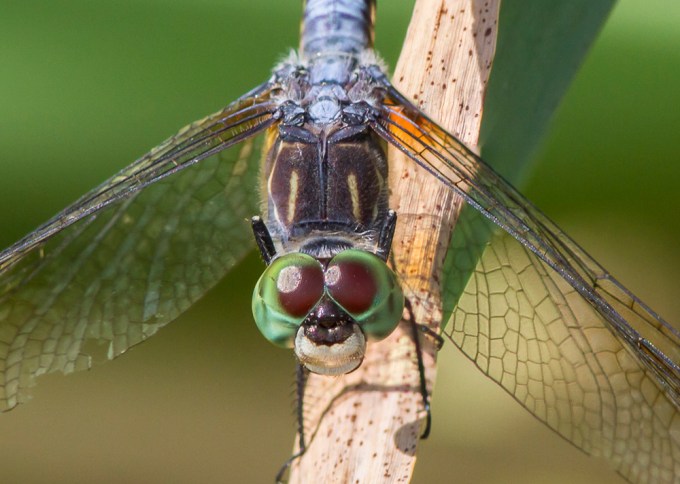
Blue Dasher extreme closeup – 2 image focus stack Canon 7D, Canon 300mm f/4 IS, 1.4X teleconverter, w/extension tubes (f/11, 1/200 sec, ISO 400)

Damselfly – multi image stack, 400mm f/4 DO with extension tubes, f/8, 1/50 sec, 1600 ISO, camera on tripod
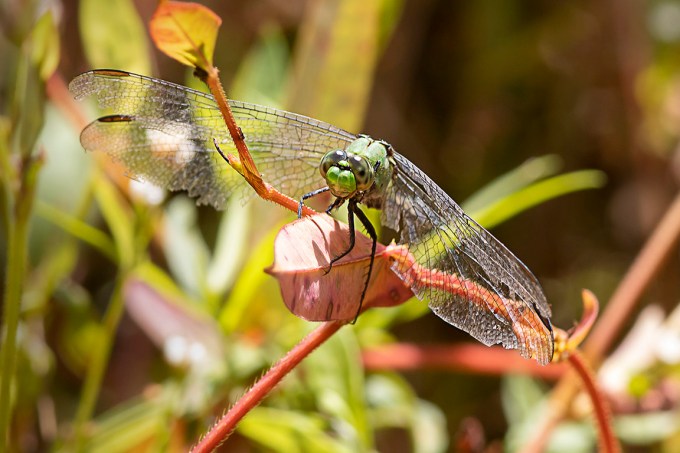
Female Eastern Pondhawk- f/11, 1/320 sec, 300mm f/4 w/ 1.4X teleconverter
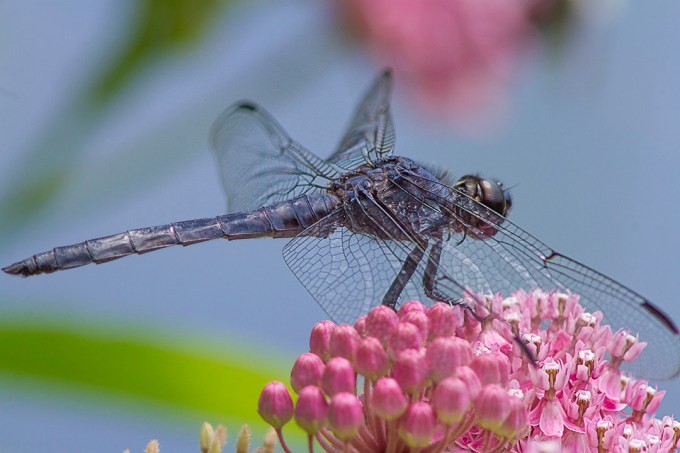
Slaty Blue Dragonfly, f/11, 1/160 sec, +1/3 exp. comp, 300mm w/ 2X teleconverter, Single image, flew off before focus stacking images
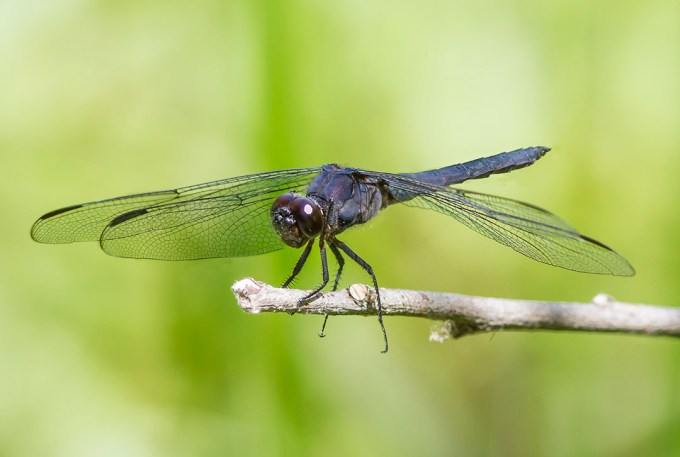
Slaty Blue Dragonfly, f/10, 1/320 sec, 300mm w/1.4X teleconverter, effective 420mm
Male & Female Blue Dasher Dragonflies
Posted on August 22, 2019

We went to a local park to see what we could find. Found a few Blue Dashers by the ponds, but most were looking the worse for wear. Then I concentrated on Butterflies that were around. When photographing Dragonflies I usually shoot multiple images at different focus points. This is to keep a smoother background and still get more of the dragonflies body and wings in somewhat sharper focus. It also depends on if the dragonfly cooperates and does not change position or flies off. The featured image I only had time for 1 shot so the tail is softer. The others were 2 images, so somewhat more depth of field.

Female Blue Dasher Dragonfly – f/8, 1/80 sec., +0.33 Exposure Compensation

Male Blue Dasher Dragonfly – 2 image handheld stack to retain more image sharpness from head to tail and still keep a smoother background. Canon 300mm f/4 Close Focusing lens, with 1.4X Teleconverter shot @ f/11 – 1600 ISO
Walk In the Woods Series #1
Posted on October 12, 2018

We enjoy walking along the paths at local parks and some go through the wooded areas. It is fun to look for little Photo Still Life images or Vignettes of natural details. It makes you look closer at what you are walking through. You never know what you will or can find. The only trouble is it is usually very dark for photographing my subjects. The featured image is a group of fungus on a tree trunk. I would usually use a tripod but on this walk I just had a 300mm lens so I raised my ISO to 6400 to get a high enough shutter speed even at f/4 for a sharp image in the tree covered woods. I shot 4 images, handheld, and focused on 4 different areas because I was shooting at f/4 to get the areas I wanted sharper and still get moody soft areas where I wanted. Then I aligned & assembled the 4 images in Photoshop for the final image.
Davidson’s Mill Fall Landscape Panorama
Posted on October 11, 2018

We were looking for colorful photo subjects on the Farm Road Trail at Davidson’s Mill Pond Park. I was looking for more detail type images so I was using a 300mm f/4 lens. On the trail I liked the colors and trees on the far side of the pond. I shot 11 handheld images to get all I wanted in my panorama. I overlapped the images a little more than usual so the images would assemble easier for the final panorama image.

Additional Pond Image taken with my small pocket camera
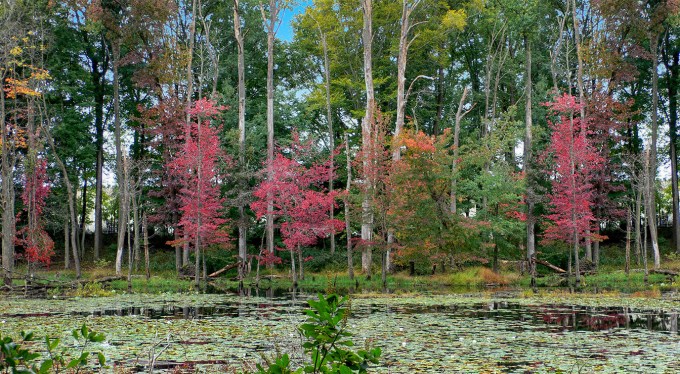
Another Pond Image zoomed in a little, again from my small Panasonic pocket camera.
Milkweed Plants & Milkweed Bugs – Both Large & Small
Posted on October 10, 2018
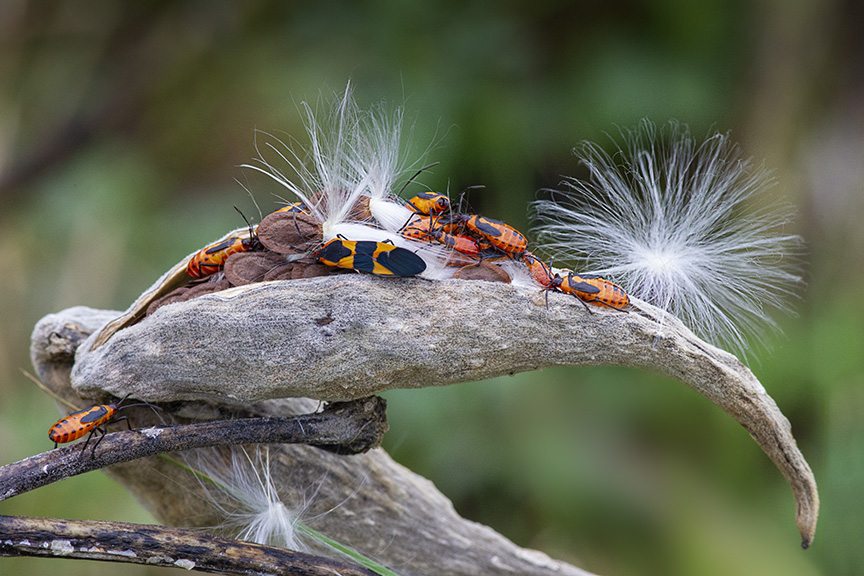
Here is a series of images from our visit to Davidson’s Mill Pond Park showing Milkweed Bugs, both the large and small variety, on the waning Milkweed Plants. Again these are stacked or panorama images from two to four images, handheld and assembled in Photoshop. Shot with a close focusing 300mm lens.
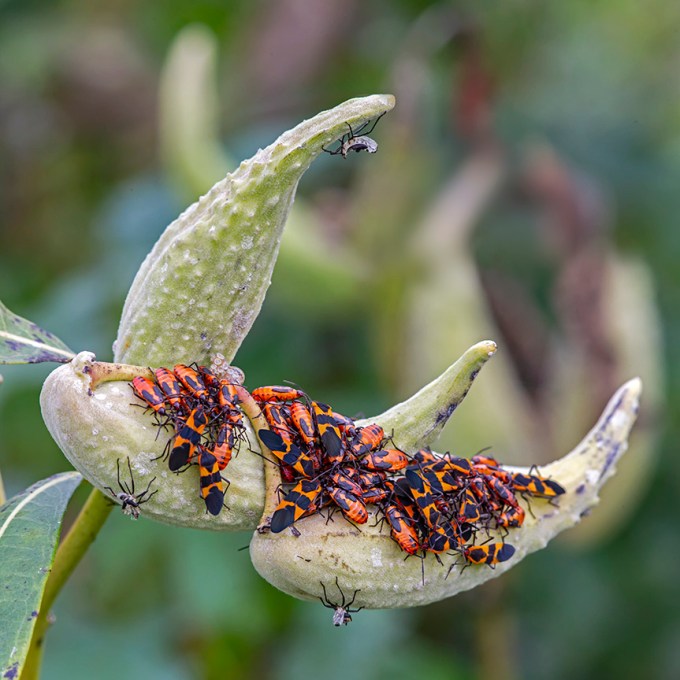
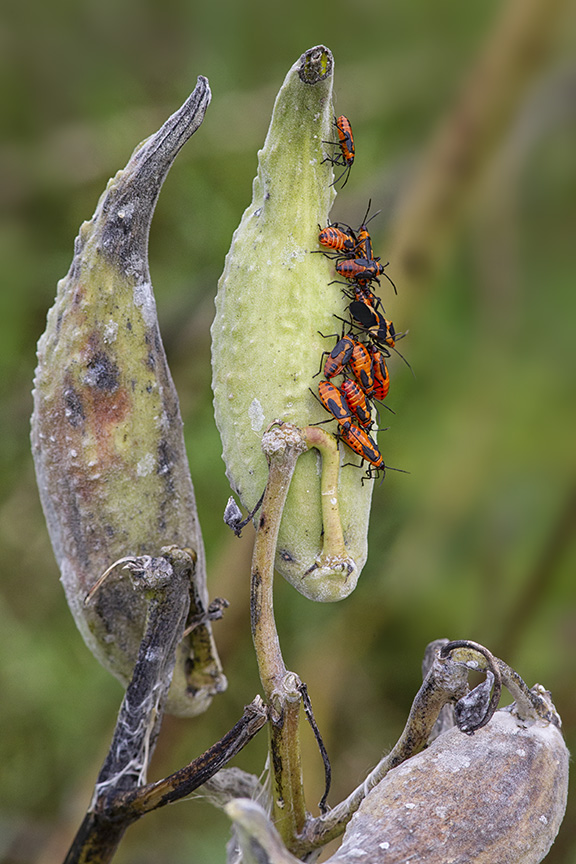

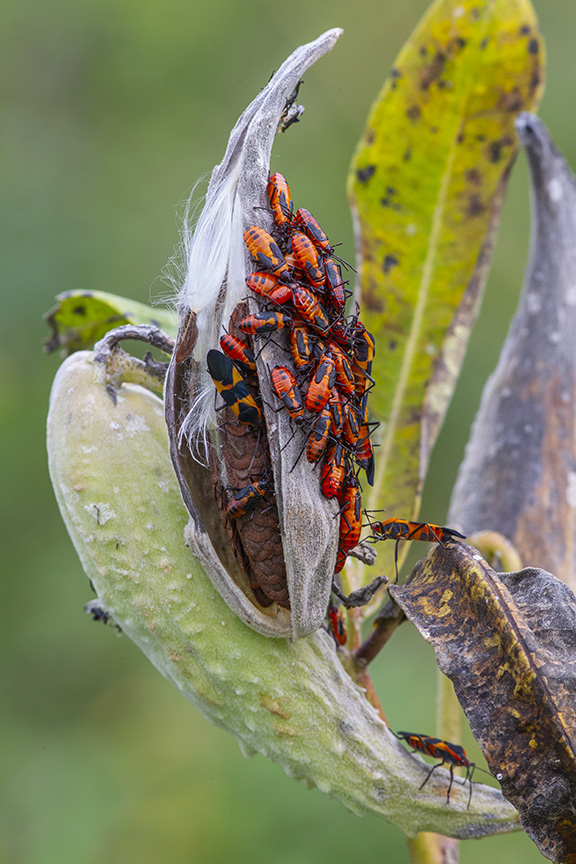

Fall Milkweed At Davidsons Mill Pond
Posted on October 9, 2018
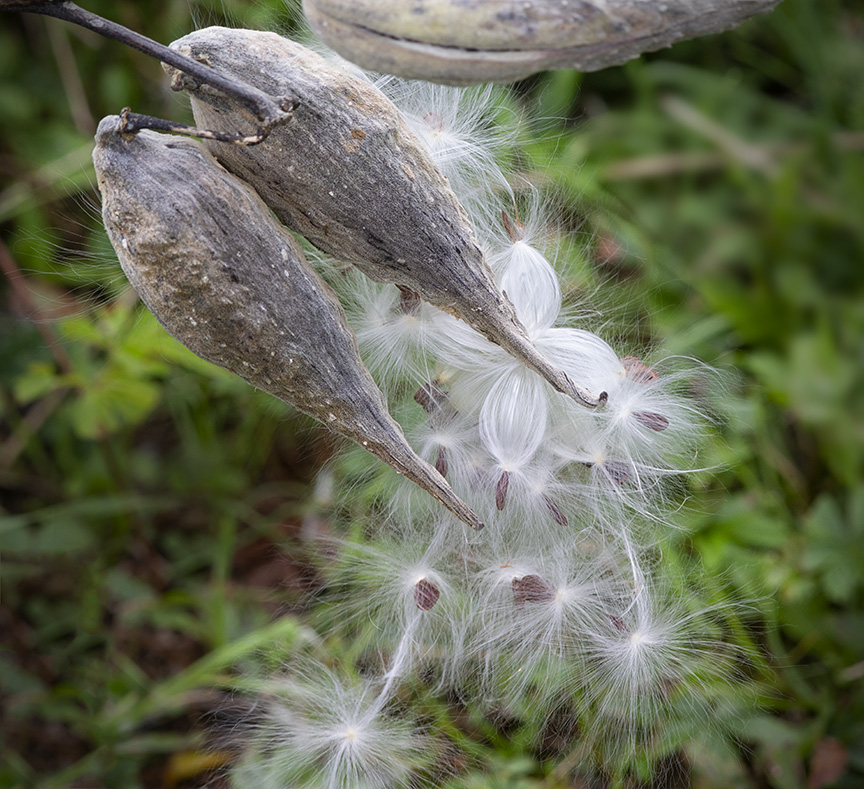
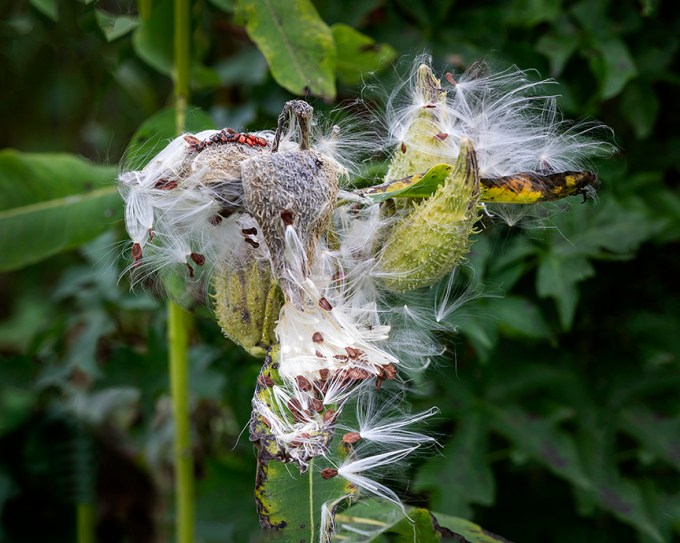
We went to a local park, Davidsons Mill Pond Park, to look for photo subjects. The Milkweed Plants were starting to look the worse for wear, but that is what happens this time of year. I liked the weathered “look” of the plants and the “feathery” pods as the season is coming to a close. I was using a 300mm close focusing lens for these to try to capture the fine detail of the weathered pods and keep the backgrounds somewhat softer. These are a series of images taken from 1 image each up to 4 handheld images which I then aligned and combined in Photoshop. It was windy so it was difficult to get some of the series to blend well, but I got quite a few. The next series will feature the Milkweed with Large & Small Milkweed Bugs, which adds some color but not good for the plants. The Milkweed is a favorite for Monarch Butterflies.



Monarch Butterfly Portraits
Posted on August 30, 2018

It is interesting to see and photograph Monarchs feeding on a plant. But after photographing them for years I never realized their amazing full life cycle. You know they go through the different stages, caterpillars thru to butterflies, but I did not realize how many stages they have.
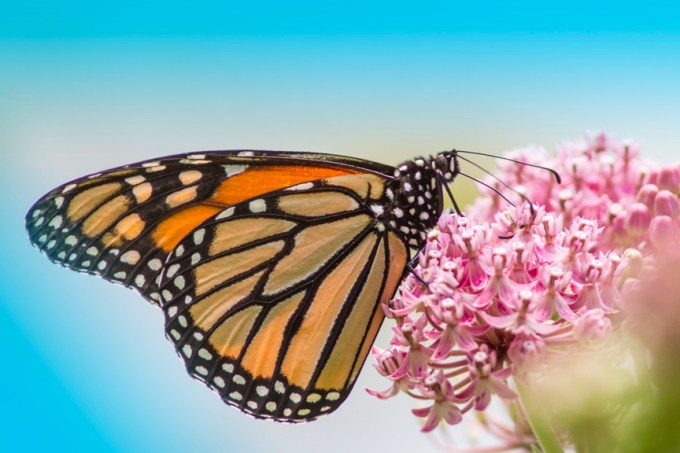
The following info is from www.learnaboutnature.com
The Photos are PhotoArtFlight Images.
Monarch butterflies go through four stages during one life cycle, and through four generations in one year. It’s a little confusing but keep reading and you will understand. The four stages of the monarch butterfly life cyclebutterfly are the egg, the larvae (caterpillar), the pupa (chrysalis), and the adult butterfly. The four generations are actually four different butterflies going through these four stages during one year until it is time to start over again with stage one and generation one.
In February and March, the final generation of hibernating monarch butterflies comes out of hibernation to find a mate. They then migrate north and east in order to find a place to lay their eggs. This starts stage one and generation one of the new year for the monarch butterfly.
In March and April the eggs are laid on milkweed plants. They hatch into baby caterpillars, also called the larvae. It takes about four days for the eggs to hatch. Then the baby caterpillar doesn’t do much more than eat the milkweed in order to grow. After about two weeks, the caterpillar will be fully-grown and find a place to attach itself so that it can start the process of metamorphosis. It will attach itself to a stem or a leaf using silk and transform into a chrysalis. Although, from the outside, the 10 days of the chrysalis phase seems to be a time when nothing is happening, it is really a time of rapid change. Within the chrysalis the old body parts of the caterpillar are undergoing a remarkable transformation, called metamorphosis, to become the beautiful parts that make up the butterfly that will emerge. The monarch butterfly will emerge from the pupa and fly away, feeding on flowers and just enjoying the short life it has left, which is only about two to six weeks. This first generation monarch butterfly will then die after laying eggs for generation number two.
The second generation of monarch butterflies is born in May and June, and then the third generation will be born in July and August. These monarch butterflies will go through exactly the same four stage life cycle as the first generation did, dying two to six weeks after it becomes a beautiful monarch butterfly.
The fourth generation of monarch butterflies is a little bit different than the first three generations. The fourth generation is born in September and October and goes through exactly the same process as the first, second and third generations except for one part. The fourth generation of monarch butterflies does not die after two to six weeks. Instead, this generation of monarchs migrates to warmer climates like Mexico and California and will live for six to eight months until it is time to start the whole process over again.
It is amazing how the four generations of monarch butterflies works out so that the monarch population can continue to live on throughout the years, but not become overpopulated. Mother Nature sure has some cool ways of doing things, doesn’t she?


Slaty Skimmer Dragonfly From Davidson’s Mill Pond Park
Posted on August 19, 2018
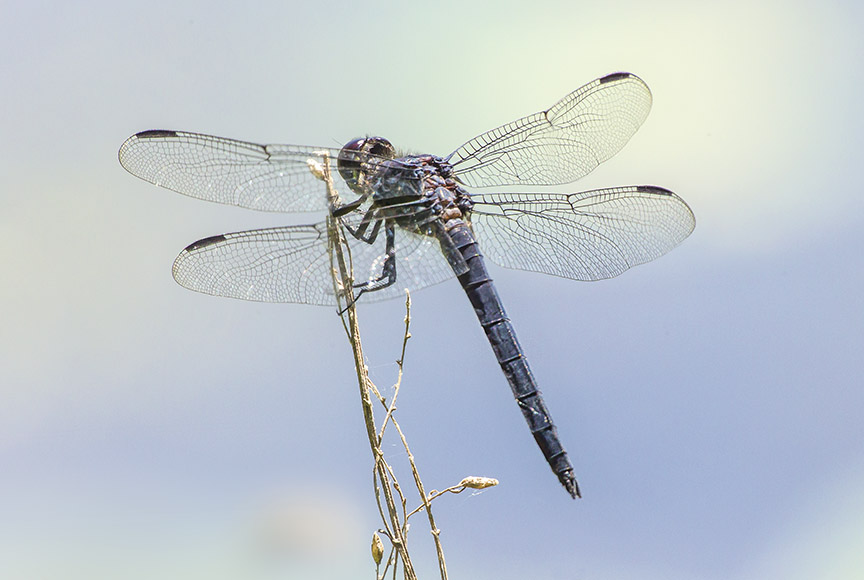
I am going through my dragonfly images shot earlier this Summer at various locations. These are Slaty Skimmers photographed at Davidson’s Mill Pond Park in Monmouth County, New Jersey. For these I used a Canon 7D (1.6 crop sensor) 300mm f/4 lens and a 1.4x or 2x teleconverter to get closer since my subjects did not want to cooperate and come closer to the edge of the pond.
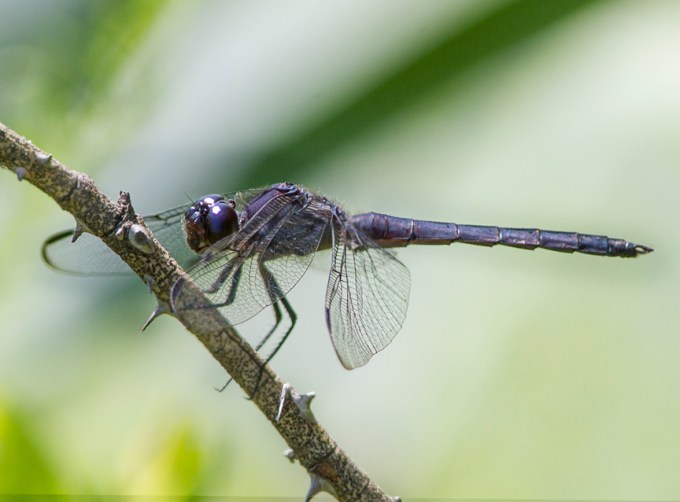
Slaty Skimmer – Side View @ 960mm (Field Of View)
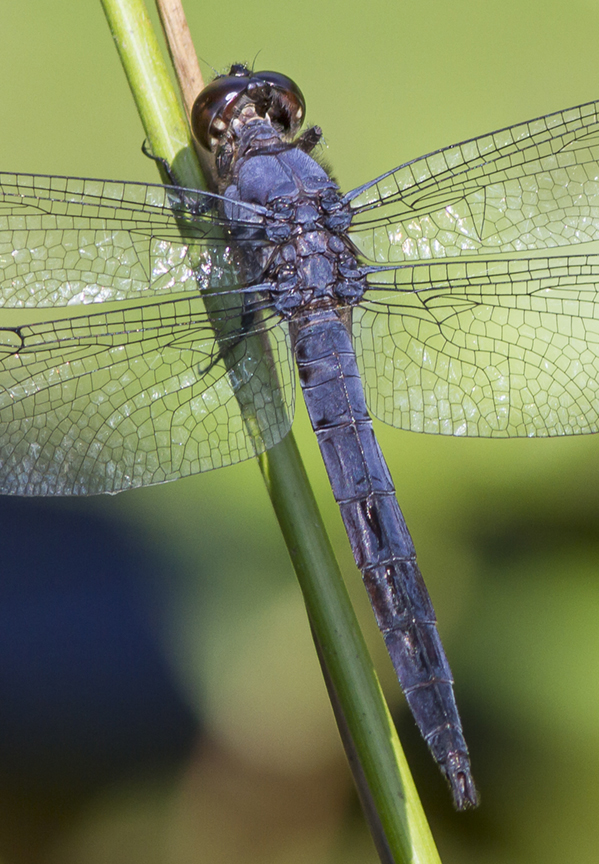
Slaty Skimmer Closeup Wing Detail

Slaty Skimmer – Side View

Slaty Skimmer – 3/4 rear view
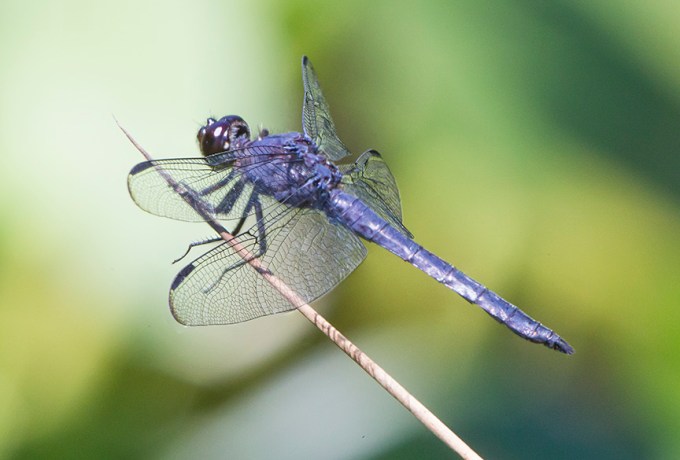
Slaty Skimmer – Side View

Slaty Skimmer – Side View
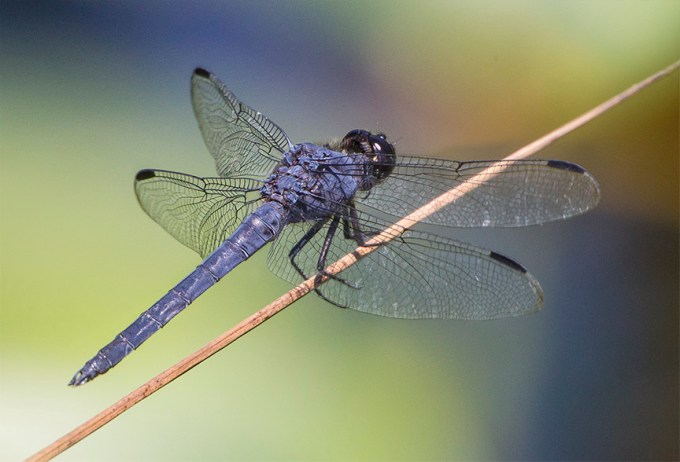
Slaty Skimmer Wing Detail
Gladiolus Image Stack & Panorama @ f/4
Posted on July 17, 2018
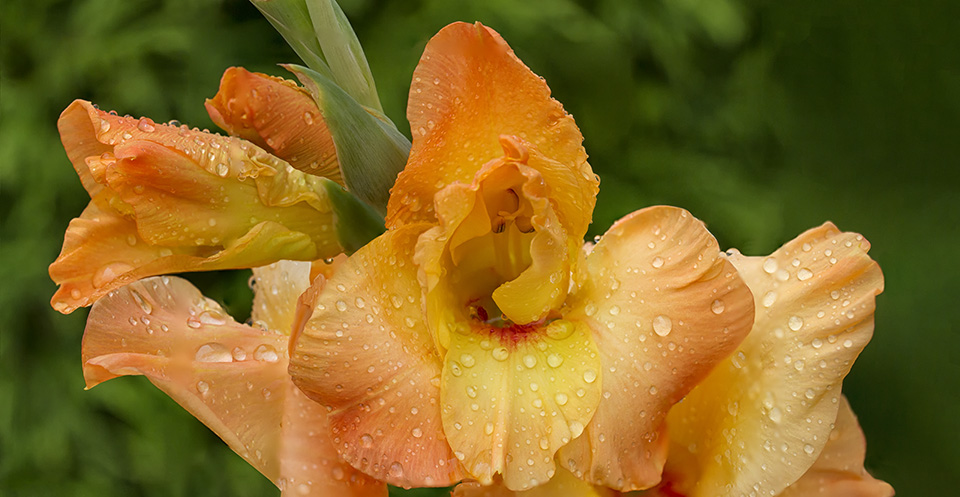
Photographing in the garden again with a 300 mm f/4 Canon close focusing Lens @ f/4. At our condo our gardens are only 3 ft deep, so if I stop down for more depth of field, the background building or shrubs are distracting. A 150mm macro at f/ 2.8 is also too distracting for me. So the 300mm f/4 seems to work best for what I like. But a 300mm that close I have to combine image stacking for more depth of field for the areas I want sharper along with a series for a panorama to get the overall area I want to capture. If I back up I get more detail in the background, so I lose some of the softness in the background. Both series handheld and assembled in Photoshop. After you do a few it gets easier to get predictable results. At least most of the time! The featured image is a series of about 12 images. I also included a Balloon Flower & Hardy Lily while I was experimenting.

Another image stack and pano series after a rain – 300mm f/4 – 10 images
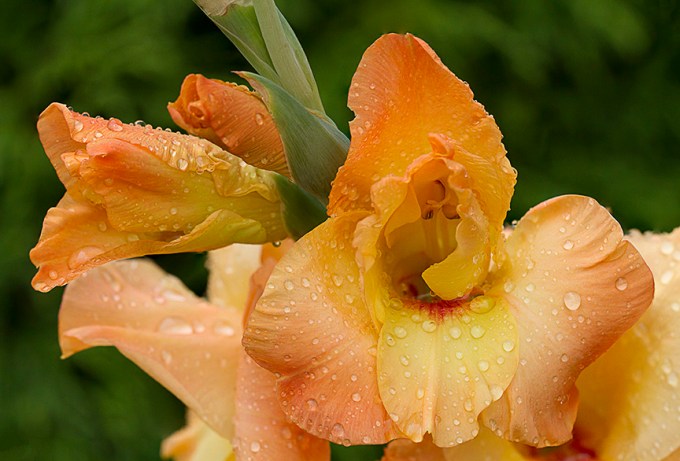
Another 10 image combo of image stacking and pano

Simple 8 Image Stack and pano – horizontal formats – Balloon Flower

Dappled light 8 Image Stack / pano – Hardy Lily
 photoartflight