 photoartflight
Great Blue Heron Panorama
Posted on November 28, 2020
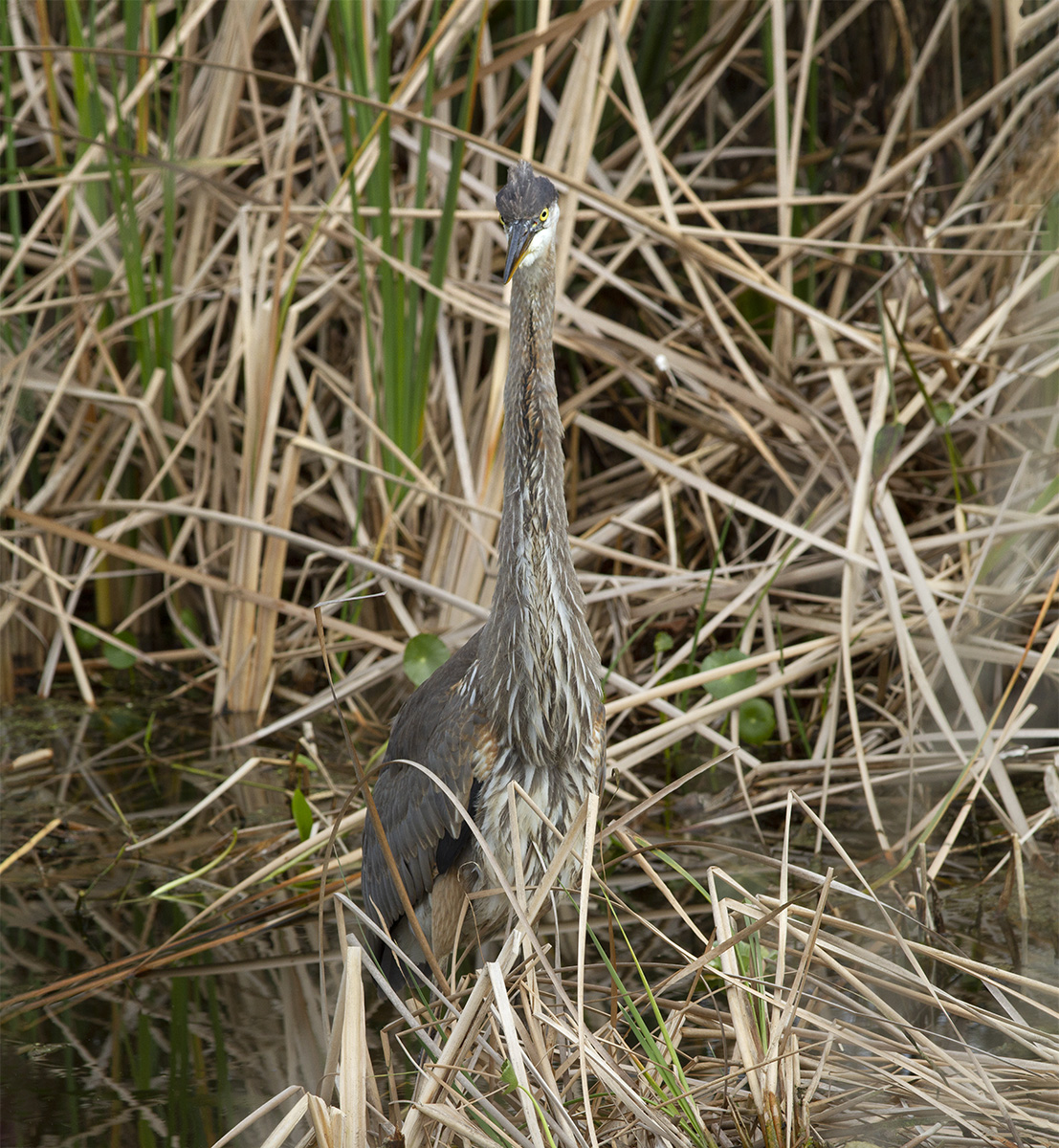
A three horizontal image panorama of a Great Blue Heron. There times when I am out walking at a Wildlife Refuge when I come upon a photo subject that is too close for the lens I am carrying. In this instance I was walking along the Wildlife Drive near the entrance and saw this Great Blue Heron standing in the water. I was too close for the lens I had with me so I shot three overlapping horizontal images to combine for a vertical panorama. It seems rare when you are too close to get the whole bird in. Usually you do not have enough focal length for what you see and want photograph. If you can shoot a series of images quickly before the bird moves you can make some interesting panorama images. The Featured Image is 3 horizontal images taken with a 300mm lens on a Canon 7D. Assembled & blended in Photoshop. I usually always photograph from the head down for the series or the head then to side for however many images you need.
Last Praying Mantis In the Gardens
Posted on October 19, 2020

The featured image is a stacked multi-image, multi-row Praying Mantis panorama. This was the last Praying Mantis I photographed in our gardens this year. We had quite a few throughout the summer, but this was the largest Mantis I photographed this year. The featured image is 8 images, shot in 3-multi-rows of overlapping images. I managed getting 3 images for the top row, 3 images for middle row & only 2 images for the bottom row before it moved. I was shooting handheld with a 300mm lens @ f/5.6 for a softer, smoother background since I wanted a blurred background not showing details of the flowers & siding on the house. I concentrated my focus on the head and front legs and so the yellow flowers behind the Mantis gave a bright pop of interesting color.

Last of the Slaty Skimmers for this year
Posted on September 22, 2020

Another Dragonfly season is pretty much over now so I will have to find other interesting subjects to photograph. Here are some Slaty Skimmer Dragonfly images from my last visit to Davidsons Mill Pond Park before they were gone.


Slaty Skimmer 5 Image Focus Stack
Posted on September 8, 2020

Photographing Dragonflies for this year is soon coming to an end. I am only seeing a random one here or there in the local parks. This image of a male Slaty Skimmer was taken with a 300mm lens with a 1.4X Teleconverter on a Canon 7D. The 5 handheld images were taken at different focus points along the dragonfly and branch @ f/8 to keep a softer background but have detail on the wings, body & branch it was on.
LadyBug On Thistle
Posted on September 8, 2020

On a visit to Davidsons Mill Pond Park, I found this Ladybug climbing on a Thistle. I liked the “Spot” of Color of the Ladybug against the green part of the Thistle. I thought it looked like it was pointing to the flowering colorful top on the thistle and added interest. Image taken with 300mm lens @ f/11 on a Canon 1D mkIV.
Widow Skimmer Dragonflies – Male & Female
Posted on August 15, 2020

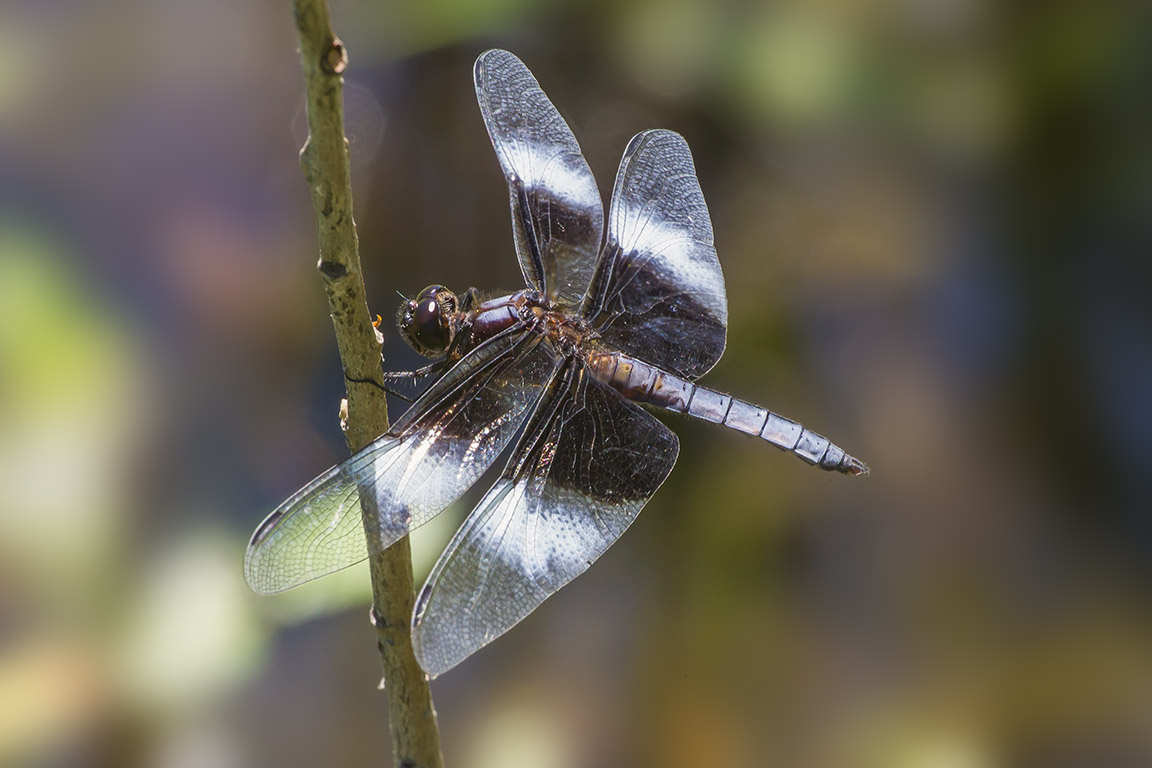
The featured image and the one below are male Widow Skimmers. Images taken with a 300mm f/4 canon lens with a 1.4X Canon teleconverter.
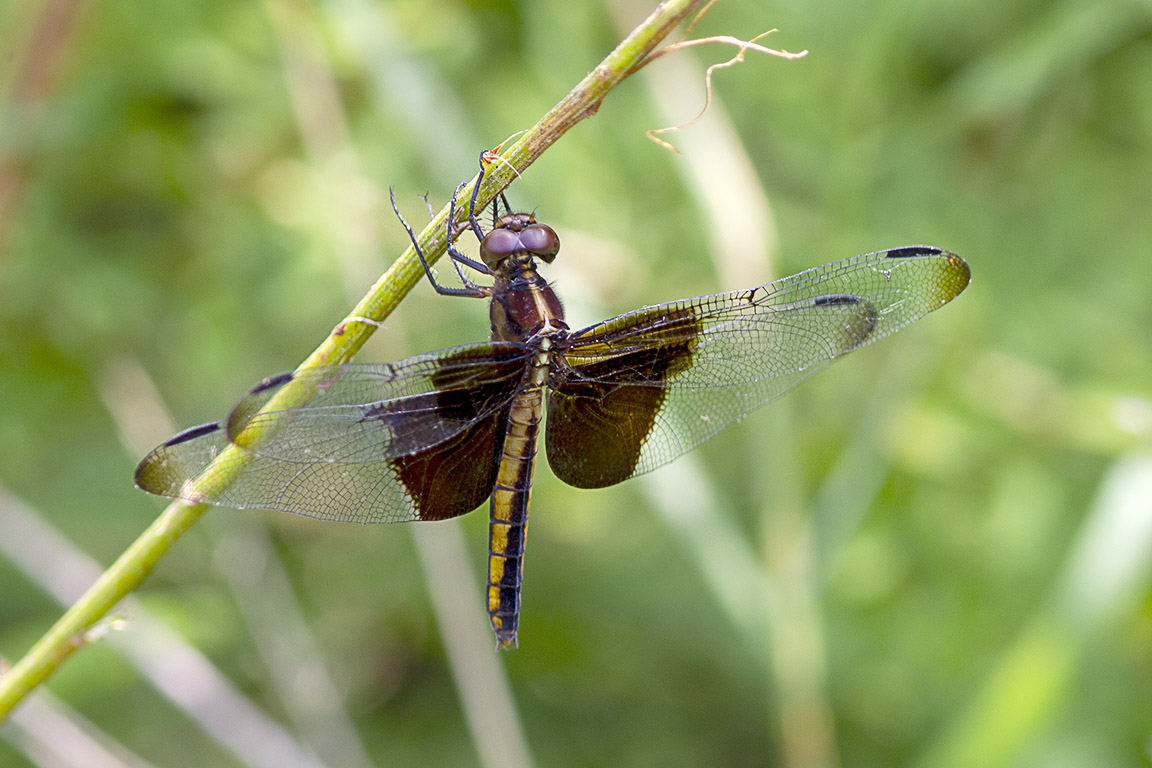
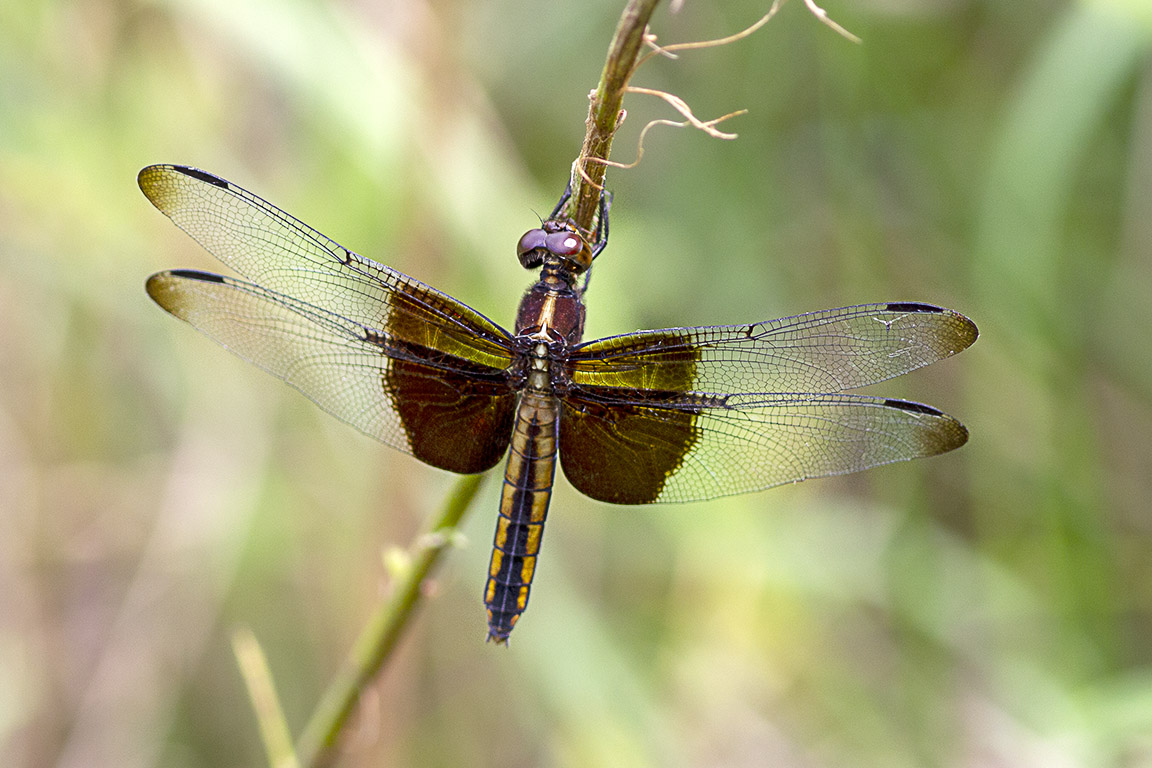
Below are images of female Widow Skimmer dragonflies. Female Widow Skimmers do not have white on the wings and have a different body coloring.
Blue Dasher – 12 Image Focus Stack
Posted on August 14, 2020
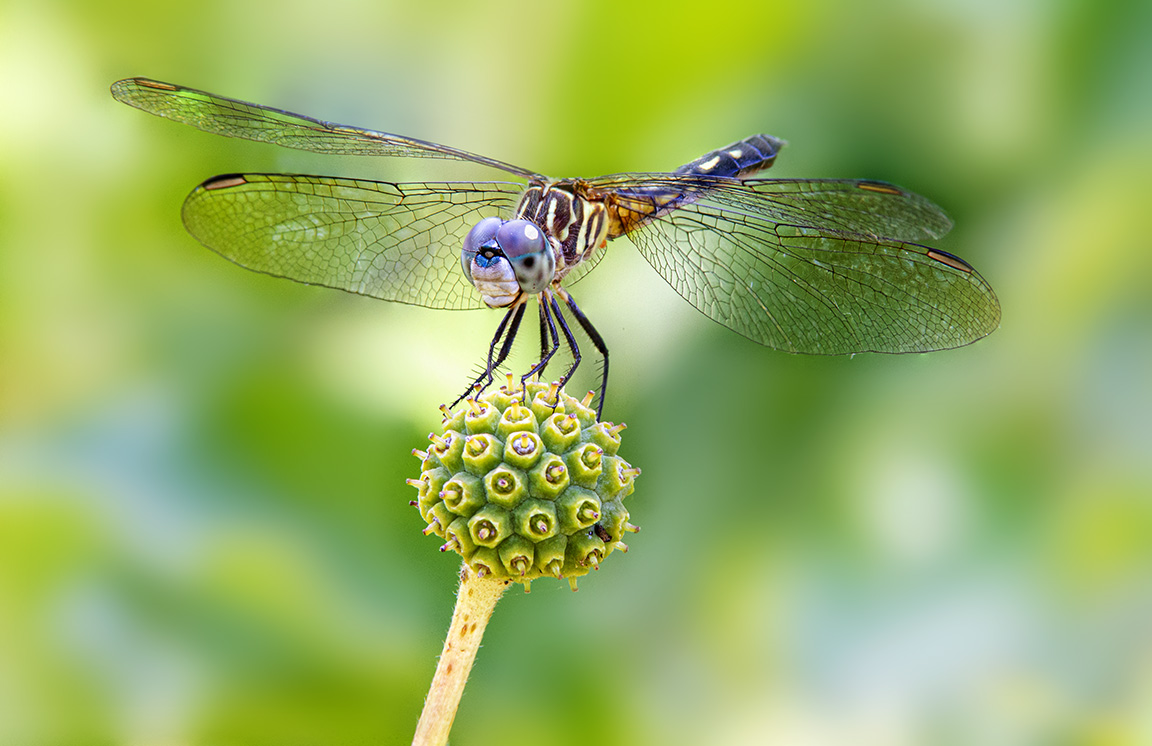
When doing a multi-image focus stack for more depth of field on a dragonfly image, I usually set my f/stop to f/11 or f/16 when using a 300mm f/4 lens with a 1.4x teleconverter. This way I do not need as many shots for the full focus series of images. Many times a dragonfly will fly off or change position before I finish the series for a stack so I cannot use it and have to start over. This dragonfly seemed to be very still & cooperative. So I managed to do a focus stack from head to tail, including wingtip to wingtip. This series was 12 images, shot at f/8 for a smooth clean background. For a focus stack with a large number of images, I also use a tripod. After flattening the layered file, you might have a minor touch up here or there.
Eastern Amberwing In Garden
Posted on August 13, 2020

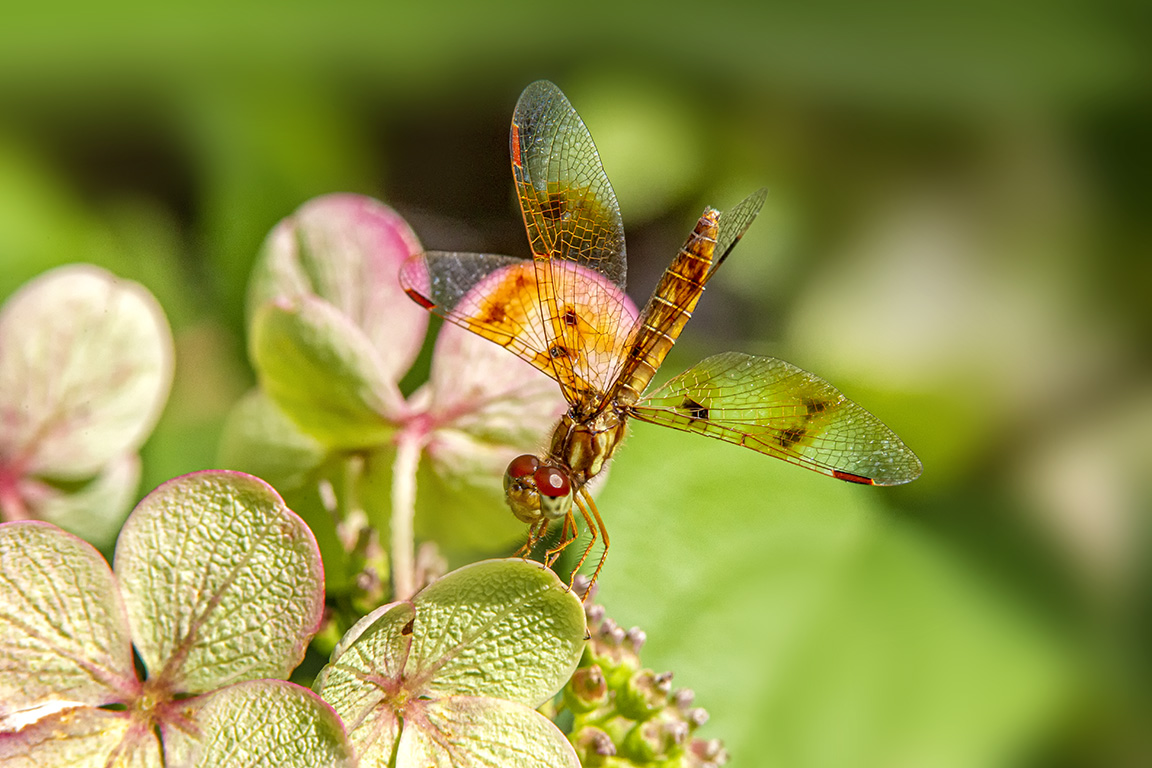
I was looking for bugs in the garden and noticed this female Eastern Amberwing on a Hydrangea. It was a nice photo subject as it stayed in the general area giving me multiple opportunities to photograph it on multiple plants. All images were taken with a 300mm lens with a 1.4x teleconverter on a Canon 1D mkIV.

Junk Bug On Zinnia
Posted on August 12, 2020

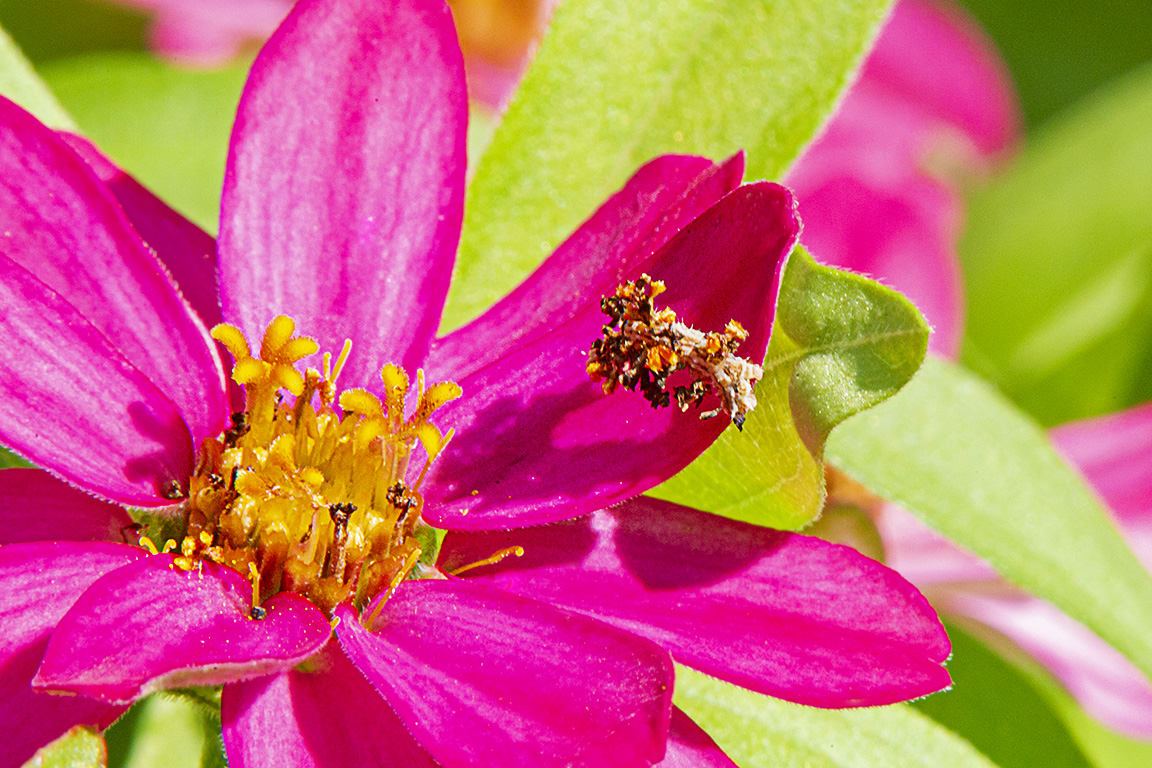
It is a lacewing larva or sometimes just called a “junk bug” because of the junk it carries around on its back. The tiny larvae come up with all sorts of creative disguises to confuse predators. Other larvae may use bits and pieces of leaves, dead insects or whatever debris is available. I have seen these in other gardens, but never tried to find out what they were.


Eastern Tiger Swallowtail Butterfly @ 960mm
Posted on August 11, 2020

Here are a few images of an Eastern Tiger Swallowtail Butterfly from our visit to Davidsons Mill Pond Park. The featured image is a single image shot with a Canon 300mm f/4 lens with a 2x teleconverter on a Canon 7D @ f/11. Image below was a Blend of 2 stacked images, blended in Photoshop with a soft edge on the seam. Field of View equivalent with the Canon 7D (1.6x crop camera) 300mm f/4 lens, Canon 2x teleconverter ~ 960mm. When using a 2x teleconverter your lens wide open will be @ f/8, not f/4 because you loose 2 stops of light with the 2x teleconverter. So I usually stop down at least 1 additional f/stop to help with sharpness because of the added teleconverter. 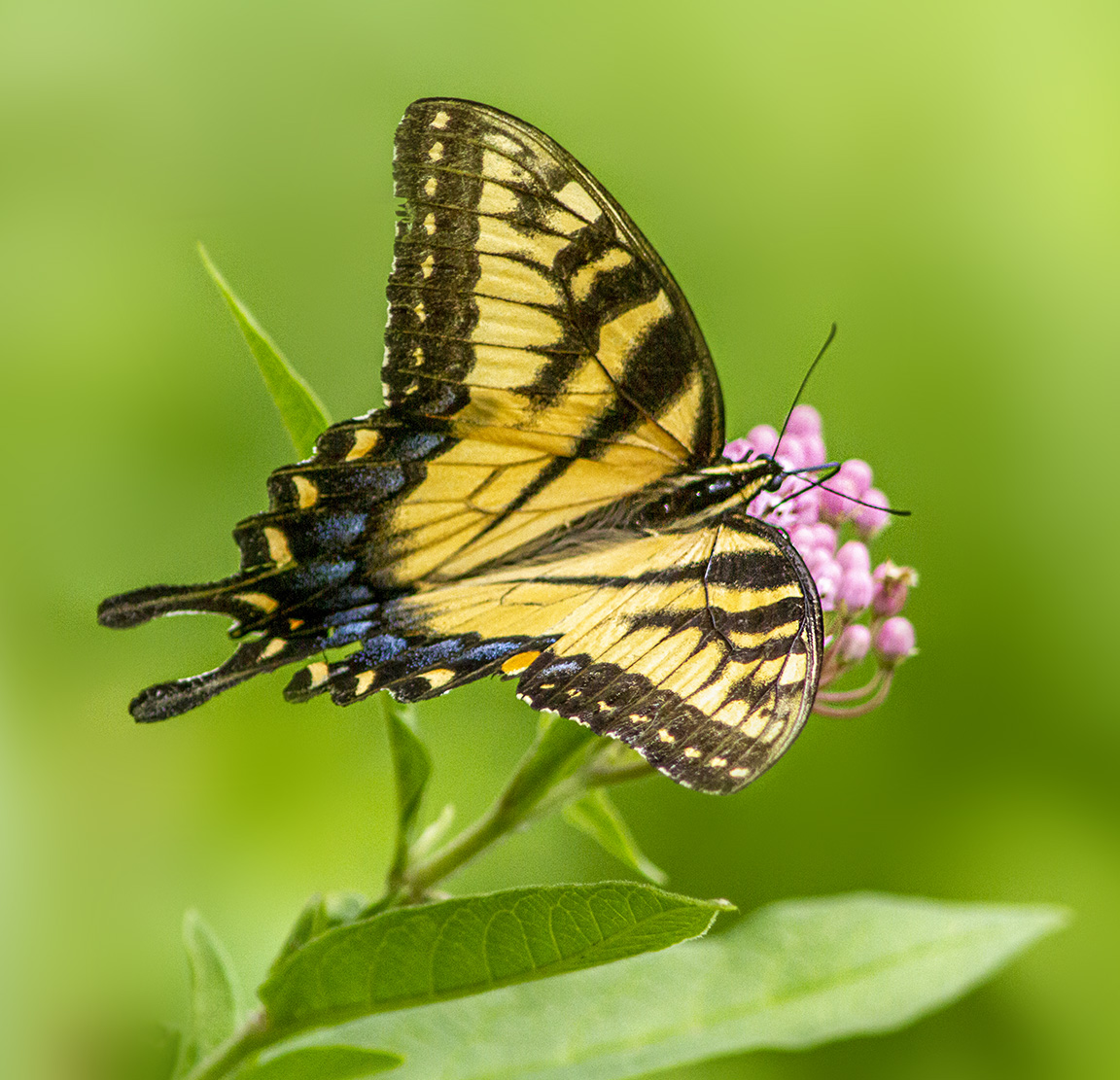
 photoartflight