 photoartflight
New Growth On Evergreen Trees
Posted on June 1, 2020

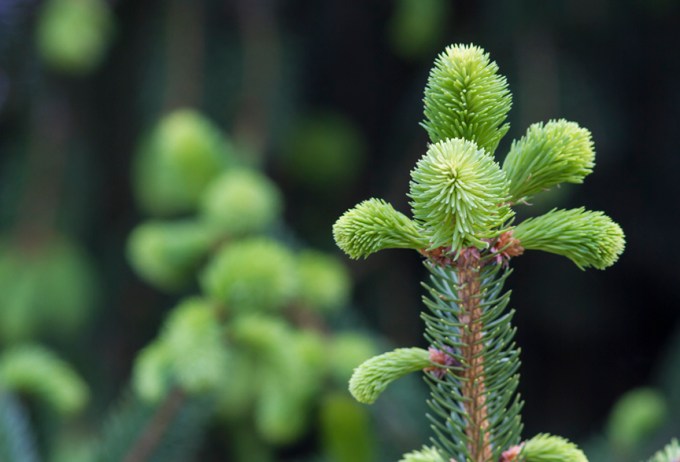
It is interesting to see Spring’s Bright Green new growth on the evergreen trees by our sidewalk. The bright growth really stands out from the older branches. Also our flowers in the garden are starting to bloom. It is nice to see new growth and a new beginning with all that has been going on in the country lately. We seem to also have a semi-permanent resident Garter Snake in our garden now.
More CloseUp American Alligator Images From Florida
Posted on March 10, 2020
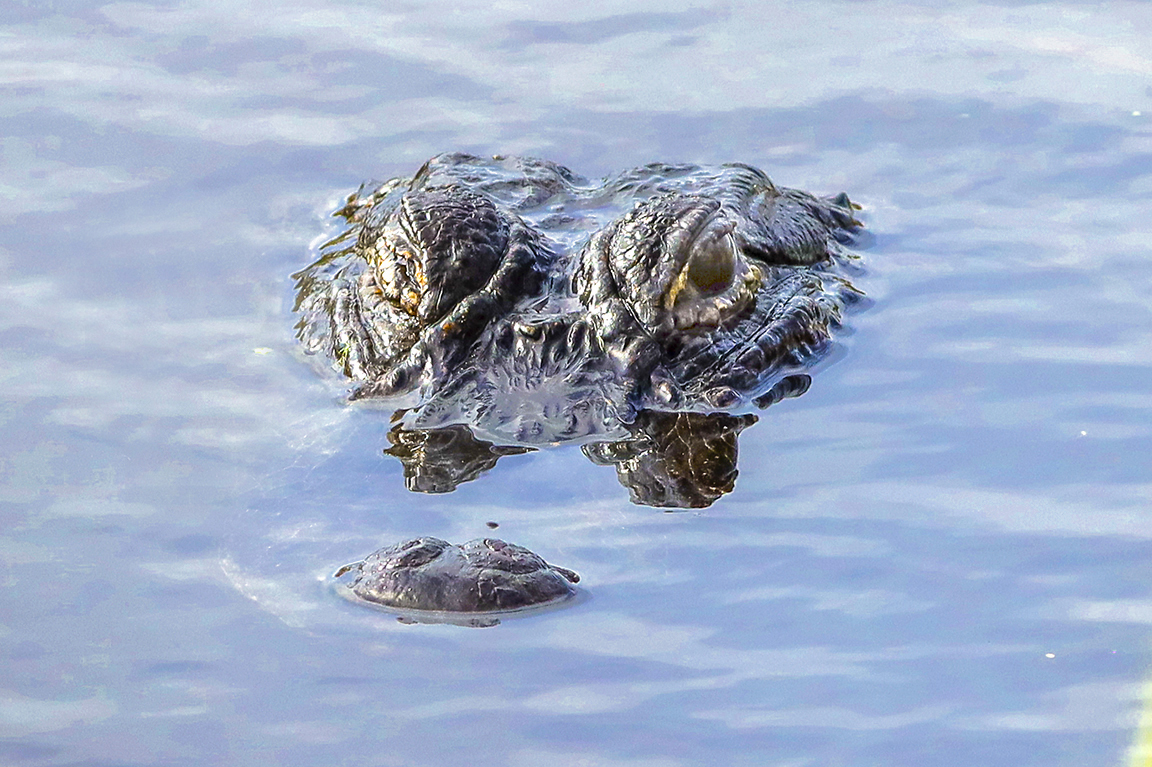
An assortment of close-up images of Alligators from 2 Florida locations, along the paths at Ding Darling National Wildlife Refuge in Sanibel, Florida and the St. Augustine Alligator Farm’s Rookery. Featured image taken at Ding Darling NWR with 300mm f/4 Lens, Canon R.

Alligator Teeth 560mm, Ding Darling NWR, Sanibel, Florida. Canon 1D mkIV, 400mm DO lens, 1.4X Teleconverter

Alligator @ 400mm, Tamron 150-600mm lens, Canon R, St. Augustine Alligator Farm
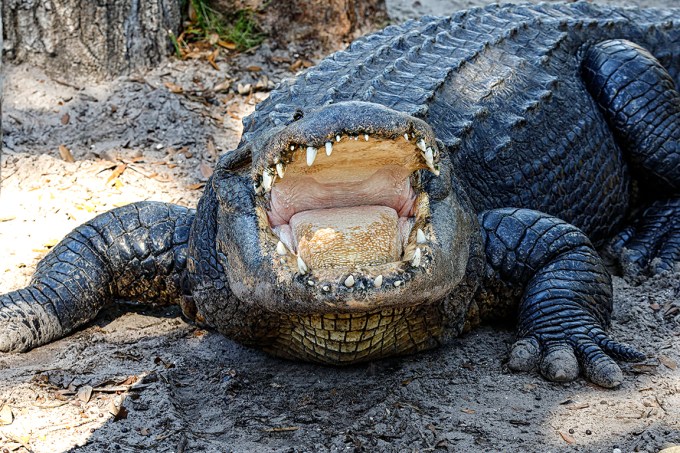
Alligator @ 226mm, Tamron 150-600mm lens, Canon R, , St. Augustine Alligator Farm
Following is information on Alligators from Ding Darling NWR’s website.
One of only two alligator species in the world, the American Alligator is a large reptile found in freshwater habitats throughout the southeastern United States. Adult male alligators can grow up to 4.6 meters long and weigh over 500 pounds while females are generally smaller and average only 3 meters long with a weight of 200 pounds. Commonly portrayed as green, the skin of an American alligator is actually a dark grey color with pale yellow on the underside, and the juveniles have bright yellow stripes along their backs until they mature and the striped fade. The dark coloration allows this predator to better blend into the swamps, marshes, and wetlands it inhabits and camouflages the animal while it hunts at night. Another adaptation that allows the alligator to better hunt within its watery habitat is a double set of eyelids. One set of eyelids is much like a humans, they close up and down and protect the eye from debris and light. A second set of translucent eyelids, called a nictitating membrane, close front to back and are used to protect the eyes while the alligator is underwater. Like other reptiles, American alligators are cold blooded and need heat from the sun or other sources such as warm water to be active or even to digest their food. Special bone plates called scutes grow between layers of skin along the back of the alligator, giving the animal an armored appearance and acting as a solar plate. The scutes collect heat from the sun when the alligator sunbathes and warms the blood that runs through the vessels of the skin, transferring the heat throughout the body. Despite their appearance as slow, lazy, or unresponsive which sunbathing as alligator is capable of running up to 11 miles per hour on land in short bursts. This species is much better built for water travel, where it is able to utilize its tail as a paddle and rudder to guide the torpedo-shaped body through the water at speeds up to 20 miles per hour.
Flying Sandhill Crane Panorama
Posted on February 19, 2020
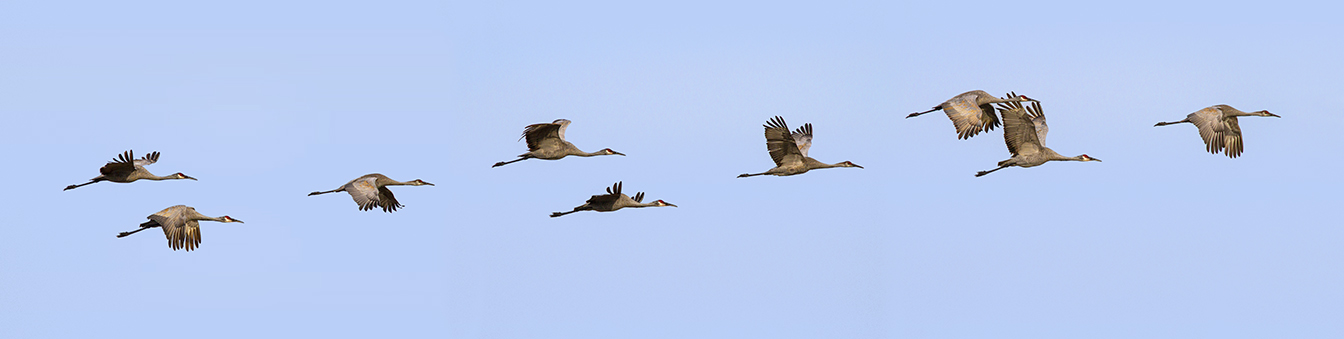
As we were walking the trails at Lake Woodruff NWR we saw these Sandhill Cranes flying by. I wanted to get the whole group in one image. I was using a 300mm lens, so I shot 5 images in a quick series to combine into one Sandhill Crane flying panorama. I could not let Photoshop align and blend the panorama because of the movement of the wings confused Photoshop auto alignment of images. I used a series of soft masks to blend the images manually in the panorama and spaced them by the spaces between the Cranes.
More Sandhill Crane Mult-Image Panoramas
Posted on February 18, 2020
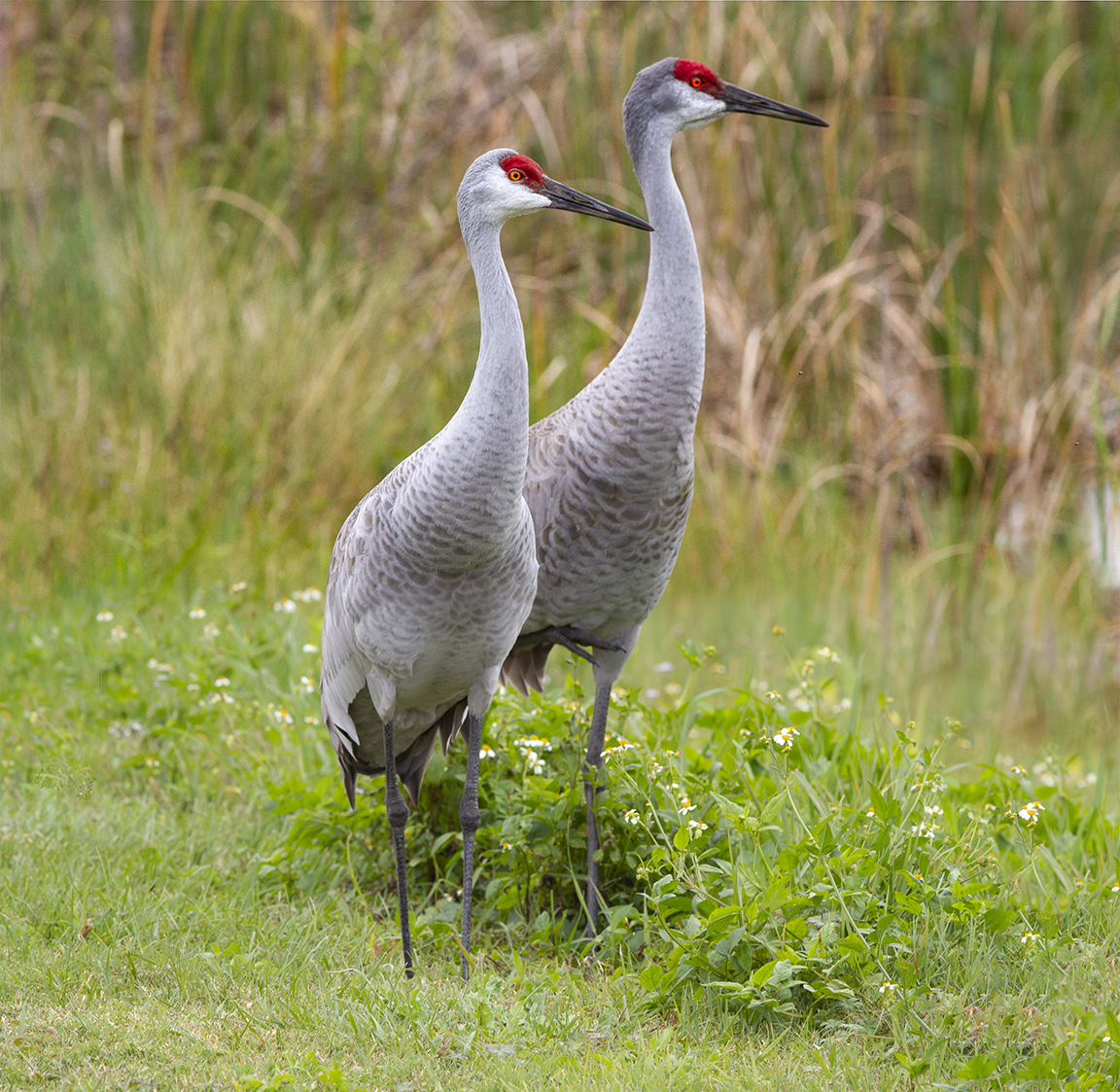
On our visit to Lake Woodruff NWR in DeLand Florida, it was amazing how the Sandhill Cranes seemed to not be bothered by people. But then again there were not many people around. So maybe they were just curious. We did not try to get close to them, but they walked right up to us as to check us out. We were a little nervous at first but they just seemed to be checking us out and went on their way foraging in the grass. It is a little intimidating to have such a large bird get that close to check you out. They are about 4 ft tall and have about a 7 ft wingspan. The trouble was I had to shoot series of panoramas to get the entire Sandhill Cranes in. Usually you can never get close enough to fill the frame with birds! The featured image is made from 2 images, @ 300mm and assembled in Photoshop. The amount of images per pano is also a guide as to how close they were to us! The more images per panorama the closer they were!

Sandhill Crane 2 Vertical Image Pano, 300mm Close Focusing lens

Screen Grab of Initial Setup letting Photoshop align and blend 5 handheld images before Photoshop filled in the blank areas with content aware fill feature.
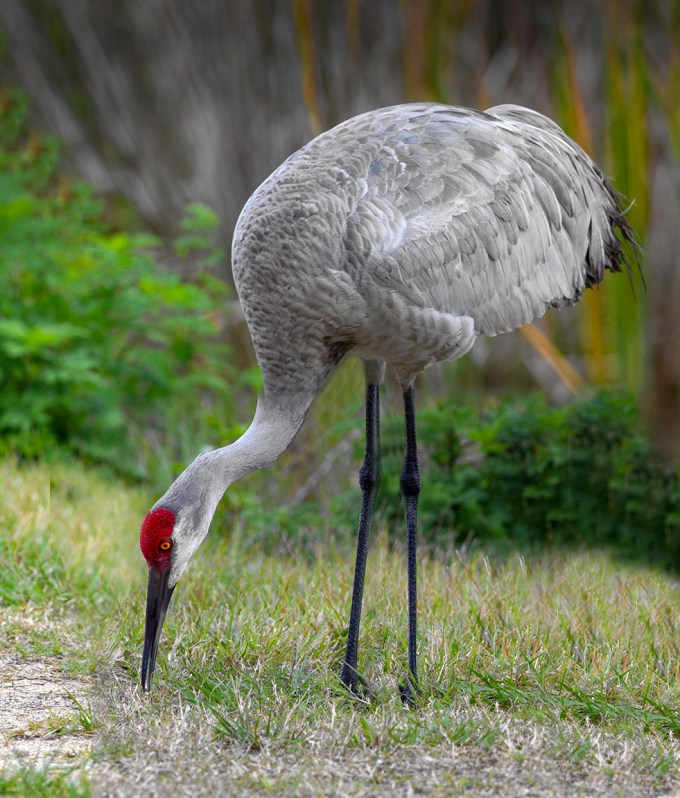
Final Image With content Aware Fill added and other adjustments for density, etc. added.

Sandhill Crane 8 image Panorama, 300mm lens
Cormorant Portraits, Sunning On Treetops
Posted on February 15, 2020

We saw a quite a few Cormorants sunning on the top of trees as we were walking the trails on our trip to Lake Woodruff NWR. The featured image was taken with a 300mm f/4 lens. I liked the strong sunlight on the Cormorant enabling more detail in the dark black bird. The images here were 2 different cormorants from different tree branches.
Additional Cormorant Images:
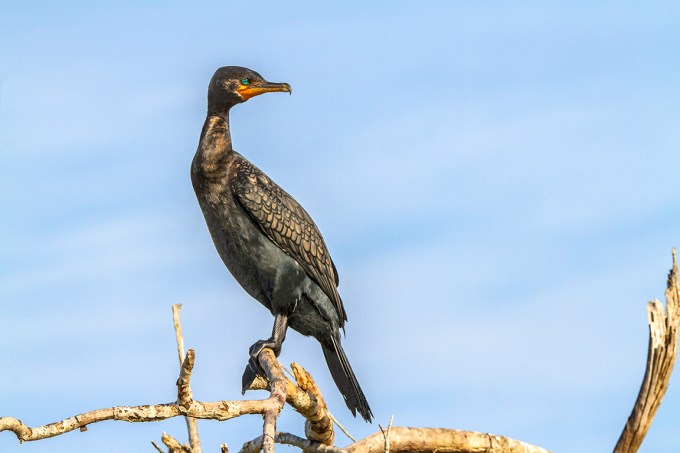
Cormorant @ 273mm

Cormorant @ 375mm
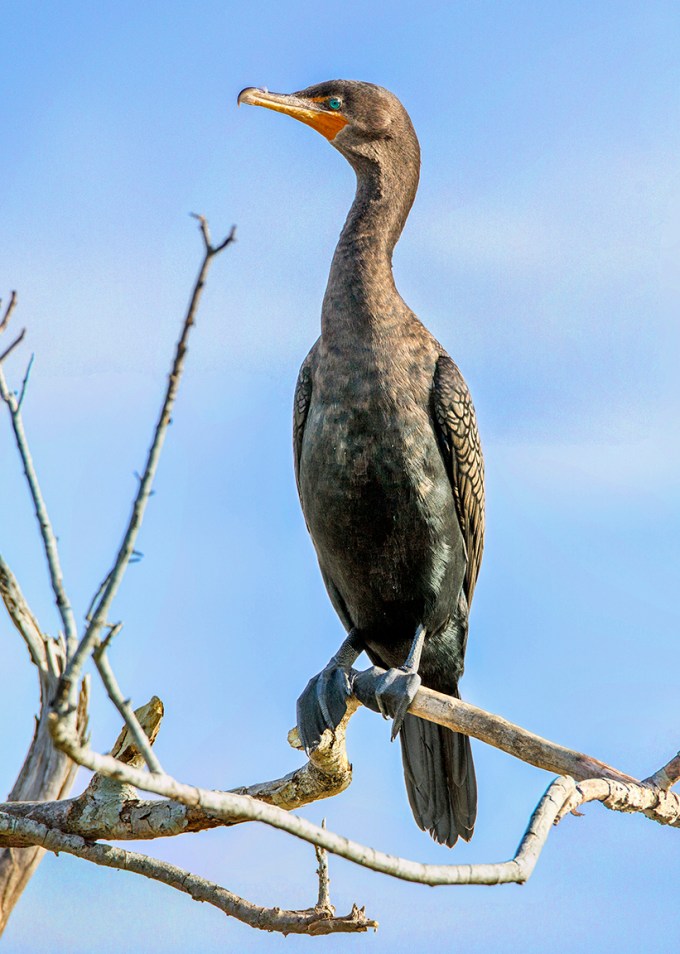
Cormorant @ 375mm
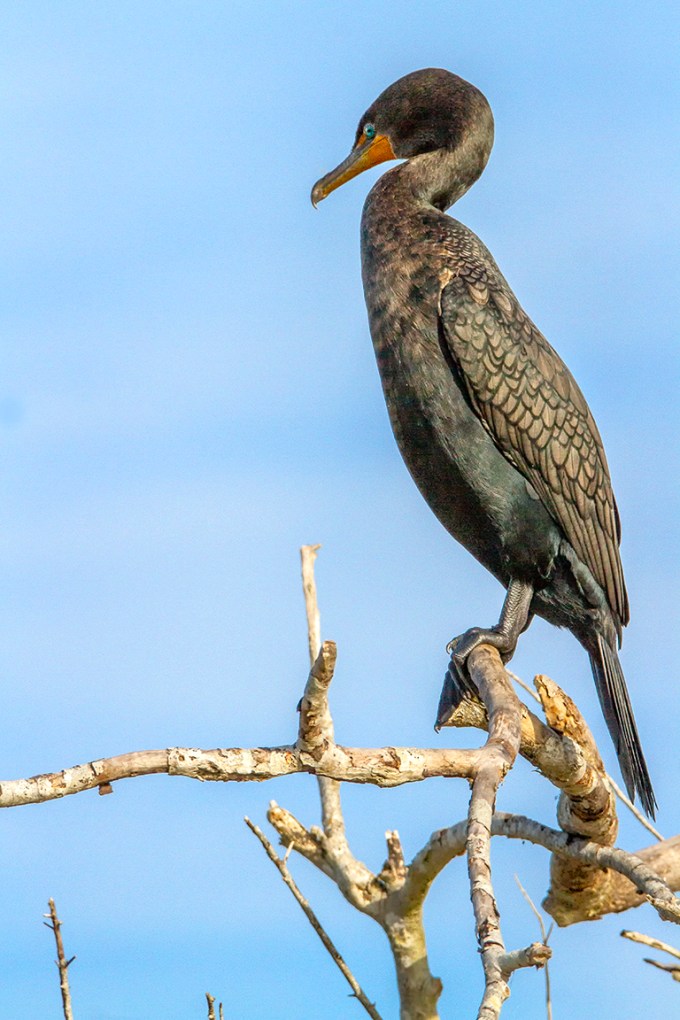
Cormorant @ 375mm

Cormorant @ 309mm
What Big Eyes You Have
Posted on February 8, 2020

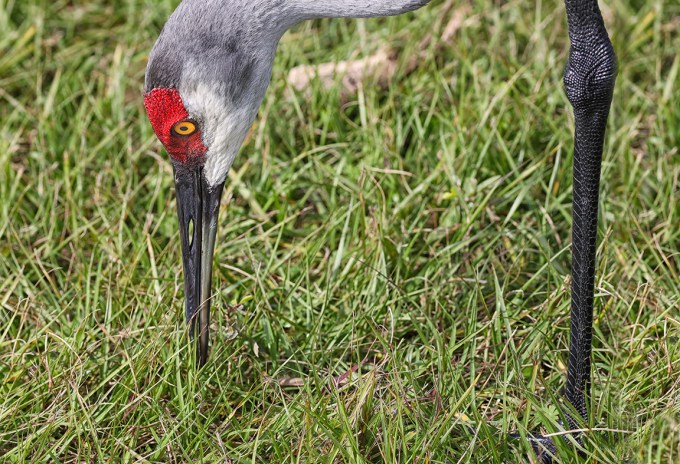
It seemed the first pair of Sandhill Cranes were quite curious about us. They walked right up to us and sort of stared at us as if they were checking us out. We were a little nervous at first as they were that close and they were very large birds. But after that they sort of kept up with us as we were walking in that area and we welcomed their company as we walked. Then they went off on their own in a different direction.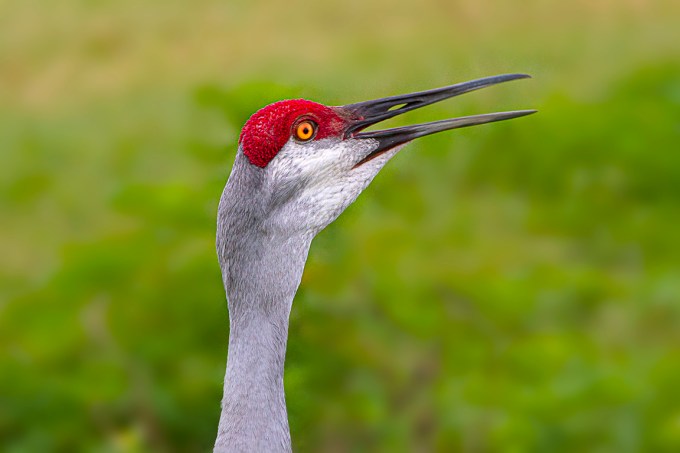

Sandhill Cranes Flying In
Posted on February 1, 2020

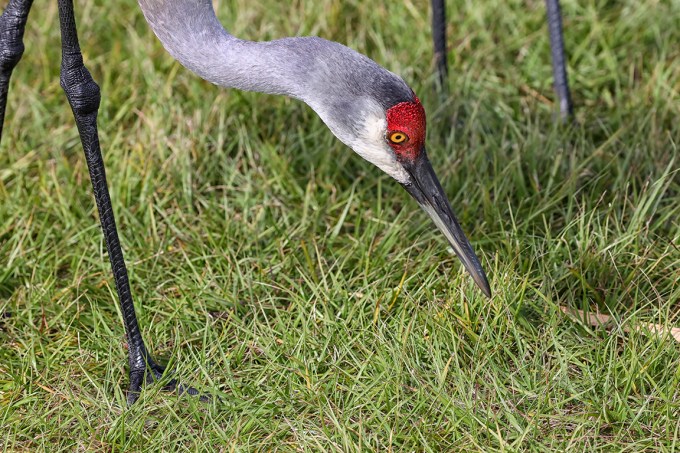
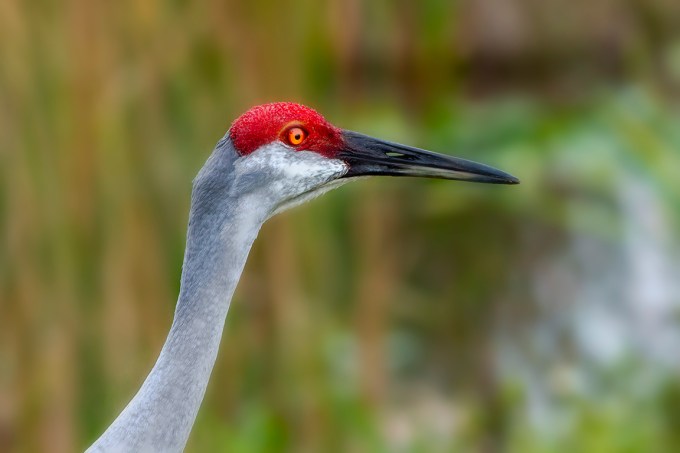
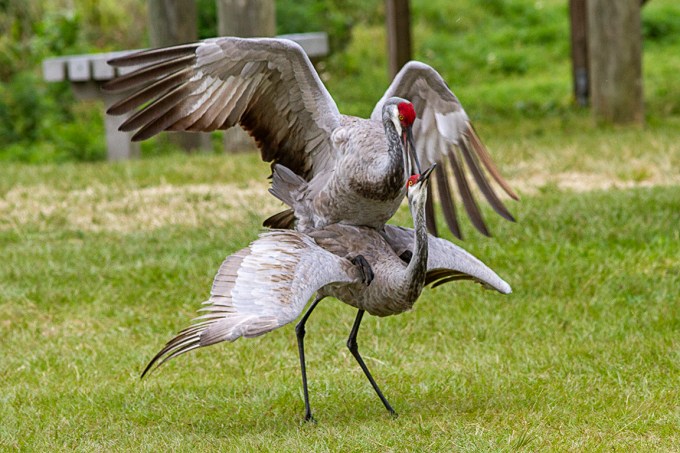
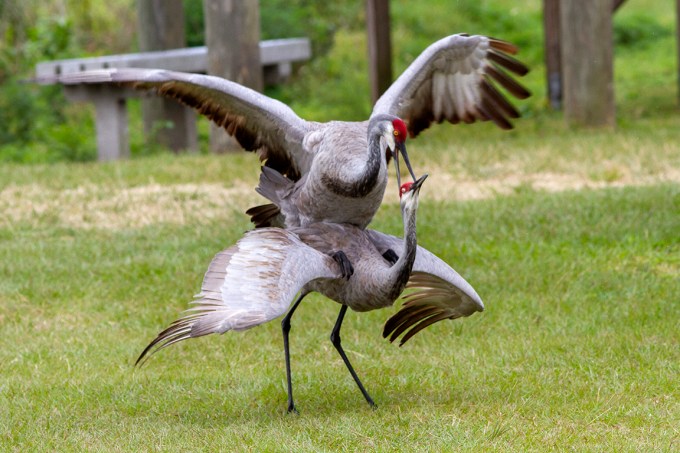
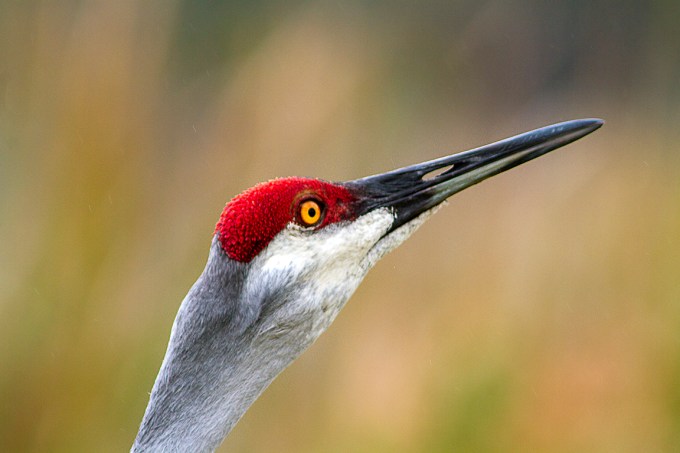
When we first got to Lake Woodruff NWR we started down one of the paths to one of our favorite spots to photograph. These 2 Sandhill Cranes landed right in front of us. Then to our surprise they started to mate right in front of us. They were so close I had to backup to get them in the frame. I was using a 300mm lens so I had to back up multiple times to get them in the frame. Then I just decided to shoot multi-image panoramas to get the whole crane in because they stayed so close to us as we walked the path. They stayed with us for about 20 minutes. It was strange that they walked right up to us within a couple of feet and sort of stared at us. But I was able to get full frame head portraits! Luckily my 300mm lens had very close focusing capability!


Anhinga Fishing – Diving In
Posted on January 4, 2020

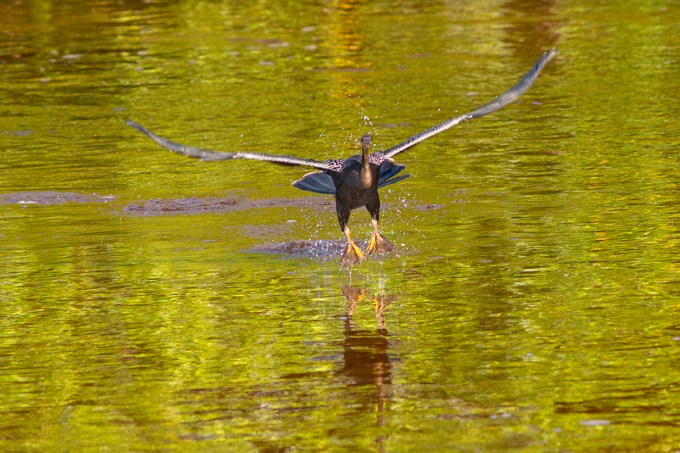
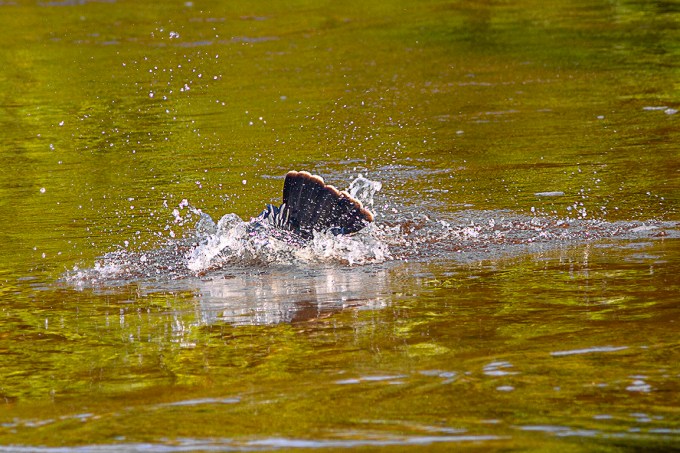
While I was photographing Pelicans at J.N. Ding Darling National Wildlife Refuge, I noticed this Anhinga flying in and diving into the water going after a fish. They must have great eyesight! The featured image is out of sequence in the series showing when it first started to hit the water. The series below was when the Anhinga was flying in to get its meal.


End Of Season Butterflies
Posted on September 21, 2019
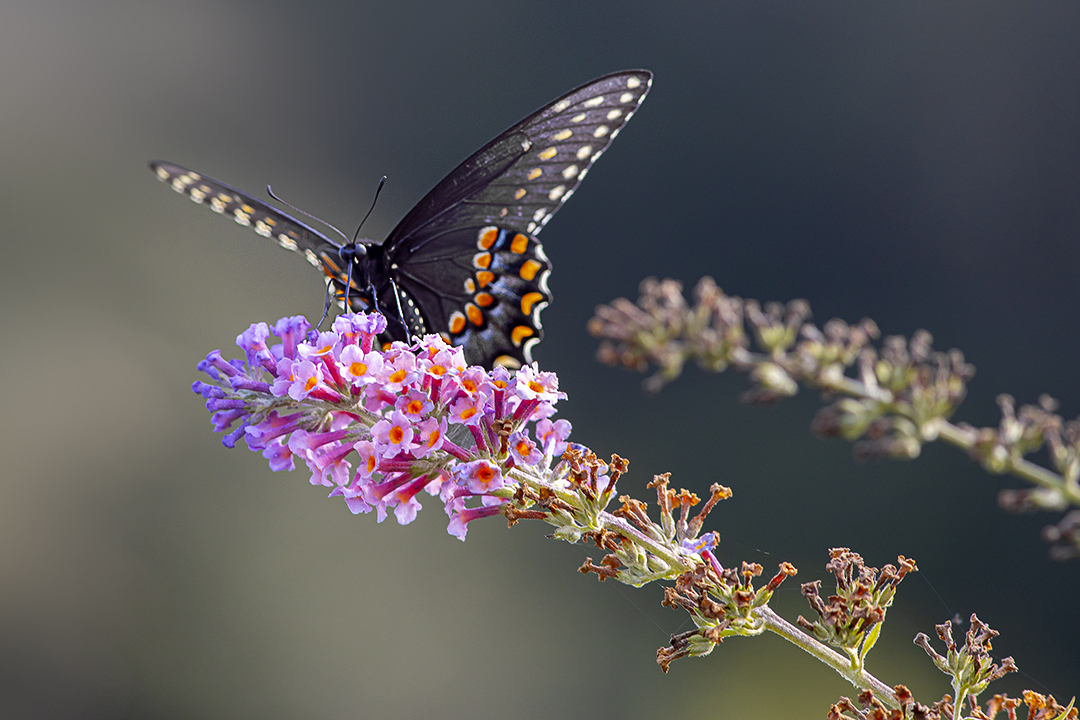
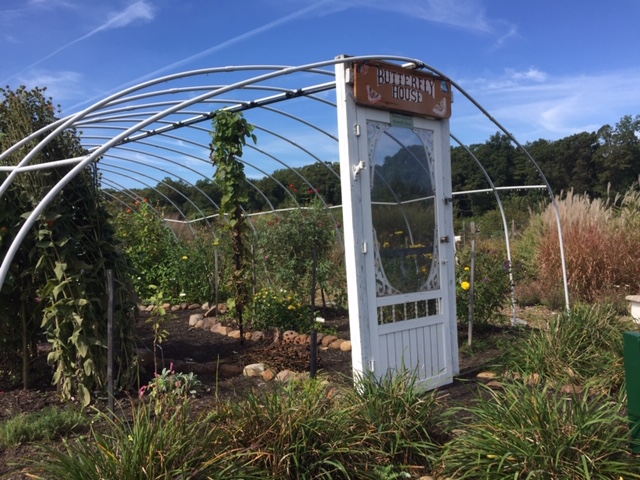
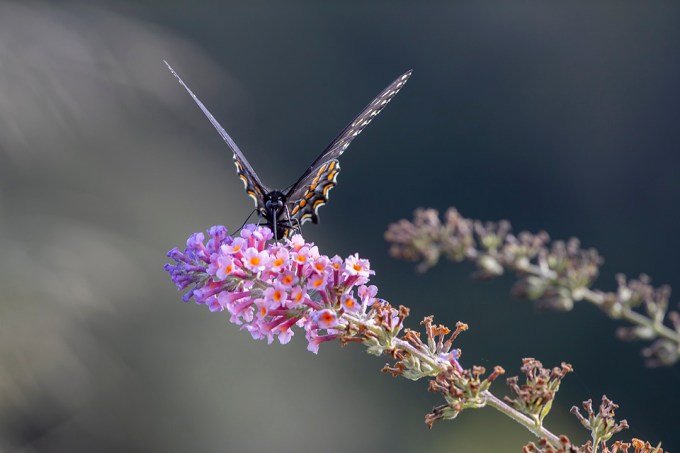
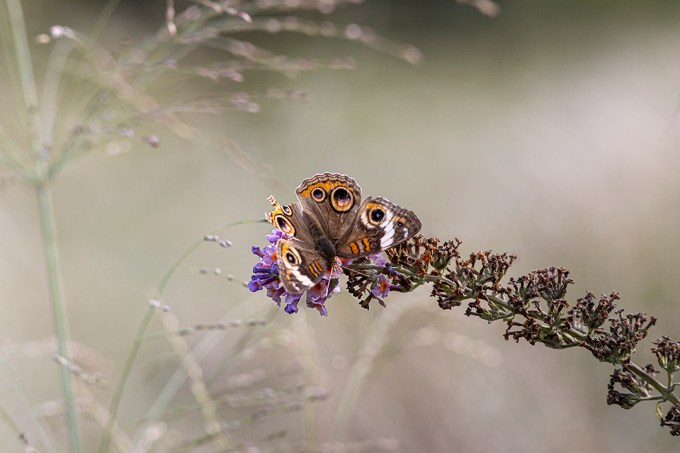
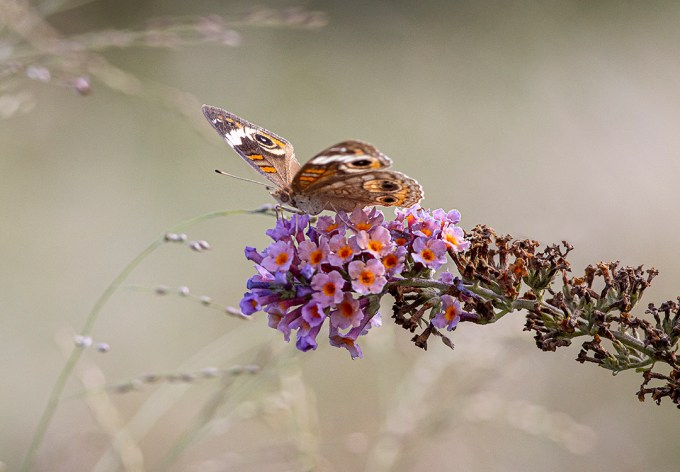
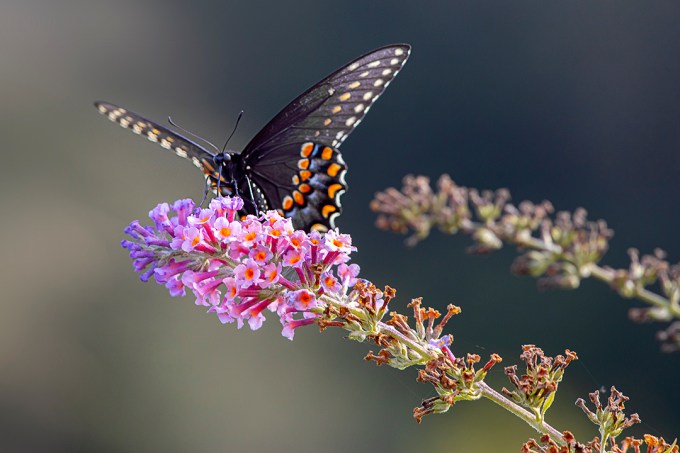
We went for a walk at Davidson’s Mill Pond Park to see what photo subjects we could find. Weeks ago was the end of season for the Butterfly House, but they still had the covering over the framework and you could still see a few butterflies flying around in there. But on this visit we were surprised they took down the covering so the butterflies were now loose in the fields and gardens around the framework. Just a few days ago the butterflies we did photograph in the fields looked quite the worse for wear. These butterflies looked in extremely good condition so we had a great time photographing them on the branches of bushes around their old home. I was using a 300mm f/4 lens but was shooting at f/4 or f/5.6 to keep the background smoother & softer to minimize a distracting background.


Red-Spotted Purple Butterfly
Posted on August 31, 2019
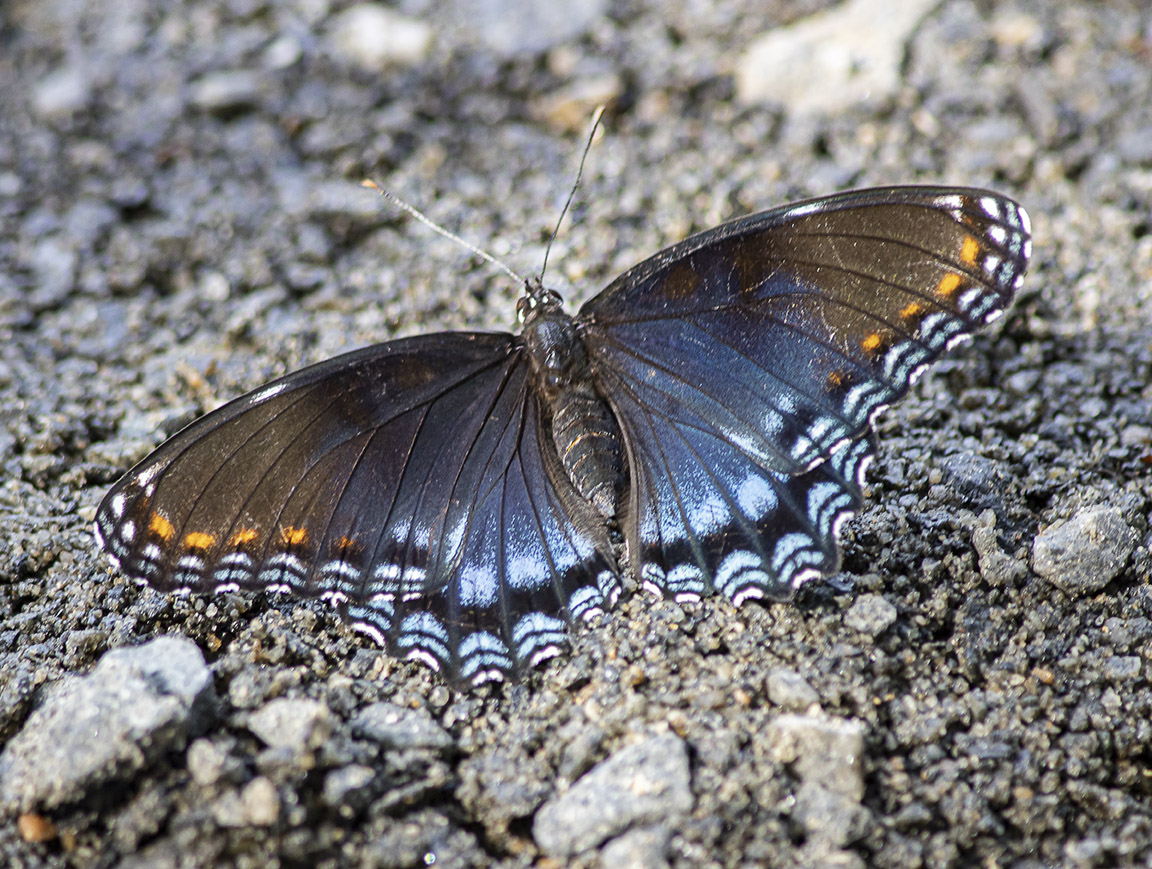
While we were looking for Dragonflies at Plainsboro Preserve I noticed this Red-Spotted Purple butterfly warming on the ground. I was using a close focusing 300mm f/4 lens with a 2X teleconverter so I could get closer images of distant insect subjects (usually Dragonflies) so I manually focused on 3 different areas to blend them into 1 sharp image in Photoshop. Using f/4 for my f/stop (with a 2X teleconverter it is actually f/8 then with the 2X teleconverter giving a 600mm focal length) and focused on middle body, then antennas and lastly rear wing edge. I used to mainly use a 1.4X teleconverter for this type of shooting but the Canon R files are extremely clean even at much higher ISO’s so the 2X gives me more working distance. Then used Photoshop to blend the sharpest areas automatically into 1 merged image. Photoshop usually does a good job on this, but here in there I might also do some manual editing to what Photoshop does. To bad it is getting late in the season for butterflies & insects. They are beginning to show signs of wear. Especially the Dragonflies!

Another on a leaf still at f/4 (actual f/8 with 2X teleconverter but it flew off before I could do my near & far focus points. That is why I sometimes shoot center, then the near & far points.
 photoartflight