 photoartflight
White Ibis Formation
Posted on January 14, 2018
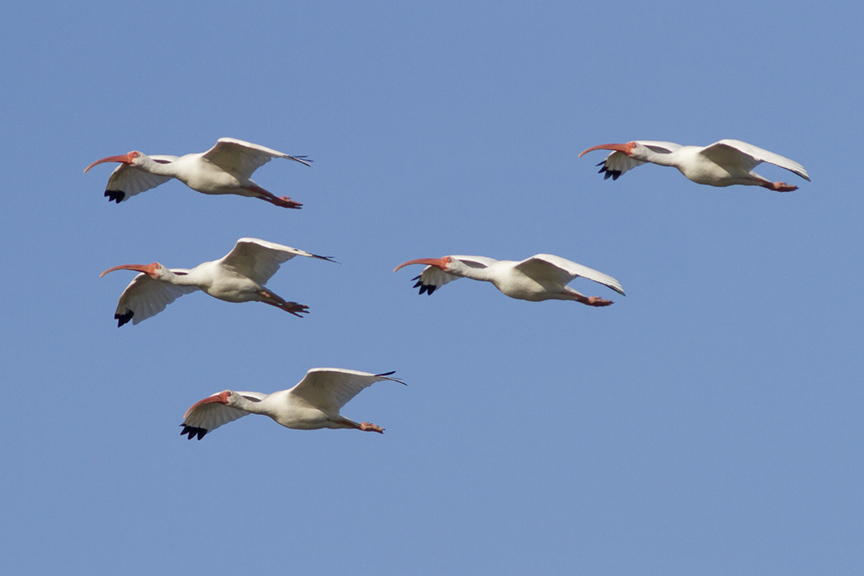
As I was photographing the Pelicans I also had quite a few overhead flybys. Here is a group of White Ibis flying by. I was hoping for them to come around and land nearby, but they kept going on their way.
Snowy Egret Hanging Out By Fisherman
Posted on January 13, 2018
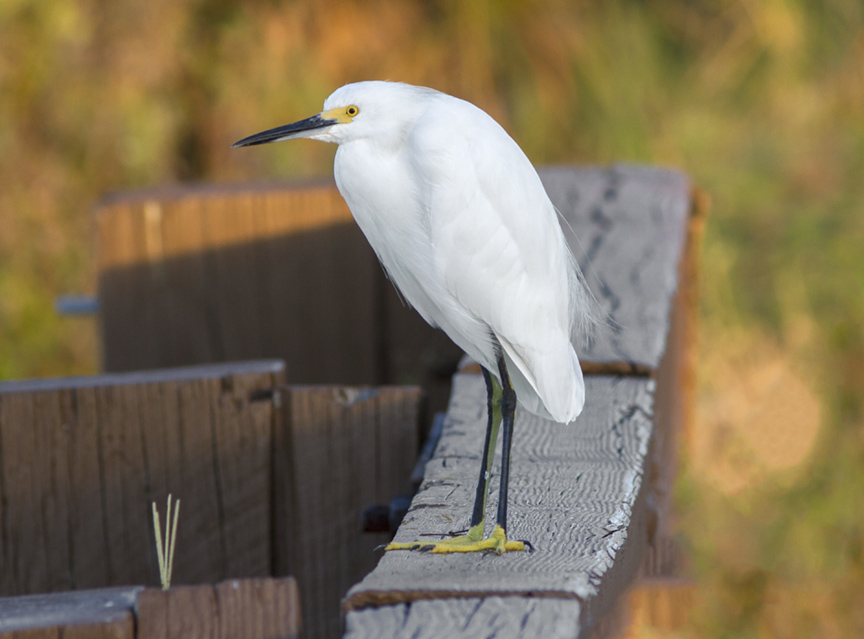
This Egret was waiting by a group of fisherman. It did not seem to be worried about people getting close to it. In fact it even moved closer to some and seemed very comfortable around all the people in the area. I do not know if the fisherman were regulars and gave it scraps of food or small fish.
Snowy Egret Flyby
Posted on January 12, 2018
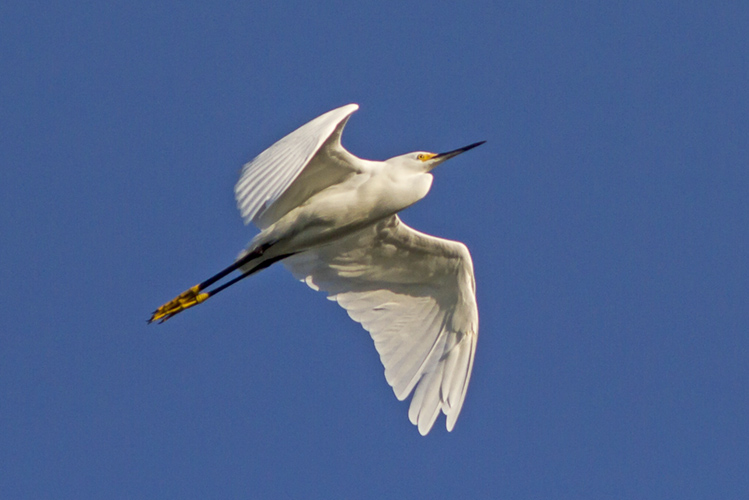
When I photograph at the J.N. Ding Darling National Wildlife Refuge in Sanibel Florida, I like working an area. If you wait and look around you can find photo subjects that basically come to you. If you constantly move around your subjects see you coming and move away. Shorebirds working a Shoreline coming up to you, Cormorants or Anhingas surfacing near you and my favorite, birds flying over or by you. I like photographing birds in flight instead of just sitting there.
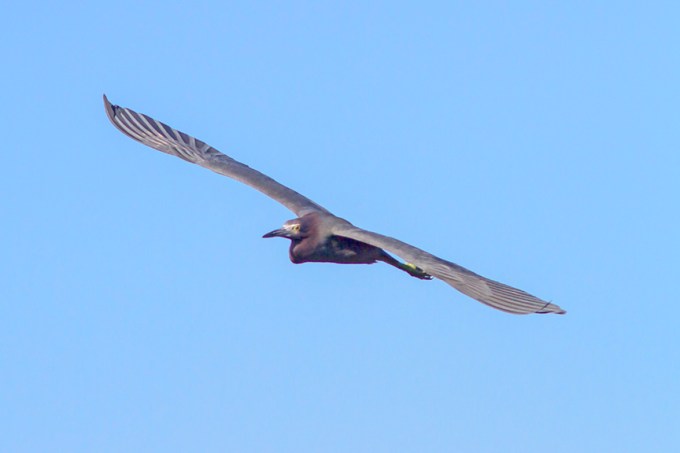
Little Blue Heron Flyby, 300mm f/4, 1.4x teleconverter


Immature Bald Eagle, very early in the morning near sunrise. Very little light, and far out in the distance. Severe Crop of image.
Cormorant Drying Wings
Posted on January 11, 2018
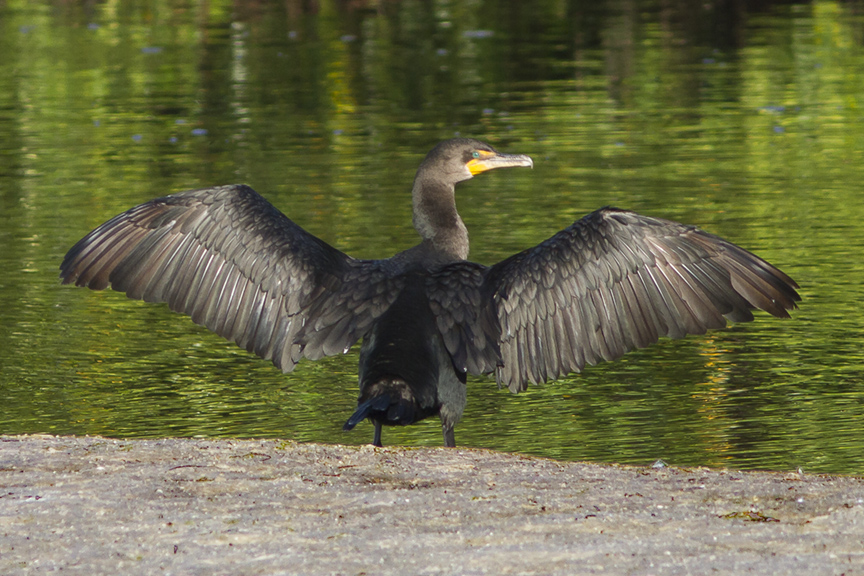
As I was photographing the Pelicans, this Cormorant flew in and started fishing in the water. After a few minutes it surfaced nearby. It came on shore to spread its wings to dry out. It is amazing how long some of them stay in this pose. This one stayed for about 10 minutes. Same pose, just looking left & right, so 1 shot of this tells it all. It also seems the Pelicans do not get too close to the Cormorants, where small shorebirds mingle in with them. Shot with 300mm with a 1.4x teleconverter.
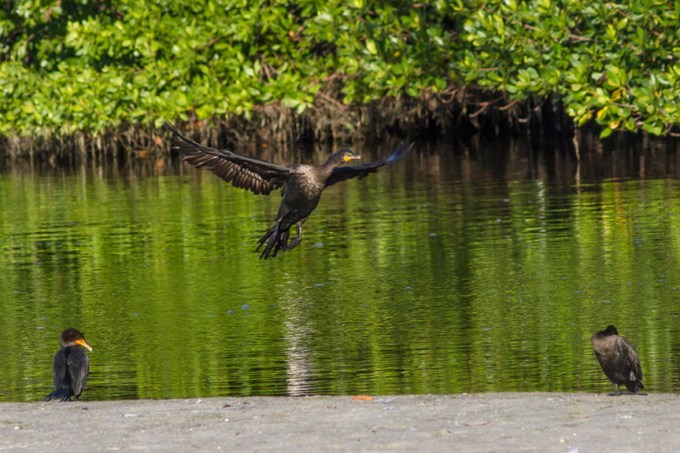
The Cormorant flying in between two already there.
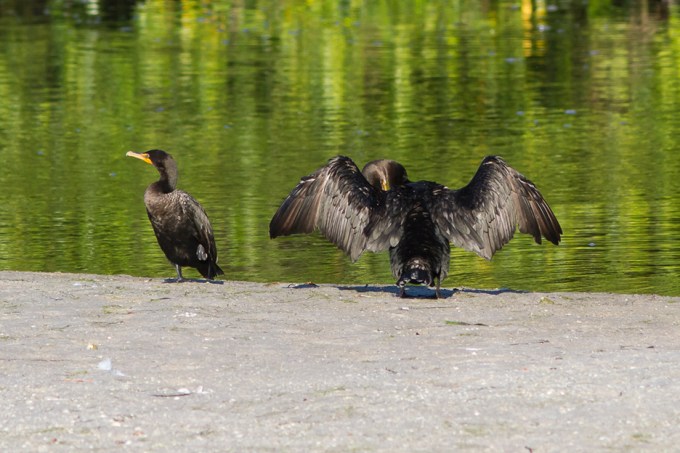
Cormorant after coming out of the water, getting ready to dry it’s wings.
American White Pelican Panorama
Posted on January 10, 2018
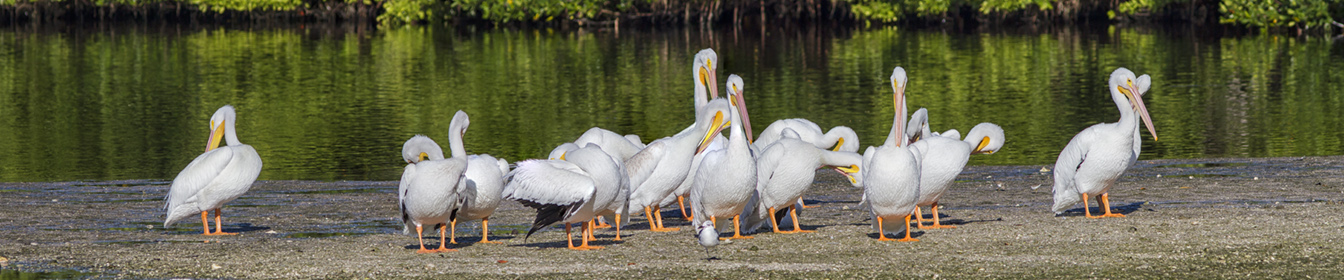
Another Group of American White Pelicans photographed along the Wildlife Drive at the J.N. Ding Darling NWR in Sanibel Florida. This was a 5 image panorama, handheld, shot with a 300mm f/4 lens, with a 1.4X teleconverter. When doing a pano like this, do not use auto exposure, especially with white subjects, because the exposures can vary, giving you different exposures which are harder to blend together. You then have to try to balance all the exposures before assembling the pano. Most people use a tripod for doing Panos, but I tend to do more handheld. The Pelicans are still moving, even slightly, so I still have to go in to the layered Photoshop file and erase some of the moving overlaps before the final “blending. The auto features usually works fairly well for the final “flattening” of the layers in your file. The hardest part is choosing which “mode” of auto align to use in Photoshop for the initial lining up of the layers. You might have to try a few of the choices and see which one works best for your subjects. It has a lot to do on the angle you are to your subject and also the focal length of the lens you are using. In Photoshop, under EDIT, go to auto-align. Then you have a few choices. It is a trial and error to see which method works best for your image. Auto align usually works fairly well, but sometimes “Cylindrical” works well for what I shoot also. It really depends on the focal length of the lens you are using and the angle you are to your subjects. Then go to Auto Blend to “blend” them together. The other choice here is “Stack” which is used for combing a set of images you shot for more depth of field, for a sharper image across a wider area, in simple terms. Under Auto Blend also check on the Box – content aware fill transparent areas of your merged files. This fills in empty areas with what Photoshop thinks is missing, and works fairly well. This happens more with wider angle lenses because of the changing angle of horizons, skies and foregrounds have different perspectives as you are shooting from left to right. This comes in handy especially if you are hand holding your camera or shooting with a wide angle lens. Also Once you flatten your image, I sometimes crop from the top and bottom to make a better “composed” image. Sometimes shooting panos, you are shooting “Taller or Wider” than you want your final image. So cropping in helps the composition. The above is just a simple overview of shooting panoramas, you can find lots of info online.
American White Pelicans @ Ding Darling NWR
Posted on January 9, 2018
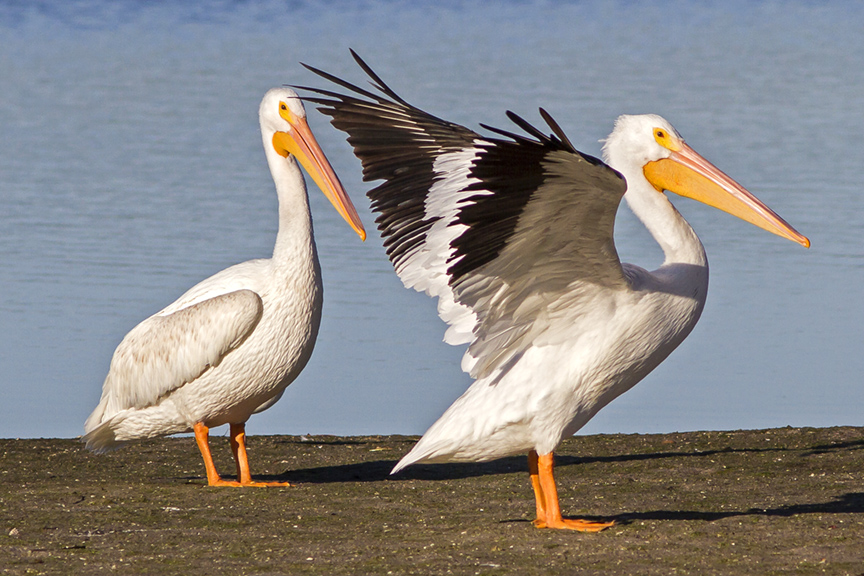
It is fun to watch and photograph American White Pelicans. Especially in groups. They seem almost comical the way they interact with each other. It is interesting to see how sometimes they are actually graceful and at other times just klutzy. But I guess I am the same way. Also they are a large subject, easier to photograph. You just have to watch so you do not overexpose the whites and keep the feather detail.
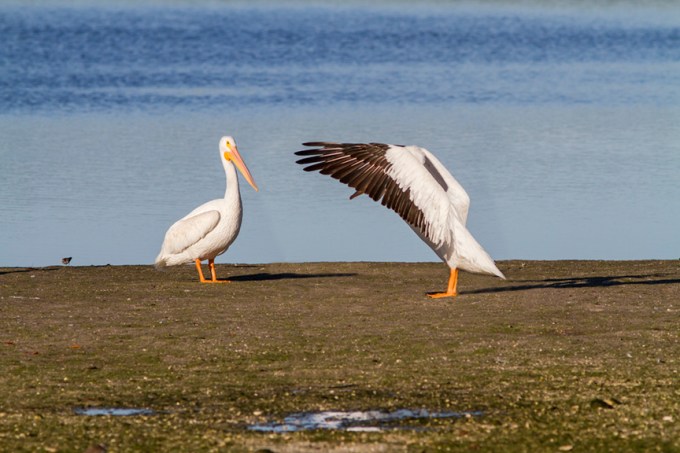
Peek a boo, I can still see you

One point landing
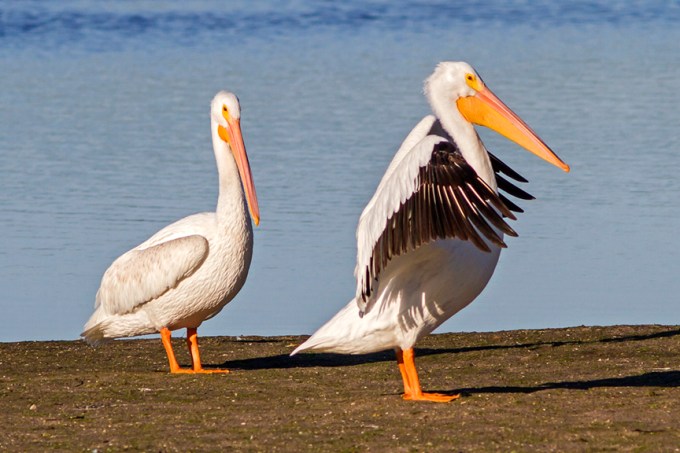
Stretching
More Little Blue Heron Images
Posted on January 9, 2018

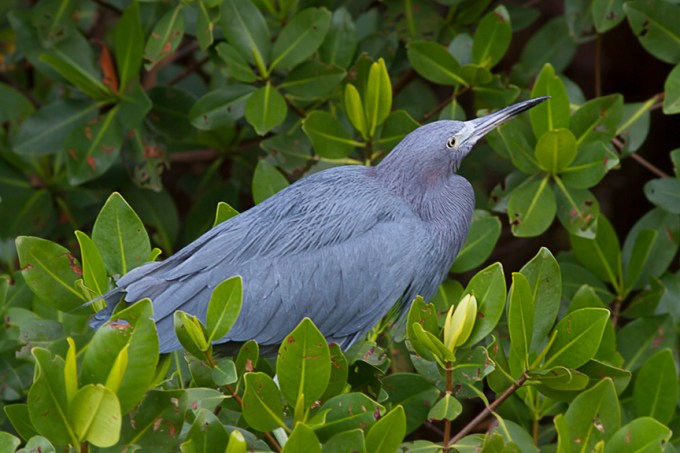
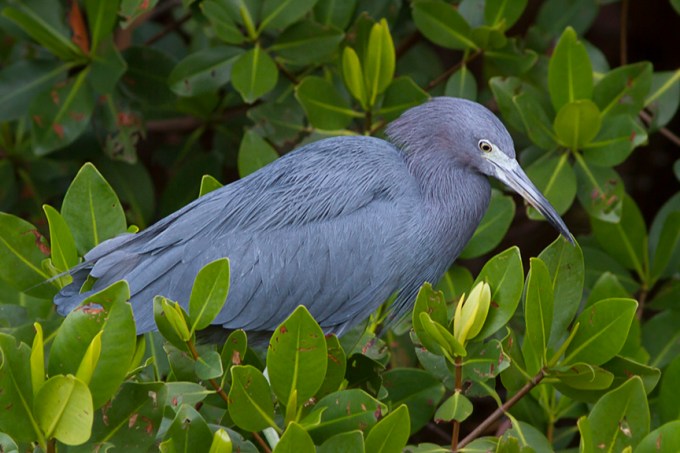
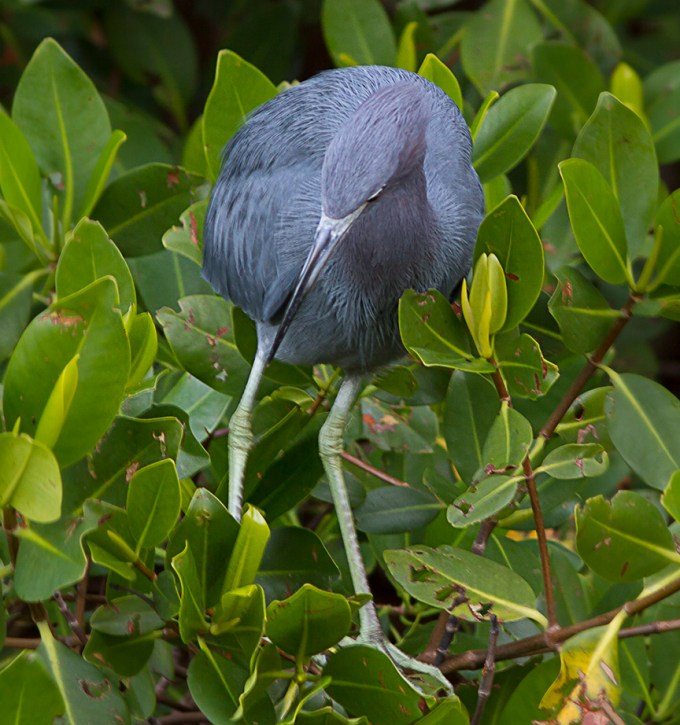
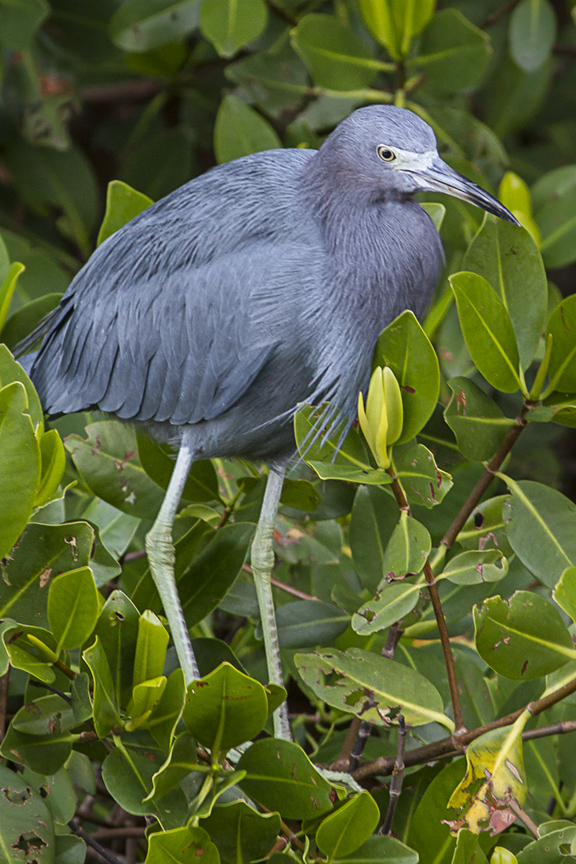
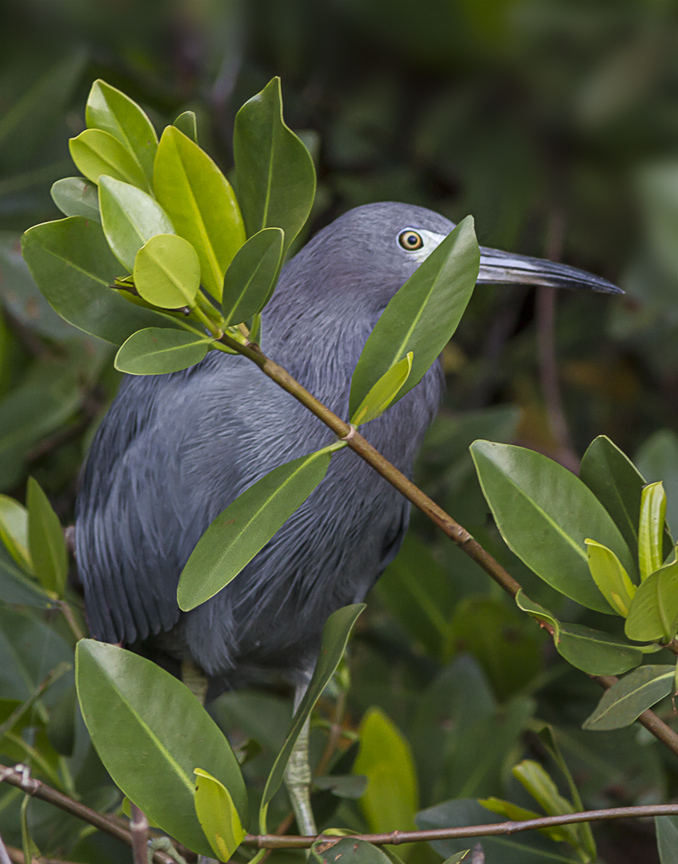
Here are some more photos of the Little Blue Heron from a previous post. It was early in the morning with not many subjects to photograph. I came upon this Little Blue along the Wildlife Drive. It was working it’s way through the bushes, above the water. The trees were blocking the sun, so it was fairly dark, so I shot a series of bursts hoping to get a sharper image in one of them. Being in the shade, I was shooting at 1/50 sec at ISO 800, handheld. I do not like raising the ISO on this camera above that, so I got what I could.



Great Egret Wing Positions
Posted on January 6, 2018
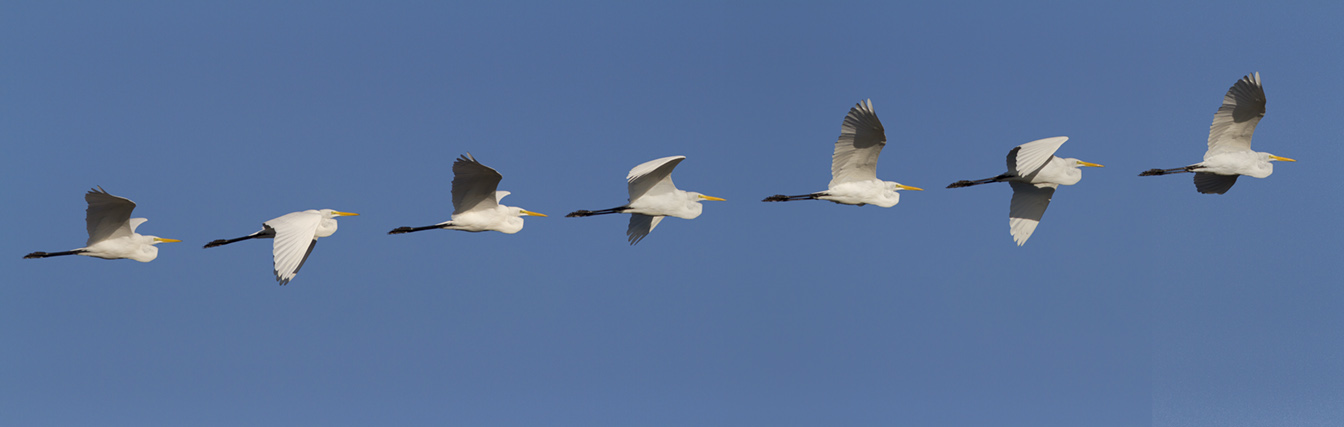
While I was photographing at Ding Darling NWR in Sanibel, FL, this Great Egret flew by where I was photographing White Pelicans. It flew in front of me from left to right. As I was adjusting my files I thought it would make an interesting image showing the different wing positions as it flew by. I did not have the camera set at a high frame rate, but I thought it was still interesting.
In Camera Raw I selected the whole series, made my adjustments and opened them in Photoshop, each on its own layer in the original file. I selected the blue background and inversed the selection to select the Egret on each one. I made a new file that would fit them all in horizontally. I selected a blue sky color from the first of the series and a blue sky color from the last of the series and graduated the color from left to right for the background sky. Then added a slight bit of noise into the sky.
Now that I had my sky background, I went back to each Egret image and selected the layer of each Egret and put that Egret image in a new layer, in sequence to show the wing position sequences. If I was at a higher frame rate I would have gotten more wing positions, but I still had fun putting it together.
Sharp-shinned Hawk (?) Watching Me
Posted on January 5, 2018

As I was photographing a Little Blue Heron early in the morning at Ding Darling NWR, I heard a noise behind me. I turned around and saw this hawk that landed on a branch close by and was watching me. I was using a 300mm lens with a 1.4X teleconverter, so I had to back up to be able to focus on the hawk because it was too close. I was only able to get a few shots before it flew off. But it was fun to see it close by. I believe it is a Sharp-shinned Hawk, but not positive. I always had trouble ID’ing hawks.
My subject I was working on early in the morning, in the shade. A Little Blue Heron in bushes, 1/50 sec handheld, f/8, ISO 800, 300mm w/ 1.4X teleconverter, handheld.
Pelican Flying Through Sunset – Captiva Island
Posted on December 30, 2017

I have not posted any blogs for a while. We were busy with downsizing studio space at work, moving the computer room, moving printers, network cables, etc. Mostly getting everything up and runnings again. Also I did not do much personal photography for a while. In November we had the opportunity to go to Sanibel & Captiva Islands in Florida. It was fun to shoot for fun again. One of my favorite places to photograph birds and sunsets. The featured image was shot with a 300mm f/4 lens with a 1.4X Teleconverter, @ f/8 1/3200 sec.

Pelicans Flying Through Sunset – 105mm with 24-105mm @ f/11

Pelicans Flying Right After The Sun Set – 105mm with 24-105mm @ f/11
 photoartflight