 photoartflight
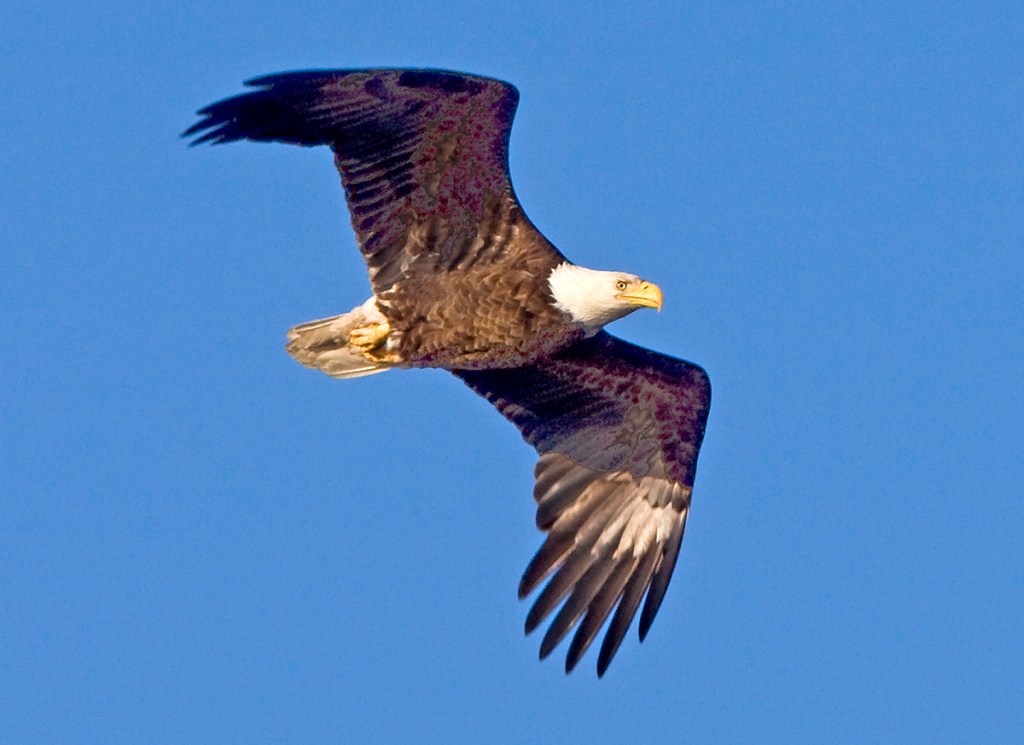
Bald Eagle Fly By
Posted on March 8, 2024

I am working on cleaning up unneeded images from my BackUp Drives and finding interesting images to Post here. I have not posted much lately but will be posting more images on a regular basis. Here are a couple of Bald Eagle images taken at the Blackwater National Wildlife Refuge.
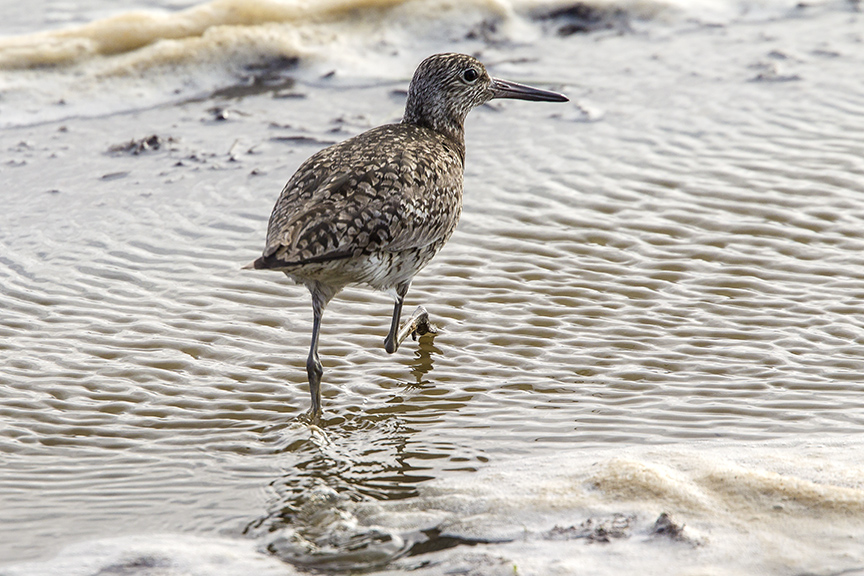
Shorebirds Walking Along Shore
Posted on June 9, 2017

When we were at the Edwin B. Forsythe National Wildlife Refuge, we were surprised that a few sections of the Wildlife Drive had open views of the shoreline. Usually along the shoreline is blocked by grasses and other vegetation making difficult to photograph shorebirds on the shore. They recently rebuilt the Wildlife Drive from the hurricane damage a few years ago. You are not permitted to go off the Wildlife Drive, except for a few trails, so it rare to be able to photograph a close shorebird at a little lower angle. I believe these are Dunlins, but I am not an expert on shorebirds. Many times they are very similar to another type. I usually photograph the larger subjects.


Pintail Ducks
Posted on February 9, 2017
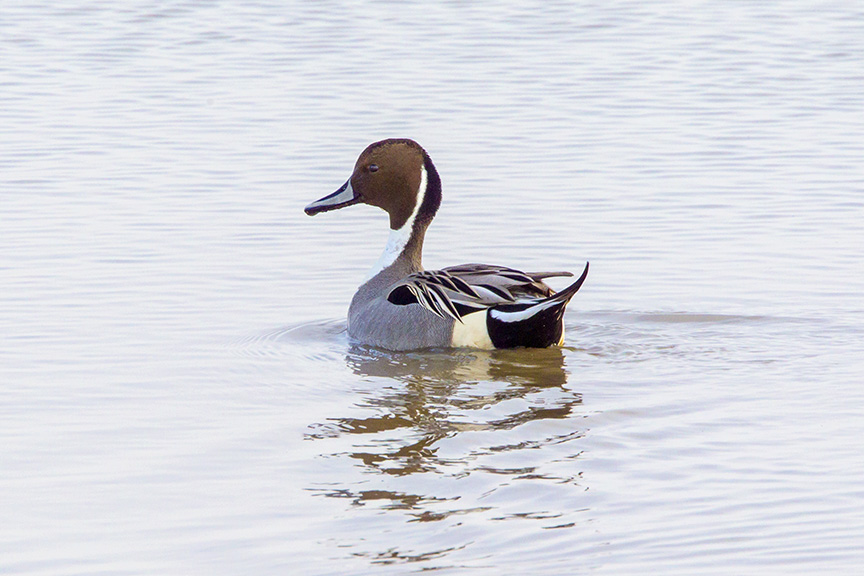
We found this pair of Pintail Ducks while we were at the Brigantine Division of the Edwin B. Forsythe National Wildlife Refuge, Brigantine Division in Oceanville New Jersey. It started as a grey overcast day but brightened up a little before we left. They were swimming away from us but I was able to get a few photos. The featured image is cropped a little, the second I waited for the female to finally turn her head a little so it was a better image. I had wanted to do a 2 shot image stack. The first focused on the male, the second on the female, but she was too quick for me. So in this image she is a little “soft” in focus. With Photoshop it it is fairly easy to do a multi-image handheld focus stack on moving subjects, especially with long lenses.
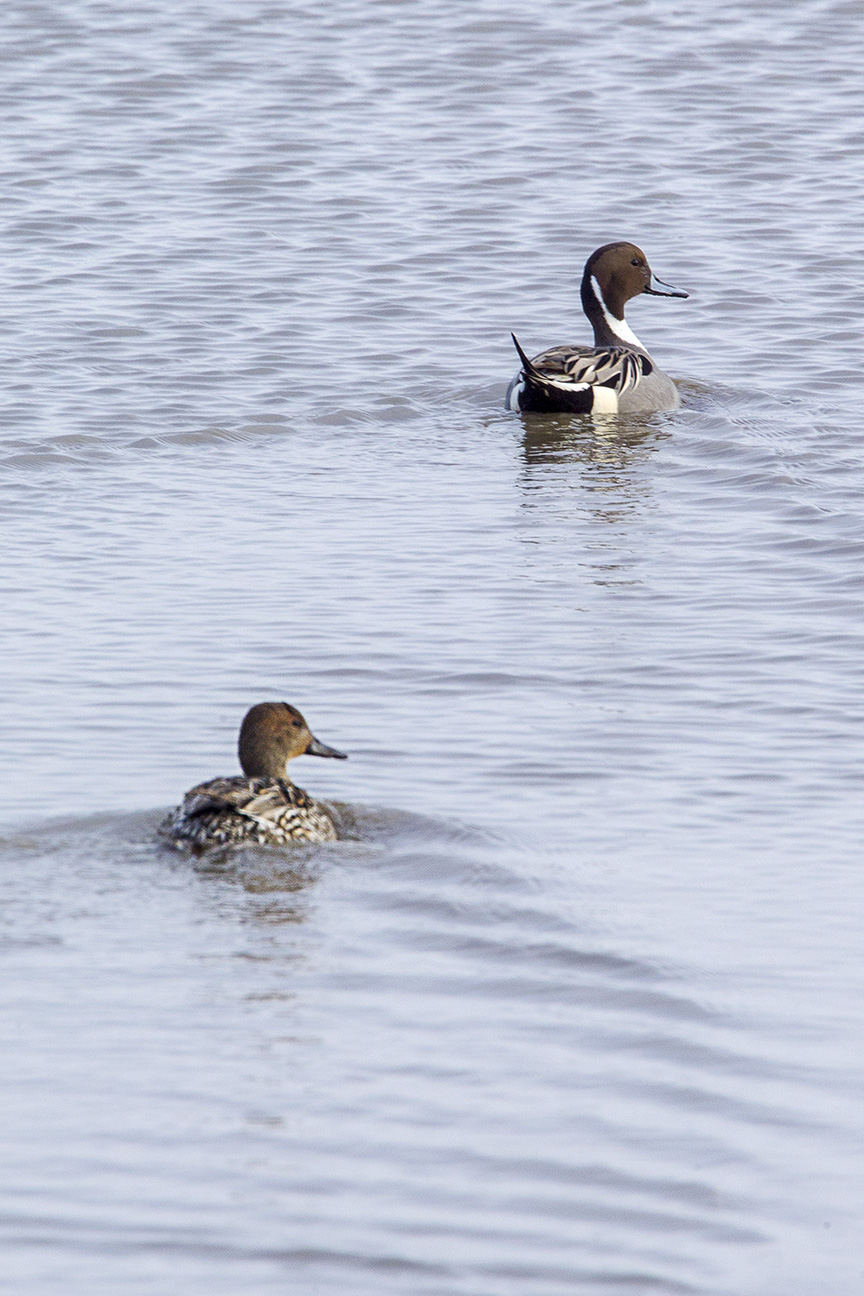
Male & Female Pintail Ducks swimming away
Mute Swan Gliding In For Landing On A Foggy Morning
Posted on January 26, 2017
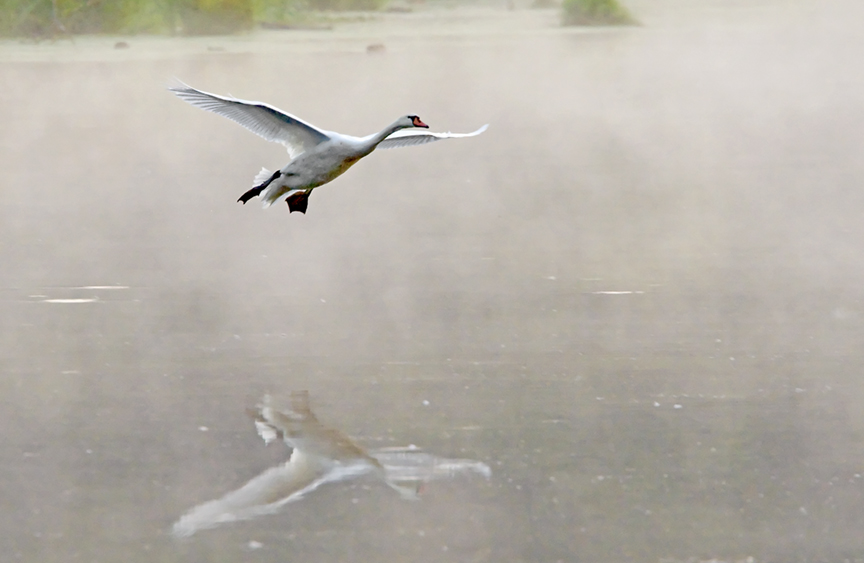
Still going through files I had not gotten to working on. Somehow work keeps getting in the way. This is from a local nature area. It was a foggy morning so I thought I might get some ducks in the fog before the sun burned off the fog. Then a Mute Swan glided in heading towards me. I liked this one because of the reflection of the landing Swan. The light was poor and again I added contrast and other editing techniques to make it less “muddy” looking but still give the look of the foggy morning.
Snowy Owl
Posted on December 20, 2016

Snowy Owl photos from the Brigantine Division of the Edwin B. Forsythe National Wildlife Refuge in Oceanville, NJ, photographed a couple of years ago. I was going through older files, cleaning up folders and sorting out images. We had heard there were two Snowys around the Wildlife Drive. We actually spotted them a few times, but they were quite far out in the fields along the shoreline. This was photographed with a 400mm f/4 DO lens with a 2X teleconverter, and cropped fairly tight. Not the best image, but a Snowy!
Blue Dasher Dragonflies
Posted on July 25, 2016
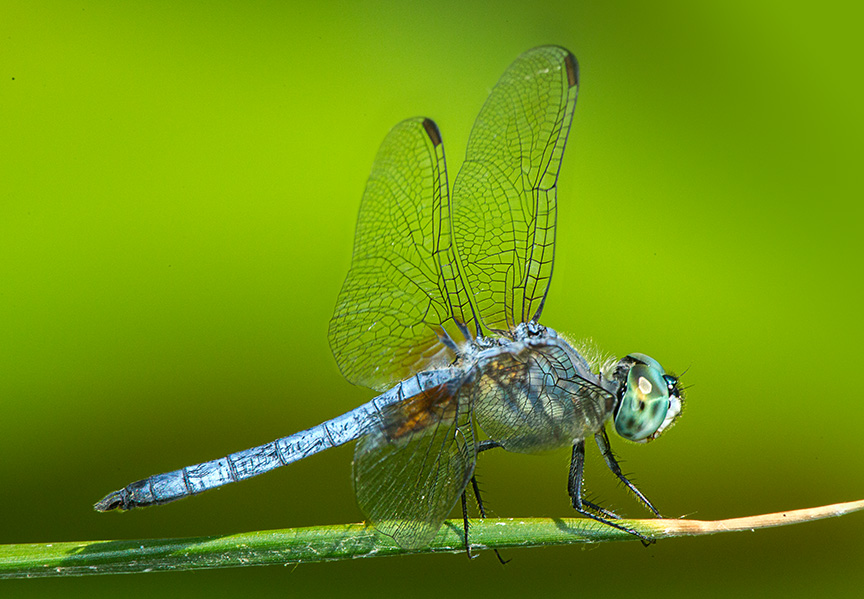
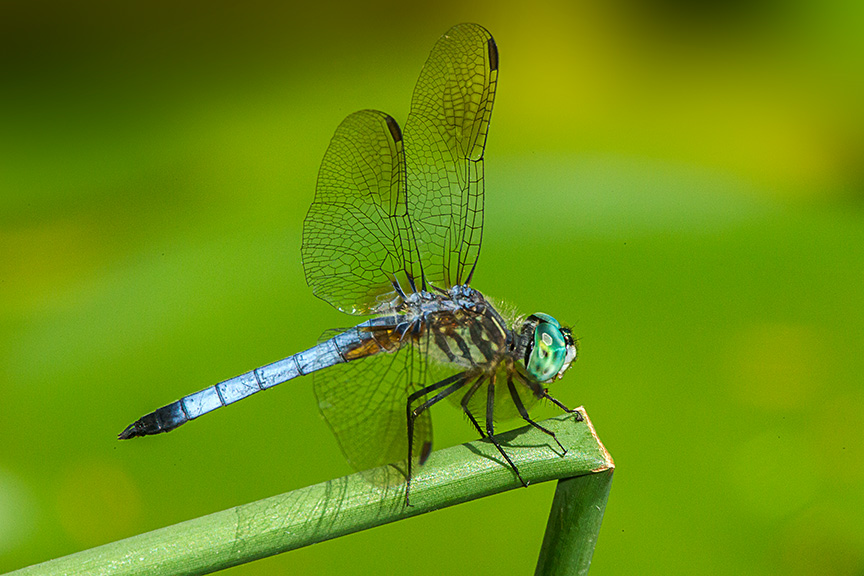 Dragonflies are one of my favorite subjects. I usually use a Canon 400mm f/4 DO lens with an extension tube, a 1.4X Series III teleconverter, and then another extension tube. This combination, with the extension tubes actually magnifies the image on the sensor. These were probably 8 to 10 ft away, but still filled the frame. I also use a flash with a Better Beamer flash extender to light them. The combination of the extension tubes and teleconverter totally confuses the metering, so I manually figure out an f/stop by trial and error. But it works for these kind of shots and I am not right in their “faces”.


Who Are You Looking At!
Posted on June 5, 2014

This American Oystercatcher was searching for food in the sand at Nickerson Beach in Long Island. It started walking straight towards me as I was tracking its movements through the lens. It stopped and was looking straight at me as though it was saying ” Who Are You Looking At”! Let me know what title you would give the main photo!

Hatched Oystercatcher Egg on the Sand. Canon 1D MkIV, 400mm f/4 DO IS, 25mm Canon Extension Tube- (for closer focusing, f/8, 1/500 sec, -0.33 exposure compensation, ISO 400

American Oystercatcher Working on a meal. Canon 1D MkIV, Canon 400mm f/4 DO lens, Canon Series III 1.4X Teleconverter, f/8, 1/1250 sec, +0.67 exposure compensation, ISO 400
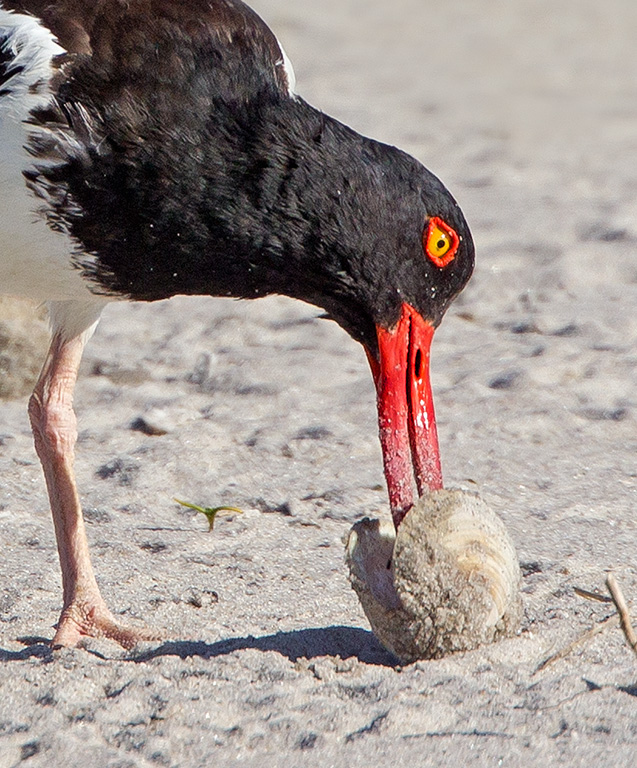
American Oystercatcher Closeup Canon 1D MkIV, Canon 400mm f/4 DO lens, Canon Series III 1.4X Teleconverter, f/8, 1/1250 sec, +0.67 exposure compensation, ISO 400
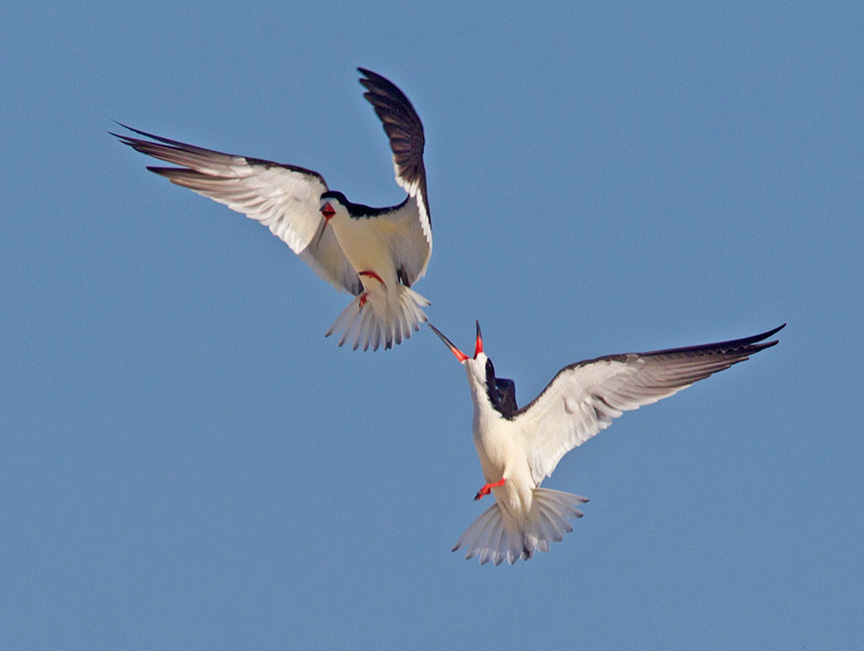
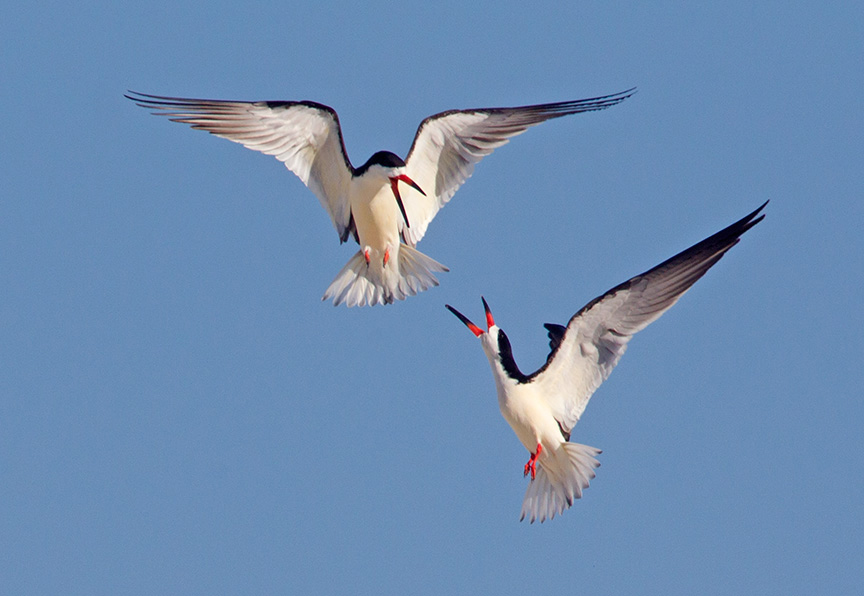
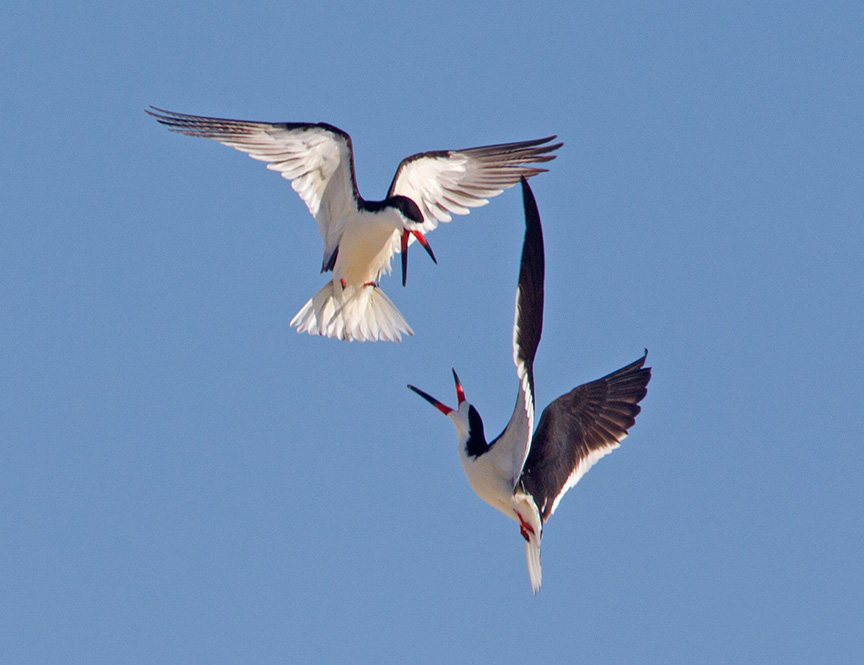
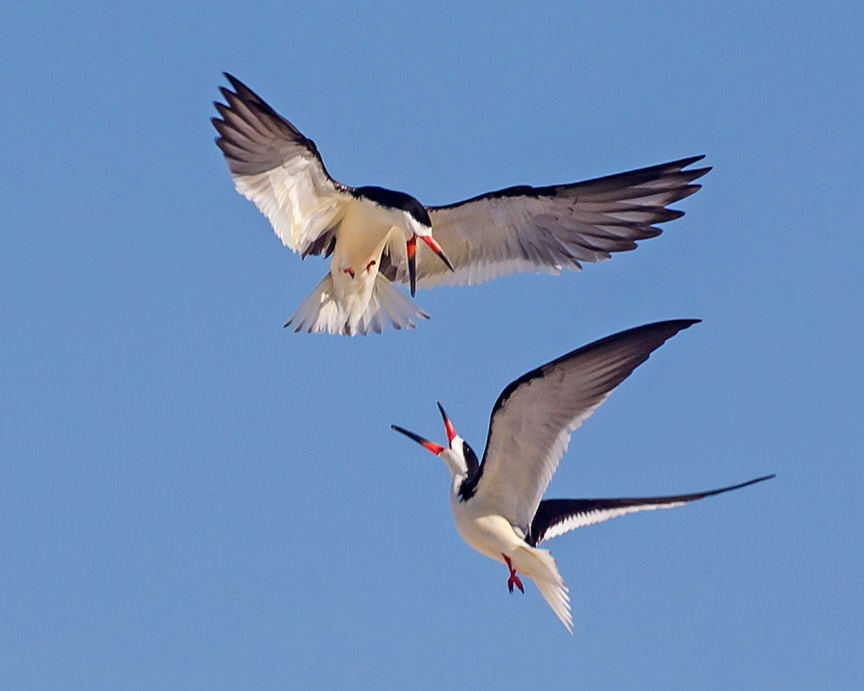
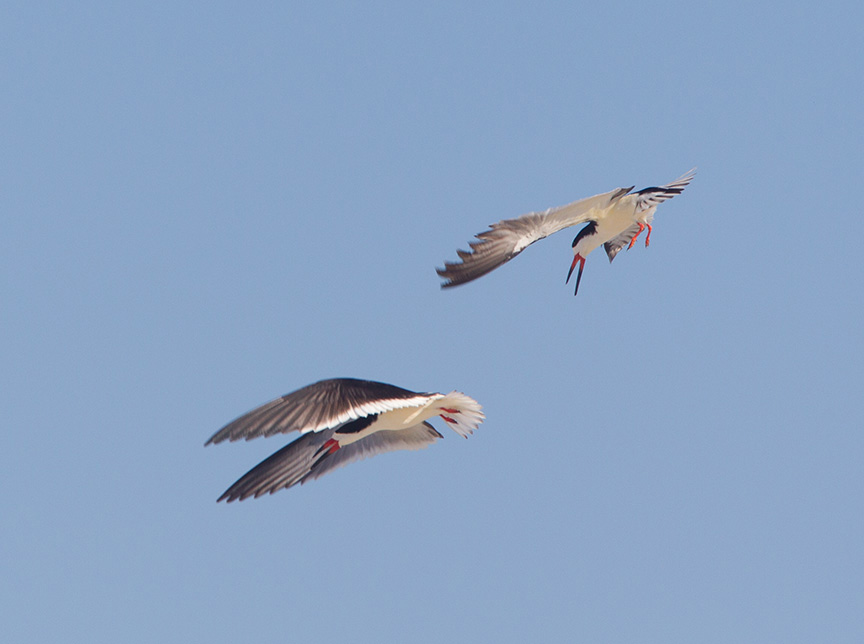
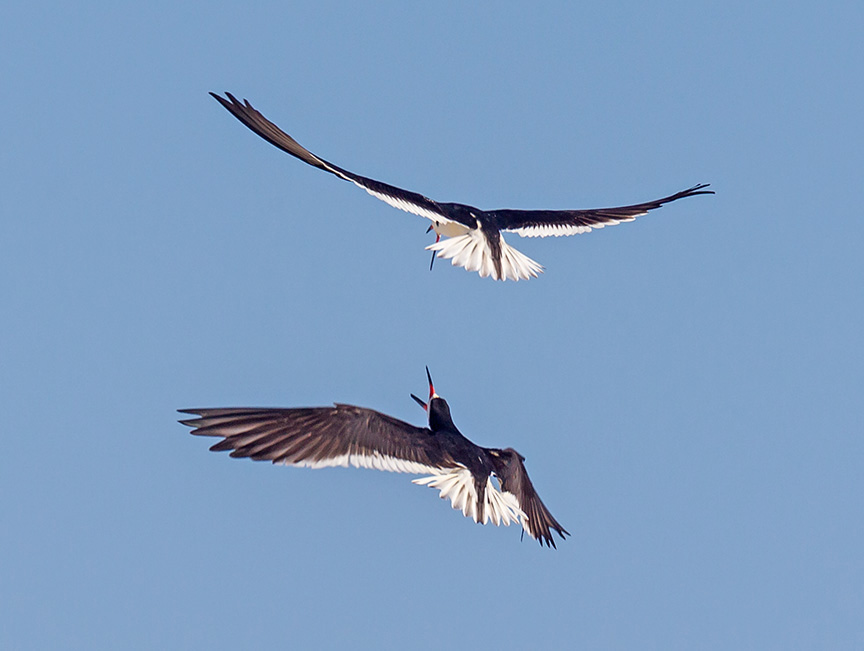
More Fighting Black Skimmers
Posted on June 3, 2014

I finished working on the rest of the files from Nickerson Beach of the Fighting Black Skimmers in Flight. This whole sequence lasted only about 4 seconds, if that. Here are a select few from 35 shots taken.
Canon EOS 1D MkIV, Canon 400mm DO Lens f/4 IS, w/ Canon 1.4X Series III Teleconverter, f/8 @ 1/1600 sec ISO 400, +0.33 exposure compensation, handheld. (Effective focal length with 1.3 crop camera body, 400mm lens & 1.4X Teleconverter = 728mm)




Immature Yellow-crowned Night-heron Walk By
Posted on March 23, 2014

This Immature Yellow-crowned Night-Heron just walked by right in front of me. Usually they are quite skiddish and do not stay out in the open in front of you, so I was surprised it just was walking along the shoreline. I also find it interesting that immature Yellow-crowns have a black beak and immature Black-crowned Night-Herons have a yellowish beak. Here in New Jersey they are rare, so it is fun to find so many in Florida.

Yellow-crowned Night-heron Taking a Stroll
Canon EOS 1D MkIV, Canon 400mm DO IS f/4, f/4.5, 1/125 sec, -0.33 exposure compensation, ISO 800
Canada Goose on Ice
Posted on March 13, 2014

I found this Canada Goose on its own little Ice Island. It was sleeping, not noticing all the other activity around him. The image seemed colorful with the blue water and white ice, plus interesting with the broken reeds reflecting in the water. Soon the other activities surrounded him and he still did not seem to care. This duck walked into the shot and stopped in front of the Goose. I kept my focus on the Goose, not realizing the Mallard entering. If I had noticed and thought of it, I would have focused on the Mallard also and blended them together, but this was an afterthought.
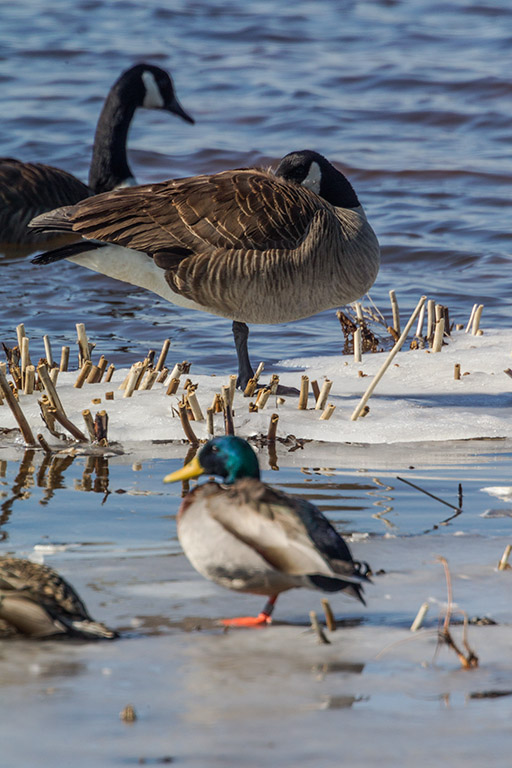
Mallard Enters stage Right
Canon EOS 1D MkIV, 400mm DO IS lens, 2X Canon Teleconverter for 800mm,
f/11, 1/1000 sec, ISO 800

Mallard Dozes Off
Canon EOS 1D MkIV, 400mm DO IS lens, 2X Canon Teleconverter for 800mm,
f/11, 1/1000 sec, ISO 800
 photoartflight