 photoartflight
Osprey Nest @ 800mm & 1280mm
Posted on May 17, 2020

These images are from a previous trip years ago to the Edwin B. Forsythe National Wildlife Refuge, Oceanville Division, in New Jersey. Along the Wildlife Drive there are quite a few Osprey platforms providing good opportunities to photograph Ospreys on nests. Quite often you can also see them with the Osprey nestlings. If you wait long enough you can see them bringing fish to the nests and feeding the chicks.

Osprey Nest @ 800mm
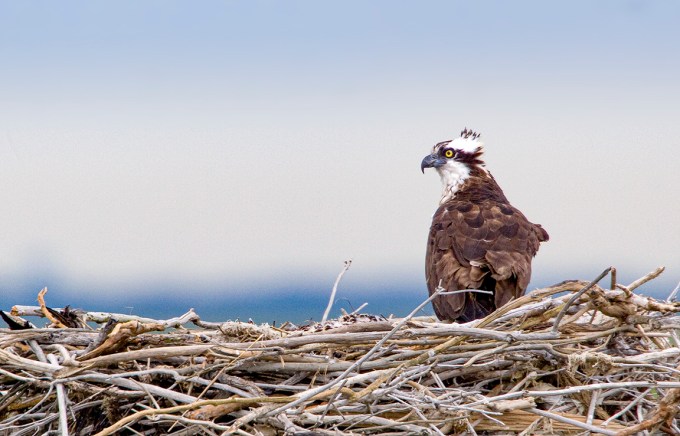
Osprey Nest @ 1280mm

Osprey Nest @1280mm, plus some image crop
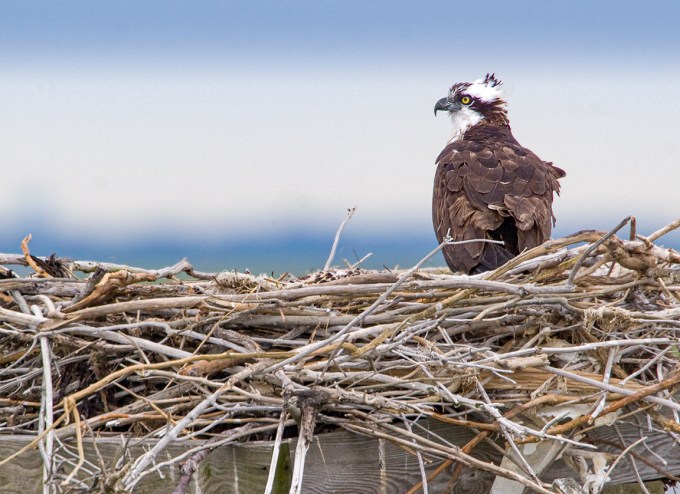
Osprey Nest @1280mm, plus some image crop
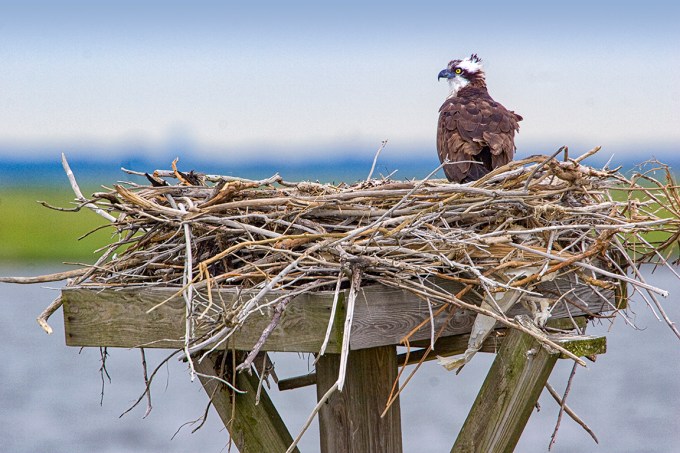
Osprey Nest @ 800mm
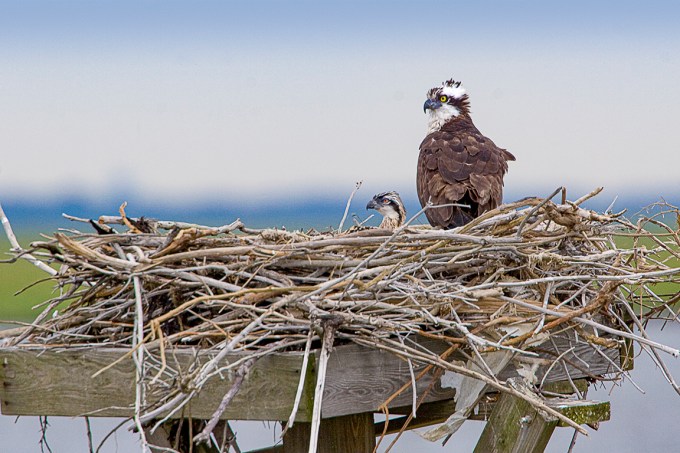
Osprey Nest @ 800mm, plus some image crop
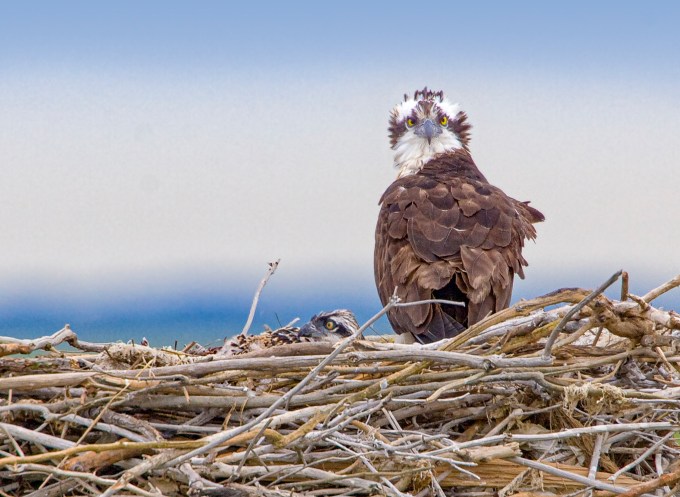
Osprey saying “Who you looking at!”

Panorama of Cormorant Take-Off In Early Morning Sunrise
Posted on April 30, 2020

Still going through my Backup Hard Drives for interesting images to post because of the stay at home order in NJ. Also helps to clear images not needed anymore and makes it easier to find images I want. Supposedly they will be lessening the stay at home order soon! This is an early morning, quickly taken, 2 image Panorama of a Cormorant taking flight from some branches in the water. 2 images shot @ 800mm and assembled in Photoshop. I liked the Black Cormorant against the warm colors of the sunrise in the water. Below another Cormorant, different Snag & Day – The Celery Farm Natural Area, Allendale, NJ.

Another Cormorant, Different Snag, 2 img Pano, 400mm f/4 DO w, 1.4x Teleconverter
American Oystercatchers
Posted on April 7, 2020

I photographed these American Oystercatchers from a much earlier trip to the Brigantine Division of the Edwin B. Forsythe National Wildlife Refuge. We saw quite a few Oystercatchers around especially by the waters edge. They seem to be very skiddish birds so I was using a Canon 400mm DO lens with a 1.4x teleconverter on 7D Camera (for a Full Frame Field of View ~ 896mm). I really like their bright colored beak and eyes! They really stand out!


Roseate Spoonbill Tree
Posted on March 17, 2020

It was interesting to see this tree full of Roseate Spoonbills surrounding this White Ibis. The featured image was captured with a Sigma 300-800mm lens @ 800mm. It seems to be very helpful at J.N. Ding Darling to have a long zoom lens with a long telephoto zoom range. Many photo opportunities there are quite far in the distance. So instead of severely cropping your image you can frame a nice pleasing image to fill the frame with your subject. The Sigma 300-800mm lens was a huge & heavy lens and with a camera body was about 12 lbs. Add a Wimberly gimbal head & heavy duty tripod and you basically setup in an area and just work that area for a while. That is why I usually also carried another camera on my shoulder strap with a 400mm DO lens for faster moving subjects that flew close by.
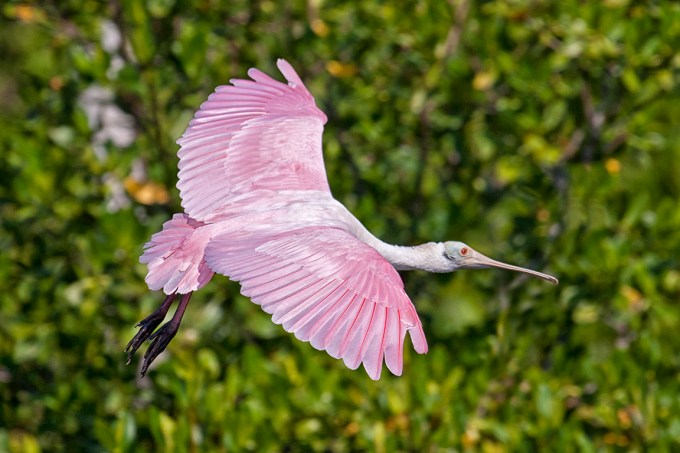
Roseate Spoonbill, Sigma 300-800mm @ 631mm
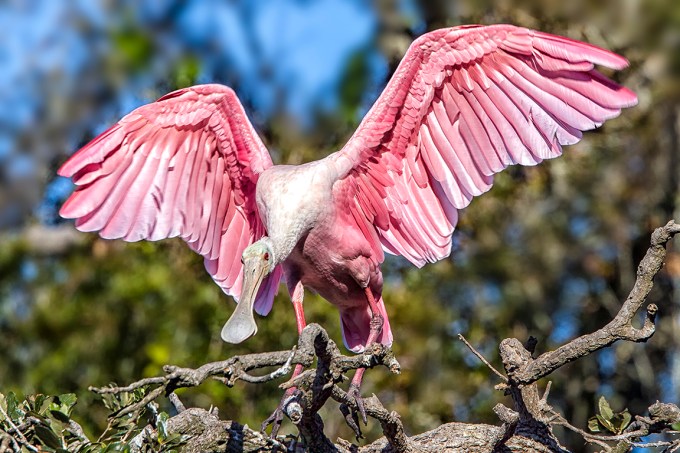
Roseate Spoonbill 400mm f/ DO lens
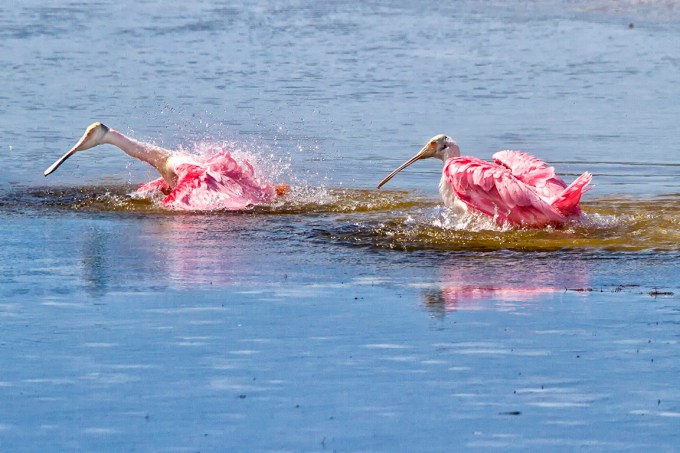
Splashing Roseate Spoonbills, Canon 400mm DO lens, Canon 7D
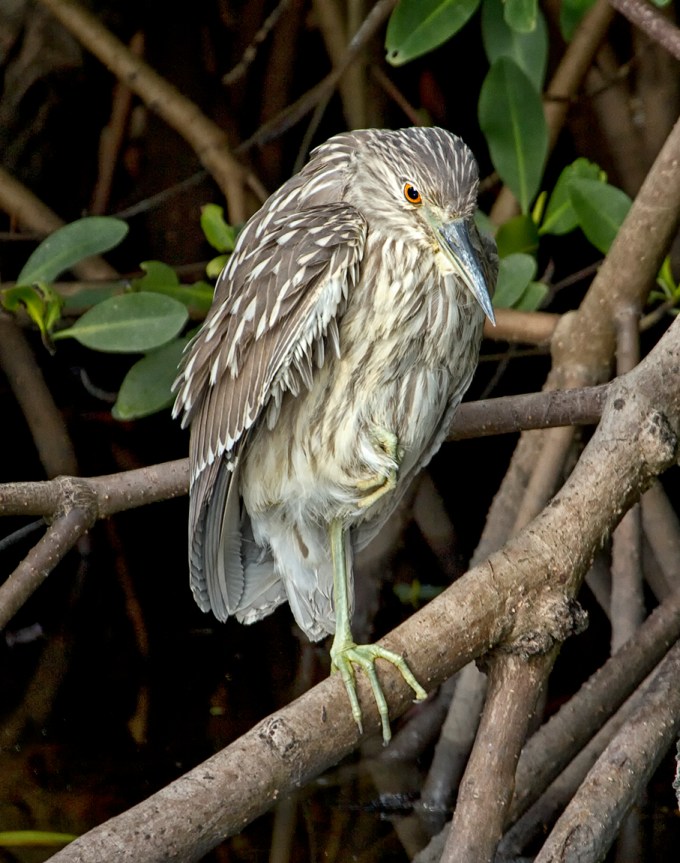
Little Green Heron & Black-crowned Night-Heron Foraging
Posted on March 13, 2020

We found this Green Heron foraging for a meal early in the morning at J.N. Ding Darling National Wildlife Refuge in Sanibel, Florida. It was very focused on something in the water and hardly moved for quite a while. I guess what it was staring at disappeared and then it relaxed it’s stance and moved on. Also nearby was an immature Black-crowned Night-Heron. It was fun to see the 2 small herons close to each other. Because of the wide range of smaller photo subjects and the distance to them at J.N. Ding Darling, I usually use here a 400mm D.O. lens, with a 1.4x teleconverter on a Canon 7D. (Full Frame field of view equivalent ~896mm)
American Alligators At Ding Darling NWR
Posted on March 9, 2020
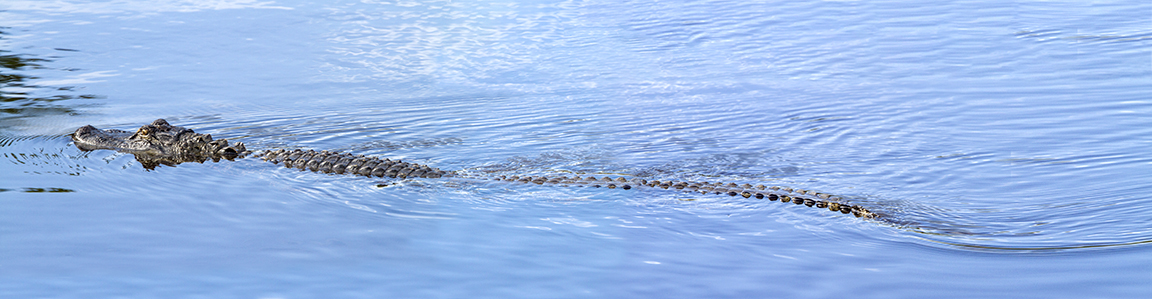
This is a series of images featuring American Alligators from a previous visit to the J.N. Ding Darling National Wildlife Refuge in Florida. Because Alligators are long and thin, it seemed to make sense to photograph them with some panoramas! This way you also limit a lot of empty water areas on top & bottom of the image making your subject alligator more the focus of your image. All images were taken with a Canon 400mm DO lens with a Canon 7D. The featured image is made from 4 images to fit all of the Alligator in the finished panorama. You also have to photograph your series of images quickly because your subject is actually swimming along as you are photographing them. So by photographing the series quickly it helps to minimize the slight difference in the overlapping images.
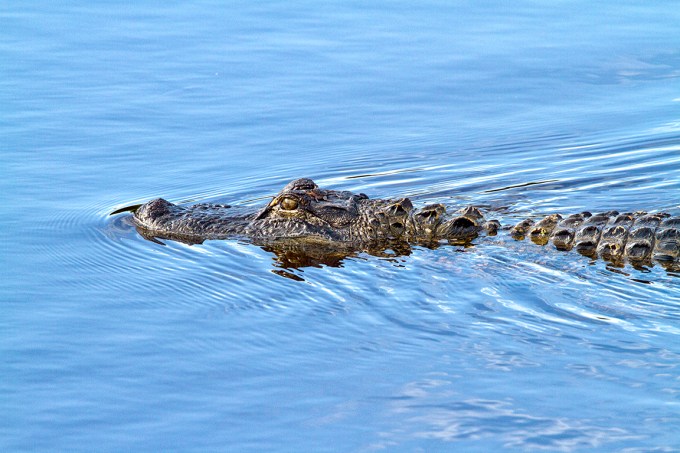
Head Shot, 1 image, 400mm, Canon 7D
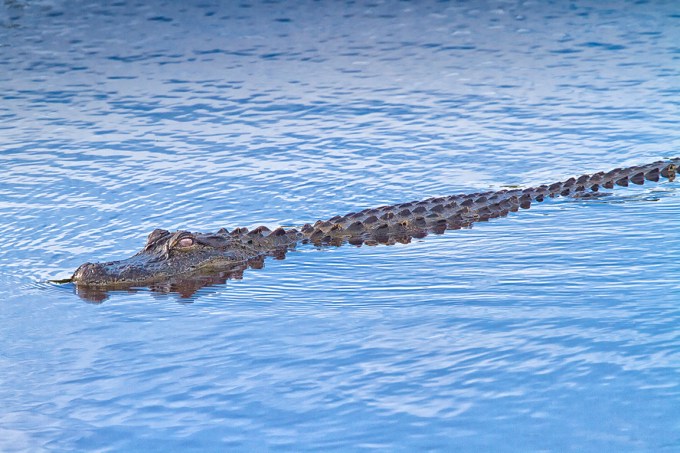
3/4 Alligator Image, 400mm, Canon 7D (Single Image)
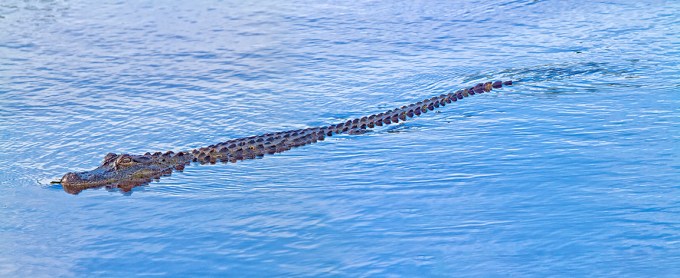
2 Image Panorama, 400mm, Canon 7D
Red-shouldered Hawk Take-Off Series
Posted on March 8, 2020
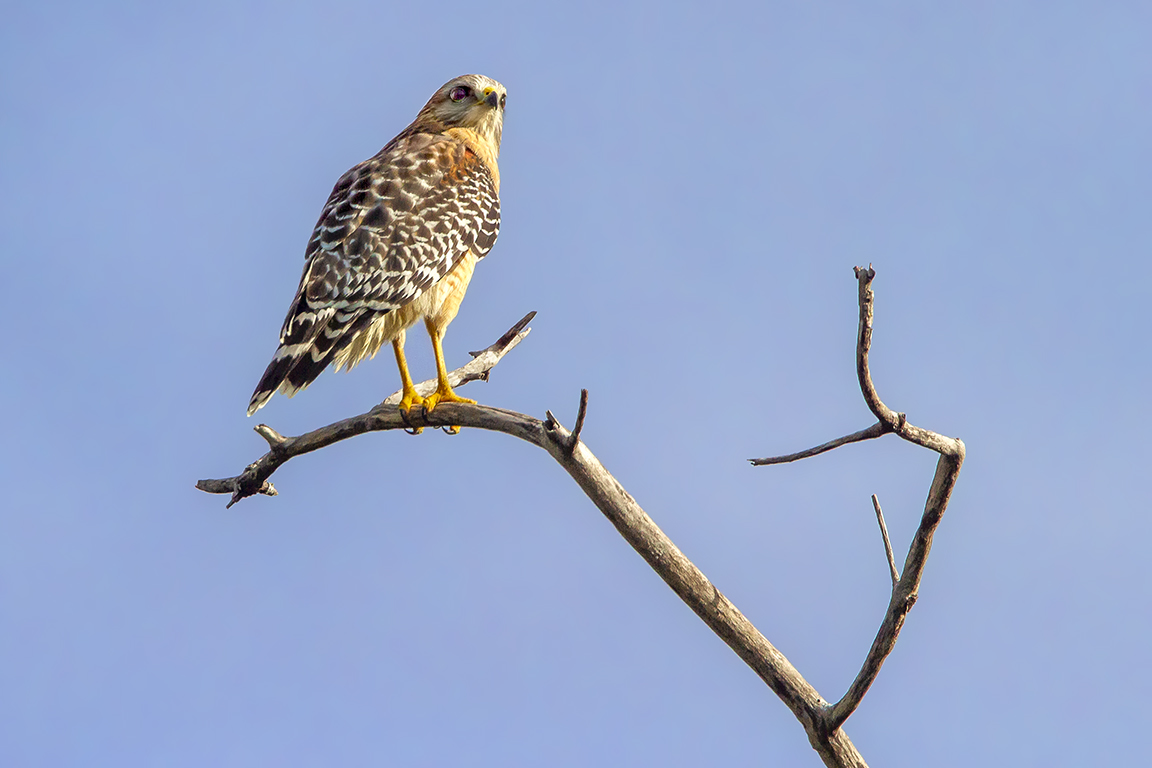
I am still going through files from past photo trips. Now that I am retired I have time to go back and work on images I had not gotten to adjust before. Work always seemed to get in the way. This is a series of images of a Red-shouldered Hawk take-off from a small branch at Ding Darling National Wildlife Refuge in Sanibel, Florida. I was using a 400mm DO lens with a 1.4x Teleconverter on a Canon 7D (for an effective Full Frame Camera equivalent field of view of ~896mm). Many times at Ding Darling you see interesting photo opportunities but the subjects are quite far away. So it is fun to try different ways to photograph distant subjects. The more you try different techniques, the better your results and are more predictable. With a 1.4x teleconverter I would stop the lens down 1 more stop than I would usually use. For a 2x teleconverter I would stop the lens down 2 stops more. With a 1.7x teleconverter I would also stop down 2 more stops than usual. Yes I actually found a 1.7x teleconverter for Canon lenses.


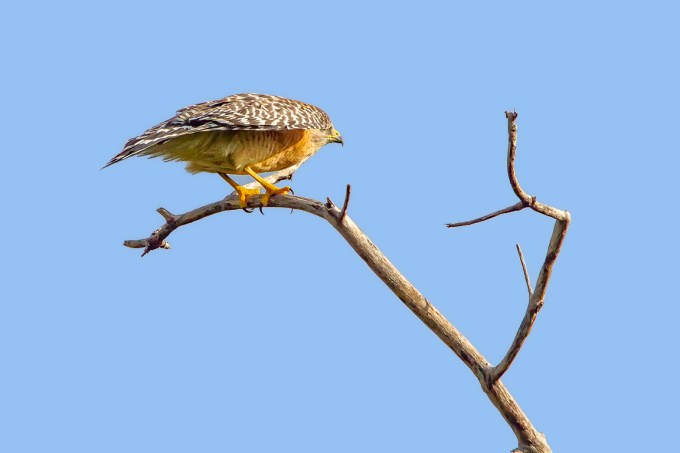
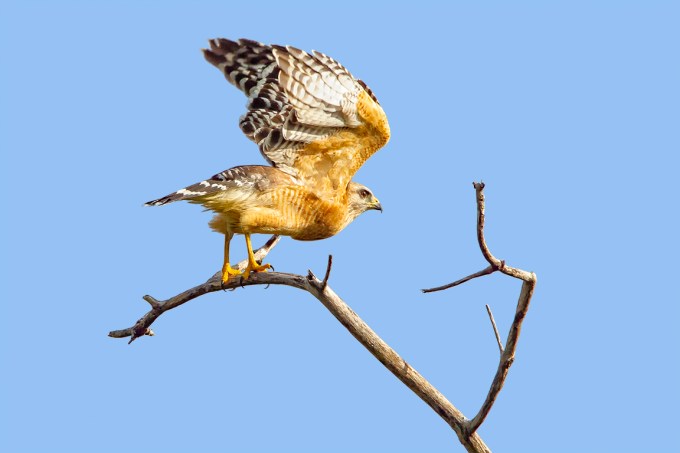

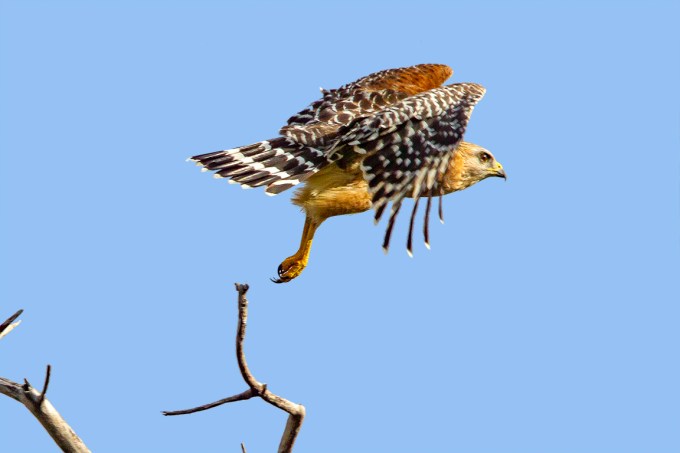

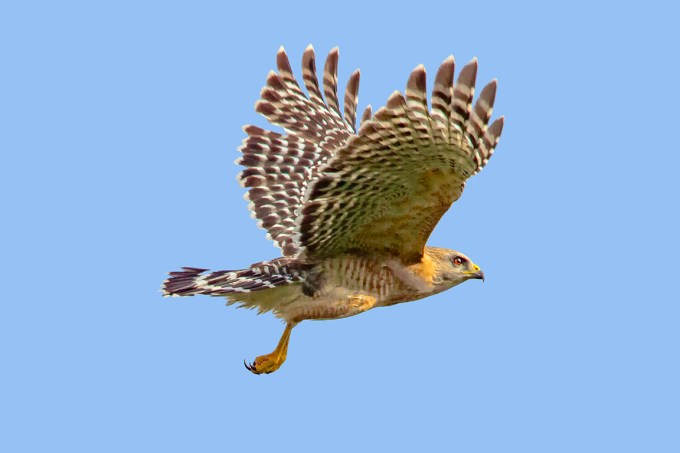

I was surprised it kept focus on the hawk and not on the branches as I was tracking the hawk.
Roseate Spoonbills En-Garde In TreeTops
Posted on March 6, 2020
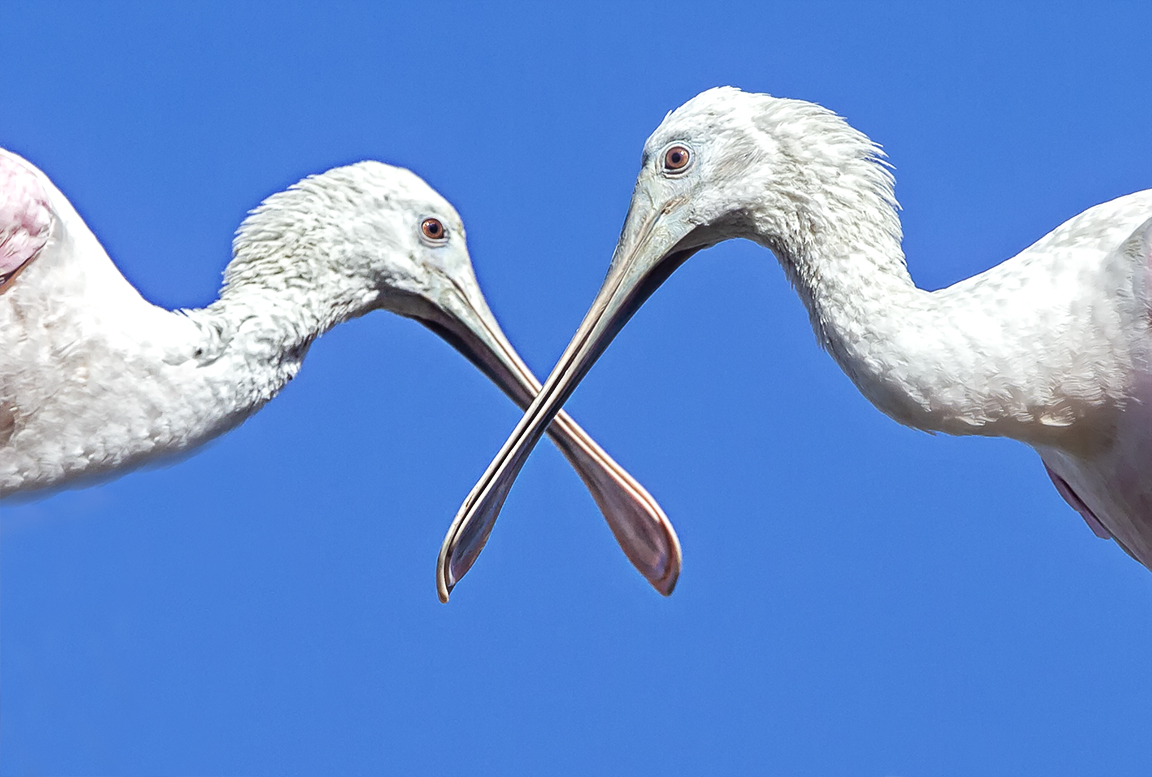
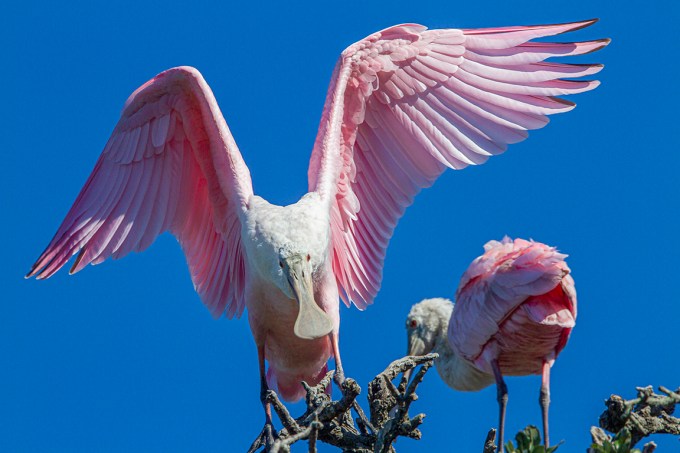
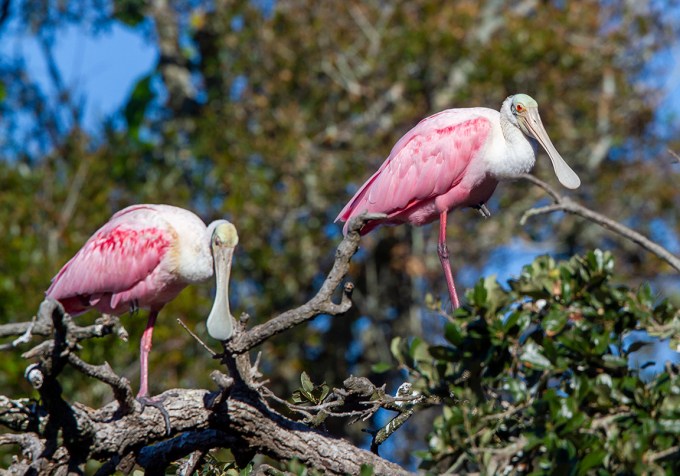
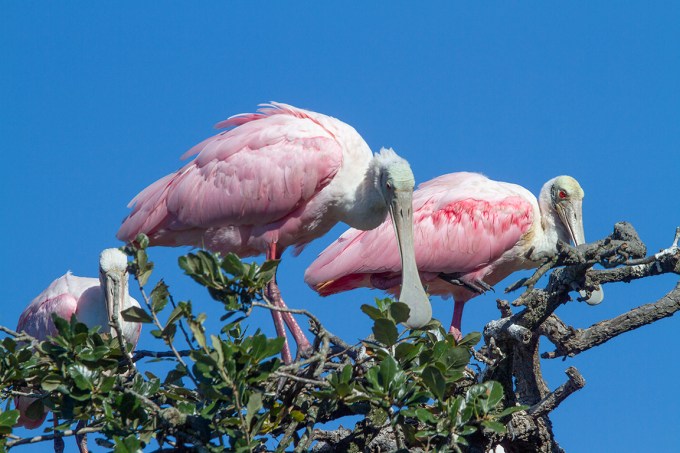
It is also fun photographing Roseate Spoonbills interacting with each other around or by their nests or just roosting in the tree tops. They seem to be in small groups scattered around the nests. They can also be quite vocal! Sometimes it sounds a little eerie! The featured portrait image looks a little strange because you do not see the usual striking pinkish color of these birds. All images captured @ 400mm with a Canon 7D (effective full frame FOV ~ 640mm)



Belted Kingfisher Fishing
Posted on January 11, 2020

I am cleaning up and going through my external hard drives and came upon this image of a Belted Kingfisher trying to catch a meal, photographed years ago. This is an image as it hit the water. It is interesting to see the large water splash from the impact of the small Kingfisher! Unfortunately it is a severe crop because it was on the other side of a small lake, but I still thought it was interesting to see. So please excuse the “roughness” of the image!
Alligators From Ding Darling NWR
Posted on December 26, 2019

I am going through my backup drives trying to clean out files for the New Year that are not needed or duplicates. But in the process I am finding files I have not used or adjusted. Work always seemed to get in the way! Here are a few from a trip years ago in 2011 to the Ding Darling National Wildlife Refuge in Florida. All images were taken with a Canon 400mm f/4 DO lens on a Canon 7D. We were walking the Indigo Trail & Cross Dike Trail and came upon a couple of alligators sunning themselves. The featured image with the alligator was in the shade under some branches near the edge of the water as we walked past. For some reason it seems like it is almost smiling in the images.
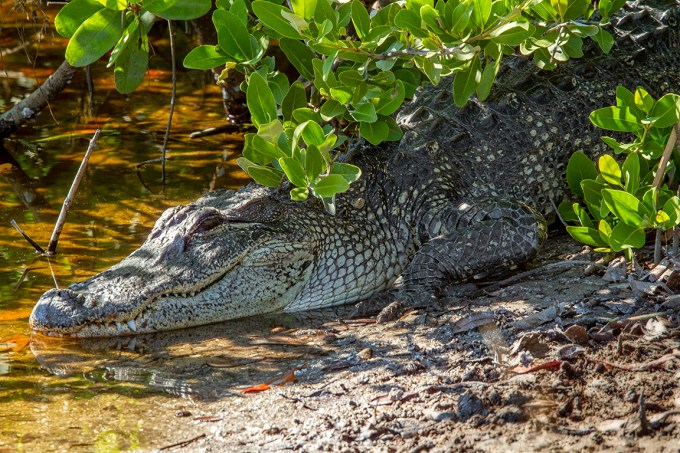
Same Alligator from farther away before I decided to get closer. ( 400mm, Canon 7D )
This Alligator below was further down the trail from the featured Alligator. Again I shot 2 images for the panorama. I have since changed my technique by shooting more images for my panoramas. With adding more images for the panorama at different focus points, I can use an f/stop of f/8 or so. This way I get a more even focus across the whole panorama. If I do not need them I just skip to the next frame in the series of images. But at least I know I have enough images to use for making the pano. It is amazing how fast these alligators can move when they want to.

Another Alligator further down the trail – 2 – 400mm images stacked panorama @ f/11, assembled in Photoshop
 photoartflight