 photoartflight
Great Egrets Roosting In Trees
Posted on September 2, 2018
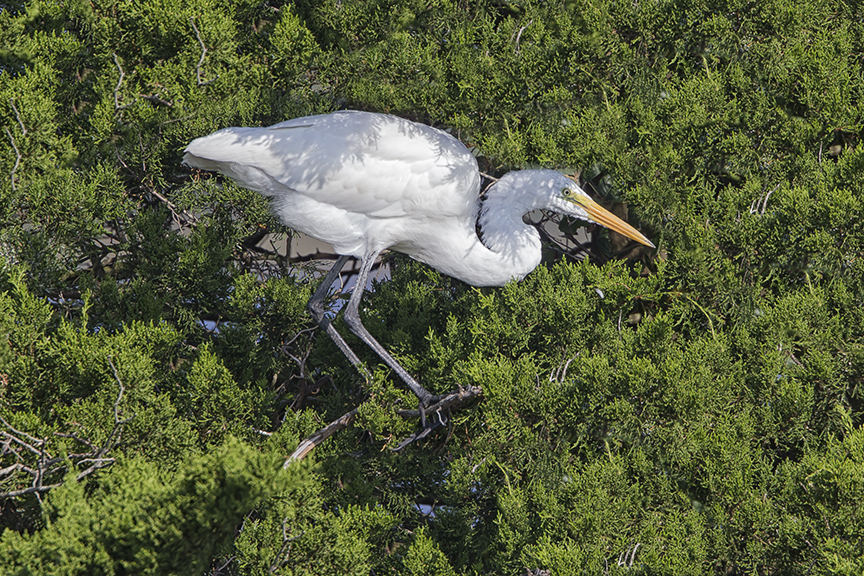
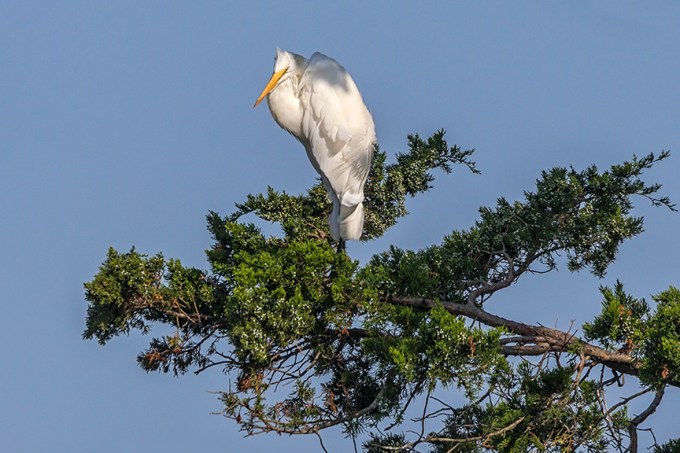
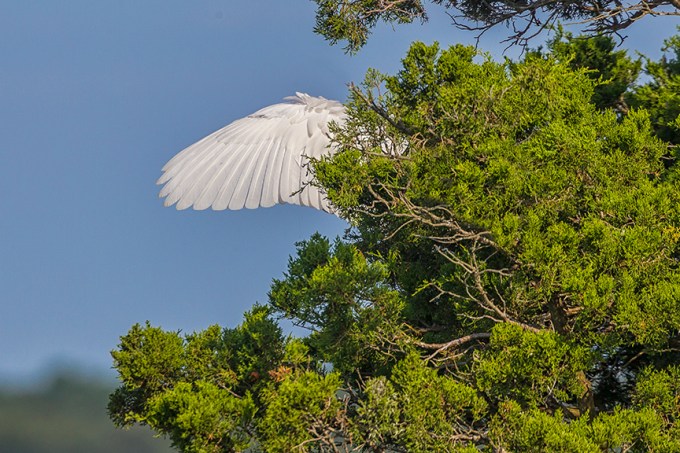
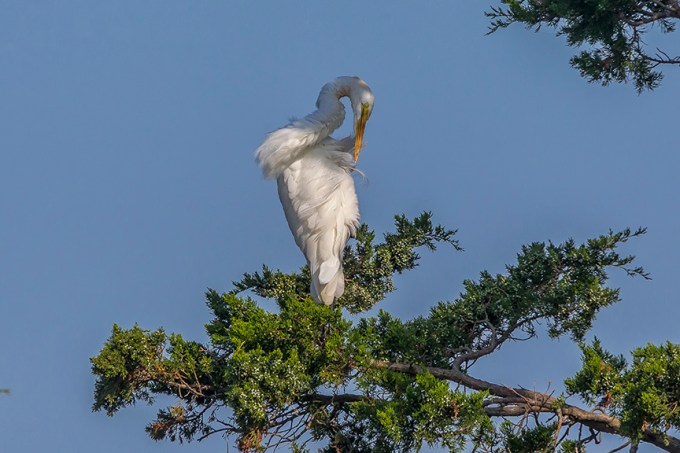
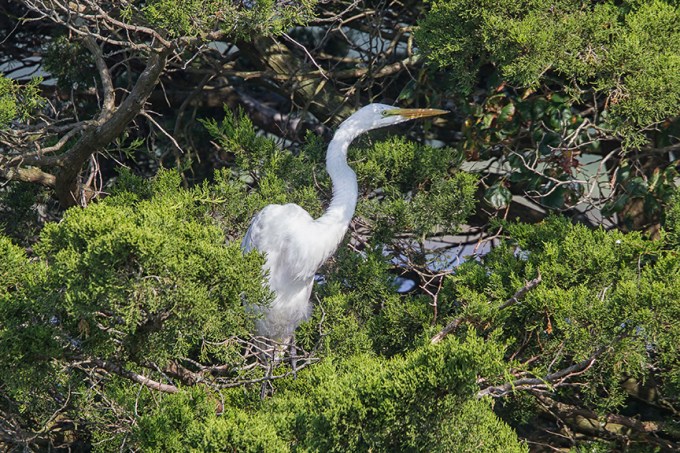
Along the Wildlife Drive in the Edwin B. Forsythe National Wildlife Refuge, there is a group of trees at one of the bends in the drive that seems to attract a variety of Herons along with Egrets. You can usually see Black-Crowned Night-Herons, Great Egrets, Great Blue Herons, and occasionally Yellow-crowned Night-Herons & Cattle Egrets. This series are with the Great Egrets.
Sleeping Great Blue Heron
Posted on August 6, 2018

I saw this Great Blue Heron towards the end of the Wildlife Drive at the Blackwater National Wildlife Refuge. It was standing on a fallen tree stump, out in the open. It appeared to be sleeping or taking a nap since it was not preening or moving after watching for 5 minutes. So we moved on. On the end of the second trip around the Wildlife Drive I decided to stop and get a few shots since it was still there. After a few minutes watching the Heron it looked up or woke up and kept looking around. Right to left. 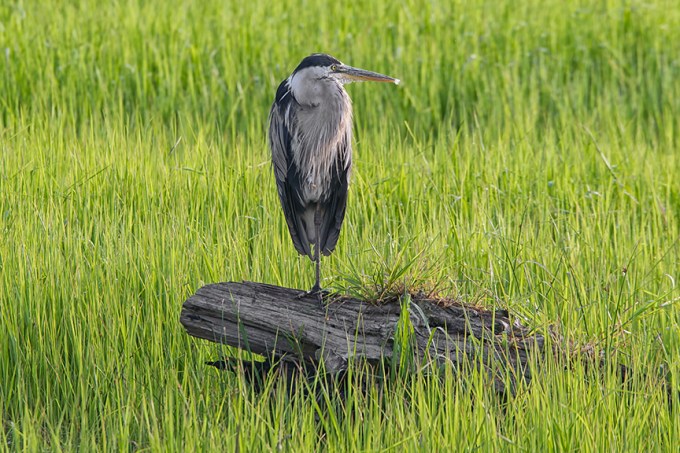
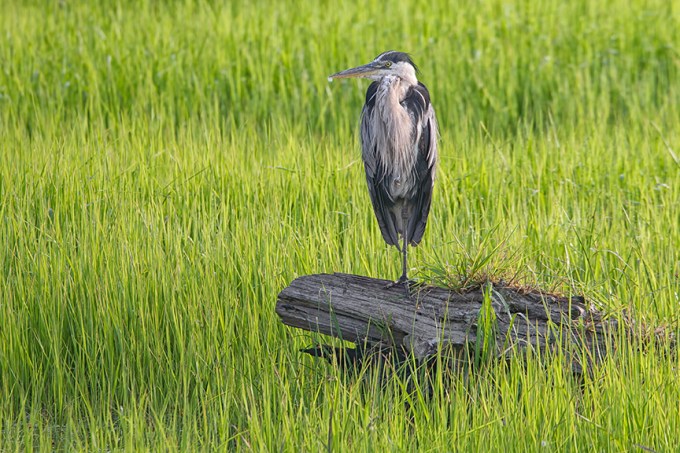
After watching & photographing for a few minutes we moved on since I did not want to bother the Heron, even though we were on the other side of the channel of water between us. We were surprised that we only saw a few Eagles. Most of the birds we saw were Ospreys, Great Egrets and Great Blue Herons.
Widow Skimmer
Posted on July 23, 2018
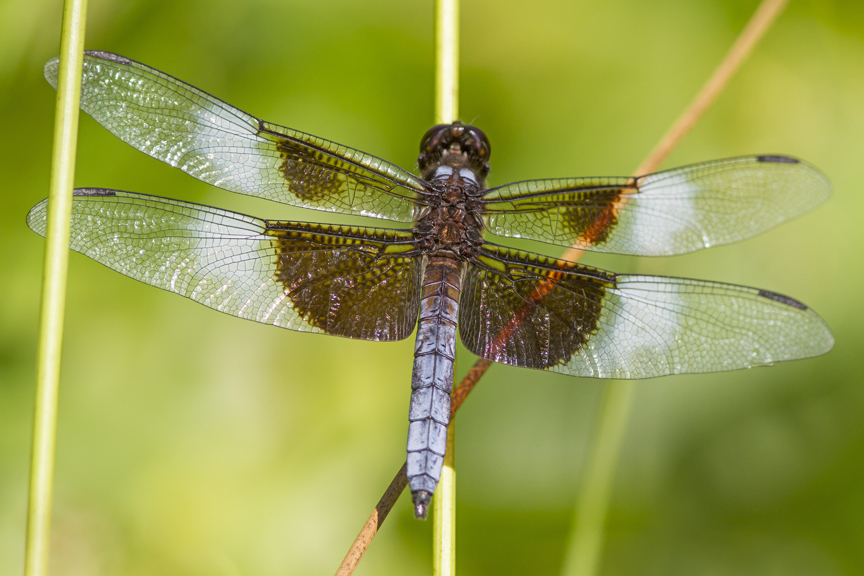
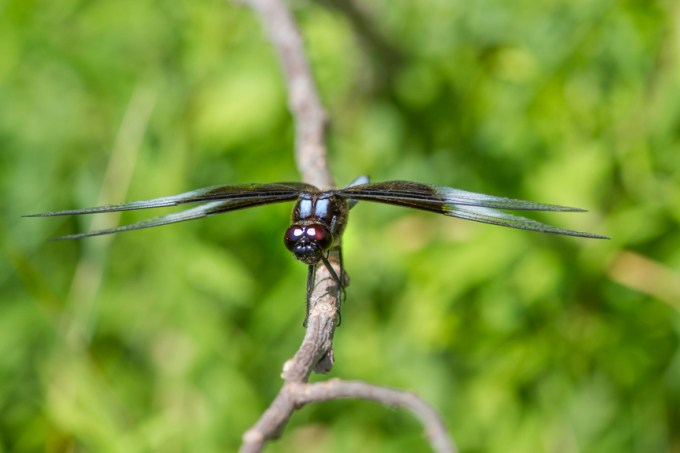
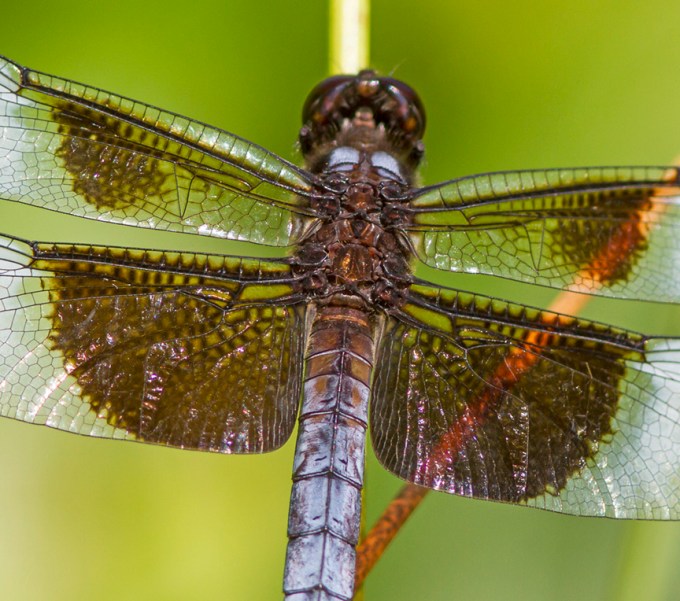
We went to Davidson’s Mill Pond Park to photograph Dragonflies. Here are a series of images of Widow Skimmers. Shot with a 400mm lens, extension tube and then a 1.4x teleconverter in that order. It allows for closer focusing plus enlarges the image some on the sensor, since my subjects are not by the shoreline. You try to get any advantage to get your subject closer or bigger in the frame.


Teneral Dragonfly??
Posted on July 20, 2018

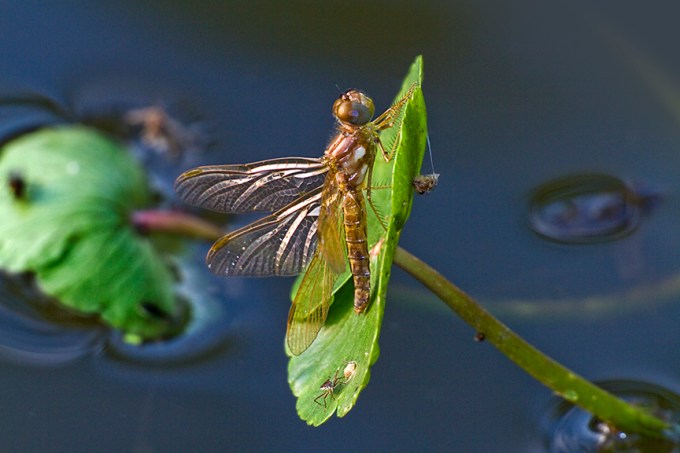
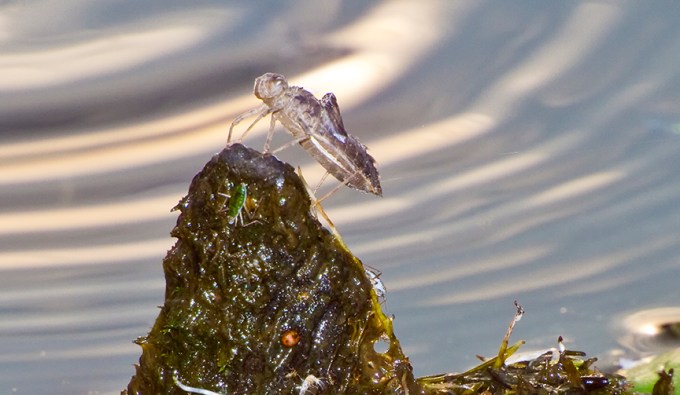
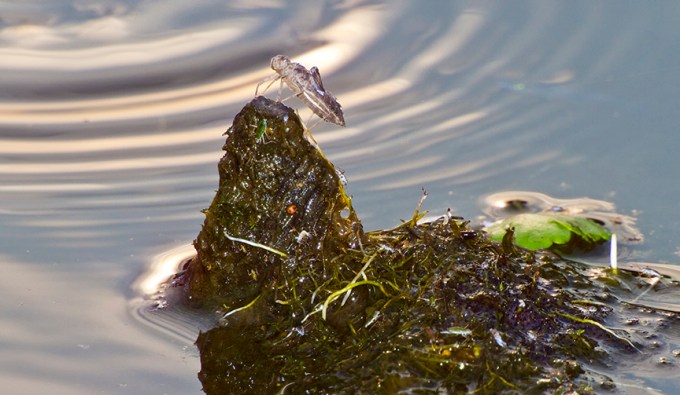
Going through old images I have not worked on before, I found this series on what I think is a Teneral Dragonfly that must have recently emerged a little before I spotted it. The wings looking very crystalline like and it did not seem able to fly yet. I have seen a quite few when I had my own pond and was always fun to see and photograph. Not sure exactly what kind it is but it stayed where it was for quite a while before I moved on. Images taken with a Canon 400mm f/4 DO lens with extension tubes since it was closer than the minimum focus of the lens. 1/50th sec @ f/8 ISO 400.

Exoskeleton Next to Dragonfly
Eastern Tiger Swallowtail On Butterfly Bush
Posted on July 19, 2018

I was going through older images to look for some colorful images to post on the blog. These were from my old home by my pond. This was on the other side of the pond probably 20 feet from my camera. Even with a 400mm lens the image would not have filled the frame like I wanted, so I started experimenting with different ways to get closer. So by adding a short extension tube, then a 1.4x teleconverter, then another extension tube I was able actually starting to get what I wanted in the frame. It took hours of experimenting with different sized extension tubes, teleconverters and teleconverter and extension tube placement for different results resulting in a large image on the camera’s sensor.

Spangled Skimmers At Davidson’s Mill Pond Park
Posted on July 8, 2018
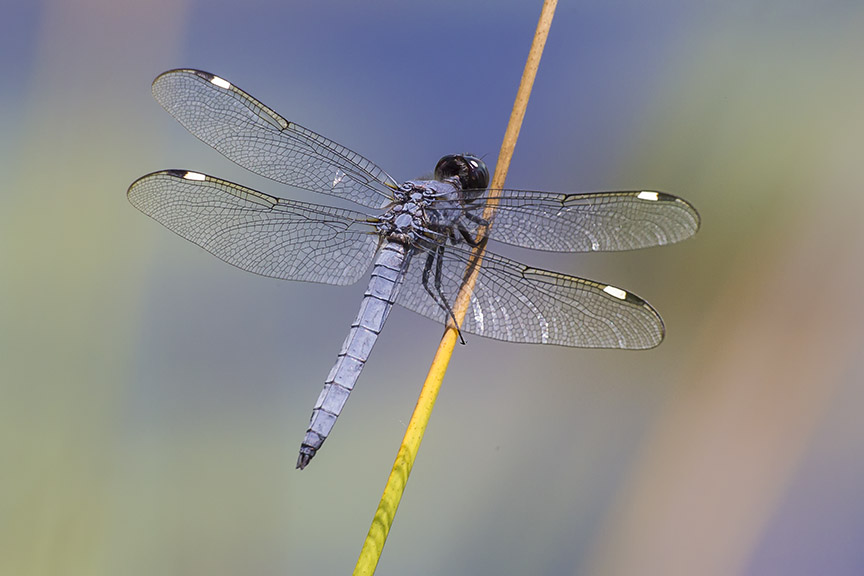
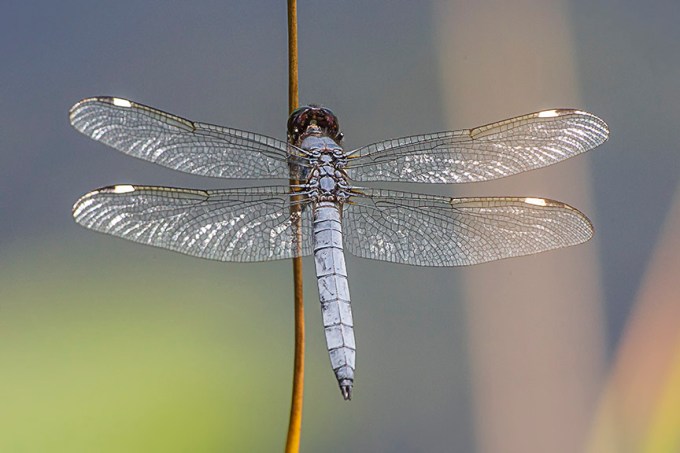
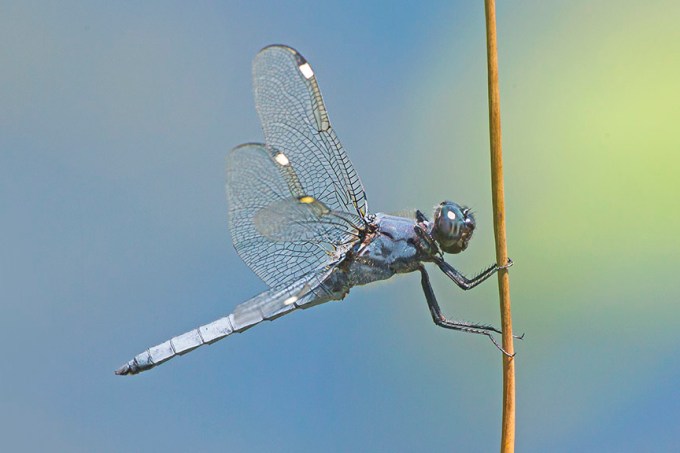
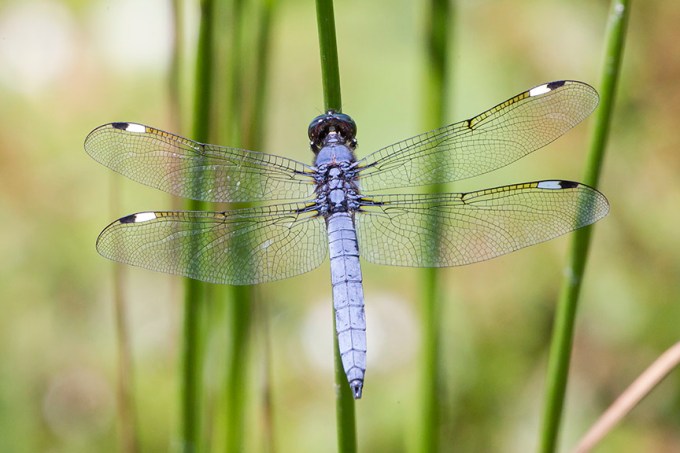
The Dragonflies are abundant at Davidson’s Mill Pond Park giving photographers a lot of photo opportunities. The temperature here has finally gotten down to normal temperatures for this time of year. With the heat index’s around 110 degrees for most of the week it was not a great time to photograph outdoors chasing dragonflies. There are a lot of Spangled Skimmers in the two main ponds. So this post will highlight these dragonflies. This is the first time I have come across these dragonflies. It is interesting to see a few different varieties of dragonflies by moving to a new home only 65 miles from where I used to be.





Pre-Sunrise Clouds – 24 Shot Panorama @ 400mm
Posted on June 18, 2018

I like going to the Blackwater National Wildlife Refuge in Maryland for their colorful Sunrises and Sunsets. (Also for Eagles & Ospreys and…) On this day the clouds were very interesting so I was shooting a few different versions, compositions, focal lengths and Camera/lens combos. Then I noticed a thin long length of colorful clouds above the trees but below the main larger clouds. So I tried a 400mm with a 1.4X Teleconverter pano version. I shot 24 images with that combo, with large overlaps on each shot, all handheld. This is the Featured Image above. I used a lot of overlapping images because it usually lines up better, especially when the camera is handheld. If I do not need them I can just use a few instead. Below are more versions with different camera and lens combinations. Also some eagles that flew by in the colorful sky adding some interest and a subject in the colorful sky. In the featured image about 2/3rds over to the right there is a small dot below the clouds. That was another Bald Eagle flying through and I decided to leave it and not clone it out.
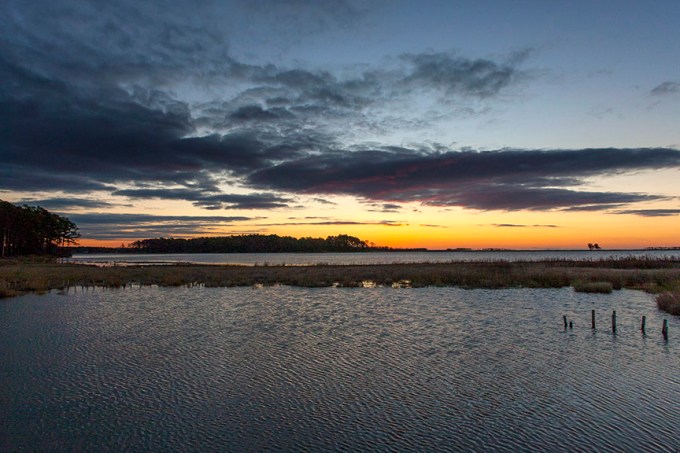
Blackwater NWR PreSunrise @ 24mm (2 image blend for foreground detail)

Blackwater NWR Sunrise, 2 Image pano @ 24mm
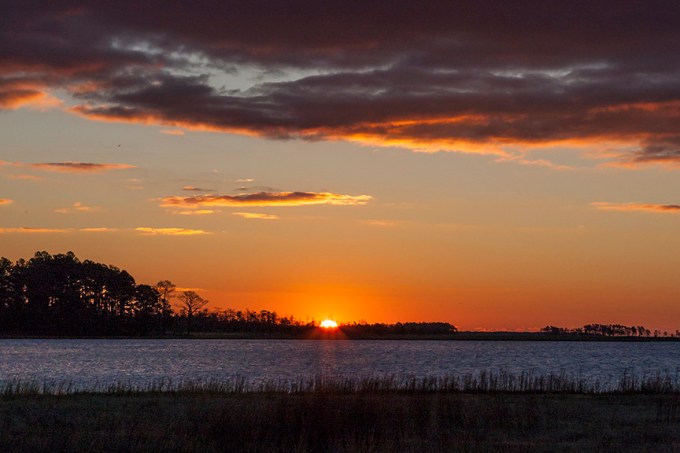
Blackwater NWR Sunrise @ 400mm, Canon 400mm DO lens

Blackwater NWR Sunrise @ 400mm, Canon 400mm DO lens w/ Canon 1.4X Teleconverter

Immature Bald Eagle Soaring in the Sunrise, Canon 400mm DO w/ 1.4X Teleconverter
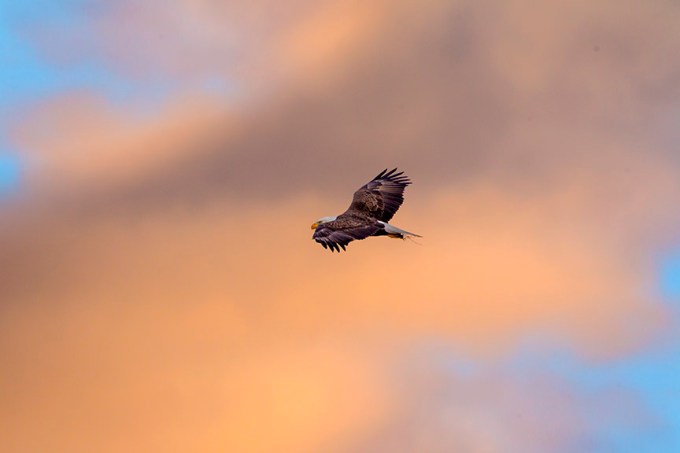
Closer Bald Eagle Flying in the Sunrise, Canon 400mm DO w/ 1.4X Teleconverter
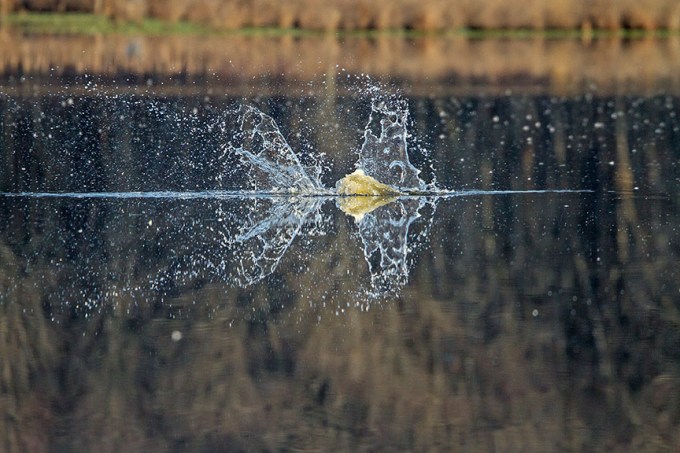
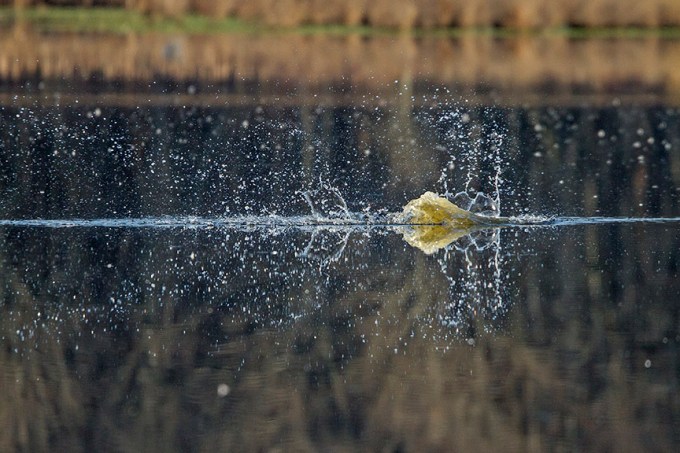
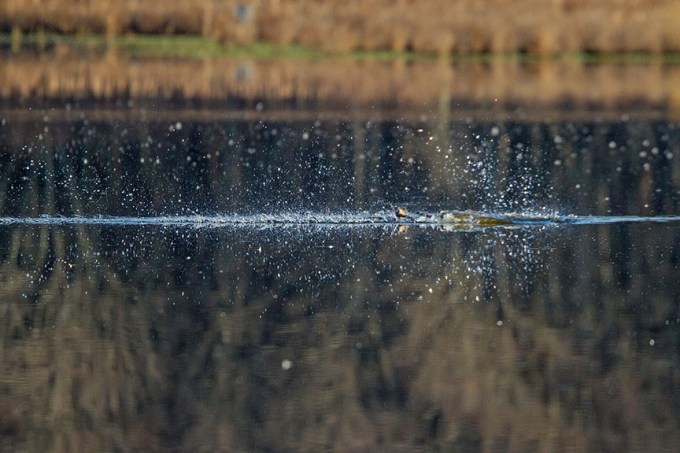
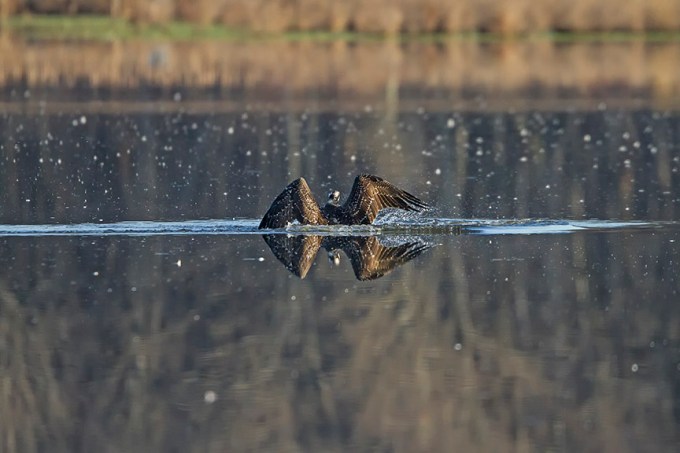
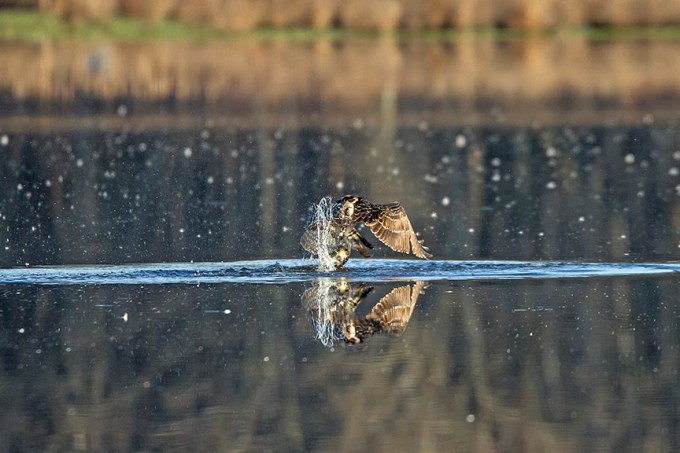
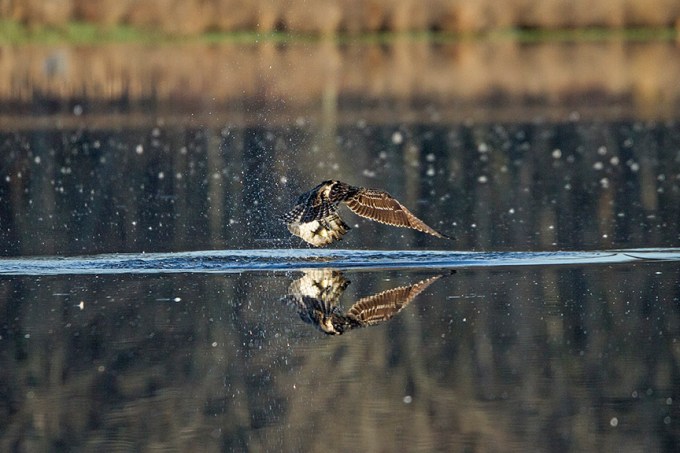
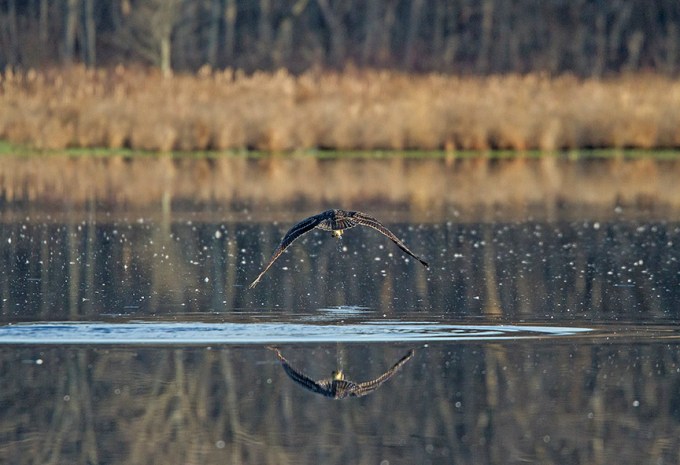
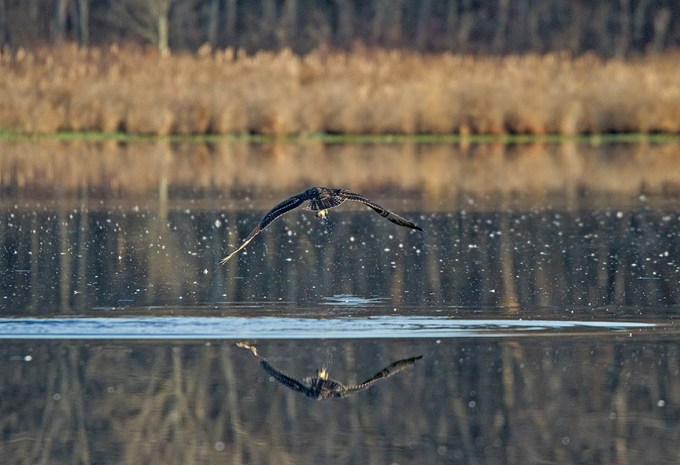
Osprey Fishing Sequence
Posted on June 10, 2018

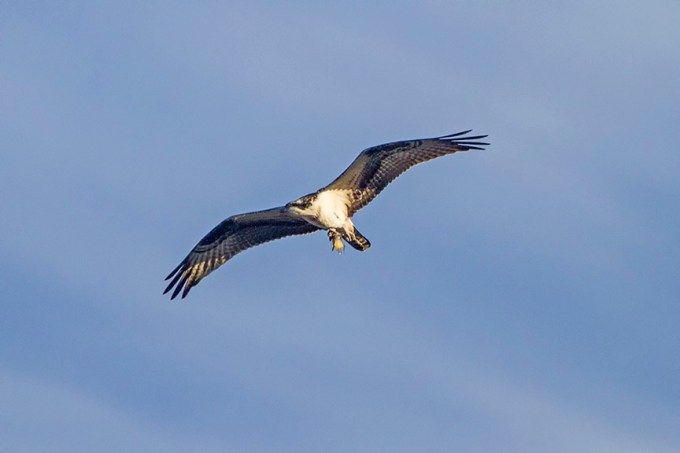
This is a set of images of an Osprey fishing series. I was photographing this Osprey flying overhead when it saw something and went into a dive to catch a meal. I lost the Osprey in my viewfinder on the way down but got it again as it hit the water. I kept shooting while it caught it’s prey, surfaced and flew off. The final image is when it circled around and flew by me with it’s fish in its claws.








Goldfinch and Dandelions
Posted on May 18, 2018
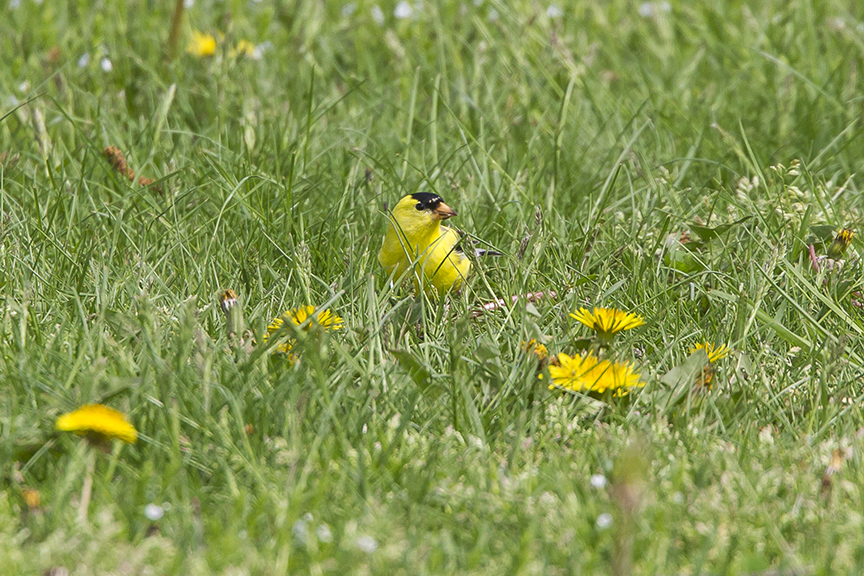
I was trying to get images of the Goldfinches that were zipping around where I was setup. They just never got close for any good images. As I was packing up this one landed a little closer, but still fairly far away. Sometimes you just have to shoot what you can get. I liked the bright yellow Goldfinch in the green grasses with the pop of Yellow color from the Dandelions. So I just got a few shots before it flew away.
Davidson’s Mill 50 Image Landscape Panorama
Posted on May 11, 2018

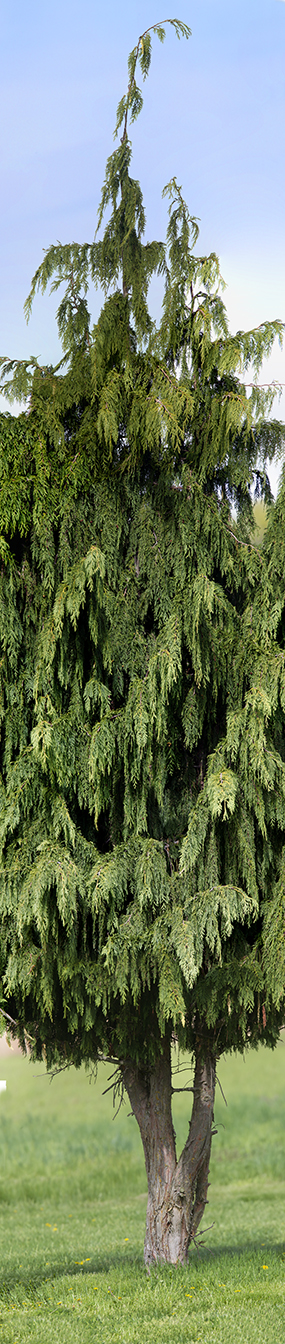
While I was photographing small birds in the tall trees at Davidson’s Mill Pond Park in Monmouth County NJ, I was waiting for some subject birds in the trees to photograph. I was using a 400mm lens with a 1.4x teleconverter. There was a lull in bird activity so I thought I would try a multi-image panorama of the field and trees in the distance. I was wondering if I could hold the detail in the grasses and tree branches, so I took off the teleconverter to help hold detail in the trees and leaves. I was also using a tripod to help with the detail (camera shake) and to keep a level horizon. I first shot a line series of 25 shots in a row. I thought it was too long and needed more height. I decided to try 2 rows of 25 images per row to get more height. So with the 2 rows of 25 images each, I had 50 images to align, stack and blend. I selected my images and opened them in Adobe Camera Raw and adjusted my settings for sharpness, color, noise reduction, lens distortion, etc. Then I selected the option to open all the files in one layered Photoshop file. Once in Photoshop, I did an Auto-align images, then Auto Blend to combine everything. It automatically aligns and combines the sharpest areas (hopefully) in the files. There are multiple choices for blending modes, but with telephoto lenses Auto seems to work fairly well. If not, you can try one of the others. So I ended up with a 50 Image pano (25 images per row, 2 rows, 50 images total). Final image is 164 inches long. It was more a test to see how the telephoto pano would work, since most of my panos are more wide to normal focal lengths or macro panos and stacking, but that would be a future blog post. Other options in Photoshop are multiple images of the same subject to blend and increase sharpness and/or reduce noise in your image (since noise is random in each image) Or multiple images of the same scene crowded with people moving about, then removing the people automatically by blending the layers in a certain way. So it always fun to try new ways to photograph your subjects and you never know when it will come in handy to get the shot you want! After that I shot 15 horizontal shots for a vertical panorama of a single tree, Again with a 400mm lens.
.
 photoartflight