 photoartflight
Sun Reflection Peaking Through Clouds
Posted on November 29, 2013
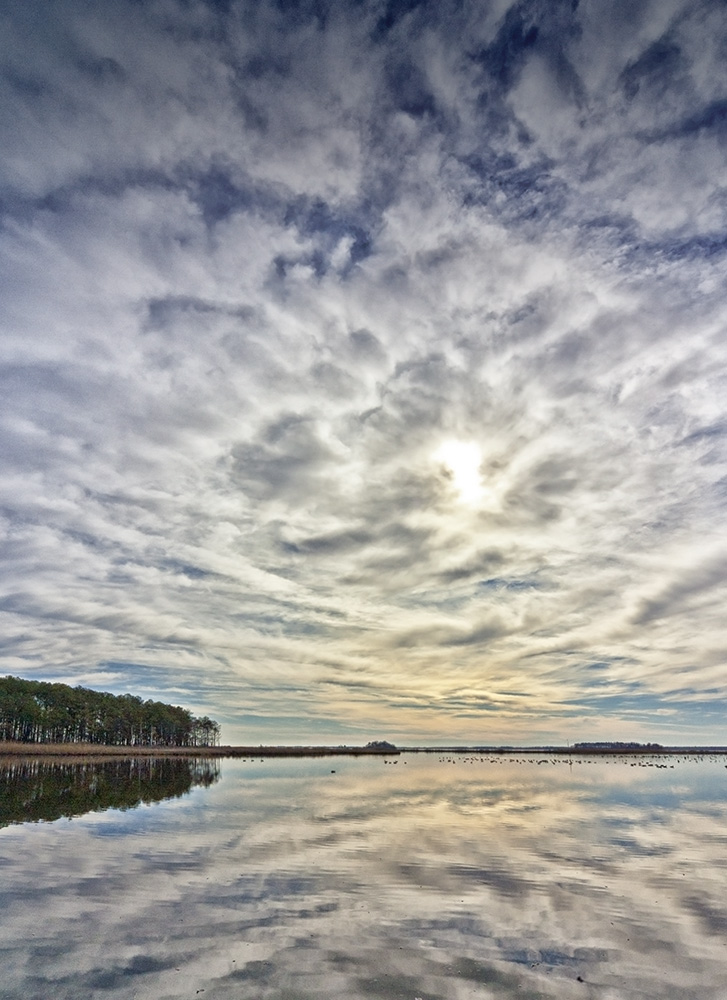
This landscape was taken at the Blackwater National Wildlife Refuge in Cambridge Maryland in Dec. 2011. Heavy cloud coverage hid the sun, but the colors shone through the clouds and reflected in the water. Usually we photograph Wildlife at Blackwater NWR, but you can also get some great landscapes with water or wooded areas. I also especially like the colorful sunsets with birds flying through them. This image was taken with a Canon EOS 1D MkII with a Sigma 12-24mm f/4.5 – 5.6 @ 12mm, 1/1000 sec, f/16, effective focal length 15.6mm, aperture priority -0.67 exposure compensation. Below are a series of B&W versions using Nik Silver Effects plug-in in Photoshop. The next to last one is using a Black & White adjustment layer in Photoshop. The last is just an adjustment of contrast. I usually do not think to use B&W images anymore for myself, (too many long hours, years ago, in the darkroom for commercial clients), but I thought this image might be interesting in Black &White.
-

- Silver Effects Neutral
-

- Silver Effects Push Process
-

- Silver Effects High Structure
-
- Silver Effects Yellowed 2
-
- Photoshop BW Adjustment Layer
-

- Photoshop Contrast adjustment
Colors of Fall
Posted on November 22, 2013
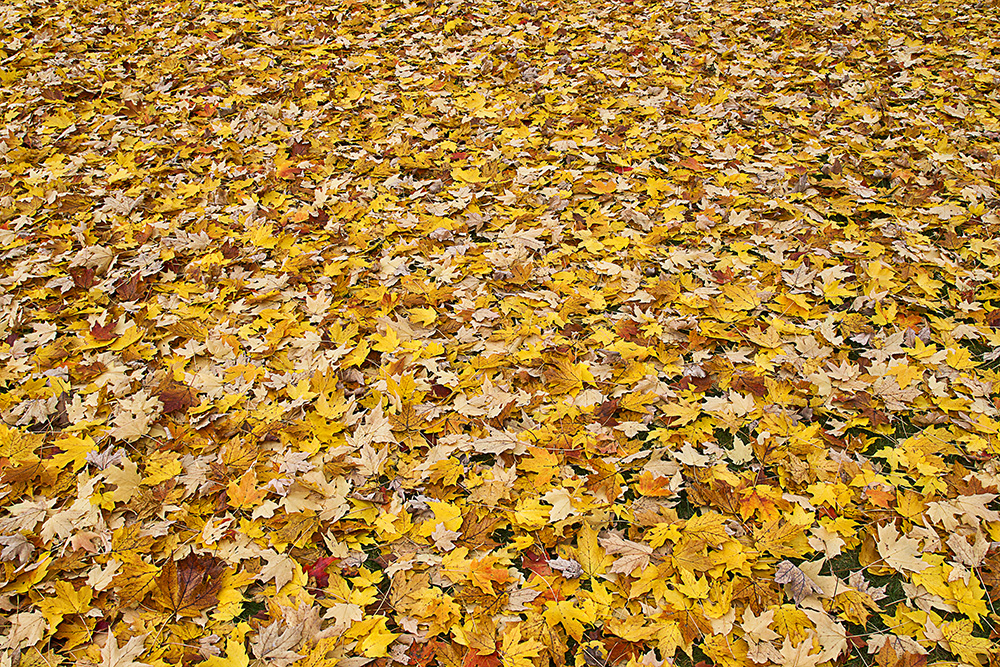
Fall is moving on, getting colder every day. Most of the leaves are starting to become dull, but the Maple tree in the yard takes a while for the leaves to change color & really come down. This is a sign that Fall Color will be ending soon. Here is a series of colorful Maple leaf images when the Maple leaves started to come down in quantity with bright yellow colors. Starting with a wide view moving to a closer up composition. This helps visually to show the story of the Maple leaves in different views and compositions. Canon EOS 1D MkIV, Canon 24-105mm f/4L IS, 1/125 sec @ f/11, ISO 320.
Opening Photo @ 24mm , 1/125 sec, f/11, ISO 125 – effective focal length with 1.3 crop camera body is 31.2mm
105mm, 1/100 sec, f/11, ISO 320 – effective focal length with 1.3 crop camera body is 136.5 mm

~75mm, 1/125 sec, f/11, ISO 320 – effective focal length with 1.3 crop camera body is 110.5 mm 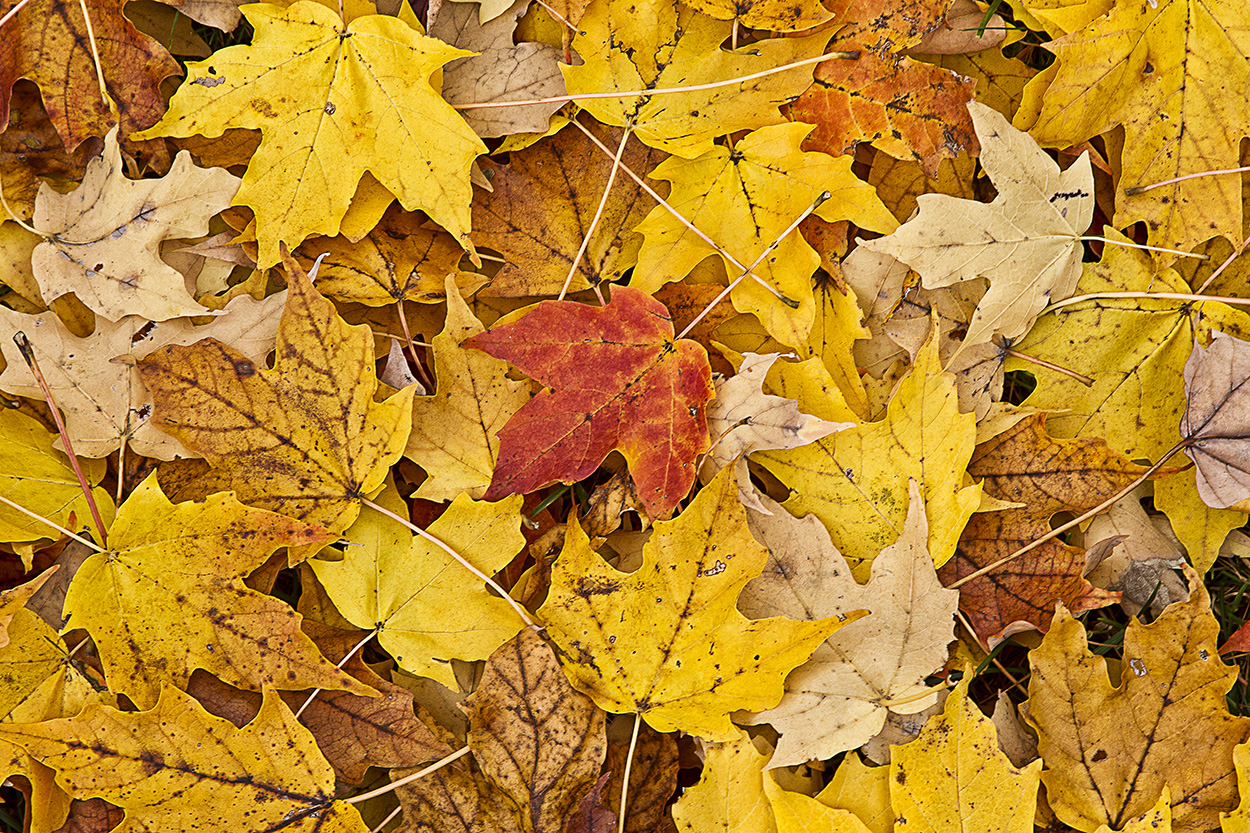
55mm, 1/125 sec, f/11, ISO 320 – effective focal length with 1.3 crop camera body is 71.5 mm 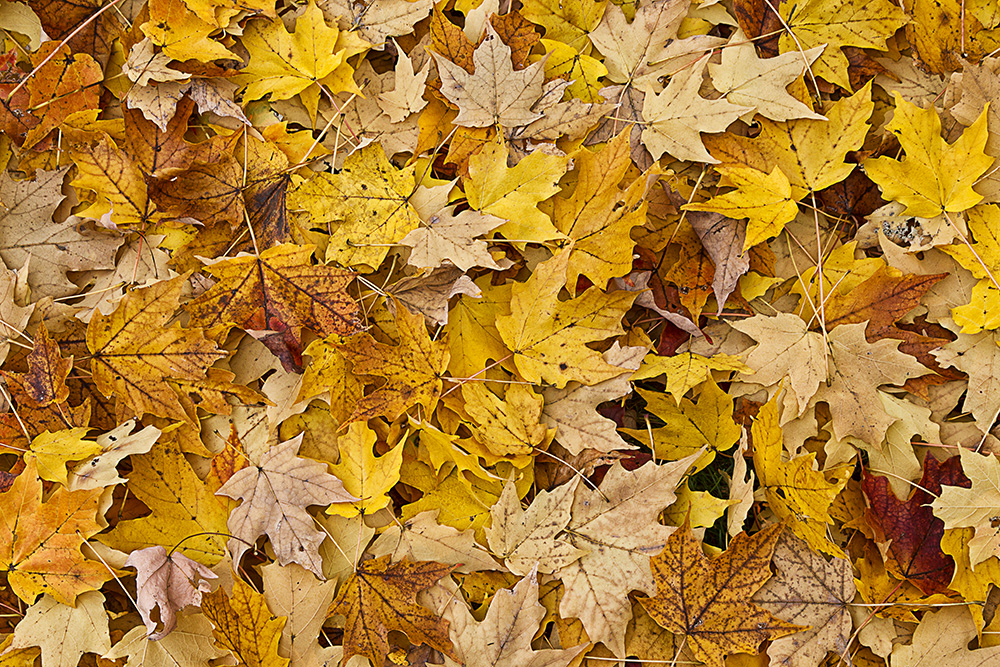
A Little Different Macro – Canon MP-E 65mm
Posted on November 18, 2013

I went out to The Celery Farm Natural Area to photograph very small dried wildflowers. I took along my Canon MP-E 65 mm 1-5X Macro. This is a very specialized macro lens that starts at 1X and goes to 5X magnification. It is more like a lens with a variable extension tube zooming out for the increased magnification. I decided to add a 1.4X teleconverter to add a little more working distance. This adds just a little bit more working distance, in some cases the front element is less than an inch away from your subject, but every bit helps. With the 1.4X Teleconverter it makes this a 91mm f/4. I was using a Canon Macro Ring Flash MR-14 EX to light these subjects as I was shooting handheld. My camera body was a Canon 1D MkIV camera body, so with the 1.3 crop of the sensor, this also adds to the lens, making it 1.3X to about 6X. For the wildflowers I left it at 1.3X for most, then later I shot some areas of the wooden lookout tower at various magnifications to show the different magnifications. I used aperture priority for some where I wanted to get some background detail, while the ones I have with dark backgrounds I used Manual exposure to darken the background and let the flash light the subject.
Full image for an idea of scale and subject

One of the smaller dried wildflowers @ 1.3X, lit with ring lash, no ambient light, for darker background
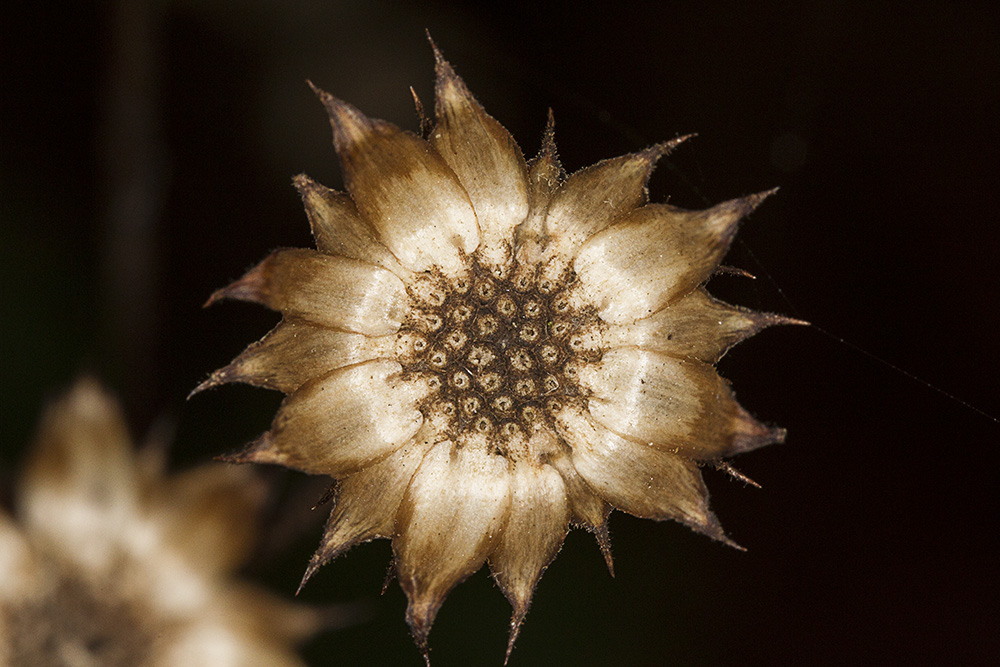
Larger Dried Wildflower @ 1.3X, handheld, lit with ring flash for main exposure, ambient light for background 1/10 of a second

Dried Wildflower @ ~3X, handheld, lit with ring flash for main exposure, 1/80 sec ,positioned for dark background
Dried Wildflower Bud @ ~2X, handheld, lit with ring flash for main exposure, ambient light for background 1/60 of a second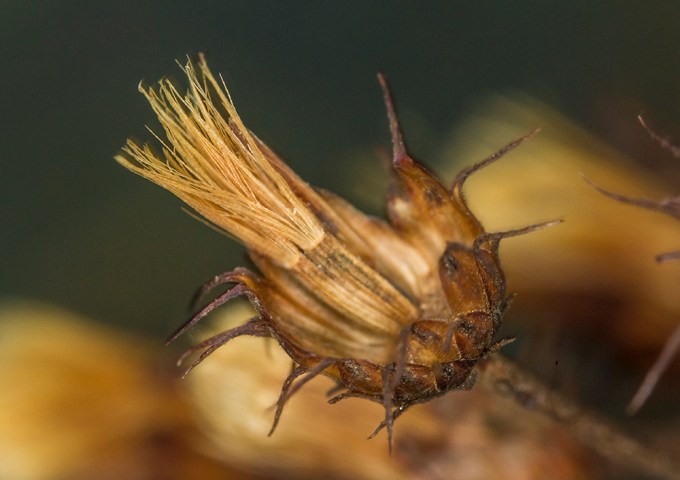
Reference shot for examples of scale
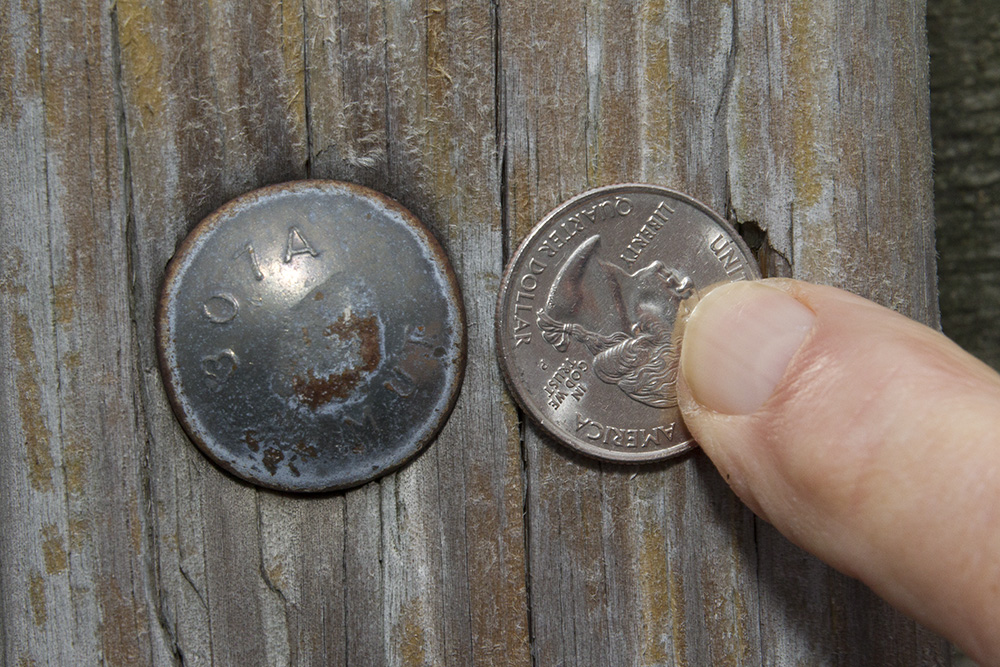
~ 2X Magnification, Carriage bolt magnification detail
~ 4X Magnification,, Carriage bolt magnification detail
~ 6X Magnification, Wood grain and with slight crack in wood grain around Carriage bolt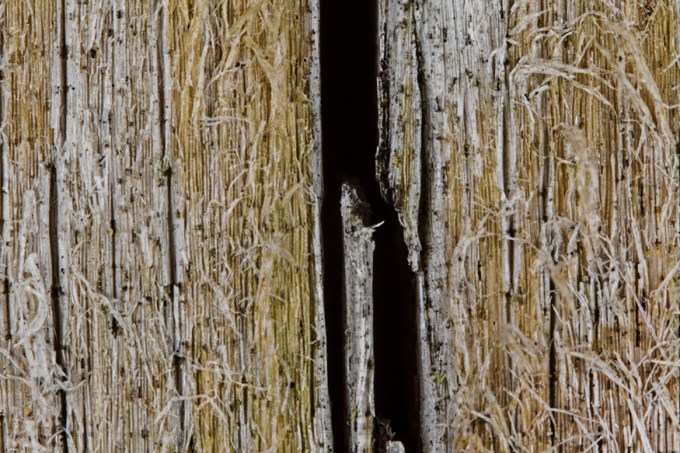
Shoot the Moon
Posted on November 15, 2013
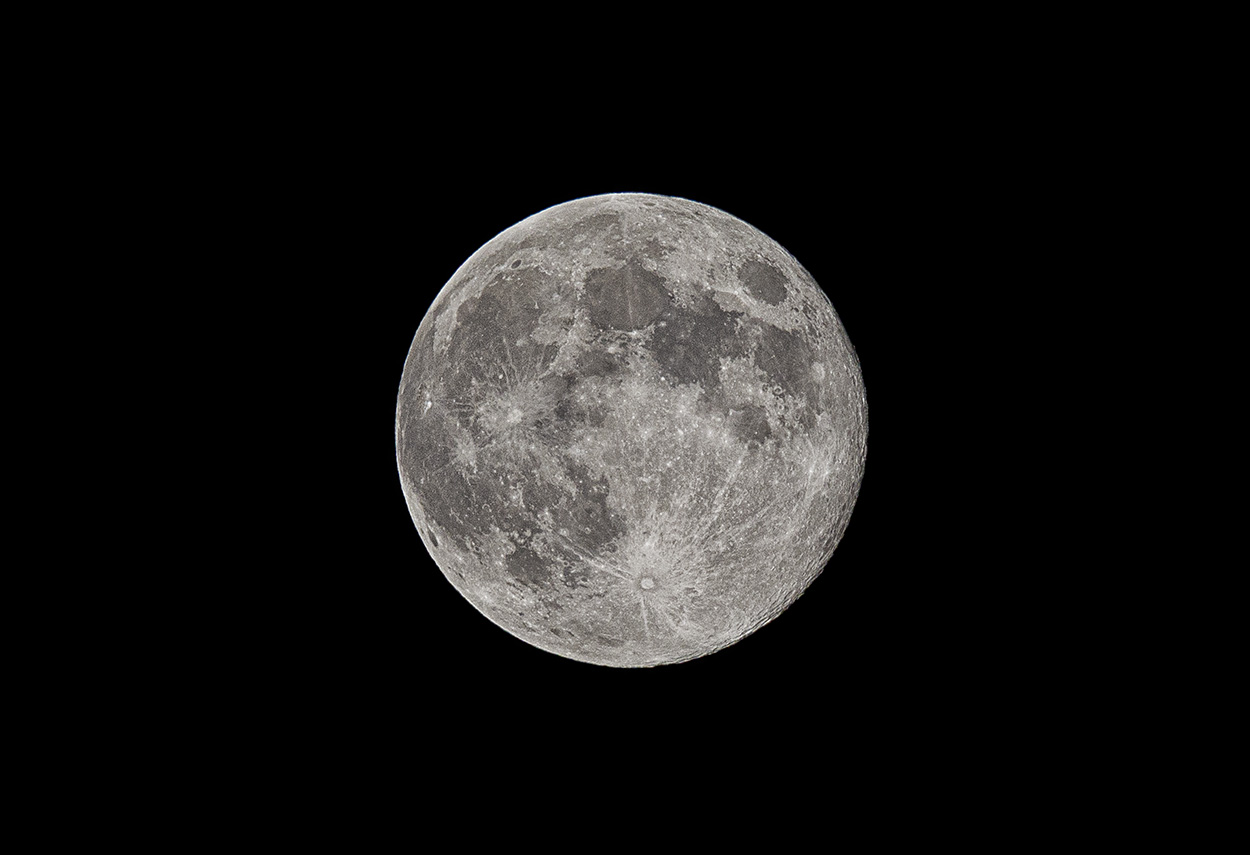
I always look at a full moon and say, I have to photograph the full moon. But usually something comes up that stops me from doing just that. This time I persisted and did a quick few shots. I used a Canon 1D MkIV with the Canon 400mm f/4 DO lens with a Canon 1.4 Series III teleconverter, which give an effective focal length of 728mm @ f/5.6 between 1.3X crop camera body and the 1.4X teleconverter. I used manual exposure and used an exposure of 1/500 sec @ f/8, ISO 400. I underexposed just a little and brought it up in photoshop to hold details. I wanted to use f/11 or f/16, but I was handholding the camera and wanted a fast shutter speed for a crisper image. This post came about because it will be a full moon on Dec 17 and I started thinking I have to try again with a longer lens and try to do better this time and bring a tripod. Give it a try.
Last Flight at Blackwater NWR
Posted on November 13, 2013

Going through my older files from Blackwater National Wildlife Refuge, I came across this series that I never worked on. Blackwater has great sunsets because of its proximity to the coast with the moisture in the air. This was shot in December, near the end of daylight. I like the sun’s rays coming down through the clouds, giving streaks of sunlight in the lower clouds. This one lone bird was flying through the sky under the dark higher cloud bank. The photo just made me think “Last Flight of the Day.” Sometimes you can see large flocks of birds going through the evening sky, but late on this day there was just one lonely bird heading home, which I thought gave an interesting look. I usually do not like having the subject in the middle of the frame, but in this instance I chose this one because the bird is so small it was not as powerful off to either side and looked unbalanced. This was shot with a Canon 7D with a Canon 400mm DO f/4 telephoto lens. Exposure 1/1250 @ f/8, ISO 400.
Autumn Mute Swans
Posted on November 10, 2013

2 Mute swans flying into a colorful Autumn background. I liked the formation flying these 2 Mute Swans were keeping as they flew few laps around this small lake. They flew lower for the first go round, then on the second lap they gained a little altitude and flew across the colorful fall background. I thought the pair of white swans contrasted nicely with the reddish leaves and the darker grayish area on the right made it look like a B&W image blending into color as the swans flew into it. This was shot with a Canon EOS 1D MkII with a Canon 100-400mm zoom @ 400mm with a Canon 1.4X teleconverter giving an effective focal length with the 1.3 crop of the camera and 1.4X of the Teleconverter of 728mm @ f/8. I usually stop down a little more when using a teleconverter, but using a lens that was @ f/5.6 and with the Teleconverter making it f/8, I chose an f/stop of f/11 to help sharpen it up a little but still give me a shutter speed fast enough to stop the action of the flying birds.
Ospreys at J.N. Ding Darling NWR
Posted on October 27, 2013
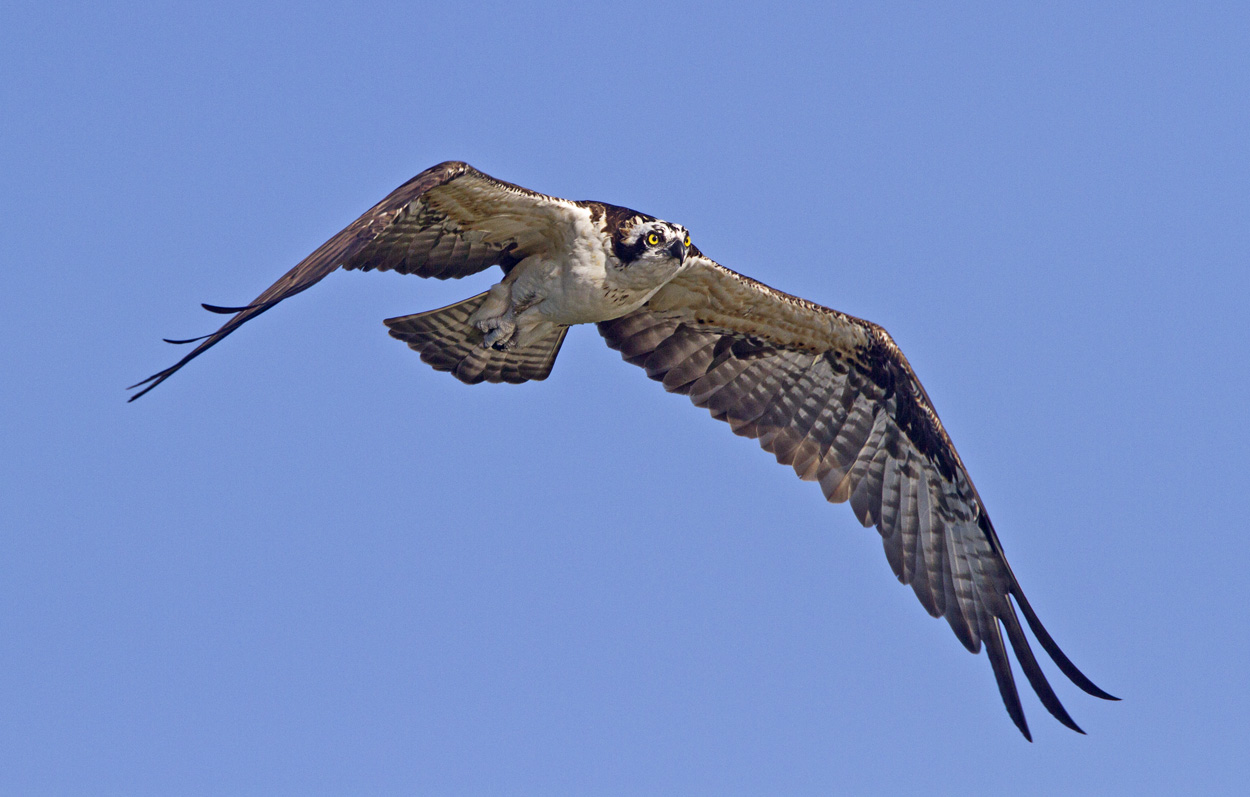
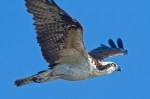
Because of my busy work schedule, I usually do not get to work on some of my personal files as soon as I would like. Going through my Ding Darling files I found quite a few that I wanted to work on. Here are some Ospreys from that trip. It is fun to photograph them fishing an area for their meal, diving into the water to catch a fish. Ding Darling is so large that it is hard to get Ospreys fishing. Usually you see them here flying by to another area or in a tree eating what they have caught. All images here were taken with a Canon 7D with the 400mm f/4 DO with a Canon 1.4X teleconverter giving a effective combined focal length of 896mm at f/5.6. This combination works well when you are photographing in a large open area plus it is extremely hand holdable for fast moving subjects. With the 7D it is important to shoot Raw images and use Adobe Camera Raw or the Canon Software that comes with your camera to process your files to control your image noise for cleaner images. If you ever get to Ding Darling look for them flying through the refuge or sitting in trees along the Wildlife Drive, either resting or eating their catch. Also note that J. N. Ding Darling’s Wildlife Drive is closed on Fridays. Hope you enjoy them.
-
- Done for the Day
-

- Fly By



Caterpiller Wreath
Posted on October 17, 2013
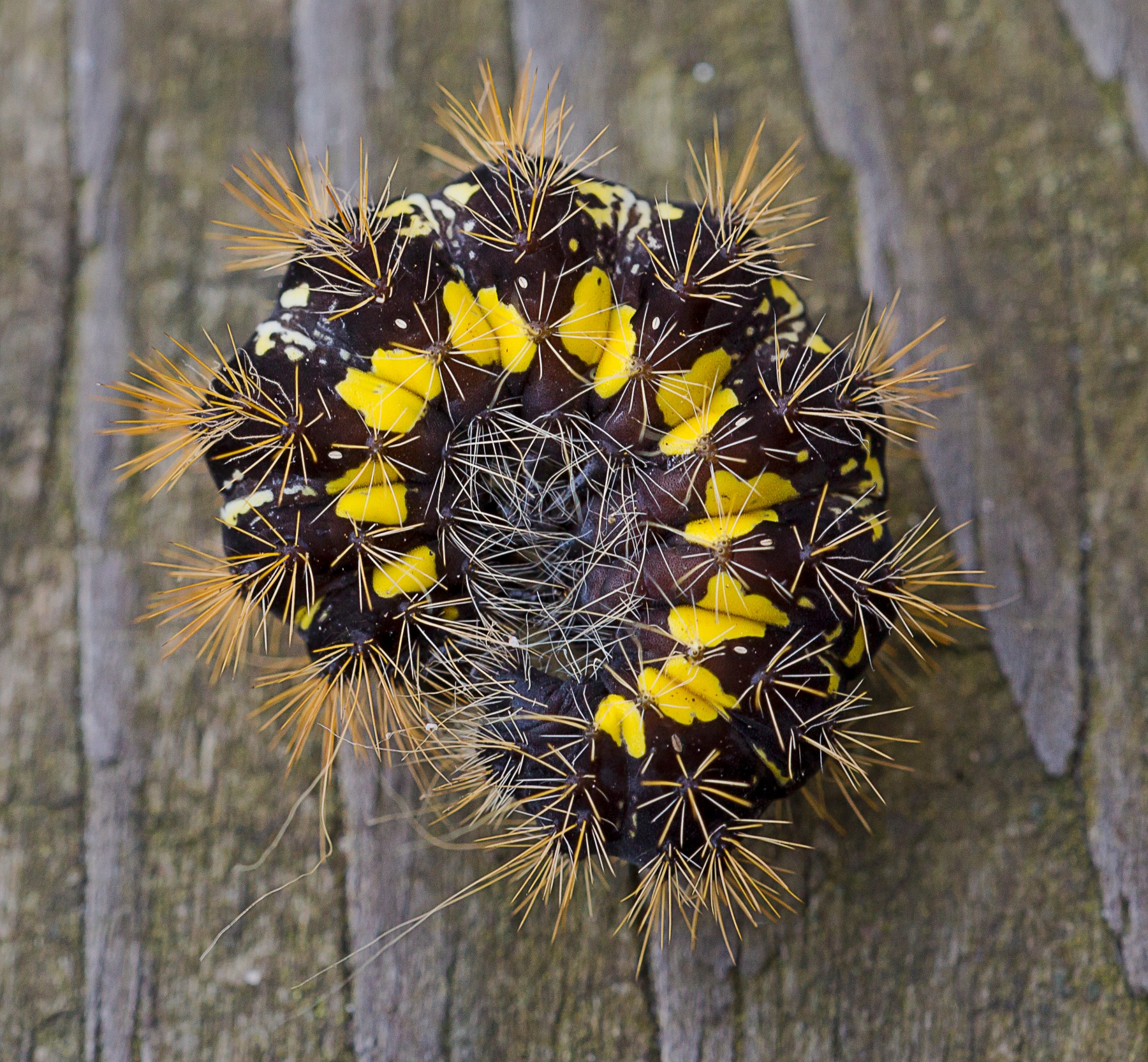
I found this rolled up caterpillar on a bench. I thought it was interesting with the spikes and colors. The caterpillar reminded me of a wreath. Canon 1D MkIV with the Sigma 150mm f/2.8 OS Macro. The caterpillar was in the shade so I used f/8 to get some depth of field for the spikes and tried to shoot straight down with the front of the lens parallel to the caterpillar to get as much in the plane of focus. I ended up with 1/30 of a second exposure at ISO 800 , handheld, so I shot a burst which enabled me to pick the sharpest exposure in the series. I believe it is a Smeared Dagger Moth Caterpillar, a stinging caterpillar. It uses poison filled bristles to defend itself.
Spiders & More Spiders
Posted on October 7, 2013
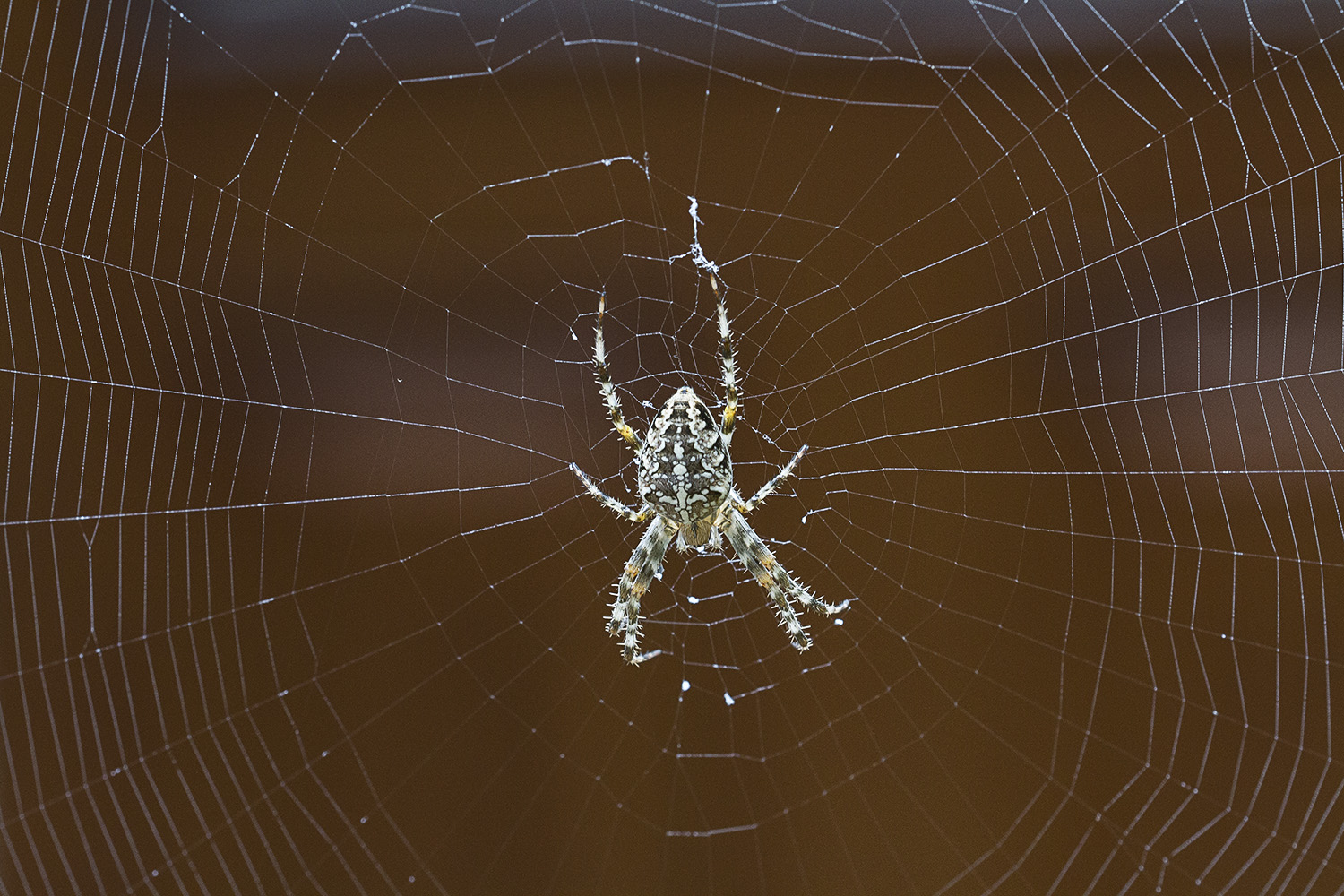
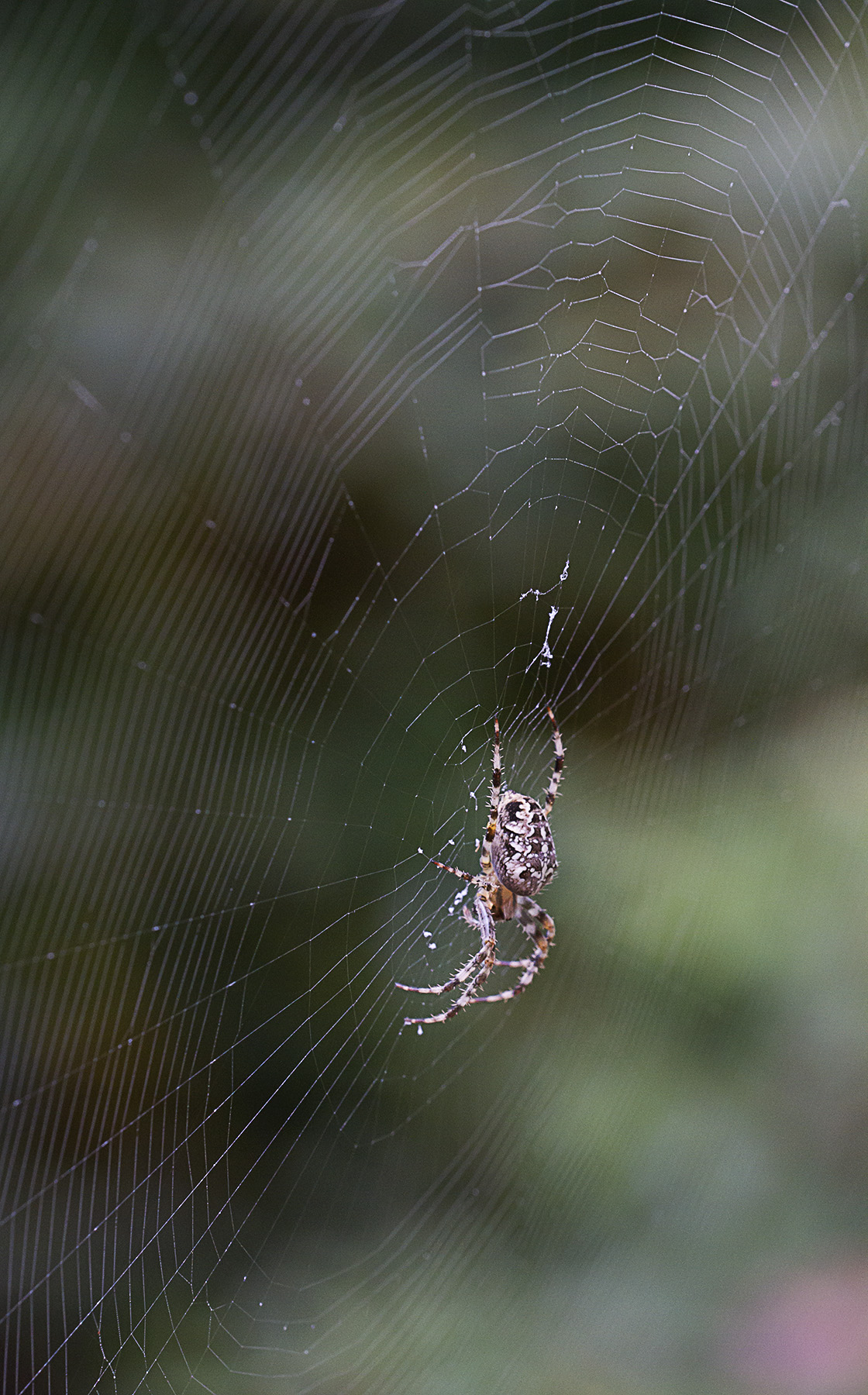
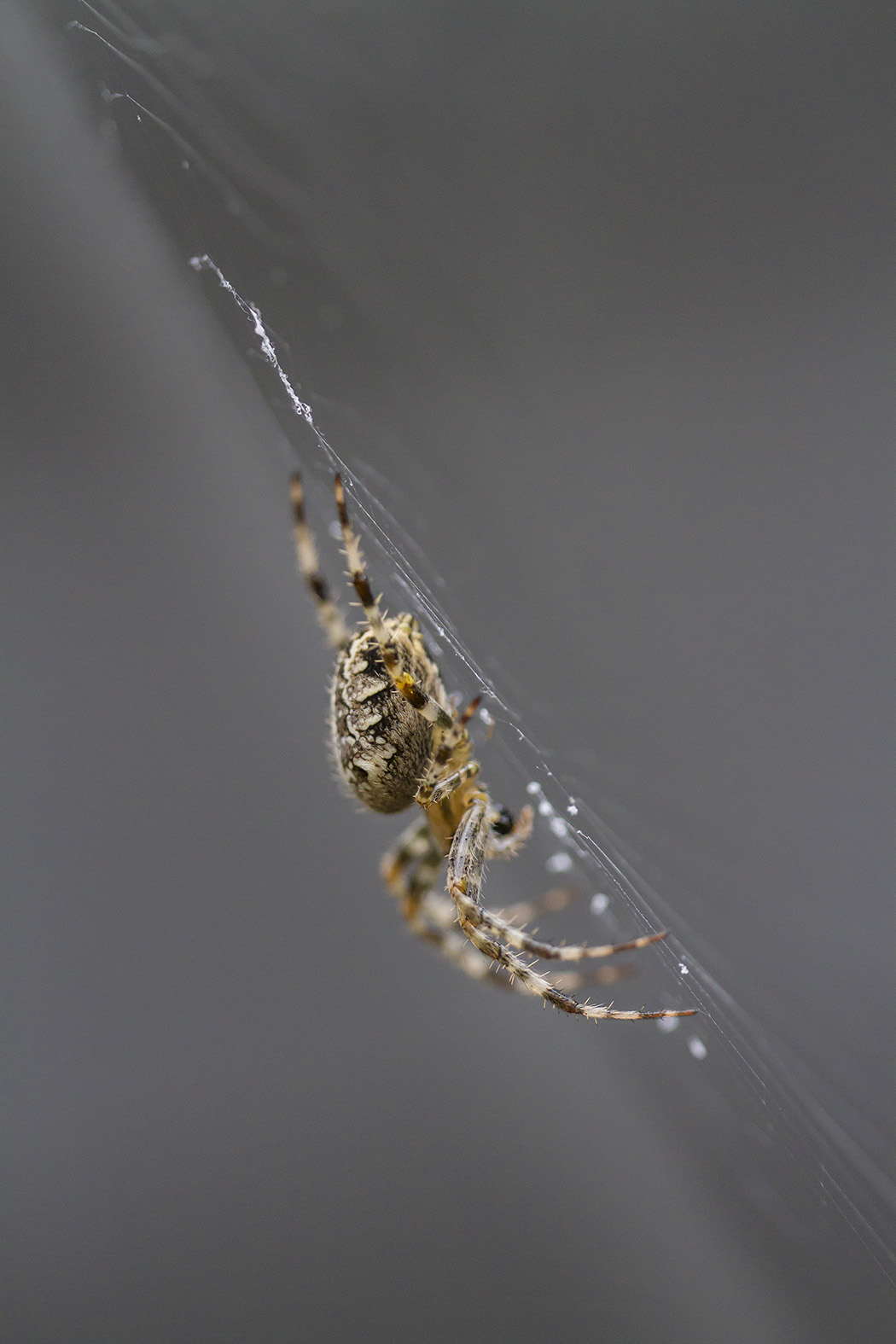 It seems to be the season for spiders. Working in the yard I am coming across quite a few. The one from the other day enlarged its web to about 8 ft wide. Very poor light and windy, but here are a few quick captures, plus one from last week. With the poor light and the wind I had to use a high ISO and f/ stops from f/2.8 to f/5.6 to get something usable. All shot with a Sigma 150mm f/2.8 macro on a Canon 7D. Opened in Camera Raw with aggressive noise reduction. I have to find something besides spiders for next time. I also added one Dragonfly that I just came across and liked.



Different Kinds Of Panoramas
Posted on September 26, 2013

Panorama basically just means wide view, but for photographers panoramas can mean many things. Most use a wide to short telephoto to make panoramas with multiple images. Often when I am out in the field, I am only carrying a 400mm lens, usually with a 1.4X Teleconverter. But quite frequently I see a shot that is too wide for the equipment I am carrying. Even if I had a wider lens, I would not have time to switch and still get the shot I wanted. So I shoot a series of shots of my subject and manually stitch them together in Photoshop. You can also try automatically stitching them in Photoshop or PT Gui. For just a few shots I use auto exposure. But if I am shooting many shots for a long or tall panorama, I switch to manual exposure so the exposure does not change, this makes it easier to combine for the final image without exposure shifts from section to section. I have used this for everything from birds, turtles, birds on top of tall trees, to dragonflies and other interesting subjects. Or if see an image that is perfect for a panorama, but I envision a longer thin crop without a lot of extra image that detracts from what I want. I do not want to crop to my panorama from my regular file because I want a large image, either for a double page spread or maybe a large print, and want to hold the detail with all the added pixels. In another scenario, I see a large bird landing with a wide wingspan, but cannot fit it all in, so a quick series at 10 fps gives me a few images to work with. Or you see a Black-crowned Night-Heron sitting in a tree and you also want to show the bird in its habitat with a lot of detail. Give it a try, it is simple to do and comes in very handy.
Blackwater NWR, Cambridge MD


Ding Darling National Wildlife Refuge, Sanibel, Florida

Closeups with 400mm f/4 DO with, 1.4X teleconverter and extensions tubes


Okefenokee National Wildlife Refuge

Bombay Hook NWR, Smyrna, DE
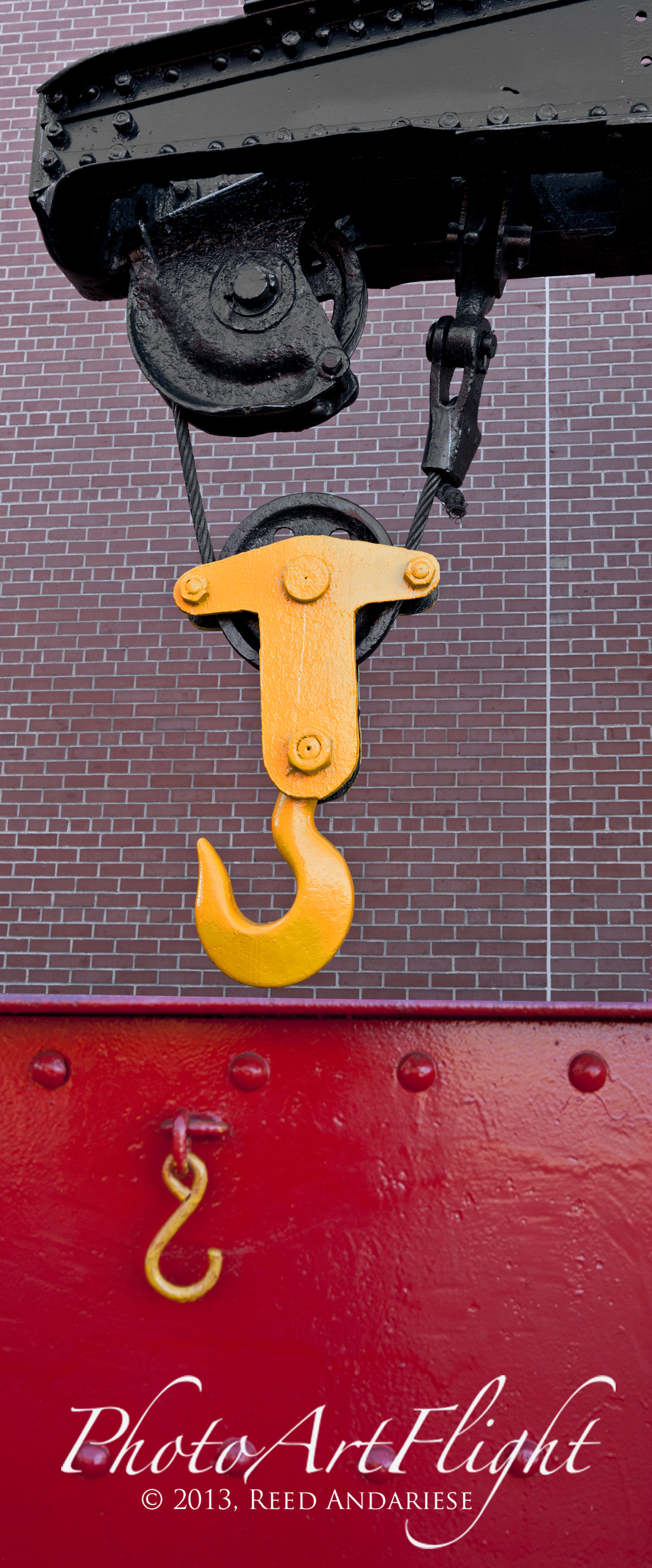
Steamtown National Historic Site, Scranton, PA
 photoartflight
