 photoartflight
Assorted Birds From Magnolia Plantation Audubon Swamp
Posted on December 19, 2020

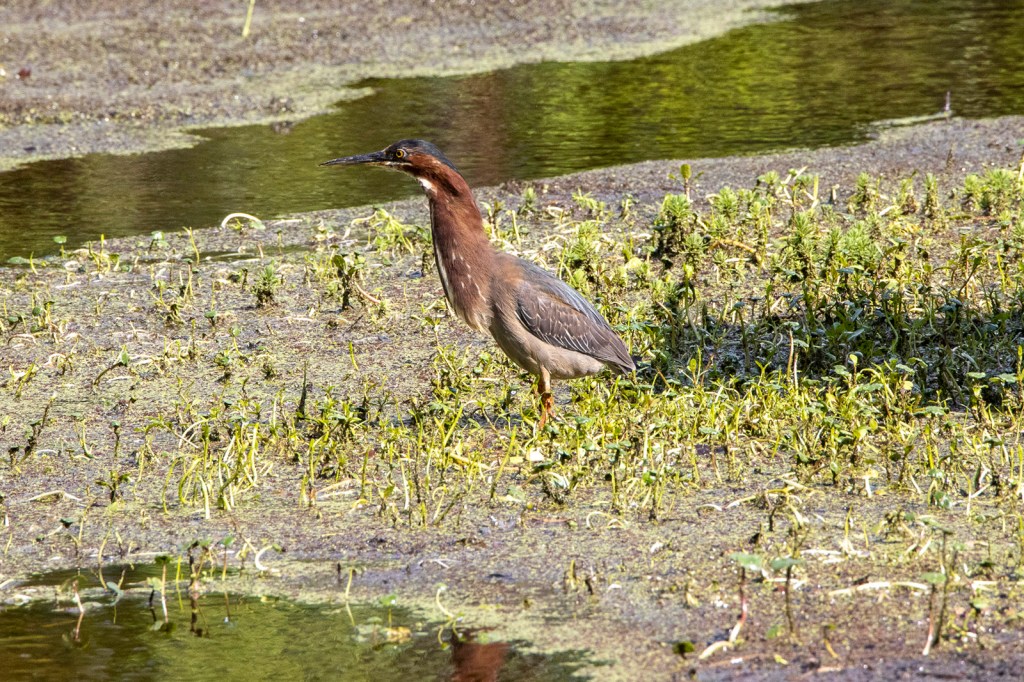
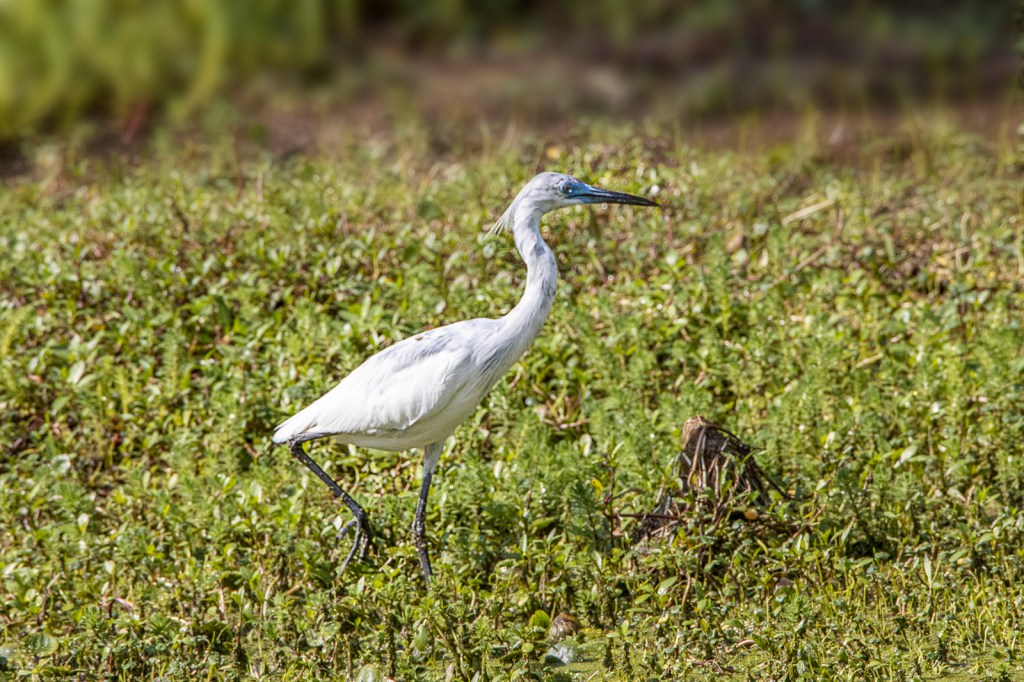
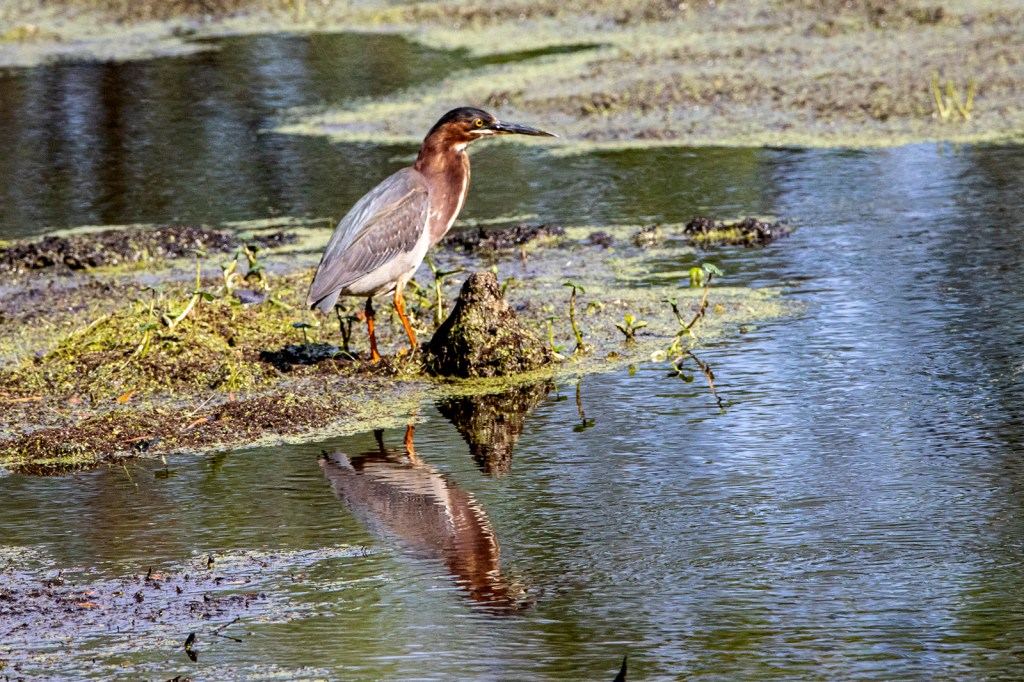
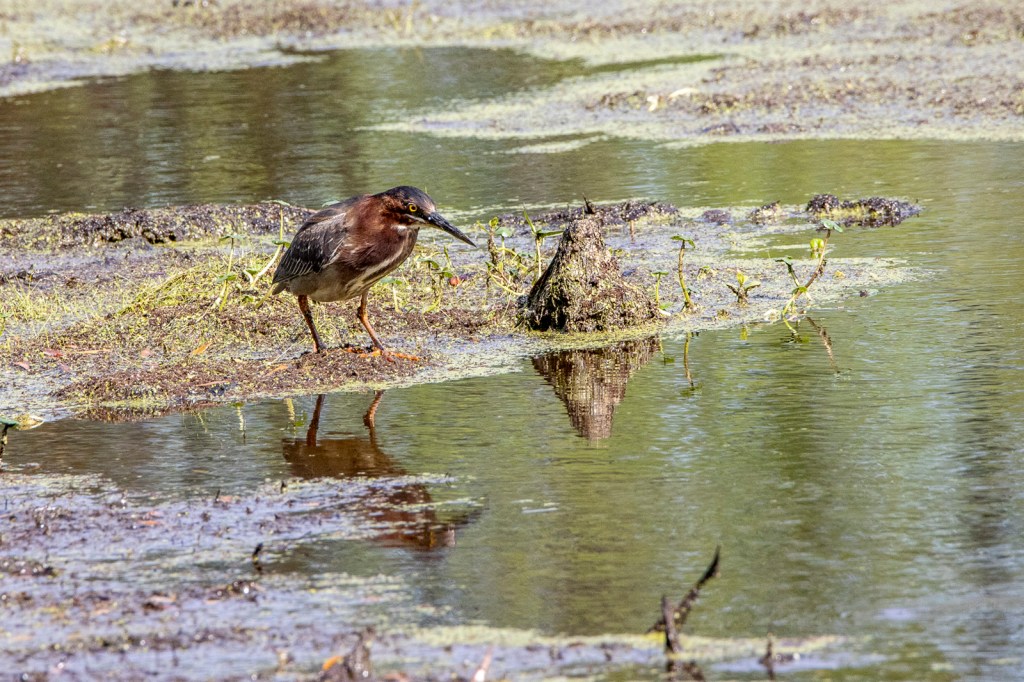
The Audubon Swamp Garden on the grounds of Magnolia Plantation near Charleston, South Carolina is a 60 acre cypress and tupelo swamp. In the past the swamp served as a reservoir for the plantation’s rice cultivation. Now it is an interesting and easy Swamp to walk through on the trails and raised boardwalks to get some interesting images. For Wildlife we mostly saw a variety of birds and quite a few alligators on this visit. Most of the birds we saw were quite far out so even shooting @ 600mm I had to crop the images some. But it was still a Great area to photograph and to just see as we were walking through the Swamp Garden. The landscapes & cloudscapes in the swamp were very interesting also, but that will be a different post.



Great Egret Nest With Chicks
Posted on December 11, 2020
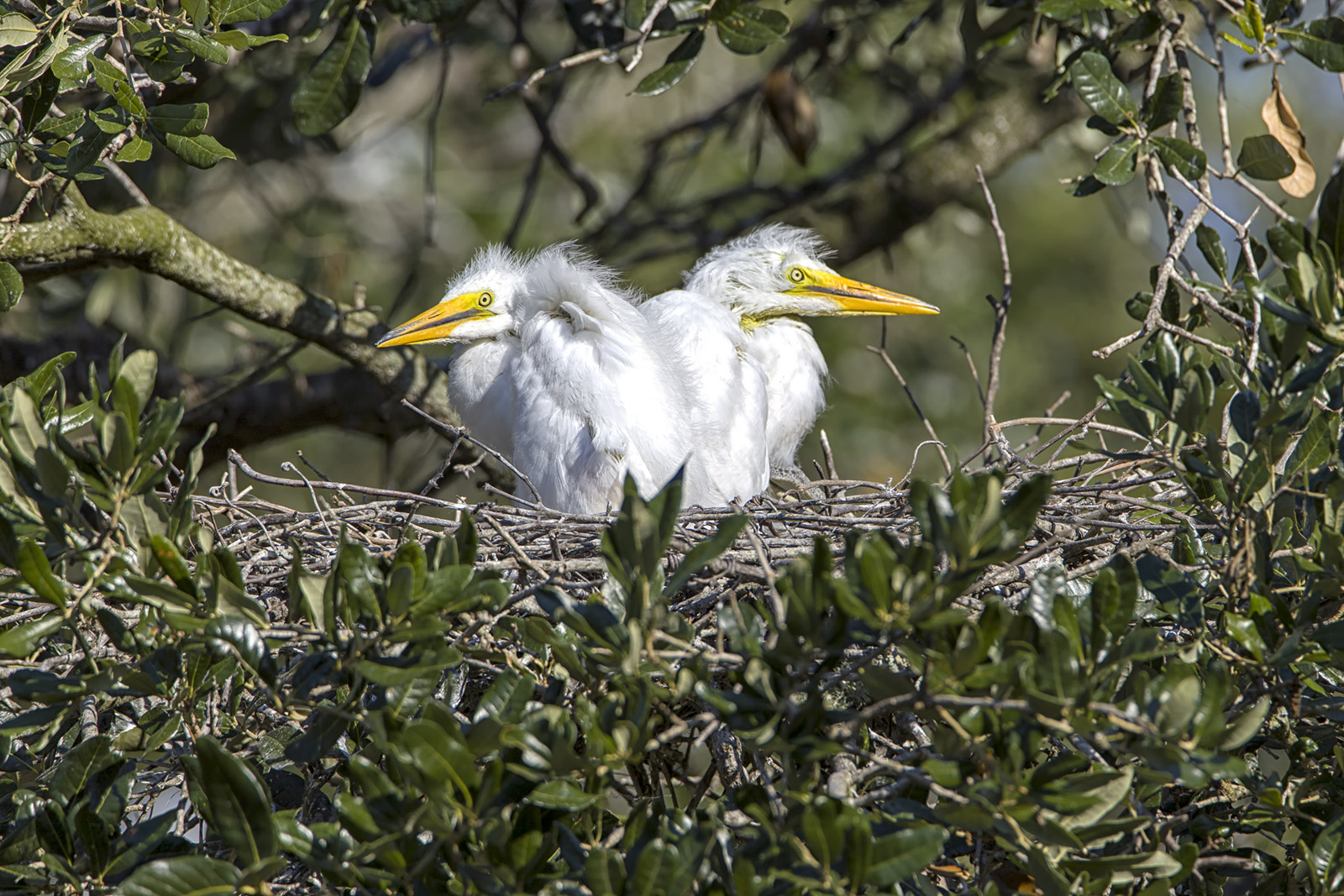
A series of images of Great Egret chicks by & in the nest. The featured image was taken @ 500mm with a Tamron 150-600mm lens with a Canon R.


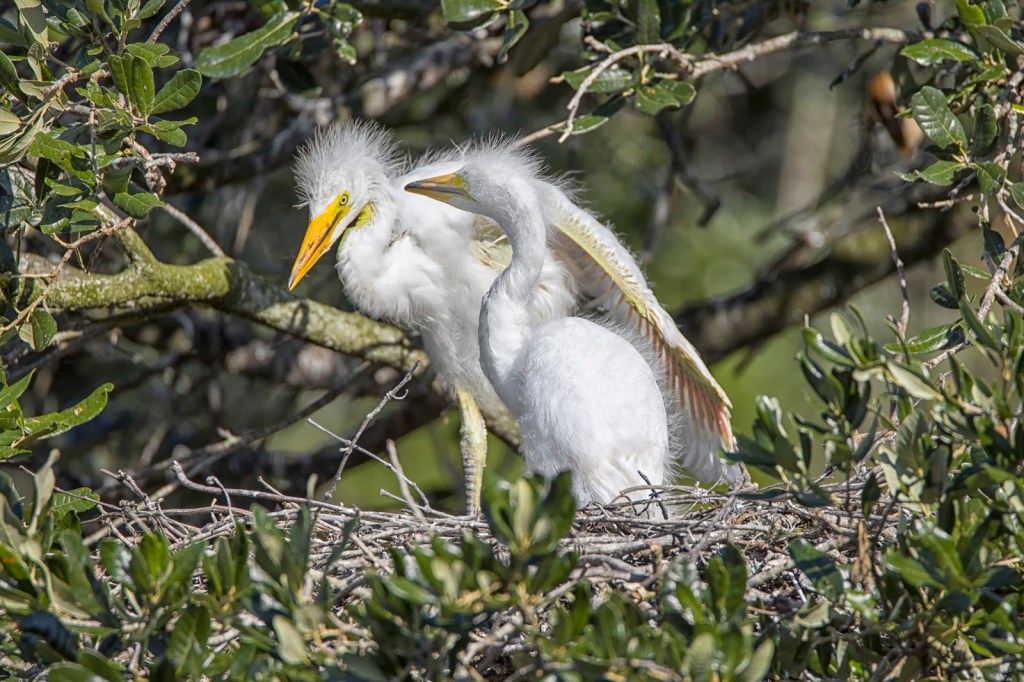
Wood Storks From St. Augustine Rookery
Posted on December 10, 2020
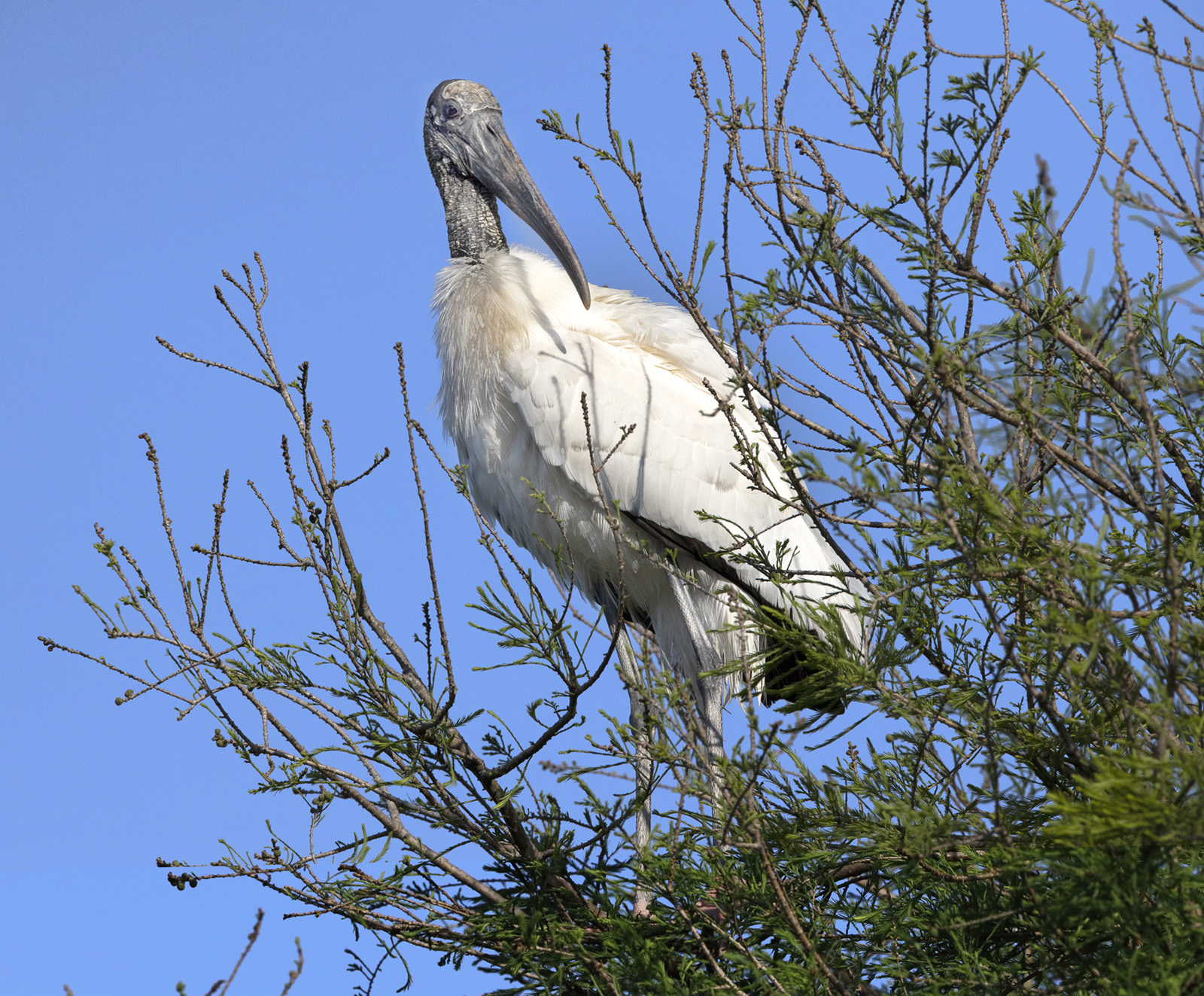
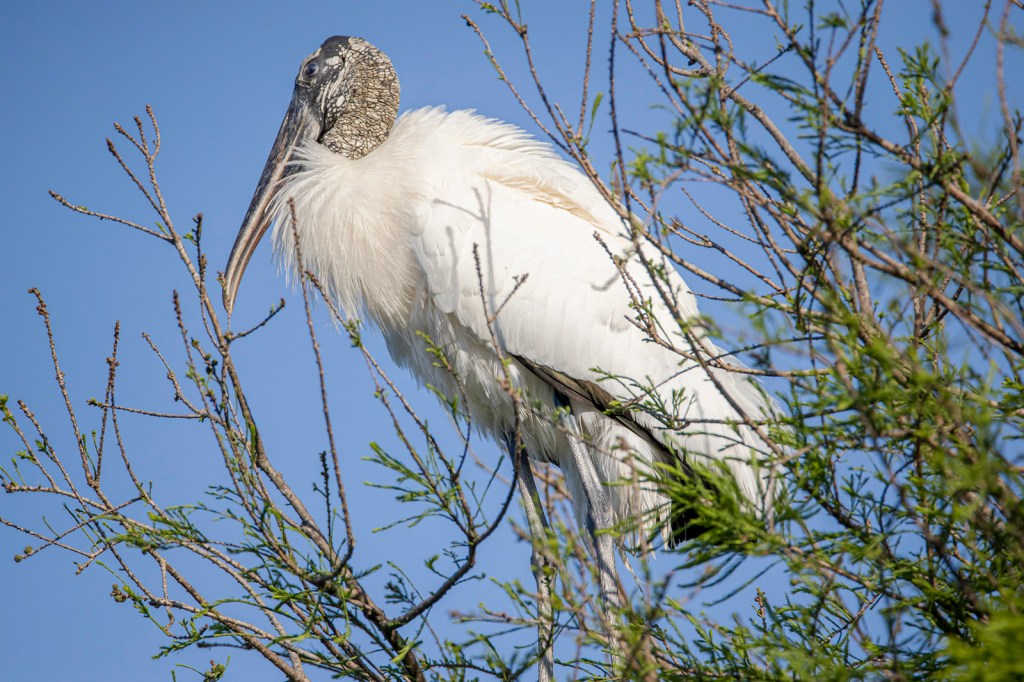
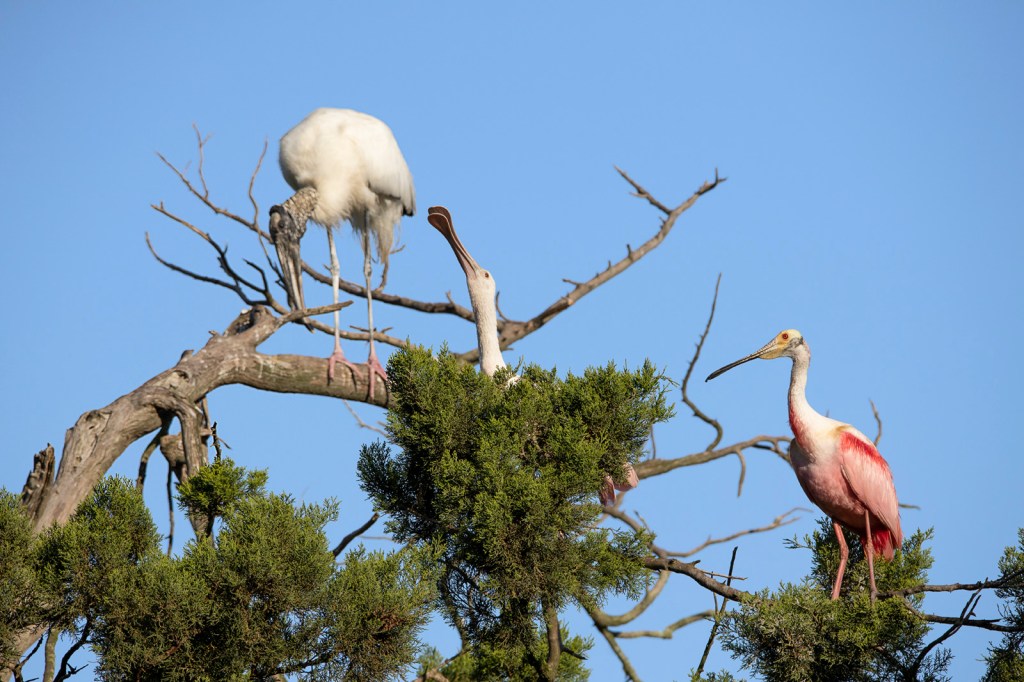
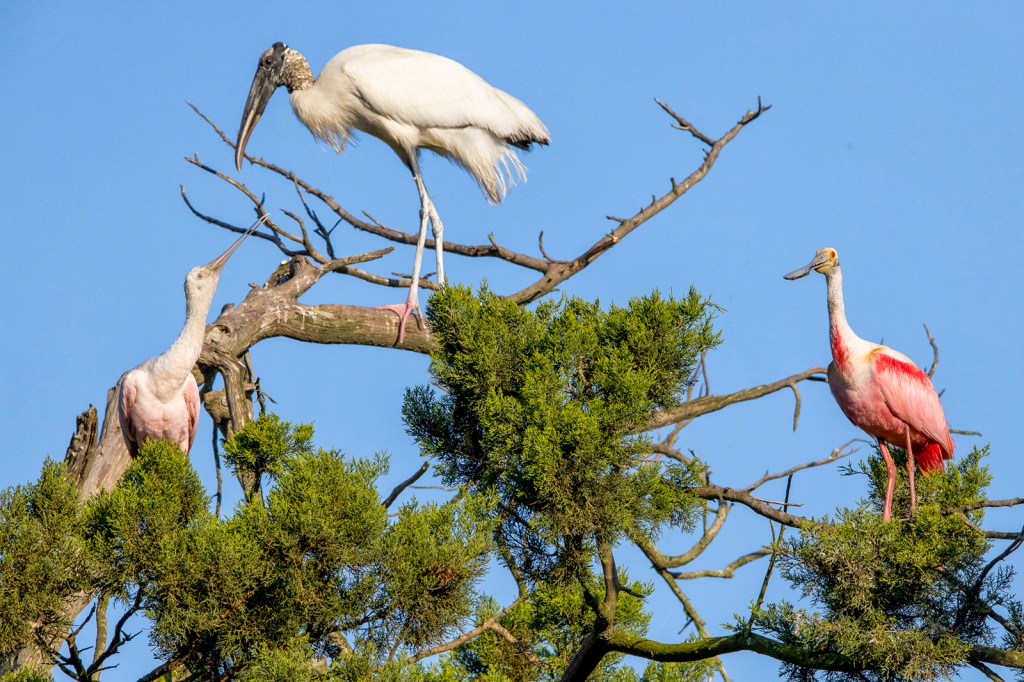
We found many Wood Storks at the St. Augustine Alligator Farm Rookery on our trip there last January. They seem to like nests more in the top of tall large trees and many times you see multiple nests in the same treetop. It is an interesting place to photograph a wide variety of birds, many nesting there. They are constantly coming & going and it can be quite noisy at times. For this post I am featuring some of the Wood Storks from the same general area around one treetop. Some think they are ugly birds, but I prefer to think of them as interesting photo subjects with character. They also seemed to interact with Spoonbills quite often. The featured image is a 2 image slight pano to not crop off it’s feet in the branches.


Great Egrets With Breeding Plumage
Posted on December 6, 2020

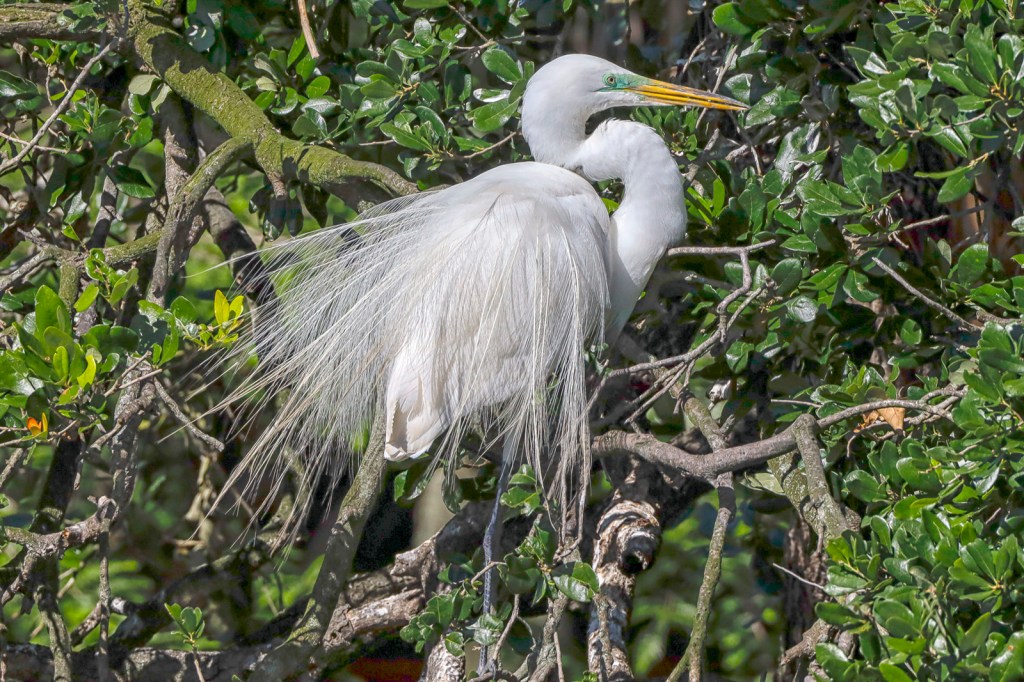
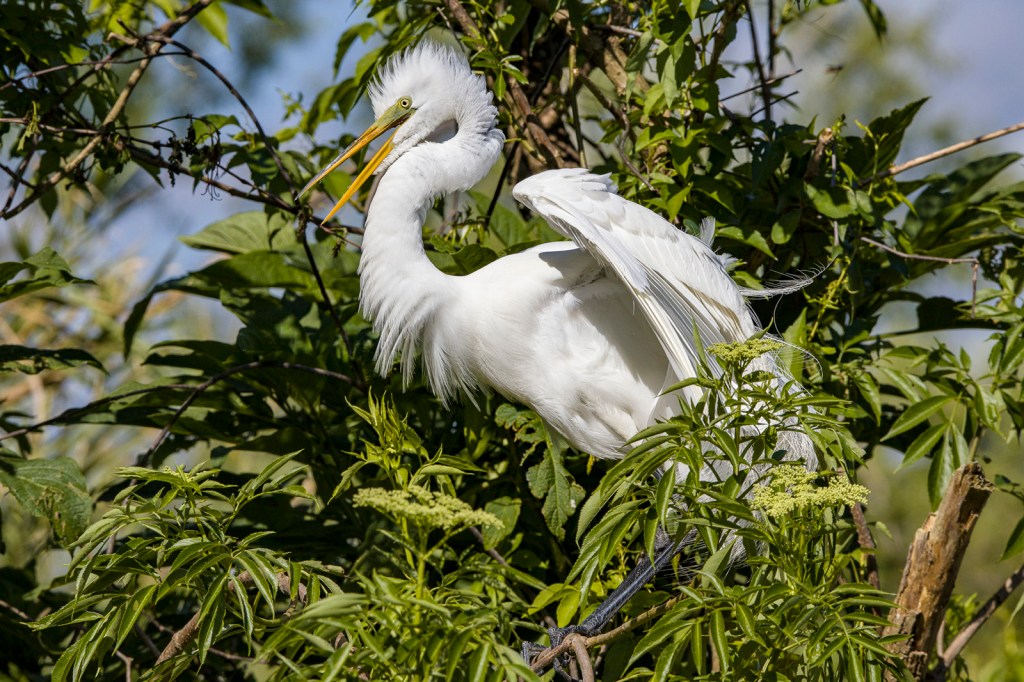
When we were photographing last year at the St. Augustine Alligator Farm Rookery we saw a lot of Great Egrets with their Breeding Plumage. Great Egrets are of breeding age when they about two years old. As they get into breeding plumage, they have long lacy and delicate plumes on their backs. The eye lores (featherless skin between the bill and eyes) turn from yellow to lime green, and the top of the upper bill turns dark. Also sometimes it seems their neck and other areas look “more feathery”. Below are a few examples of their Breeding Plumage.




Snowy Egrets From St. Augustine Alligator Farm
Posted on December 3, 2020

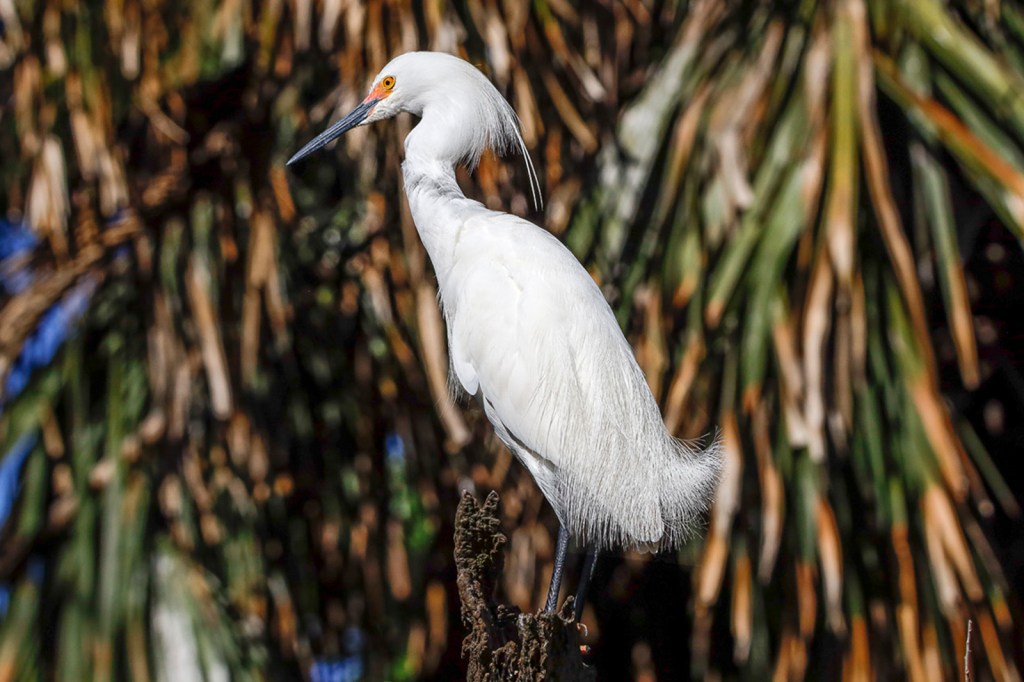
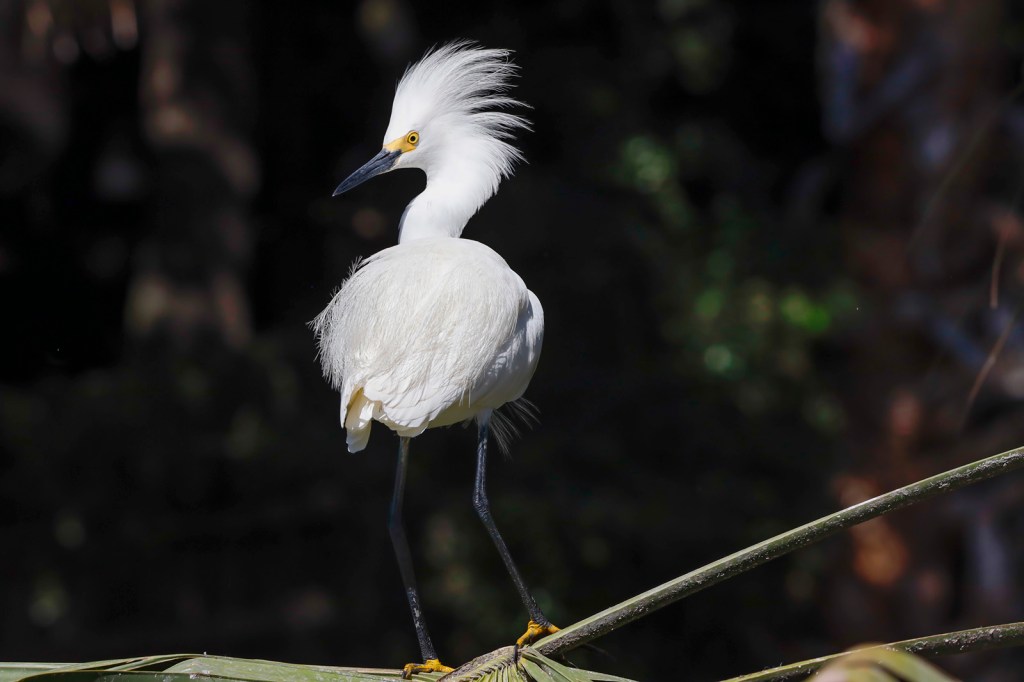
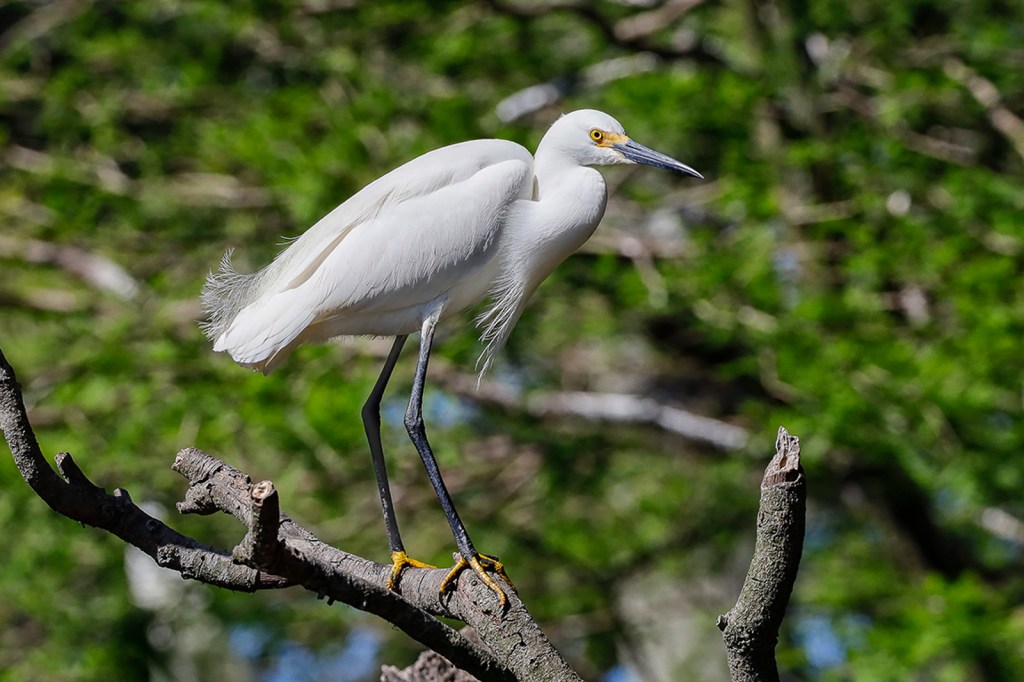
Because of the Covid 19 restrictions we have not traveled from home. I was going through images from a trip last January to Florida. The images used here were taken at the St. Augustine Alligator Farm & Rookery. It was a Great photo destination and they seem to cater to photographers. With a membership, they offer early hours to photographers& it can get very crowded in some of the areas. The Rookery area has a boardwalk going through it above the water & the alligators. It attracts a lot of photographers because there are so many nesting birds in the trees in the Rookery. The alligators provide protection to the birds’ nests in the trees above the water & the gators. I also saw quite a few birds walking on the shoreline by the alligators. I guess they are well feed since they seemed to leave the birds alone. I was using a Tamron 150-600mm lens on a Canon R which was a perfect combination to photograph there. I Since you are in a large gated boardwalk area it was nice to not lug too much gear around with all the photographers, tripods & other visitors. Usually I do not like photographing in commercial wildlife areas, but it was a nice area with nice people running the Alligator Farm. These are images I did not post before. The featured image was taken @ 600mm with the Canon R.





Plainsboro Preserve Landscapes @ 12mm & 24mm
Posted on October 29, 2020

We went to Plainsboro Preserve to take a walk and to see what we could find to photograph. Looking outside before we left we saw the clouds were amazing. So I decided to travel light and only brought a 12-24mm lens on a Canon R, thinking I would concentrate on landscapes with the clouds. And if I saw something else interesting I also had my iPhone 11 Pro. The Plainsboro Preserve includes over 1,000 acres of undisturbed open space with nature trails and the 50-acre McCormack Lake. The New Jersey Audubon Society manages the preserve on behalf of Plainsboro and Middlesex County County, NJ.
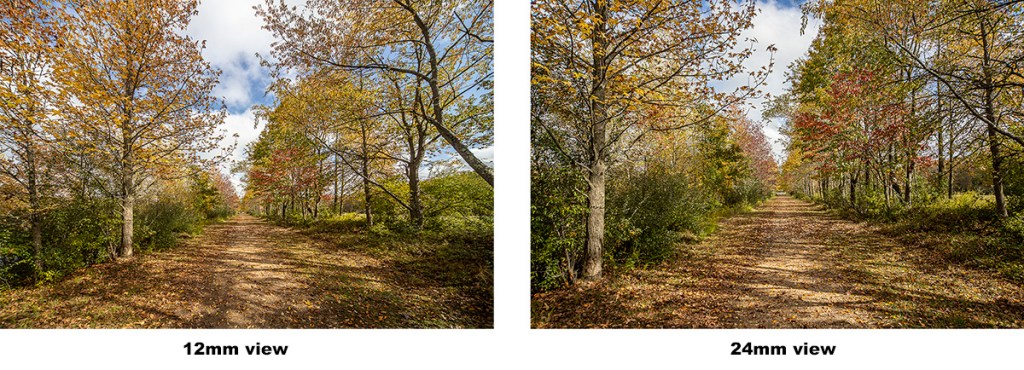

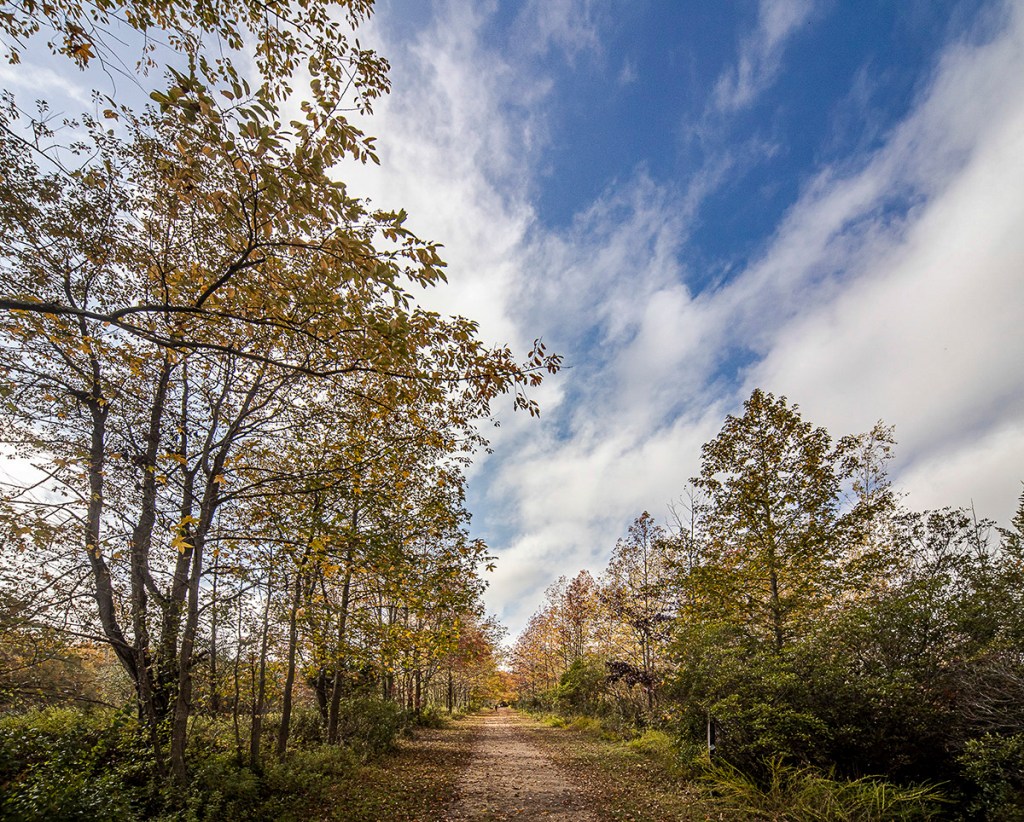


4 images @ 12mm, 2 overlapping images top half, 2 images overlapping bottom half, Canon R

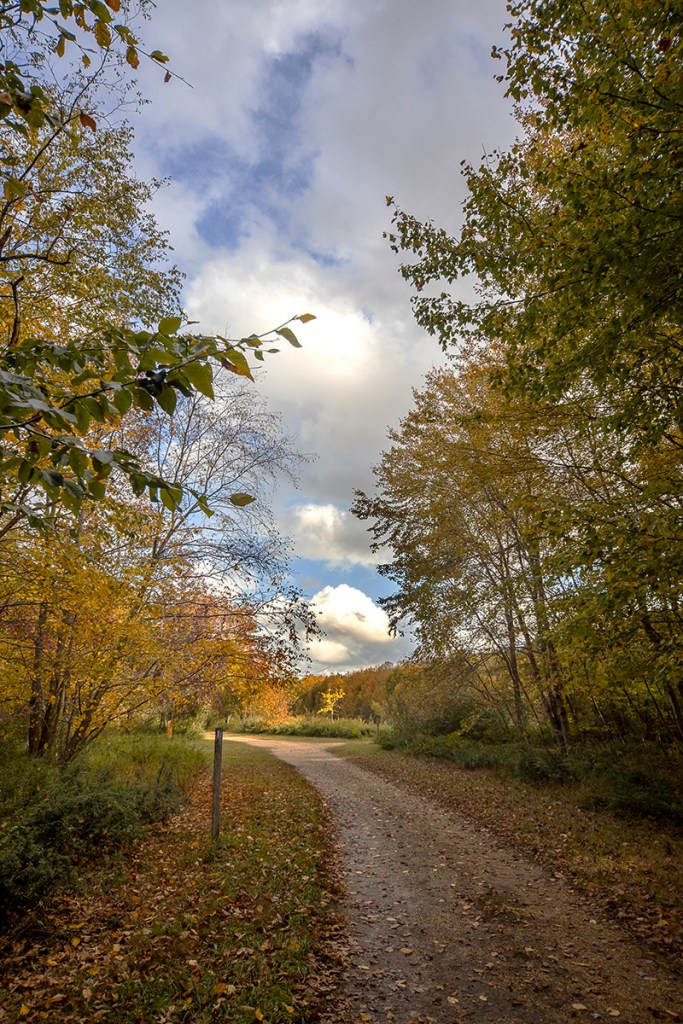

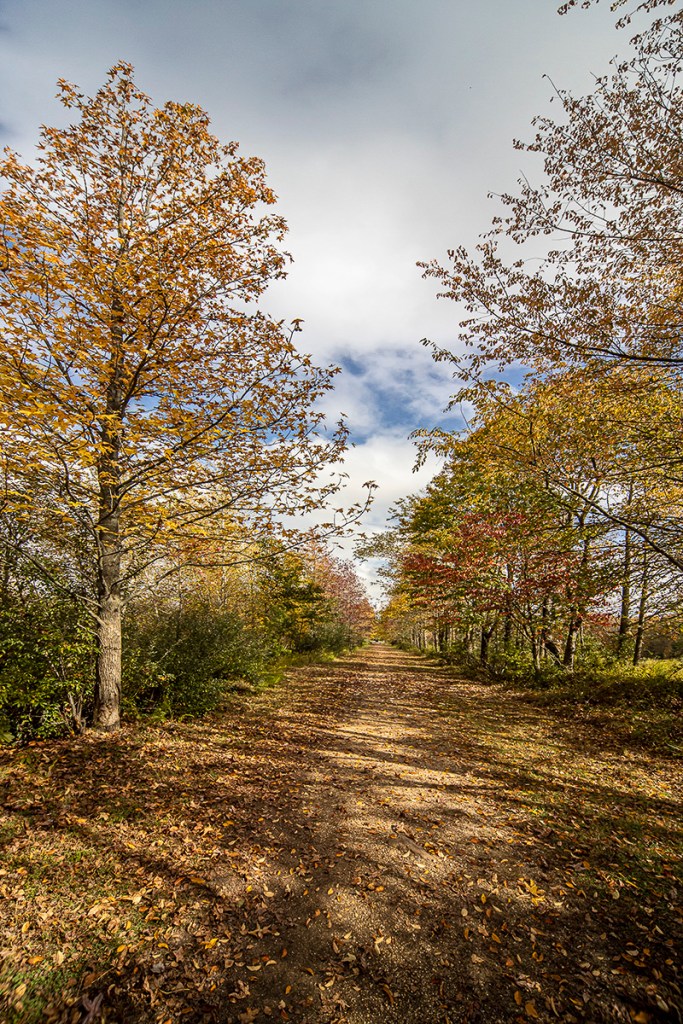
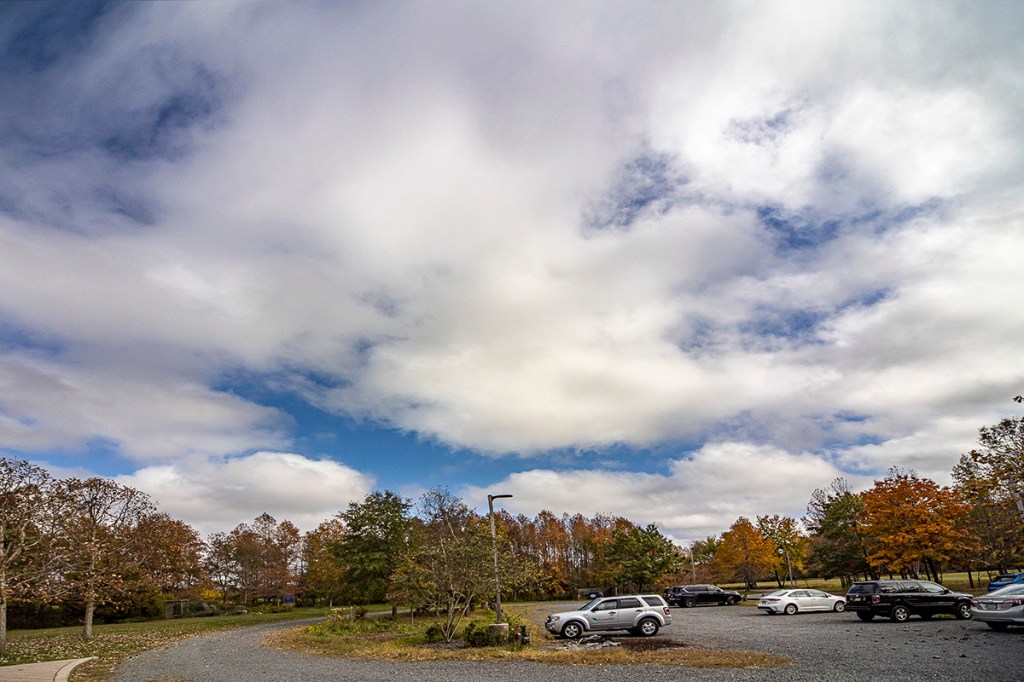
Bleeding Heart Panorama & Focus-Stacking For Smoother Backgrounds
Posted on May 12, 2020

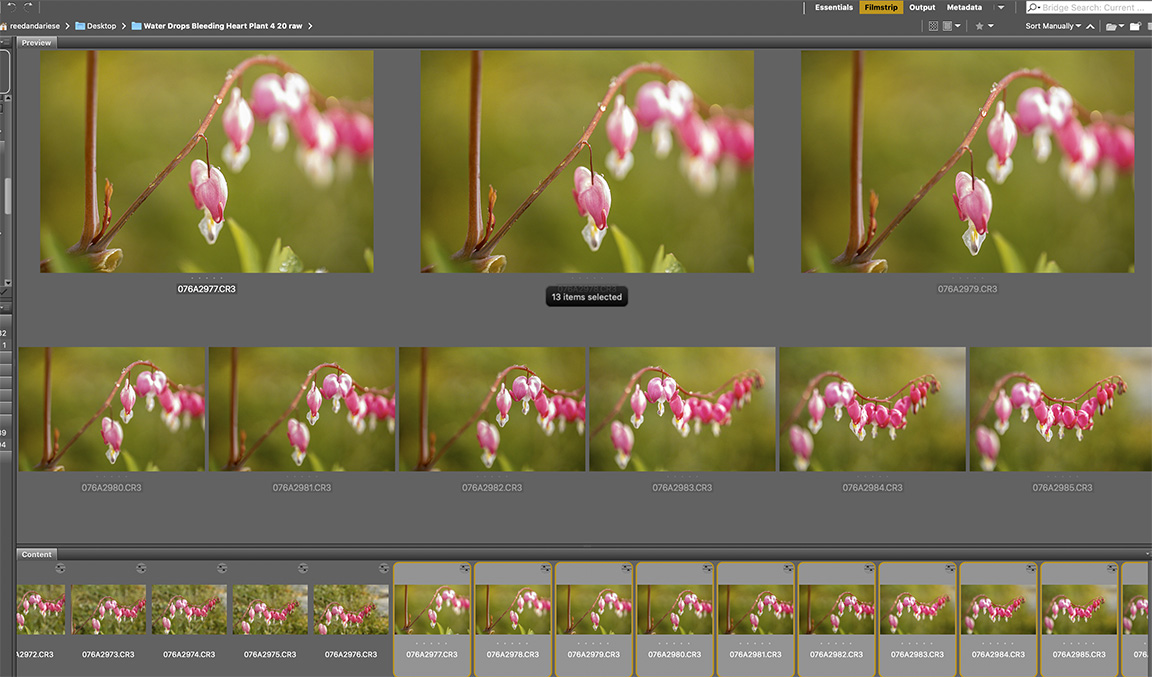
After a heavy rain the other day I went out to see if I could find some interesting subjects with water drops to photograph. I wanted to use Image Stacking for more detail in the water drops and main subjects, but still have softer backgrounds. This is one of the first subjects I came upon. I was using a Sigma 150mm f/2.8 macro lens on a Canon R. These are all handheld because it was difficult to get the view I wanted using a tripod. The featured image is 13 images shot from left to right @ f/2.8. Each image in the panorama series is manually focused for the area needed in focus as I shot along the subject to keep a softer cleaner looking background.
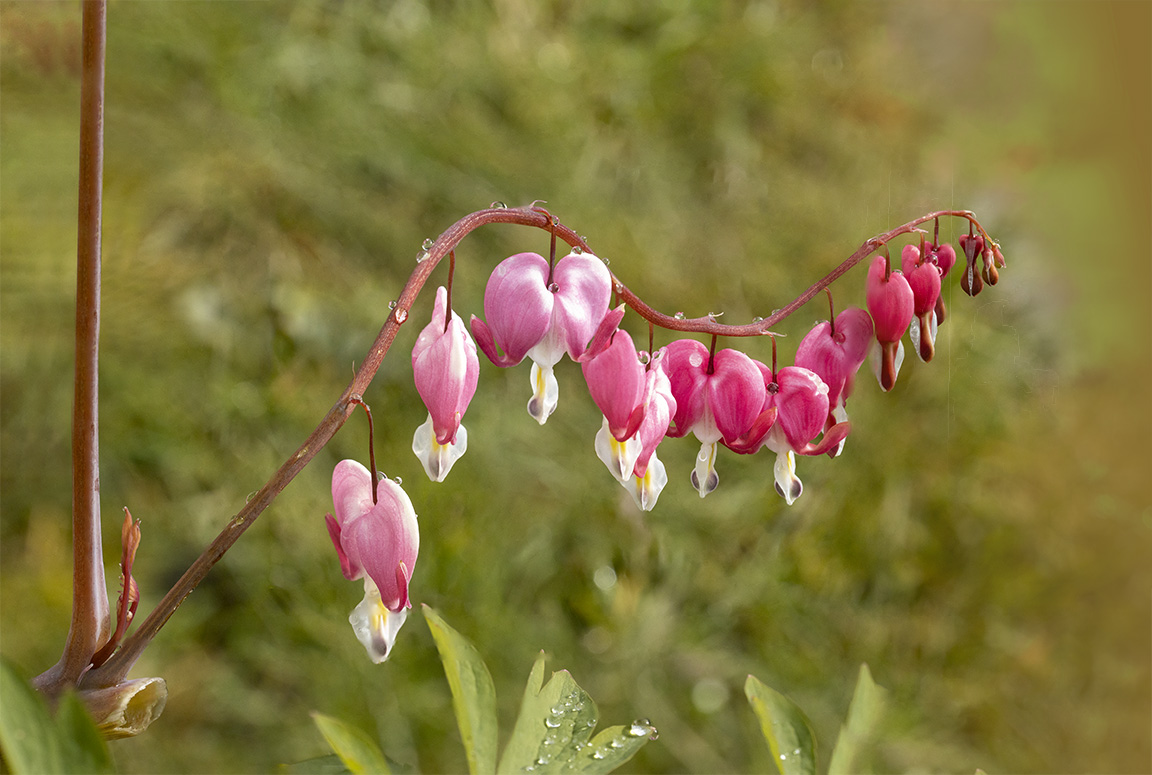
8 image handheld panorama focused stacked stopping down to f/11 – giving a much busier looking background
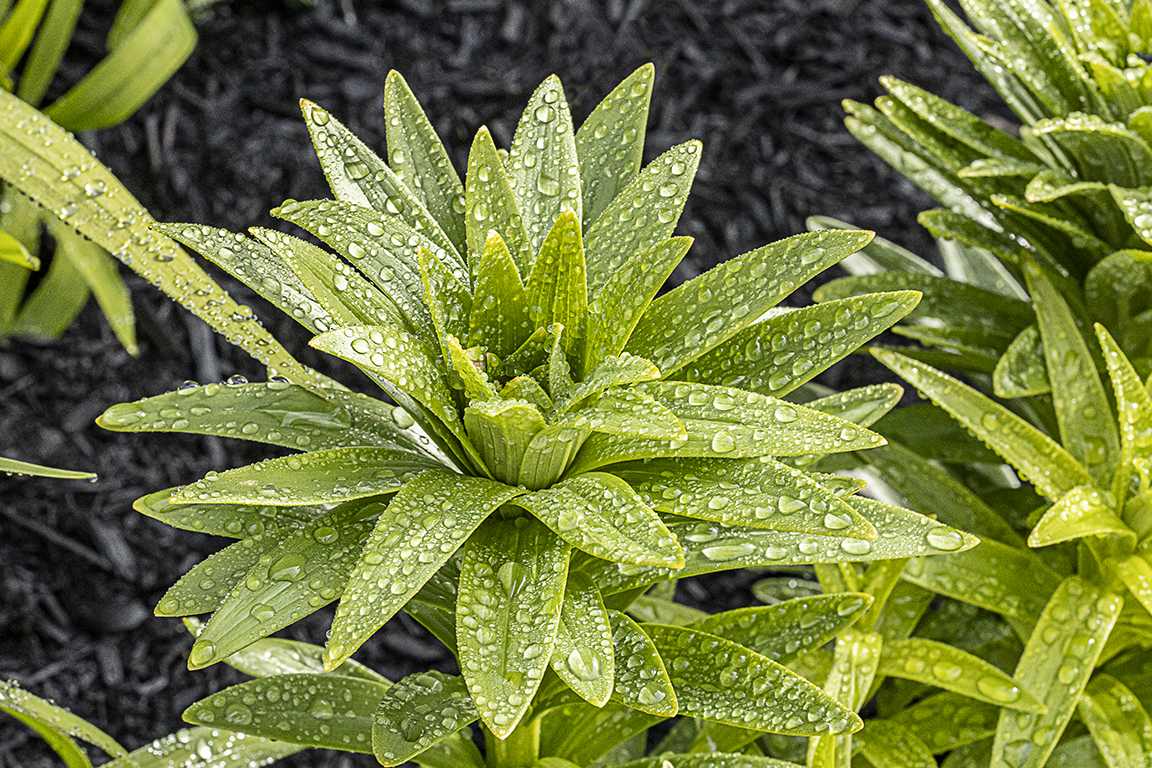
18 image stack @ f/8

8 image Focus Stack – f/16
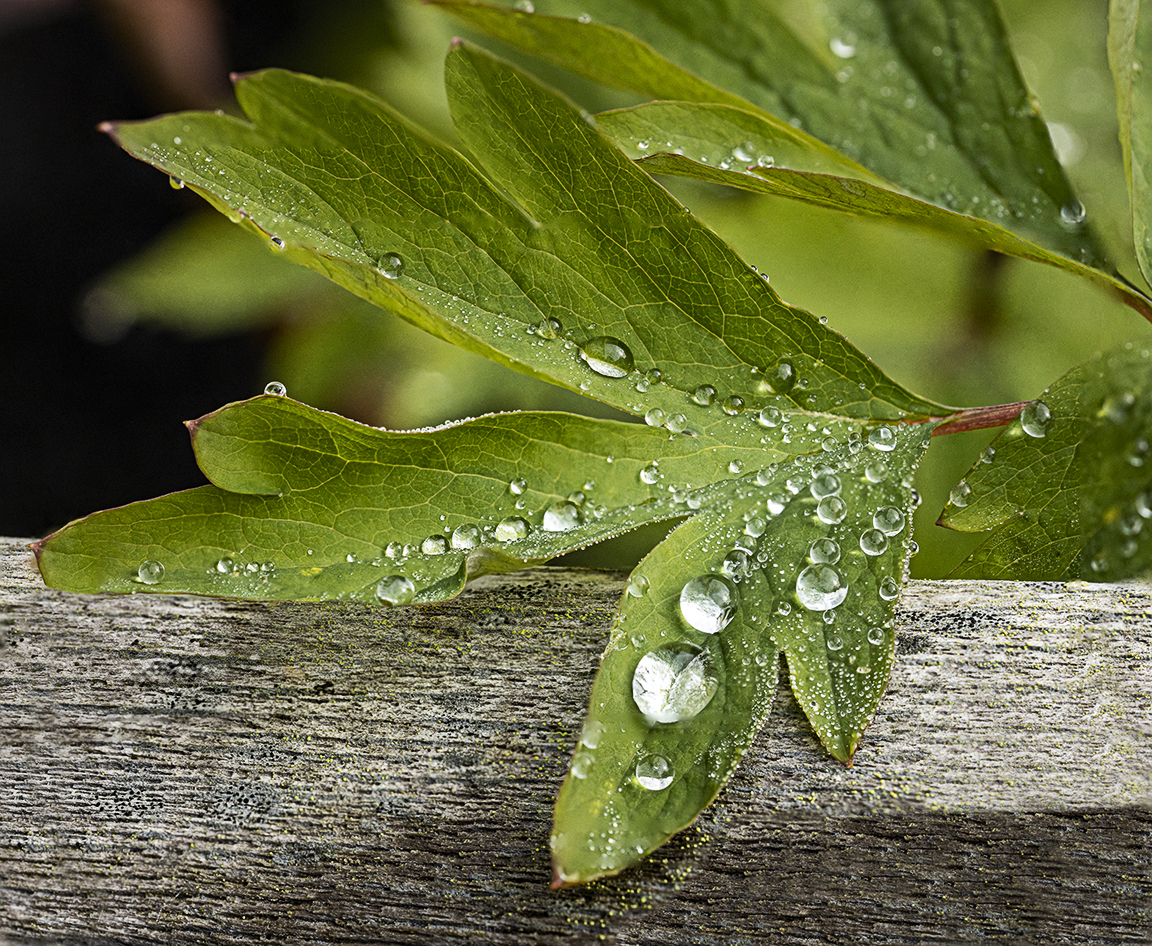
12 Image Focus Stack @ f/8
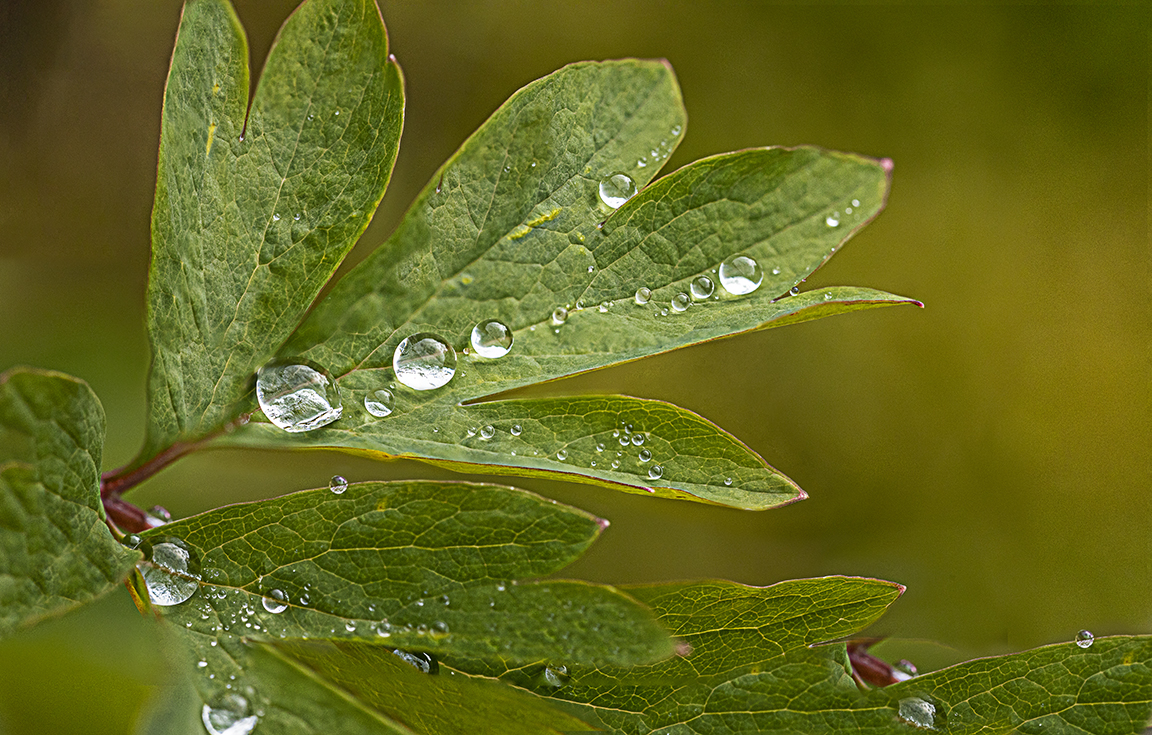
9 Image Focus Stack f/5.6

7 Image Stack @ f/8
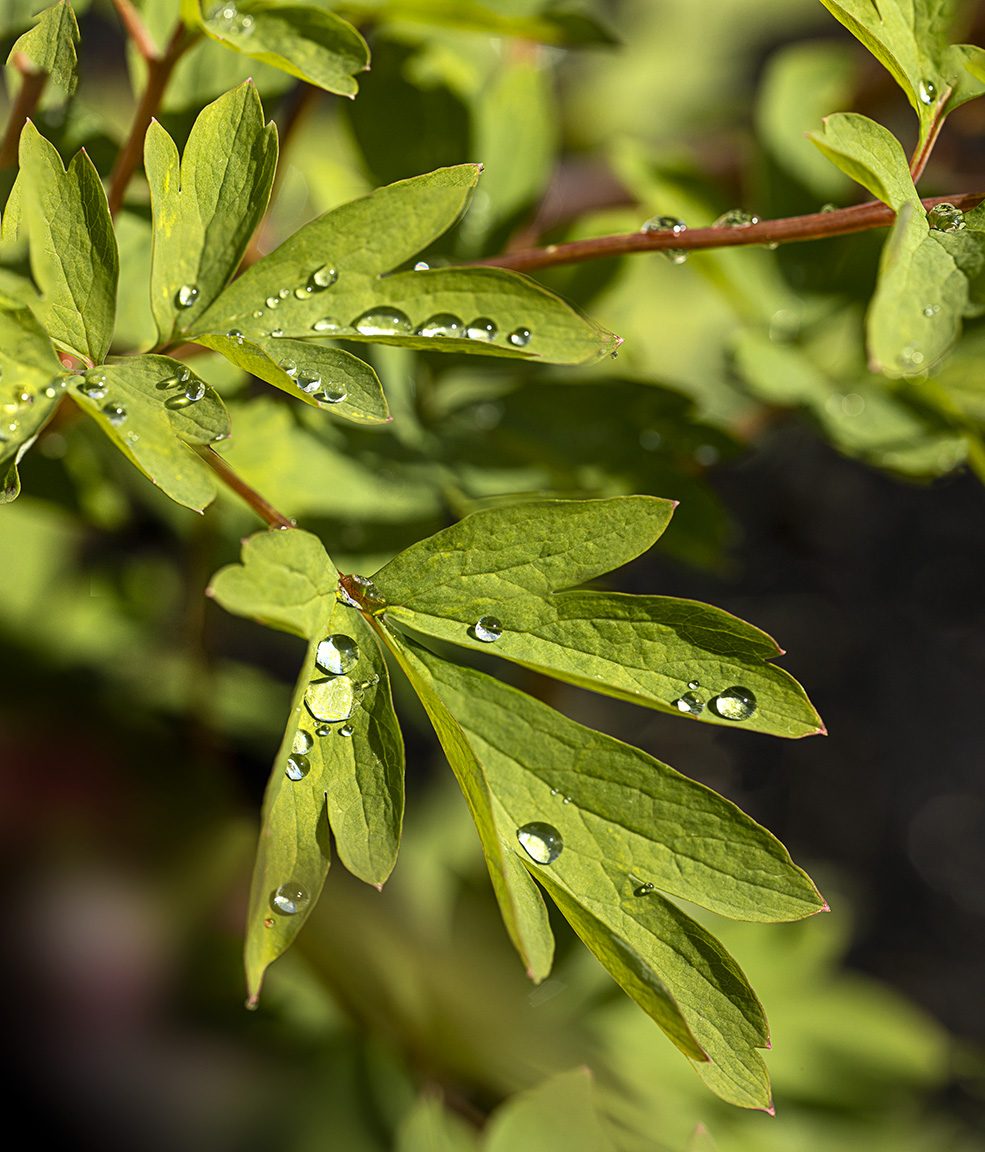
18 image stack @ f/8 for a much wider focus range.
Meeting House Series In B&W Infrared
Posted on April 23, 2020
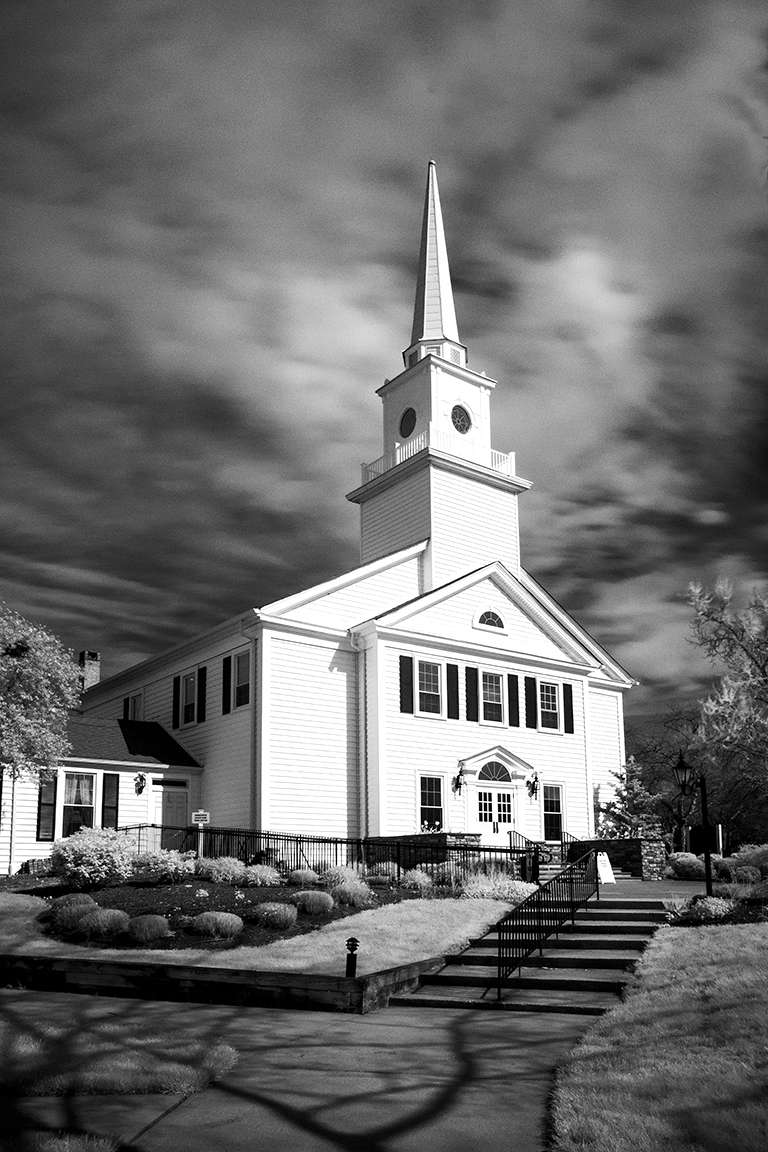
I believe we have had a stay at home order in NJ now for 34 days! We can not even go to a park to walk. But we can walk outside in our Condo Community (with a mask). So I thought I would go to the Meeting House on the Commons in our community. It is used for meetings, concerts and various church services. It is an interesting building & Commons for photography, some of which I have posted before. So I thought I would practice some B&W Infrared Photography. I shot a mix of multi-image panoramas along with single shot images. For this I was using a Canon R camera with a Hoya R72 Infrared Filter on with a Canon 17-40mm lens. All images were shot with the lens at 17mm. With the Canon R Mirrorless Camera Body I can actually see what I am composing/framing in the viewfinder with the R72 Infrared filter attached on the lens. On a standard DSLR all you see is BLACK in the viewfinder. So you would compose/frame your shot, then put the filter back on. Then you would manually adjust your focus point to the IR focus mark on the lens. (See images detailing this procedure below in this post). Since with the lens set to 17mm and shooting buildings my focus for all was set manually at infinity focus on the IR Focus marker. Also for shooting with this R72 filter it is necessary to photograph a white piece of paper for adjusting the White Balance when Editing your IR images.

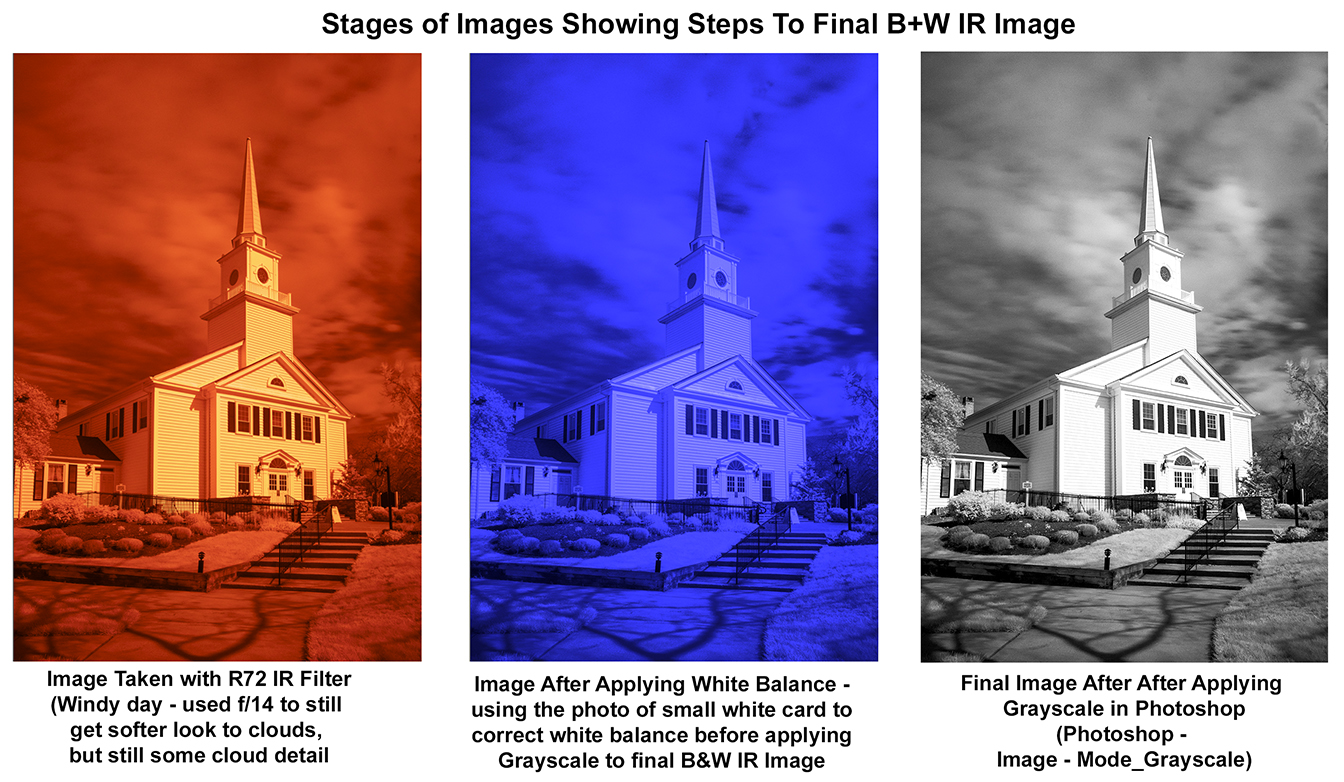
Image showing R72 filter used and small white paper you need to photograph out in the field for preparing proper white balance for adjusting your files
When you Open your IR Image it has a Reddish Orange Cast from the R72 Filter. Use the steps below to convert to B+W Grayscale Image.
Since you are using long exposures because of the R72 filter, clouds seem to get an even smoother feathery look. I chose an f/stop to get a ~14 second exposure. If you go too long the clouds have even less detail which looks a little bland and gray.

17mm, f/14, 13 seconds
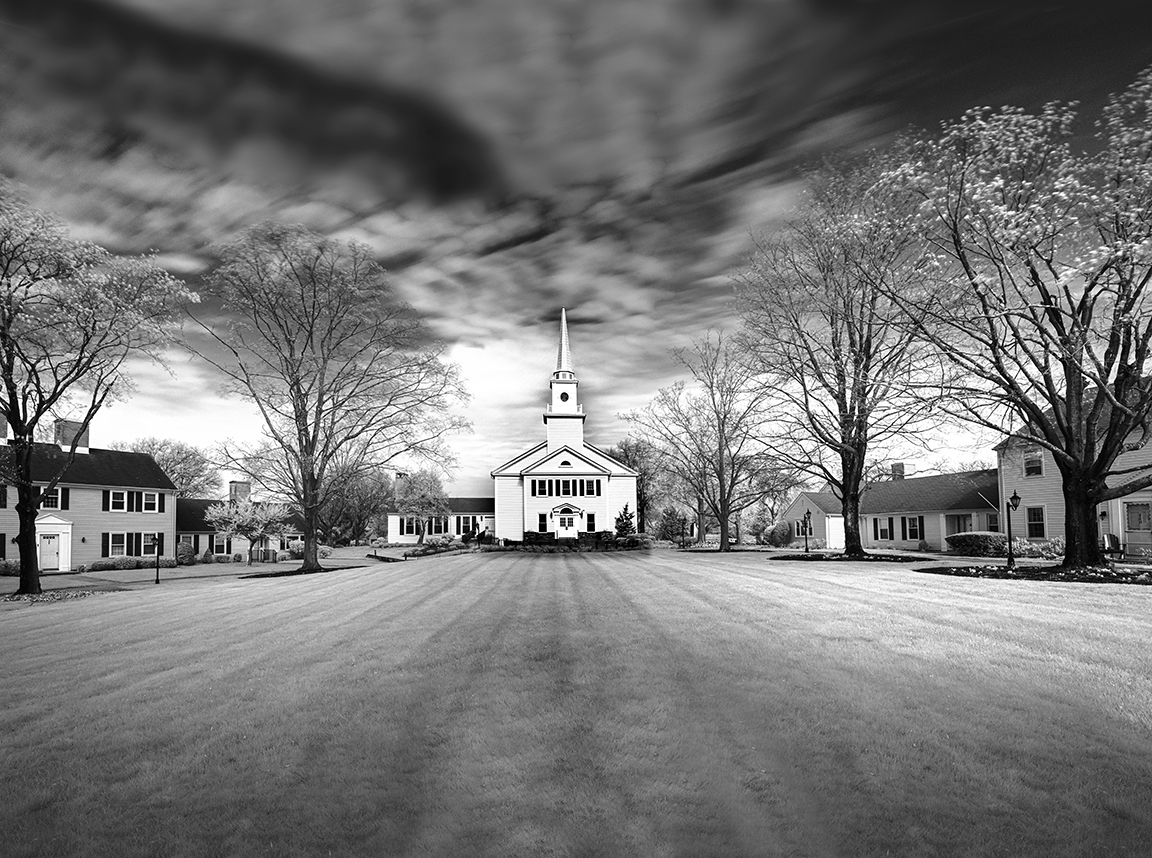
7 image panorama, @ 17mm

2 image panorama, @ 17mm, 14 seconds each
Below are a series of images showing the manual setting for infinity focus for InfraRed shooting. If shooting closer than infinity, take filter off, manual focus and adjust that spot to the IR Red line on focus area of your lens. Hopefully by seeing the 3 images below you will understand how to set the focus manually to the correct IR focus point.


Lens Manually Set for IR Focus @ infinity

More CloseUp American Alligator Images From Florida
Posted on March 10, 2020
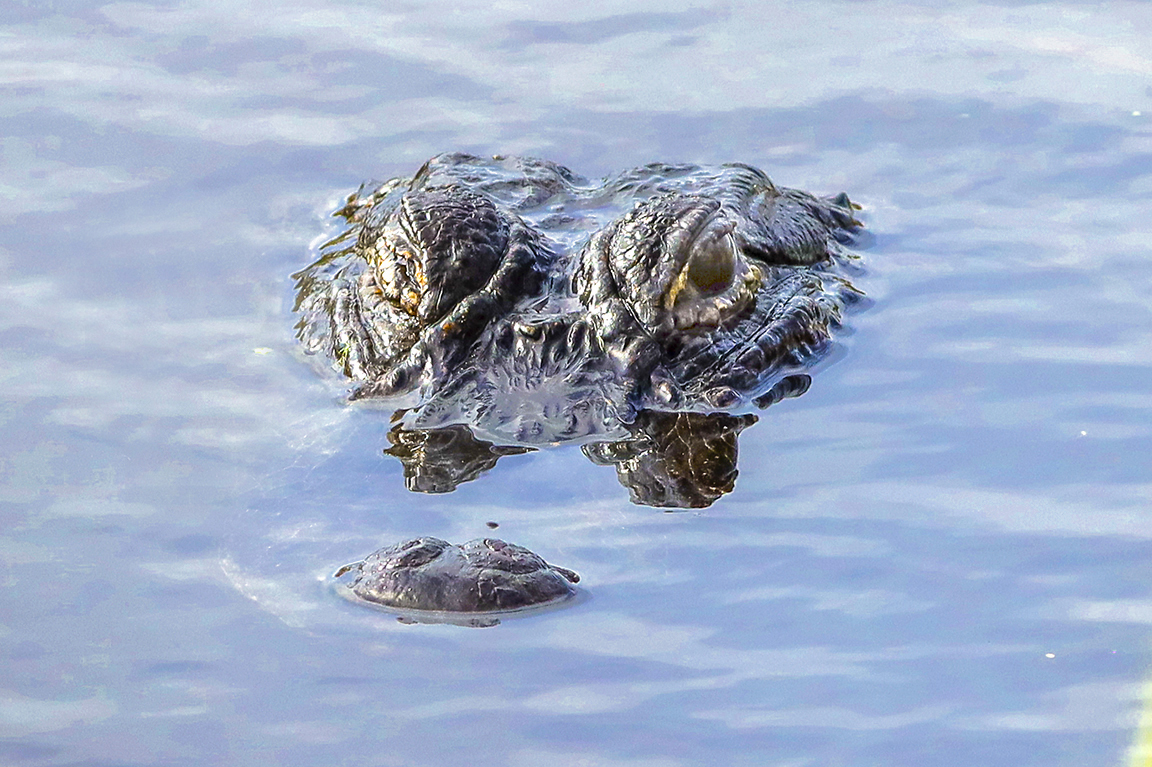
An assortment of close-up images of Alligators from 2 Florida locations, along the paths at Ding Darling National Wildlife Refuge in Sanibel, Florida and the St. Augustine Alligator Farm’s Rookery. Featured image taken at Ding Darling NWR with 300mm f/4 Lens, Canon R.
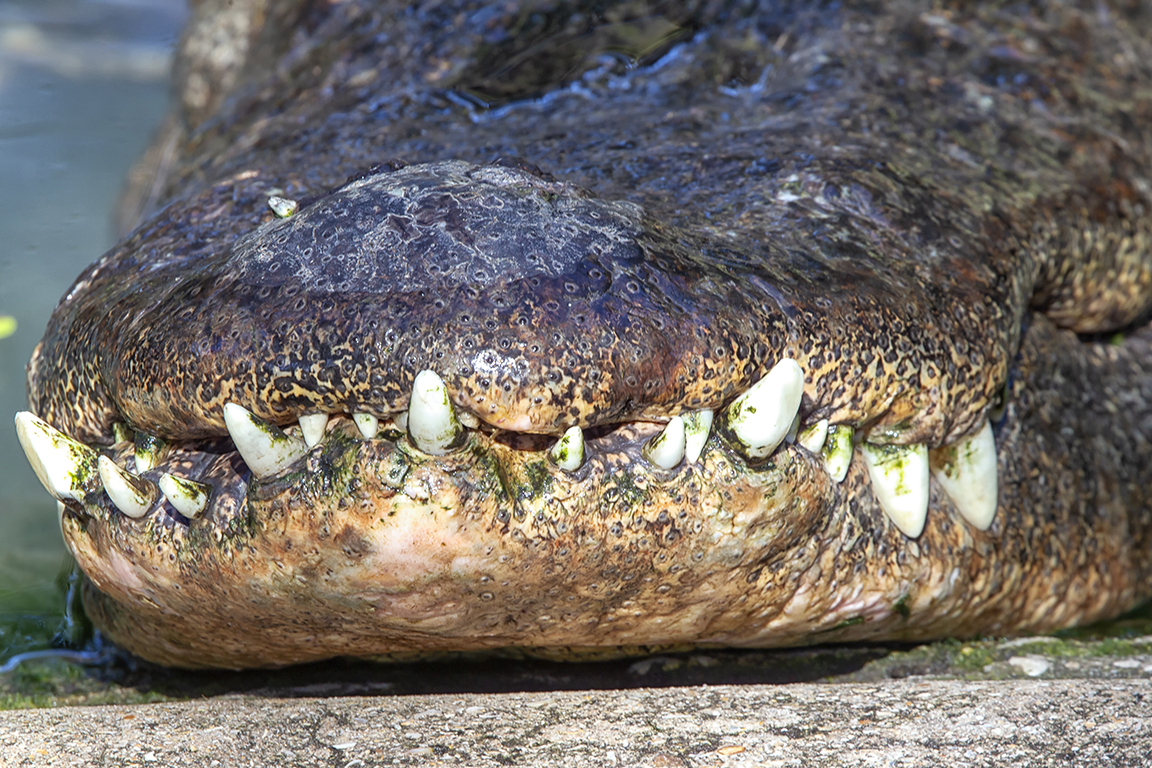
Alligator Teeth 560mm, Ding Darling NWR, Sanibel, Florida. Canon 1D mkIV, 400mm DO lens, 1.4X Teleconverter

Alligator @ 400mm, Tamron 150-600mm lens, Canon R, St. Augustine Alligator Farm
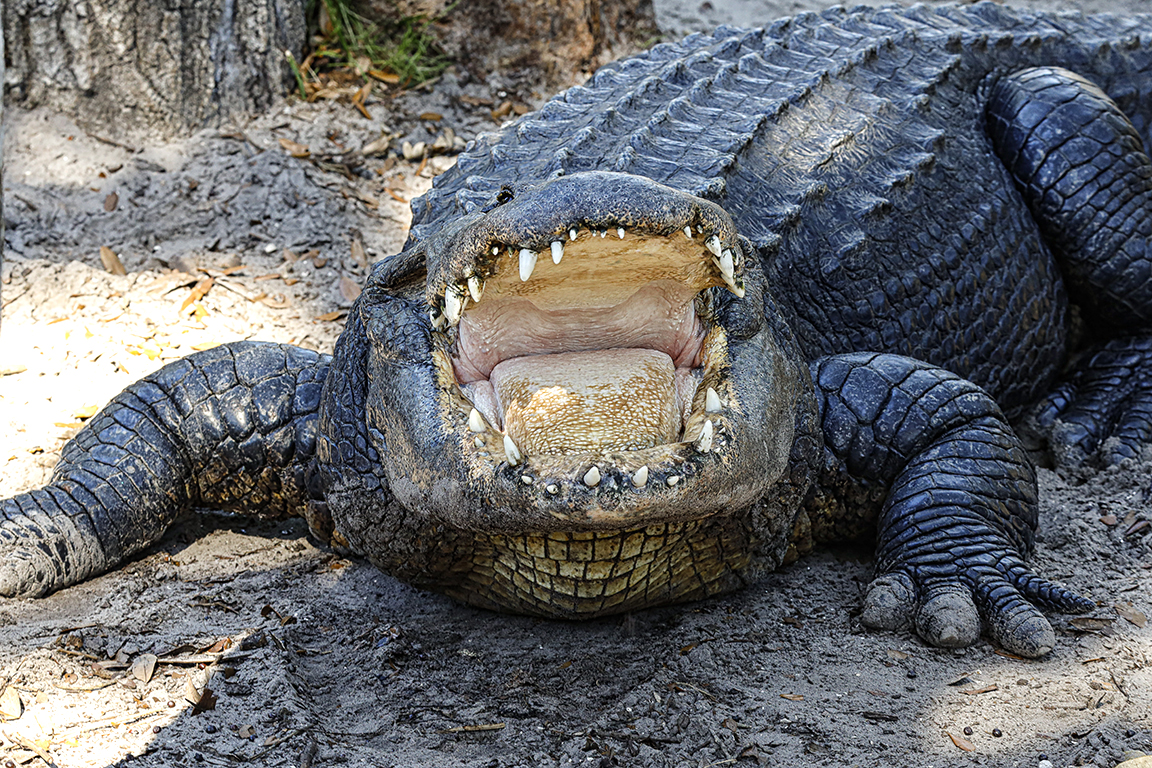
Alligator @ 226mm, Tamron 150-600mm lens, Canon R, , St. Augustine Alligator Farm
Following is information on Alligators from Ding Darling NWR’s website.
One of only two alligator species in the world, the American Alligator is a large reptile found in freshwater habitats throughout the southeastern United States. Adult male alligators can grow up to 4.6 meters long and weigh over 500 pounds while females are generally smaller and average only 3 meters long with a weight of 200 pounds. Commonly portrayed as green, the skin of an American alligator is actually a dark grey color with pale yellow on the underside, and the juveniles have bright yellow stripes along their backs until they mature and the striped fade. The dark coloration allows this predator to better blend into the swamps, marshes, and wetlands it inhabits and camouflages the animal while it hunts at night. Another adaptation that allows the alligator to better hunt within its watery habitat is a double set of eyelids. One set of eyelids is much like a humans, they close up and down and protect the eye from debris and light. A second set of translucent eyelids, called a nictitating membrane, close front to back and are used to protect the eyes while the alligator is underwater. Like other reptiles, American alligators are cold blooded and need heat from the sun or other sources such as warm water to be active or even to digest their food. Special bone plates called scutes grow between layers of skin along the back of the alligator, giving the animal an armored appearance and acting as a solar plate. The scutes collect heat from the sun when the alligator sunbathes and warms the blood that runs through the vessels of the skin, transferring the heat throughout the body. Despite their appearance as slow, lazy, or unresponsive which sunbathing as alligator is capable of running up to 11 miles per hour on land in short bursts. This species is much better built for water travel, where it is able to utilize its tail as a paddle and rudder to guide the torpedo-shaped body through the water at speeds up to 20 miles per hour.
Big Cloud, Little Bird
Posted on March 7, 2020

It is always fun to photograph Belted Kingfishers. But they are very small birds that are usually very skittish. So it is hard to get closeups of them. But I noticed this Kingfisher way off in the distance when we were at J.N. Ding Darling NWR. I liked the large cloud background accenting the small Kingfisher. The featured image was captured with a 400mm DO lens on a Canon 7D (Full Frame FOV ~ 640mm)
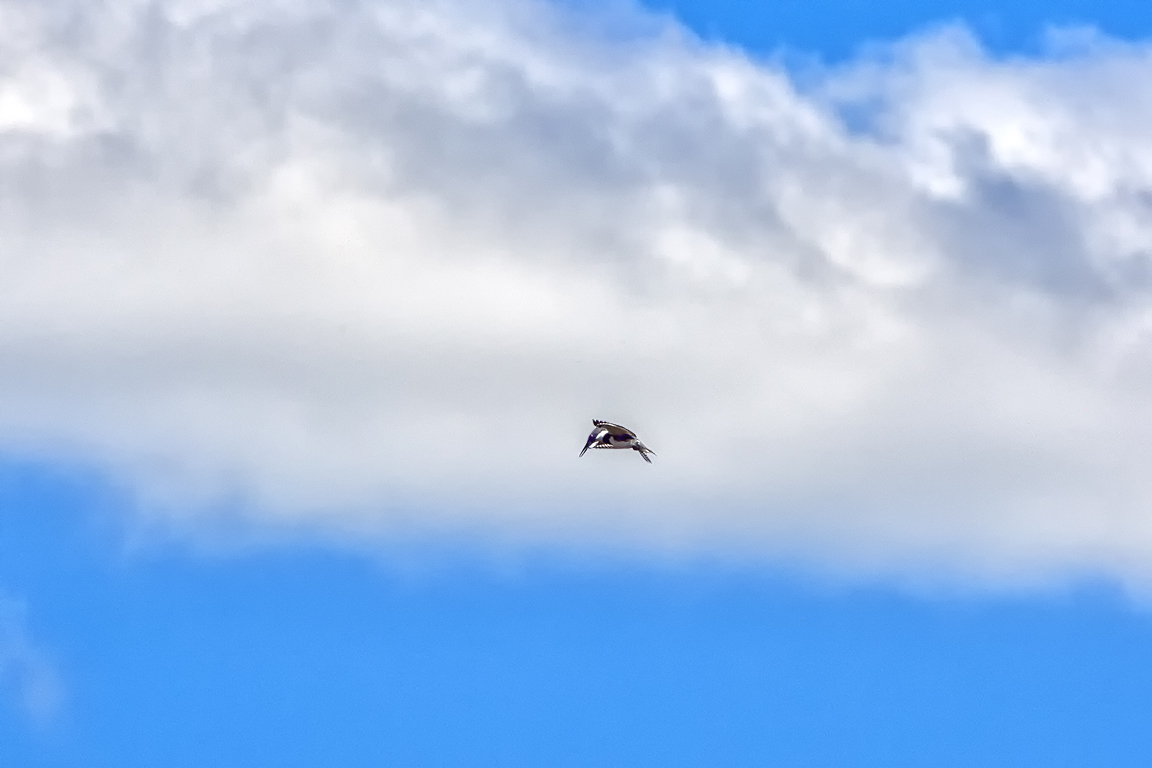
Slightly cropped for closer view

More Extreme crop of above images
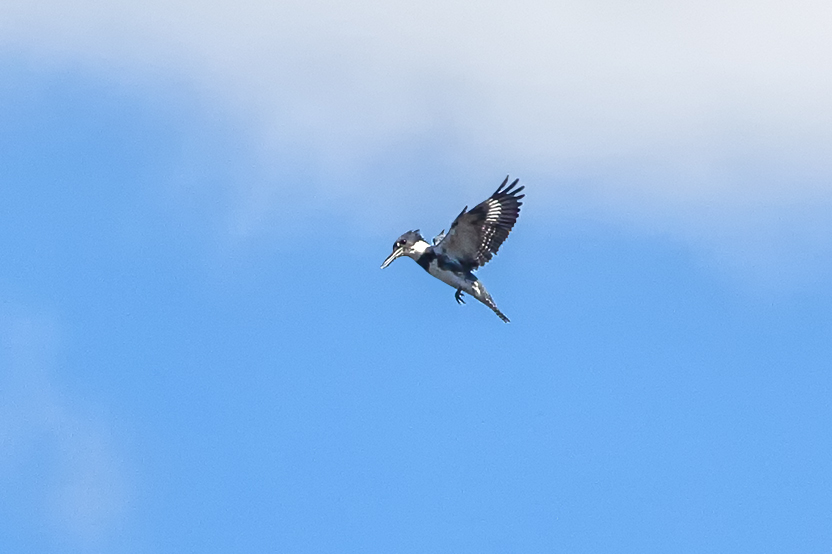
Another view. Liked the raised wing. Extreme crop
 photoartflight