 photoartflight
Tundra Swans Along The Wildlife Drive
Posted on January 19, 2019

Along the Wildlife Drive at Blackwater NWR there are many large & small pools of water, besides the main bodies of water, the Blackwater River and the Little Blackwater River. These pools of water have various large groups of birds swimming, feeding and interacting. If you have long lenses it is fun to photograph the interactions of the birds. Also it is a good spot to shoot panoramas of them with a longer lens to get more detail instead of a wide angle lens with the birds looking like little dots. Sometimes there are very large groups of Tundra Swans, Snow Geese or Canada Geese with various ducks and other birds thrown in. If you are lucky you can also get mass takeoffs of a flock of Snow Geese or Swans taking flight. The images below are just showing a small section of the long pools of water. I included an image at the end of the Blackwater NWR map showing the pools and the pool names. The map also shows the Tubman Road Trail down the road, which is also an interesting area for photography.

3 image panorama, handheld, Tundra Swans, Canada Geese & various ducks, etc. at Pools 5a & b on Wildlife Drive. 400mm with 1.4x teleconverter.

5 image Panorama, handheld, Tundra Swans, Canada Geese and various ducks, etc. at Pools 5a & 5b On Wildlife Drive, 400mm with 1.4x teleconverter.
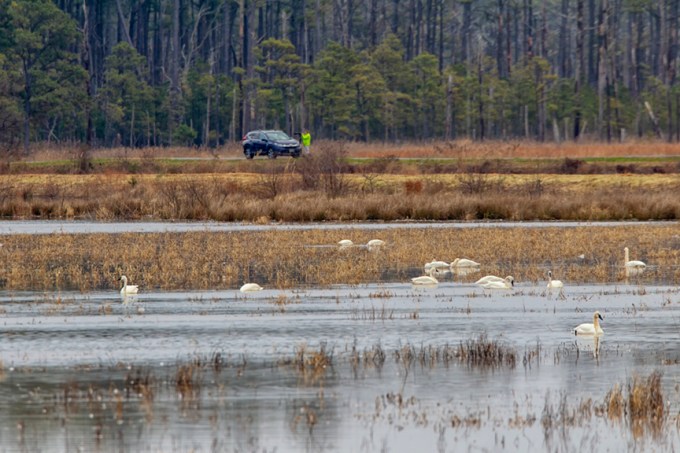
Photographer phototographing Tundra Swans On other side of pool 5c. 400mm with 1.4x teleconverter.

Blackwater NWR map showing the water pools & Tubman Road Trail.
Tundra Swans Fly-By
Posted on January 18, 2019

Getting around to working on more of my images from Blackwater National Wildlife Refuge. Here are some of the Tundra Swans we saw at the refuge. Most of the time they were far out in pools along the Wildlife Drive. But occasionally we saw some fly by giving us an opportunity for some flight shots. These were on an overcast grayish blue sky day. The higher up the Swans were flying seemed to be a little bluer sky. Because of the gray day I had to raise my ISO higher than I usually use to get a shutter speed fast enough to stop the wing movement.
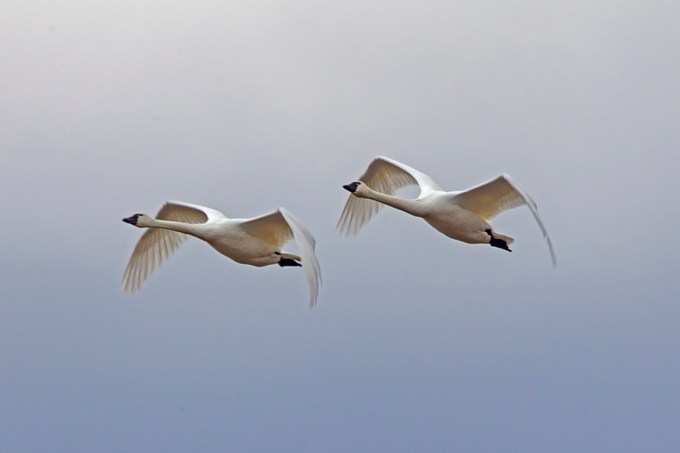
Pair of Tundra Swans in Flight – 400mm, 1.4x teleconverter
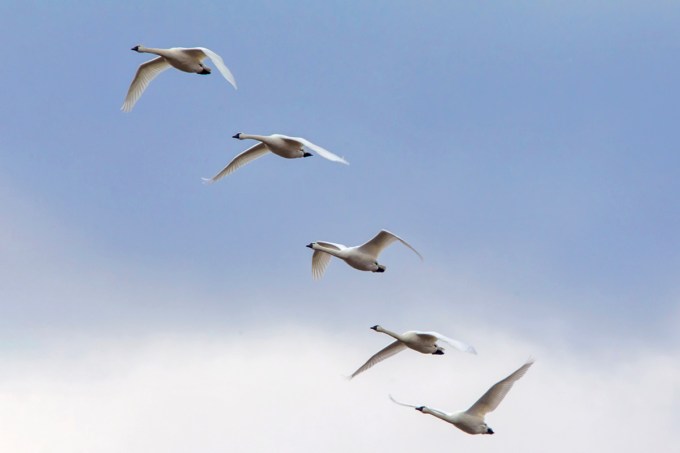
Higher Flight of Tundra Swans – 400mm, 1.4x teleconverter
2 Eagles On Treetops At Sunset.
Posted on January 9, 2019

As the sun was going down on our first day of our trip to Blackwater NWR, we noticed these 2 Eagles on the top of the trees along the last leg of the Wildlife Drive. Their nest seems to be a little further down from these trees, but that is for another post. It seems the male is on the left, the female is on the right. The featured image is shot @ 140mm with a m43 lens on a Olympus Camera (FOV full frame camera equivalent 280mm)

Eagles Roosting Along Wildlife Drive – Canon 400mm f/4 DO lens with Canon Series III 1.4x Teleconverter
Snow Geese Panoramas From Blackwater NWR
Posted on January 8, 2019

On our weekend at Blackwater National Wildlife Refuge, I like photographing the great landscapes and also the birds and wildlife, plus detail images I find interesting. On the first day the weather cooperated and I got a lot of images to go through. As I was photographing the large groups of Snow Geese, Tundra Swans and Canada Geese in the water, I wondered if multi-image panoramas shot with long lenses would work on the large groups of flying flocks of birds. You could just use a wide angle lens, but that would not be a very large file. And for a long flying group you would have a lot of blank blue sky on the top and bottom.
So as large groups flew by, I would shoot a series of the flying birds, panning as quickly as I could, to try to capture the whole group. I could not use a tripod and just shoot the same spot in the sky as they passed because the sky & clouds would be in the same place with different birds. I was using a Canon 400mm f/4 DO lens with a 1.4x teleconverter. So at 10 FPS I got quite a few frames of each group as they flew by. Then I chose the best frames for overlap and manually lined them up for position. Then retouched some overlap wing positions or birds that overlapped.
The featured image is made from 4 images of the series I shot on the first day. The first day was a beautiful day with nice blue skies. I manually lined up the images, blending them in Photoshop and touching up a few overlaps.

The 2nd Image is 5 images shot on the 2nd day which was more overcast and kind of a gray day. Again manually lining up the images in Photoshop and blending them together. I had tried to automatically let Photoshop CC2019 align the layers but it could not because of all that was going on with the birds. These final images are between about 80 inches and 110 inches long. I probably would not print them but I know it sort of works.
Great Egrets Preening At Blackwater NWR
Posted on November 19, 2018
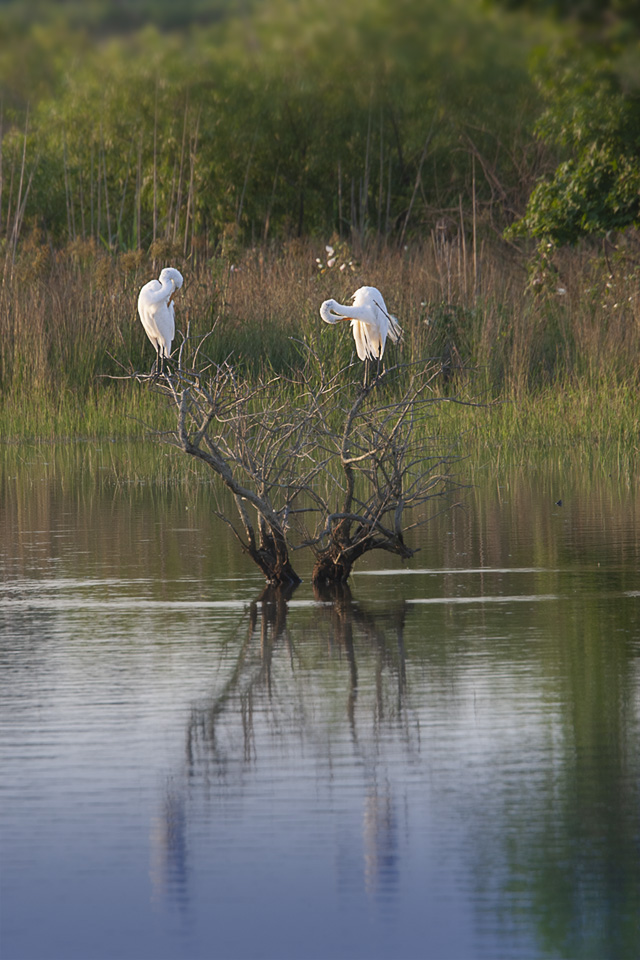
I finally got a chance to go through images I shot at Blackwater NWR a couple of months ago. Here are two Egrets preening in a tree along the Wildlife Drive. The featured image is a 3 image blend, shot with a 400mm lens with a 1.4x teleconverter. I purposely shot the top and the bottom image a little softer so the main center area stood out more when I blended the images in Photoshop.
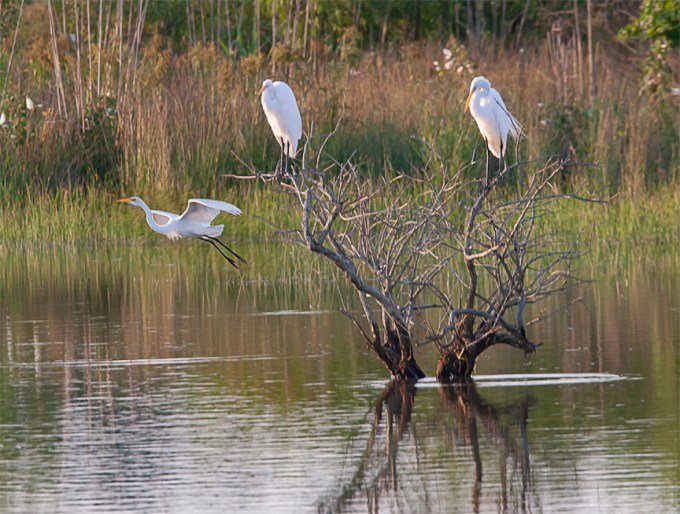
After I photographed the featured image series another Egret flew by behind the two in the tree, giving me an opportunity to photograph something flying! We then mostly concentrated on Landscape Panoramas and dragonflies the rest of the day. The cloud formations were spectacular so it was still a wonderful day to photograph at the Blackwater National Wildlife Refuge!
Sleeping Mute Swan
Posted on September 23, 2018

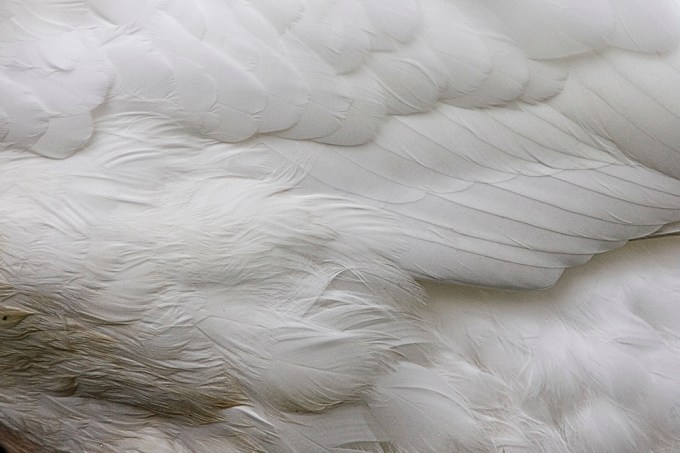
I found this Mute Swan at a local nature area a while ago. While I was photographing this Swan you can see it opened its eye and was keeping an eye on me. Also photographed a few detail shots. After a few shots I moved on.

Widow Skimmer
Posted on September 17, 2018

Some more Dragonfly images from Davidson’s Mill Pond Park, shot in the beginning of September. Probably the last dragonfly images for me this year because of work. We found them around the small pond that is near the entrance along the roadway. I was hard pressed to find a few dragonflies to photograph there for the blog.

Cabbage White
Posted on September 9, 2018
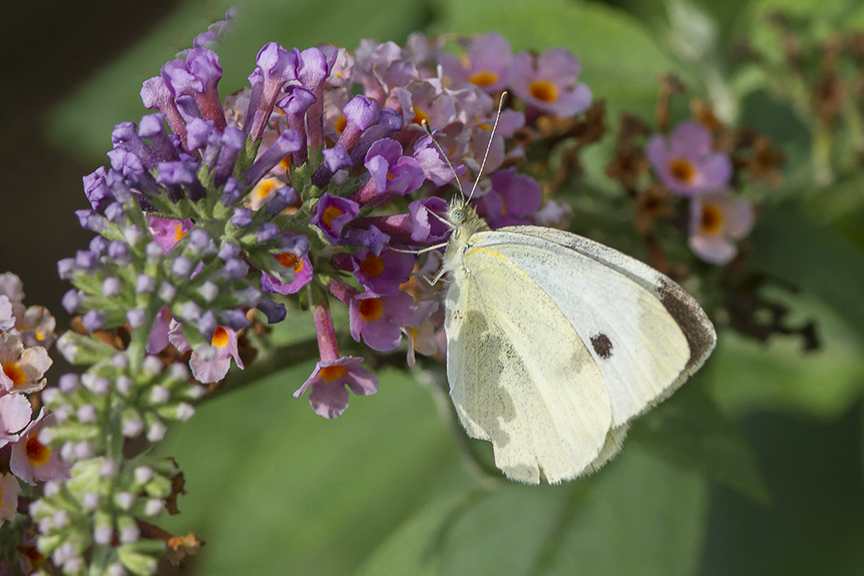
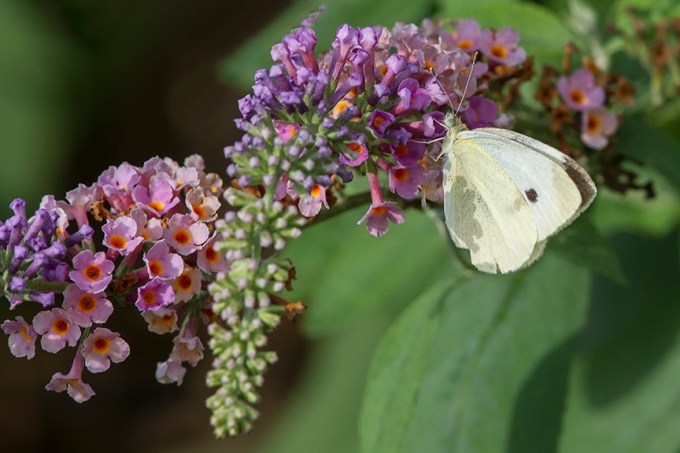
Butterfly and dragonfly season is ending, but I am still finding a few still around for some last images to capture. The featured Cabbage White was on a bush near where a Monarch was feeding.
More Monarchs
Posted on September 7, 2018

Butterfly season and Summer are coming to an end. The butterflies and dragonflies are starting to look the worse for wear. Wings are starting to look more tattered and pieces are missing. These were taken at Davidson’s Mill Pond Park outside the butterfly house that is now closed. This year with work and the weather not cooperating I never shot inside the butterfly house, but I enjoy getting shots where they are not in a controlled environment anyway. I like the look and challenge of a natural environment to capture my images instead of a “zoo” like environment.
 With the wind blowing them and the branch all around and their constant movement I was surprised I got some sharp images. I was not stopped down much so I sacrificed depth of field for a higher shutter speed to help stop blur from the butterfly blowing around in the wind.
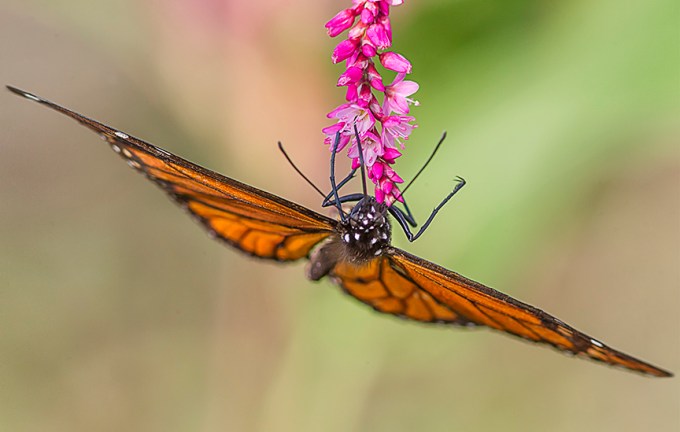

Great Blue Heron Birdscape
Posted on September 3, 2018
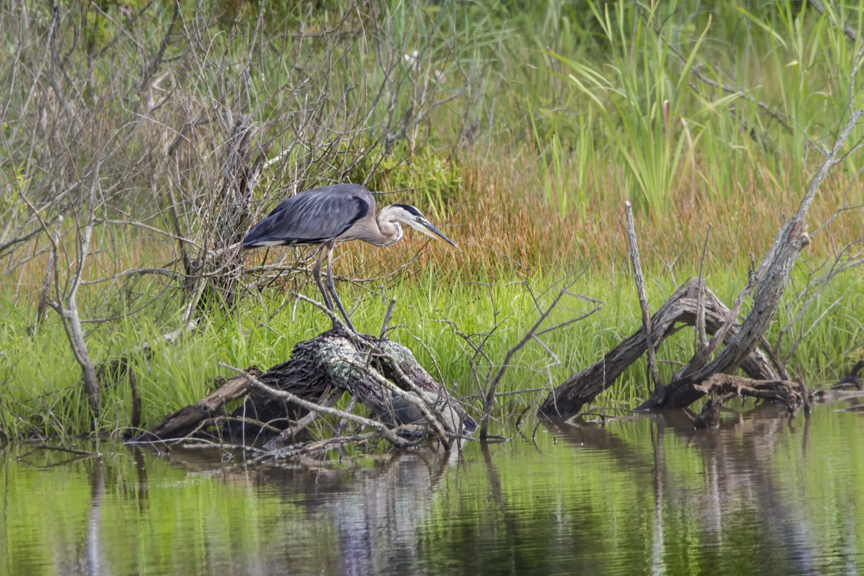
Sometimes instead of trying to fill the frame with my photo subjects, I like to show the environment that they live and exist in. I think it shows the birds and how they act in it. Also where you might be likely to find them.
 photoartflight