 photoartflight
Praying Mantis Portrait
Posted on July 27, 2021
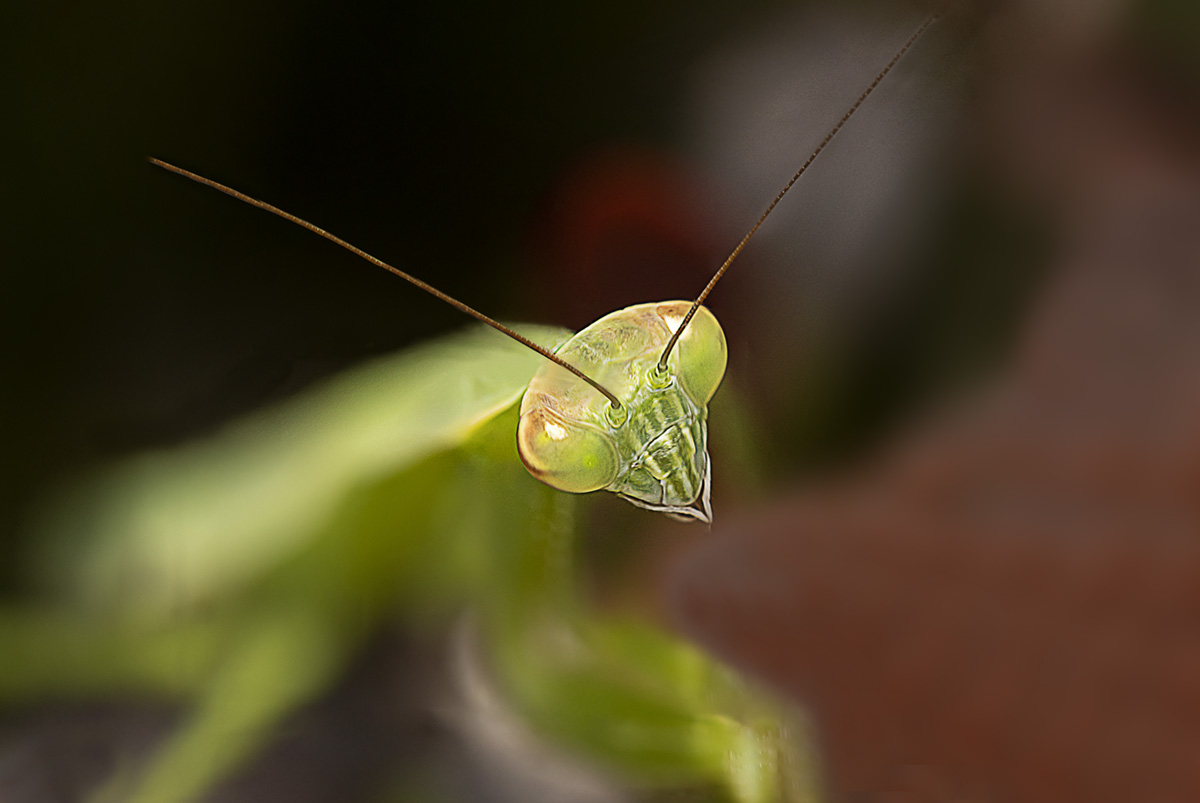
I was looking for interesting bugs in our gardens to photograph and I found this Praying Mantis in the shade under some of the flowers. It was very dark but that made the Mantis stand out more. I was using a 300mm lens with a 1.4X Teleconverter @ f/11 with a Canon R. I wanted to make sure I got detail on the head and antennae only so I did a handheld 13 image focus stack to make sure I had detail on it’s head & 2 antennae or feelers. I purposely only wanted detail on the head and antennae and let the body go soft.
3 Ospreys On Osprey Platform
Posted on July 22, 2021
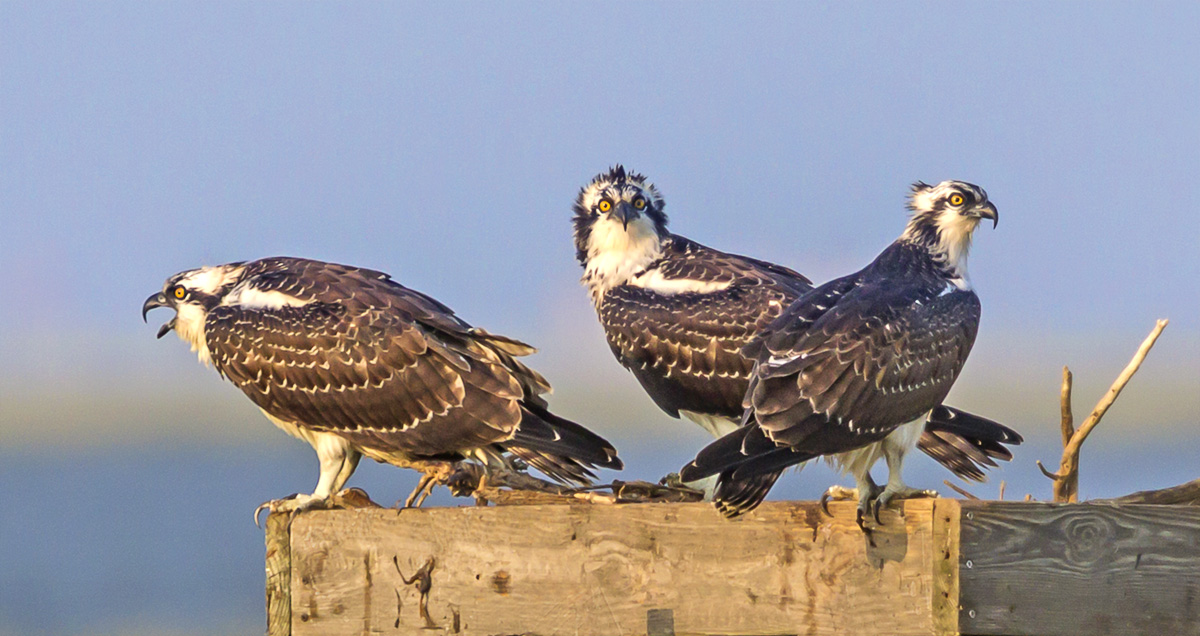
I photographed these 3 Ospreys along the Wildlife Drive at the Brigantine Division of the Edwin B. Forsythe NWR in Oceanville, NJ. In the Spring & Summer months there is a lot of activity at the Osprey Platforms along the Wildlife Drive. Some Platforms are fairly close to the Drive, where others are a little more distant from the Wildlife Drive. Usually the closer ones are crowded with cars lined up so I tend to like the ones further away and shoot with longer lenses. Usually I am photographing them in-flight coming & going from the Platforms but here I liked the 3 lined up in a row looking like a family Portrait.

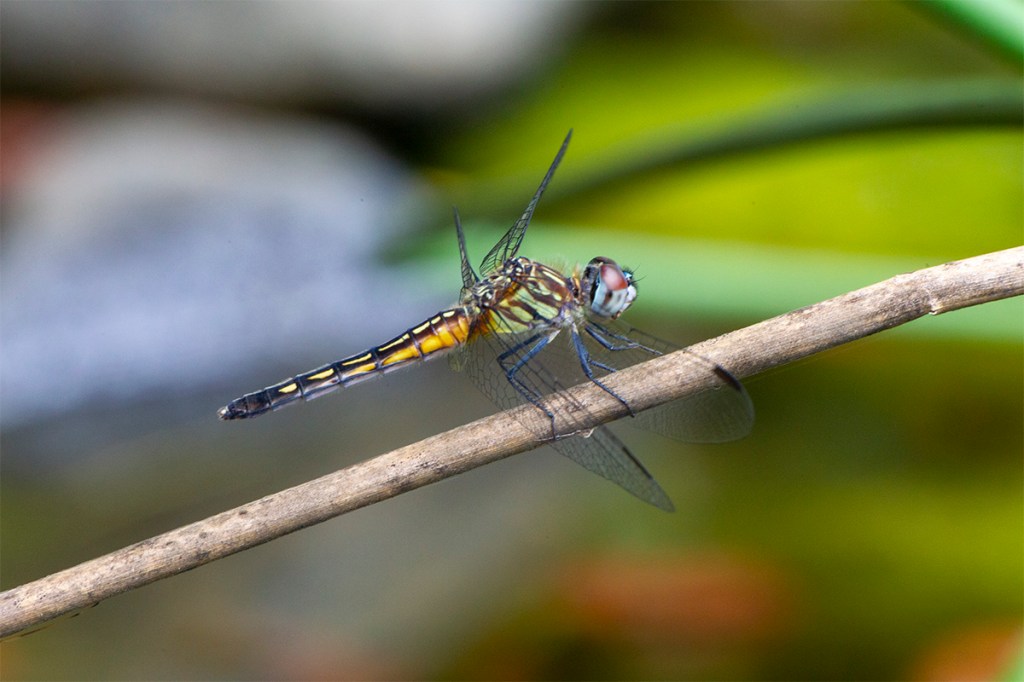
Blue Dasher Dragonflies
Posted on July 9, 2021

A couple of images of Blue Dasher Dragonflies. The Featured Image of the male Blue Dasher was taken with a 400mm DO lens with a 1.4X Teleconverter @ f/8 on a Canon 1D mkIV. To get the smoother background I wanted I only stopped down 1 more f/stop to f/8 since I already lost 1 stop with the 1.4X Teleconverter attached. My usual workflow when (on bright days) using teleconverters for a little more sharpness is to stop down at least 1 additional stop when using a 1.4X and at least 2 stops when using a 2X teleconverter. If I am using a 3X Teleconverter I would stop down 1 or 2 more stops than when using a 2X Teleconverter if I could. But then again a 3X Teleconverter usually is so bad I would just stack a 1.4X & 2X teleconverter. If using an extension tube on Telephoto lenses to get closer focusing I would also stop down at least 1 or 2 more stops for more depth of field.

Eastern Forktail Damselfly – 9 image Focus Stack
Posted on July 8, 2021

I am going through backup Hard Drives clearing out files not needed to clear up some of my storage space. I found this image of an Male Eastern Forktail Damselfly covered with the raindrops after a heavy rain. I thought it looked interesting with the heavy amount of raindrops. I was using a Sigma 150mm macro lens with a 1.4X Teleconverter on a Canon 1D MkIV. To get more in focus but still keep a soft uncluttered background I was shooting with my aperture @ f/4.5. I shot 9 images along the Damselfly and the water drops . Then loaded them into 1 layered Photoshop file to blend into my final image. Luckily the Damselfly did not move as I was photographing it. The 2nd image is a Immature Female Eastern Forktail Damselfly shot at the same session as the Featured Image.

Monarch Butterfly On Buttonbush
Posted on July 6, 2021

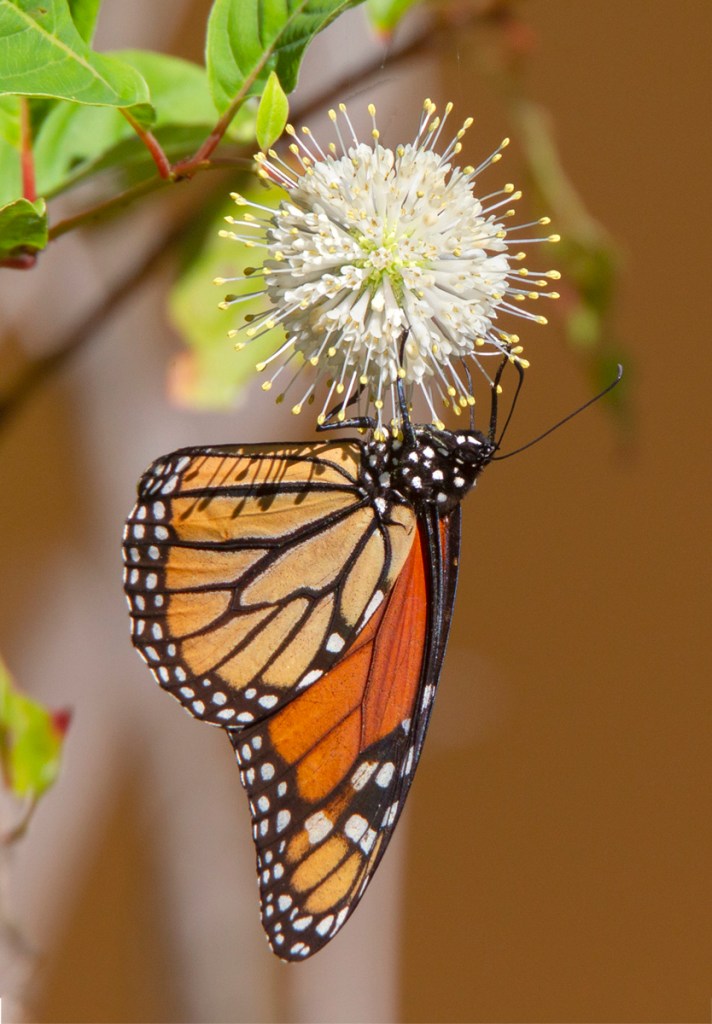
I was looking for Dragonflies to photograph at the Blackwater National Wildlife Refuge near Cambridge Maryland, but came across this Monarch Butterfly on this Buttonbush plant. I was using a 400mm DO lens with a 1.4x Teleconverter on a Canon 1DmkIV. I thought it looked interesting hanging upside down on the spherical pincushion blossoms. They are composed of dense clusters of tiny white tubular flowers. Buttonbush (Cephalanthus occidentalis) is often lauded for its utility rather than its beauty. Its commercial introduction in 1735 was primarily for beekeepers (hence, its other common name of honey-bells), who cultivated this deciduous shrub as a pollen and nectar resource for honeybees. This wetland shrub can be found in low-lying areas, swamps, marshes, bogs, and wetlands, and along the edges of ponds, streams, and rivers. It is often used to develop and restore wetlands, control erosion in riparian areas, and create wildlife habitats.
Distant Dragonfly Closeups
Posted on June 30, 2021

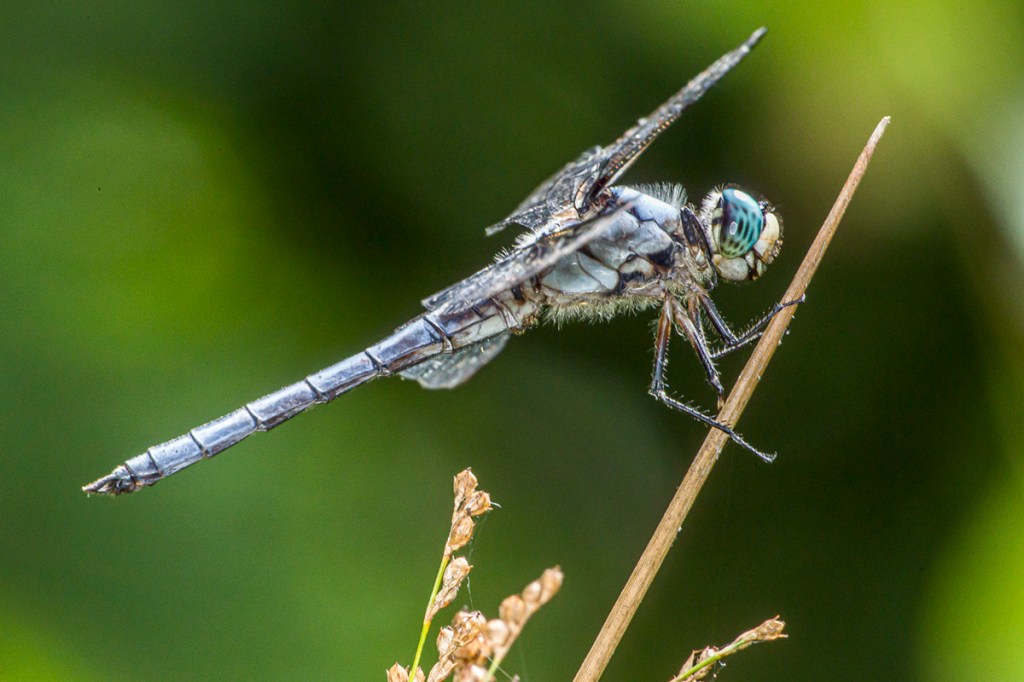
A closeup uncropped image of a Female Blue Dasher Dragonfly. It was in a small pond but off in the distance in the middle of the pond. It was about 8 feet from the edge of the pond. To get this close to Dragonflies that I can not get close to I have come up with a method to get detail images of them. I was using a 400mm f/4 DO lens with multiple stacked extension tubes between multiple teleconverters. With this setup I had to use an on-camera flash with a “Better Beamer” Flash Extender to light the dragonfly because of all the light loss with multiple extension tubes & teleconverters . This dragonfly was about 8 ft out in the water. You can see the flash hotspot on the eye. Changing the order of the extension tubes and different sizes of the teleconverters gives you different zones of manual focus. Also you have to try different exposures because Auto Exposure does not work with all the extension tubes & teleconverters. After trying this for a while you can get nice closeups of distant Dragonflies. Also you usually get nice “clean” & smooth backgrounds. It takes some practice but you can get some interesting images of distant Dragonflies.


Immature Male Great Blue Skimmer Dragonfly
Posted on June 21, 2021
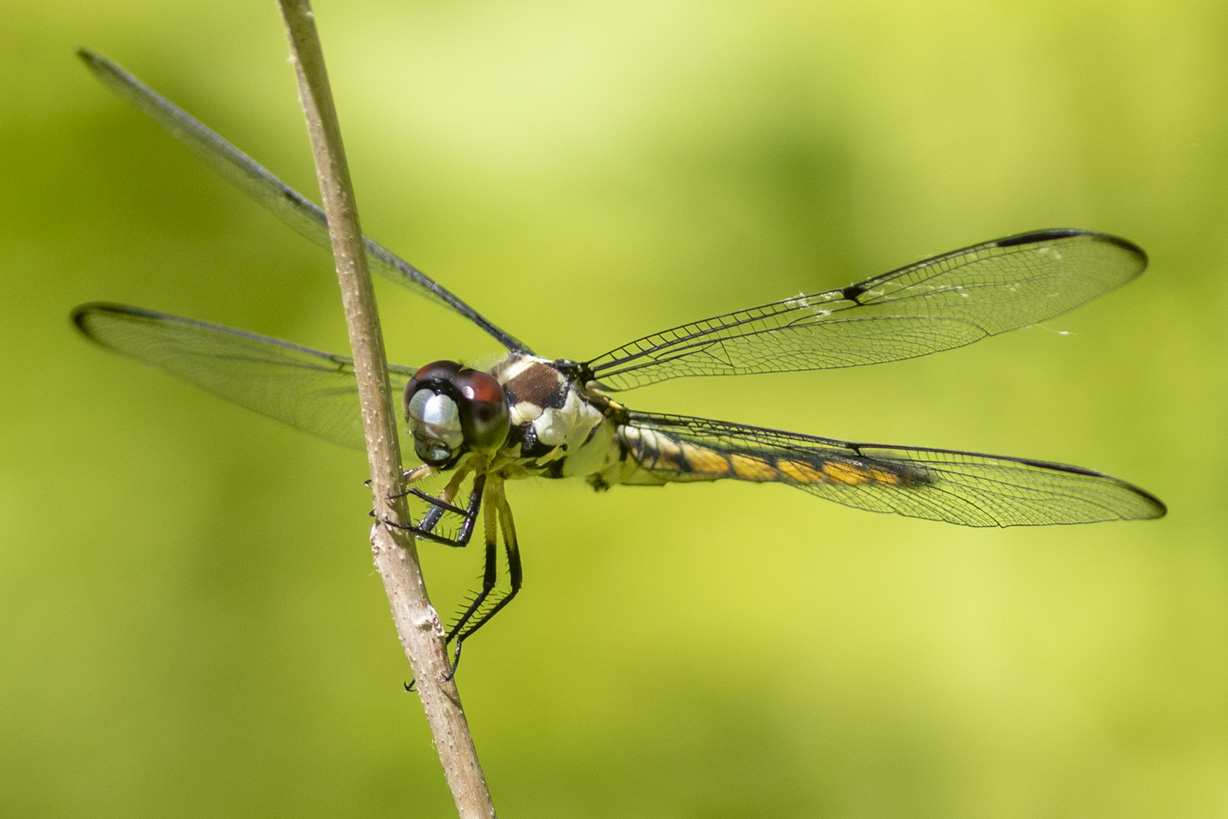
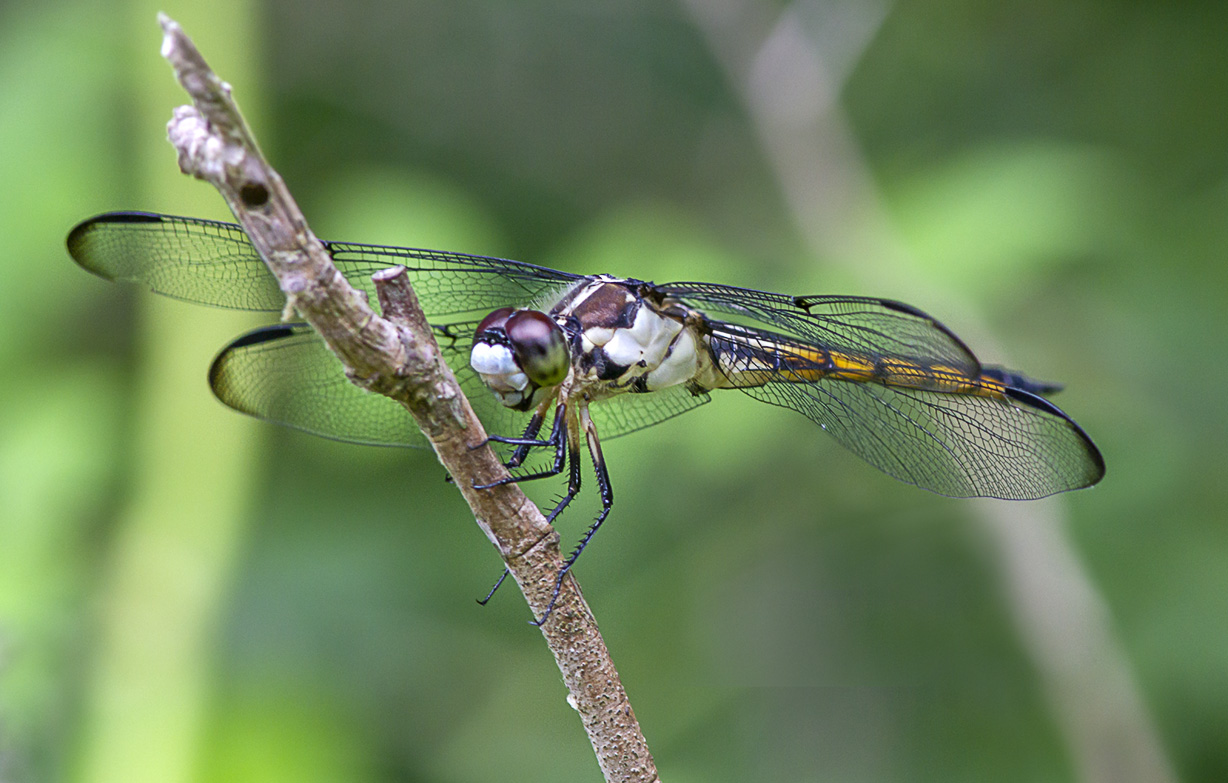
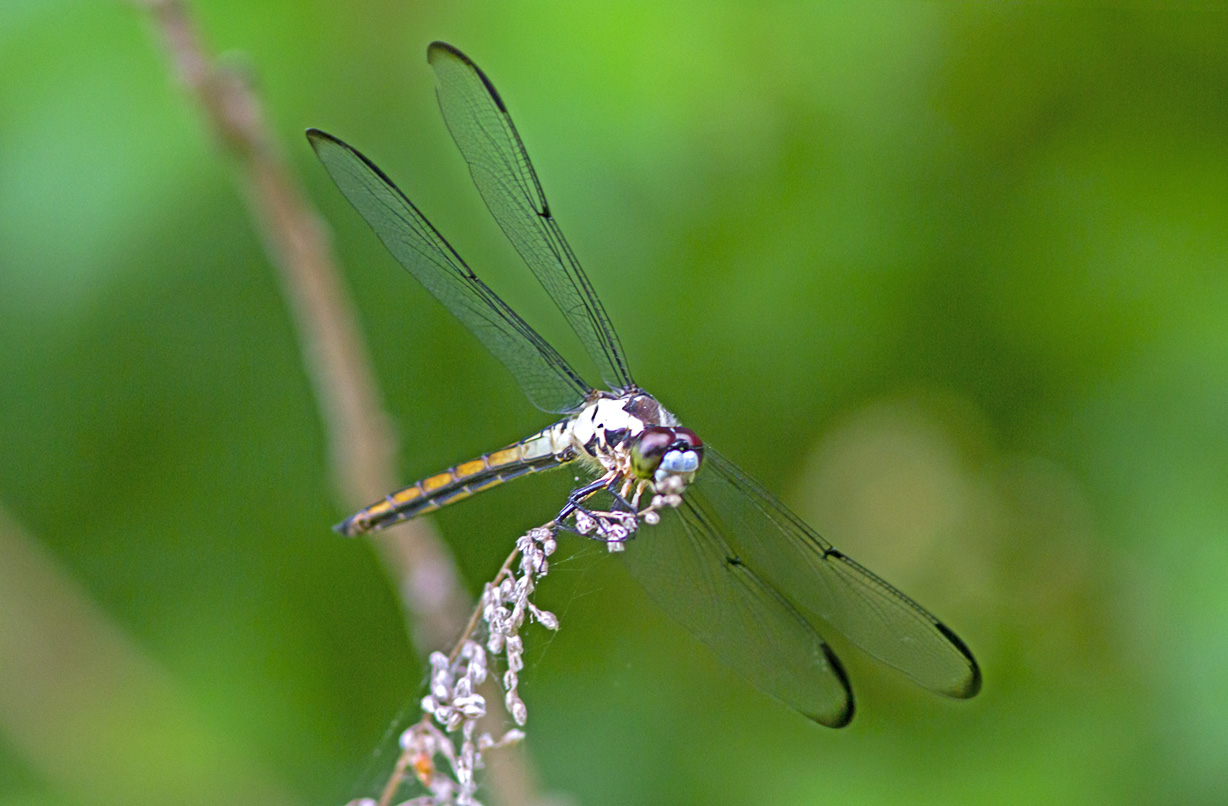
We had gone to the Audubon Plainsboro Preserve to see if we could find a few interesting dragonflies to photograph for the blog. The Preserve was still overloaded with Cicadas but there were quite a few Dragonflies flying around on the paths. It was fun to find this Immature Great Blue Skimmer Dragonfly along the main path. The featured image was taken with a Canon 300mm lens with a 1.4x Teleconverter @ f/6.3 for a smoother background. Below are other views at various f/stops.


Common Whitetail Dragonflies From Davidsons Mill Pond Park
Posted on June 11, 2021
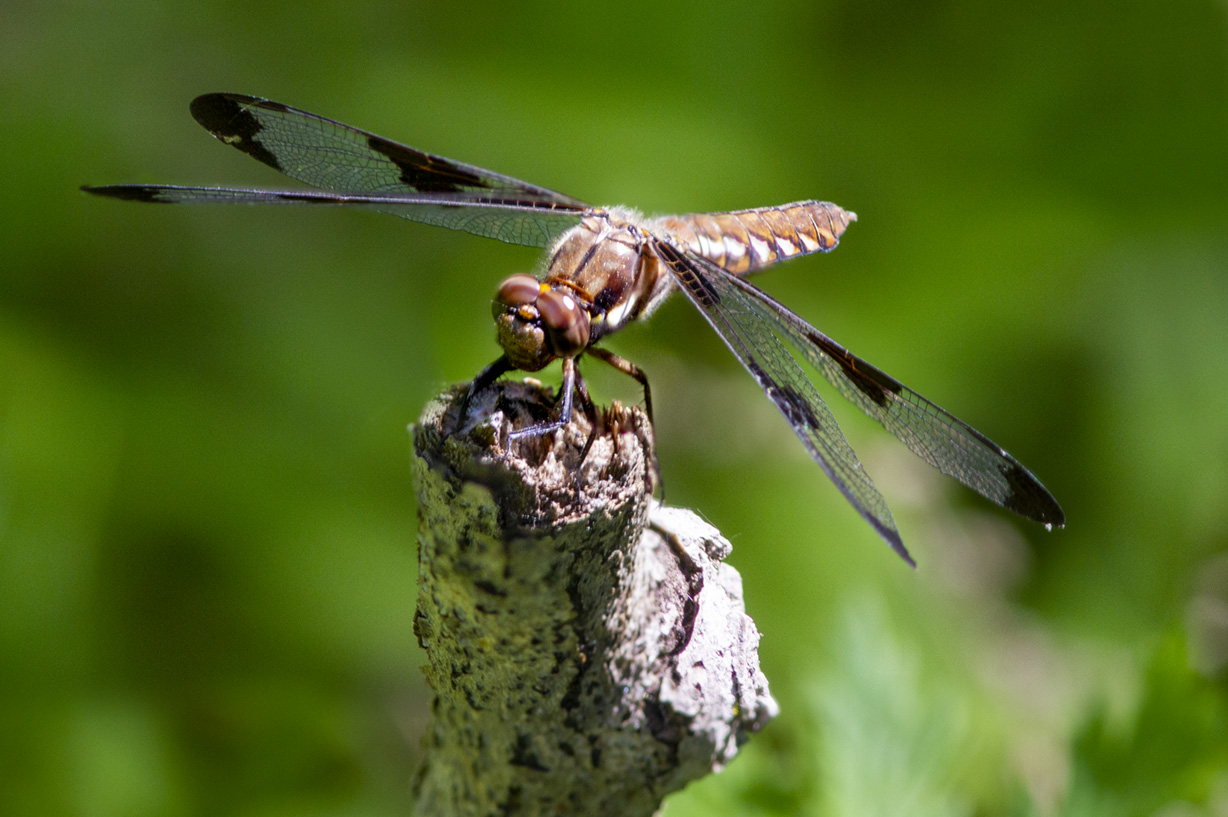
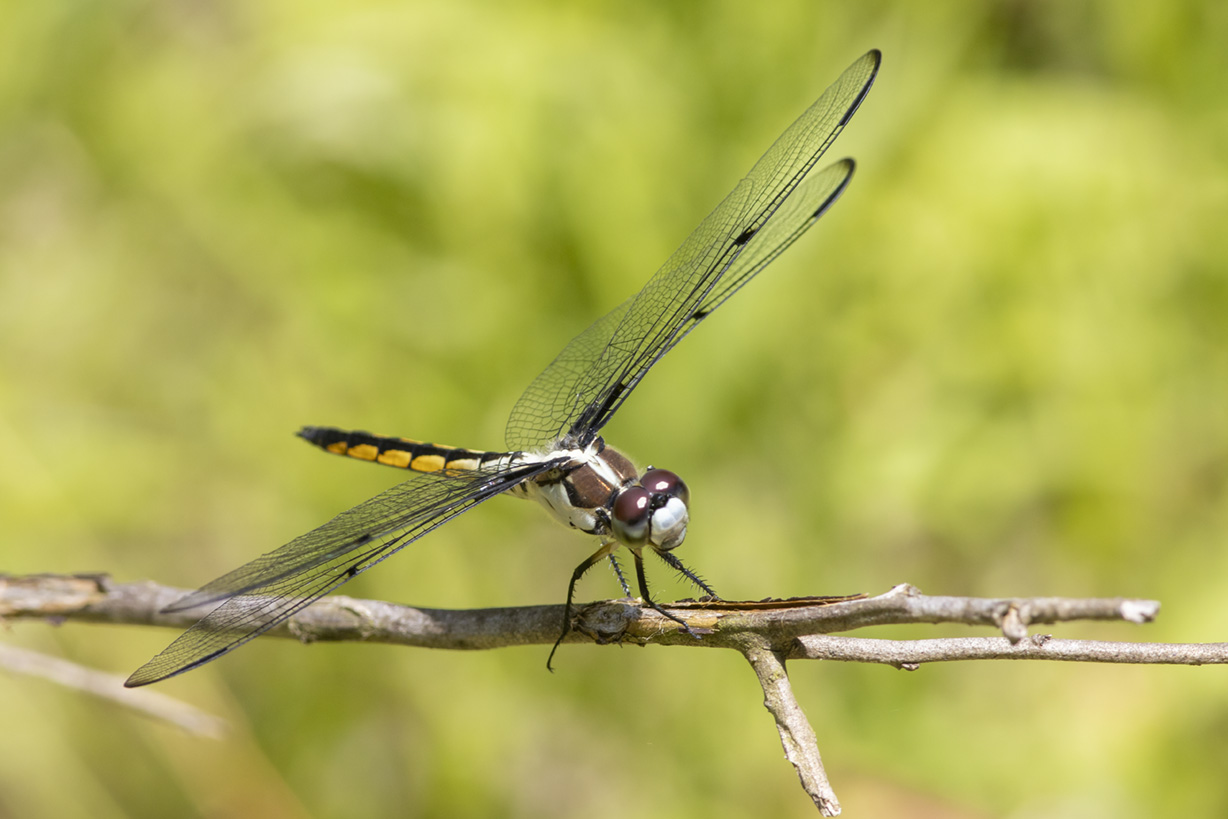
We went to the Audubon Plainsboro Preserve looking for dragonflies and any other interesting subjects we could find to photograph. We found a male & female Common Whitetail Dragonfly in 2 different locations along our walk. The Featured Image is a Female Common Whitetail Dragonfly 2 shot focus stack @ f/8. I focused first on the head & then focused on the tail. Then blended the 2 images in Photoshop for the final image. By shooting 2 images @ f/8 and combining the 2 images I had the depth of field to get the head & tail in focus and still have a somewhat smoother background I wanted without getting a more cluttered looking background. Usually I would use f/5.6 instead of f/8 but I only wanted to use 2 images in case the dragonfly flew off. All images in this post were taken with a Canon 7D with a 300mm f/4 lens & 1.4X Teleconverter.

Female Common Whitetail Dragonfly, f/ 5.6. Showing smoother uncluttered background but the tail sharpness is softer than the 2 image stacked image.
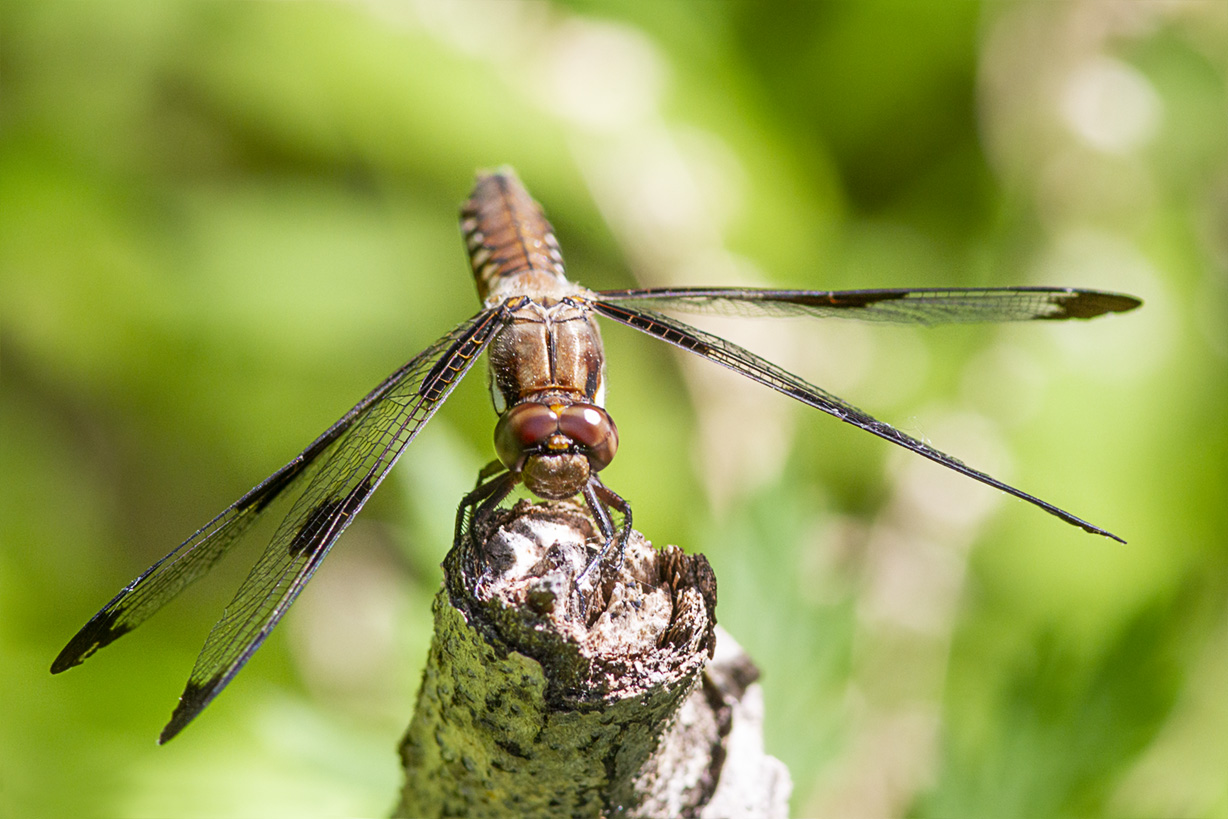
Female Common Whitetail Dragonfly @ f/11, 300mm, 1.4x teleconverter. Showing even at f/11 the tail sharpness is softer than the 2 image focus stacked image.
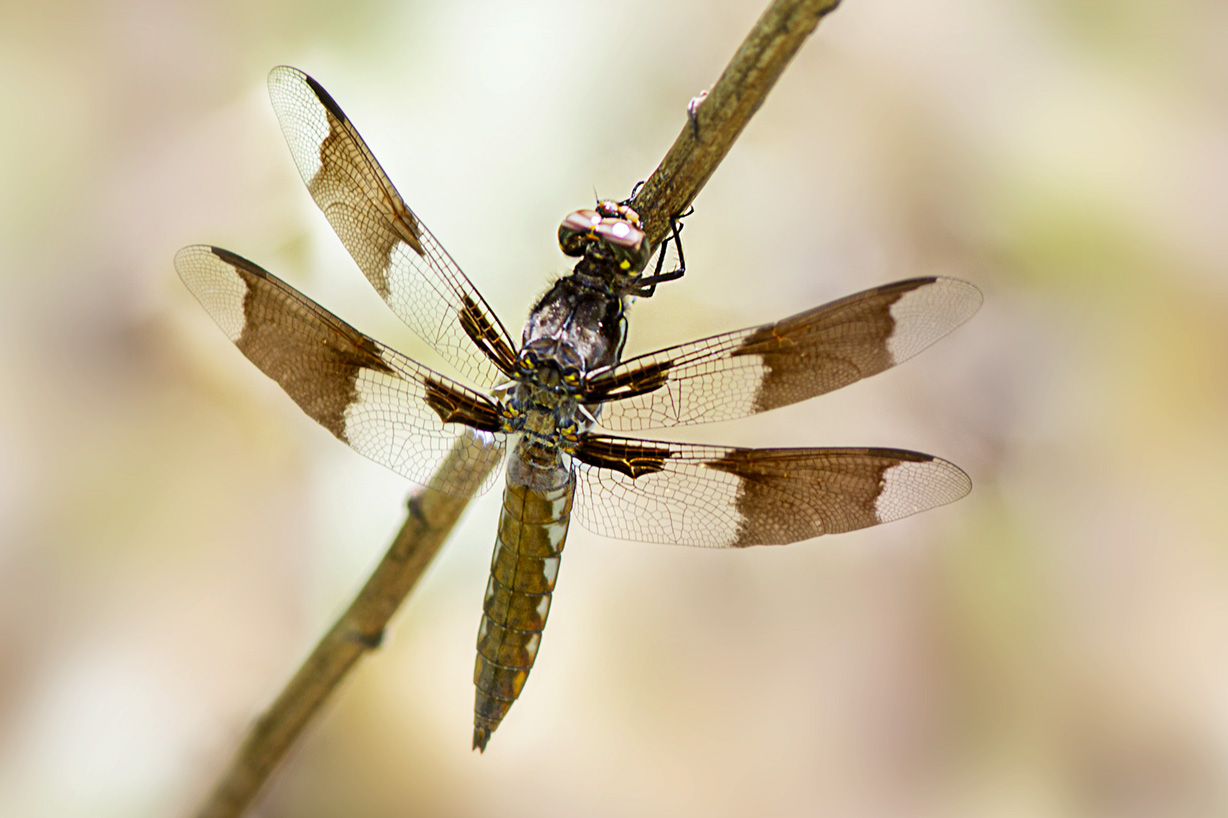
Immature Male Common Whitetail Dragonfly, 300mm, 1.4x teleconverter, @ f/8, Canon 7D, showing smoother, uncluttered background.
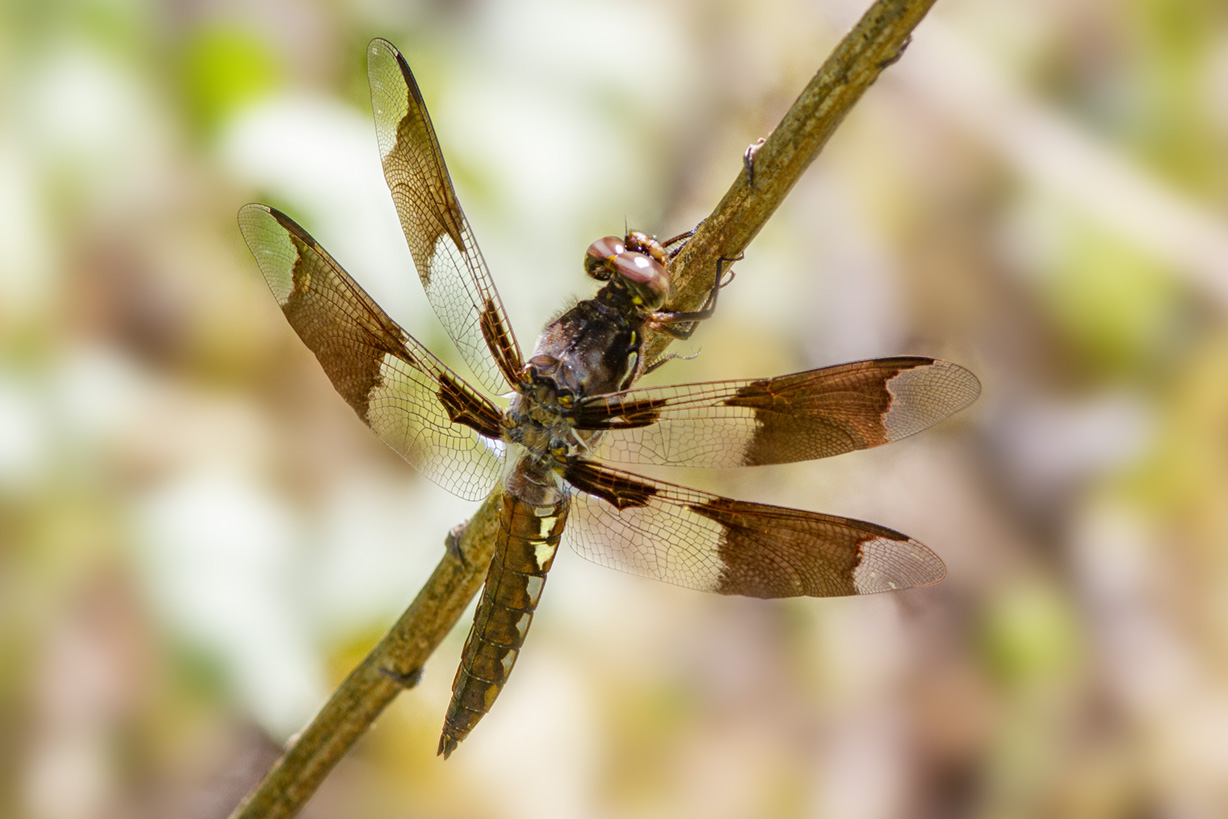
Immature Male Common Whitetail Dragonfly, 300mm, 1.4x teleconverter, @ f/16, Canon 7D, showing a more cluttered distracting background.
Lancet Clubtail Dragonflies – Mating Wheel Formation
Posted on May 26, 2021

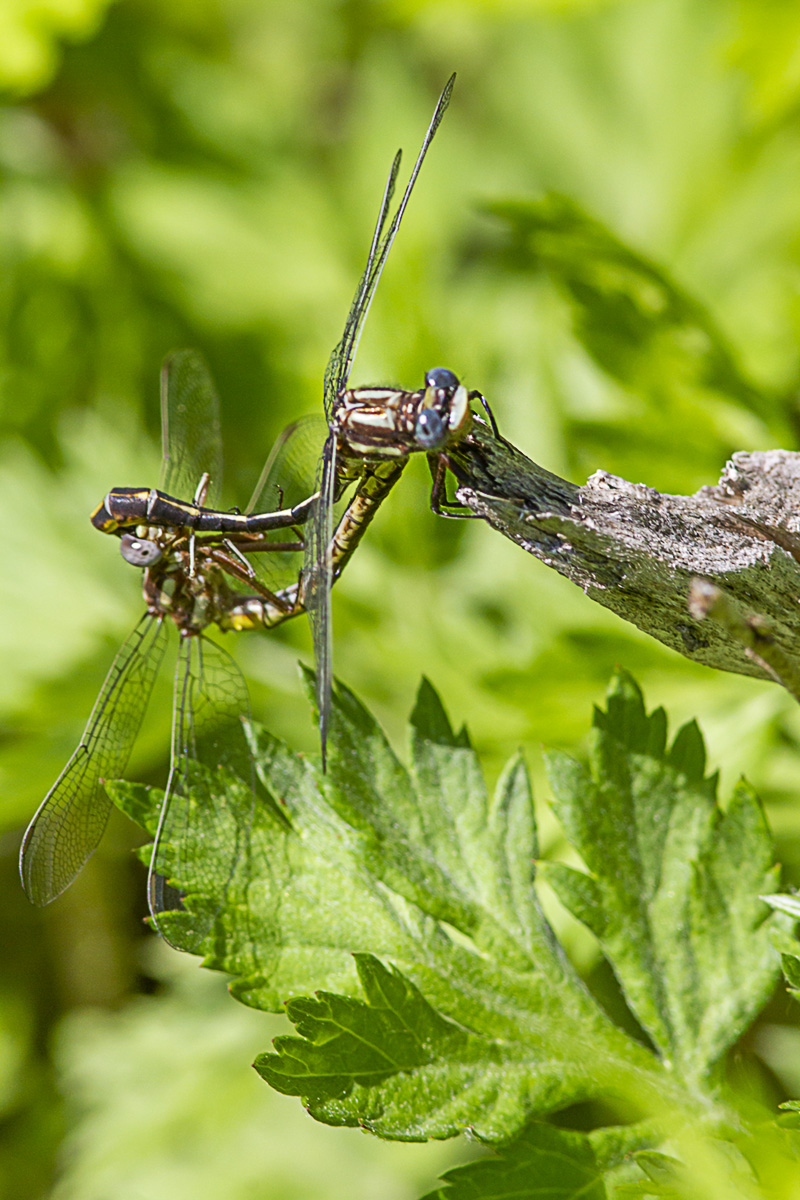
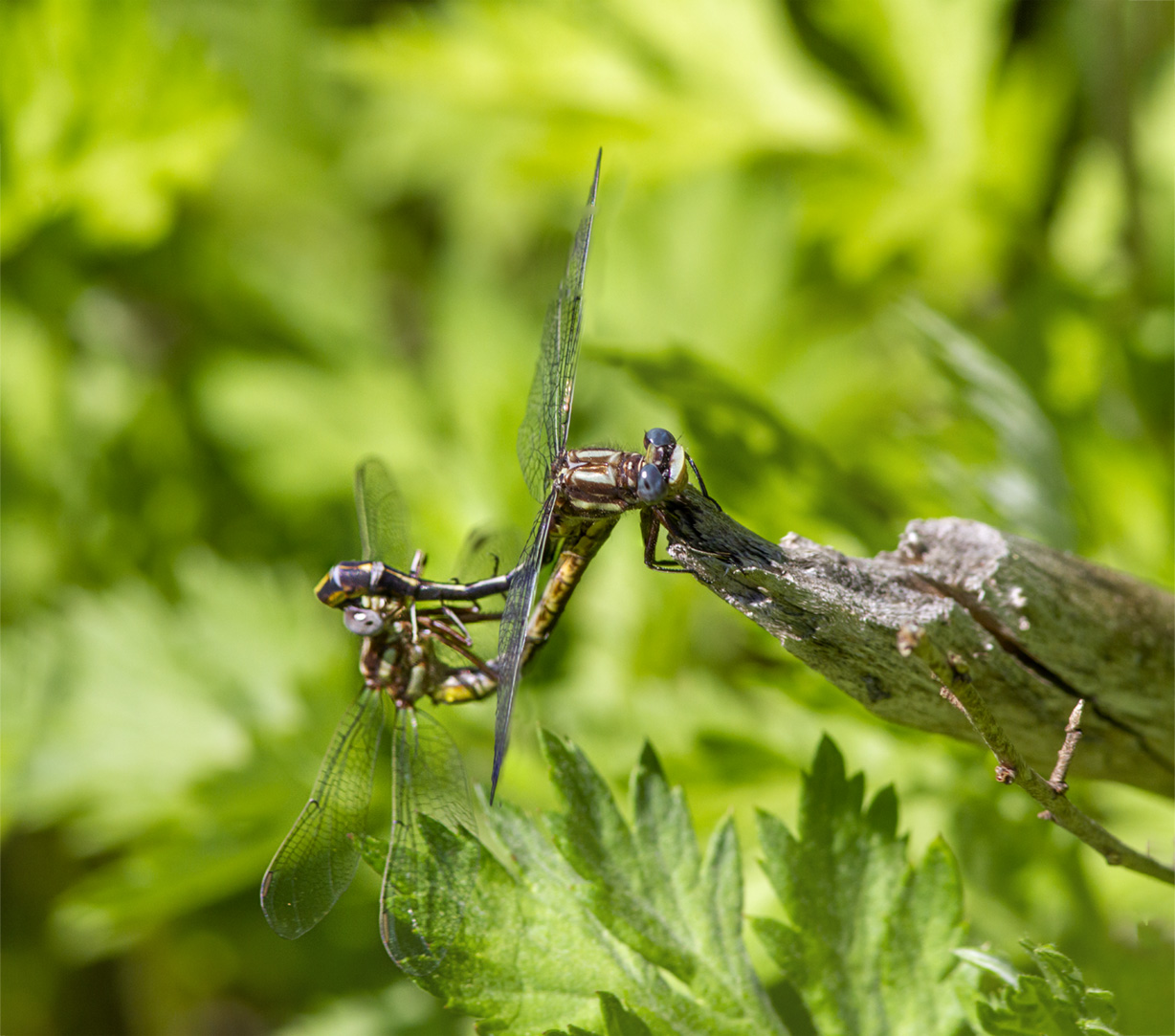
We were walking around Davidsons Mill Pond Park looking for Dragonflies to photograph. We did not see any by the small pond so we went down by the Lake. There the first ones I saw were a pair of Lancet Dragonflies mating. It was not in the usual “Heart” formation” but somewhat close. I was using a 300mm lens @ f/11 with a 1.4X Teleconverter on a Canon 7D. Using f/11 I got enough detail on my subjects but still had a smoother non-cluttered looking background. I also focused on each area of the Dragonflies I was shooting for the panorama instead of stopping down more for a cleaner looking background when the images are blended. The Featured Image is a 2 image Pano to get them both in the image.

Osprey Fishing In Early Morning
Posted on March 14, 2021
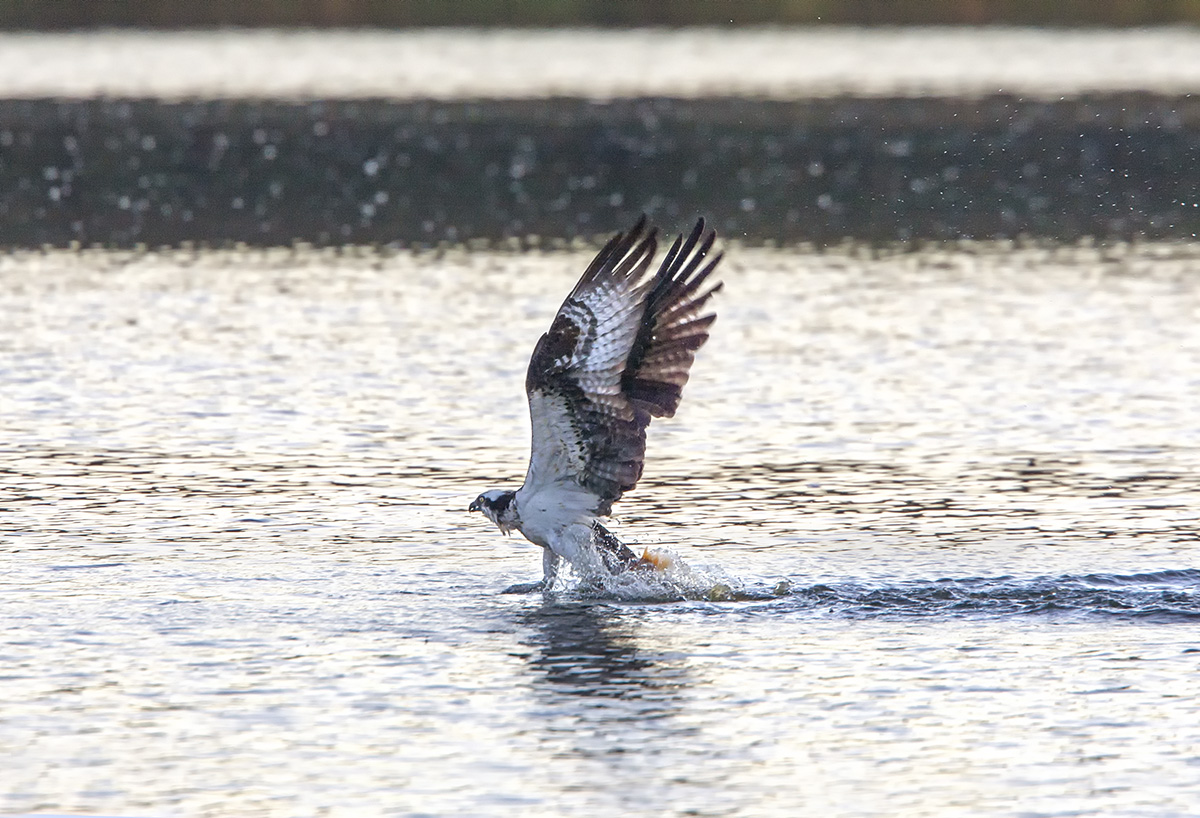
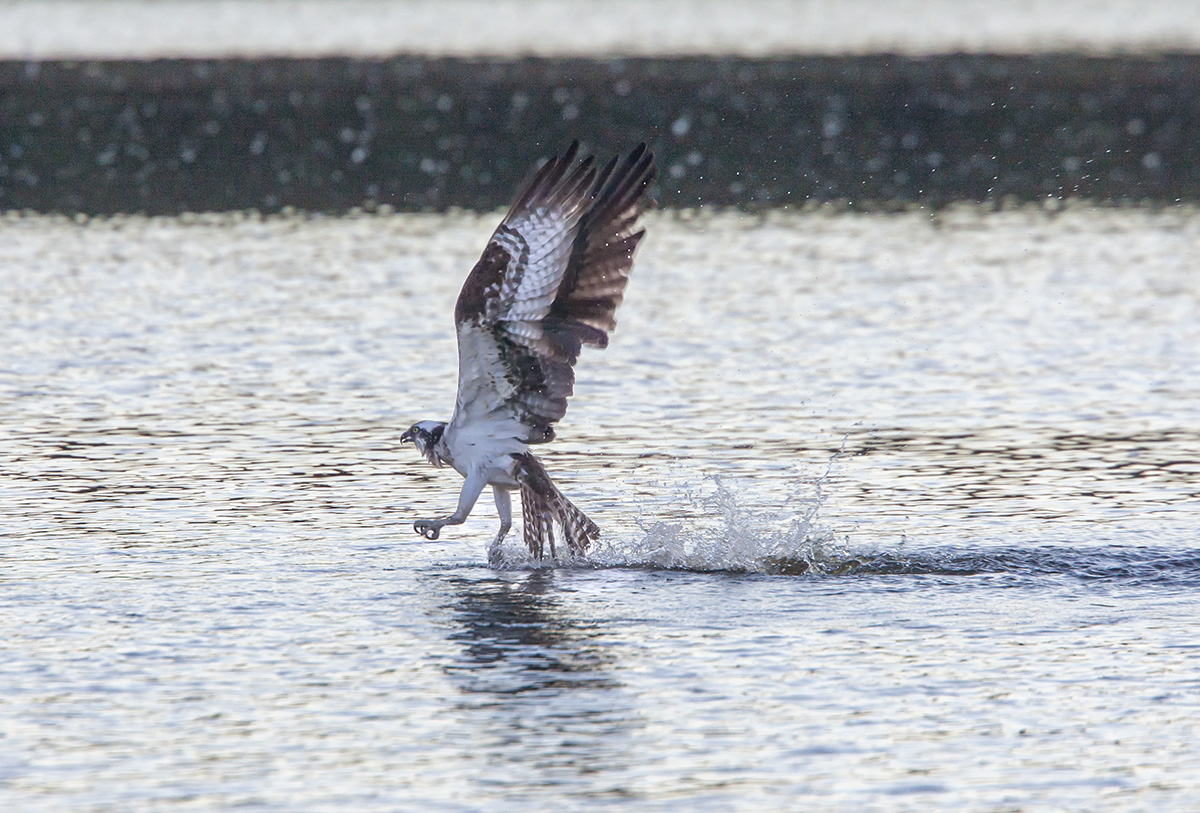
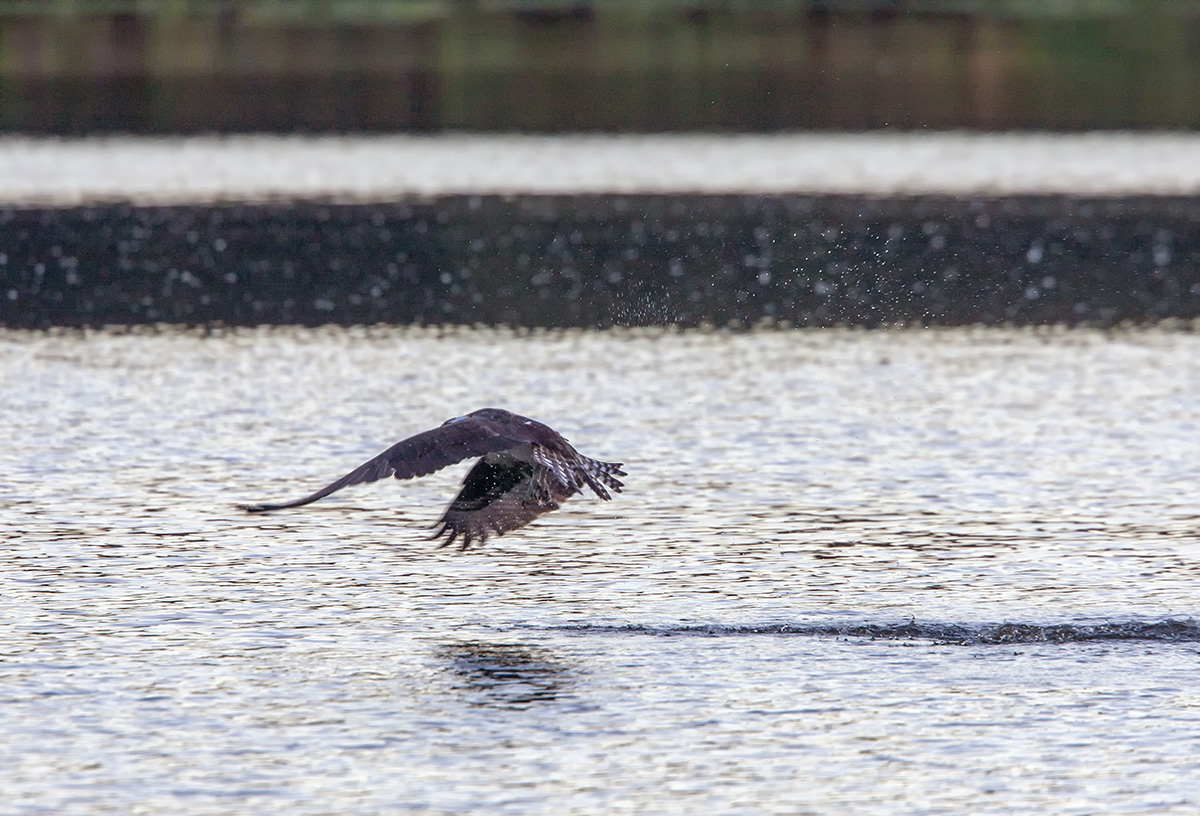
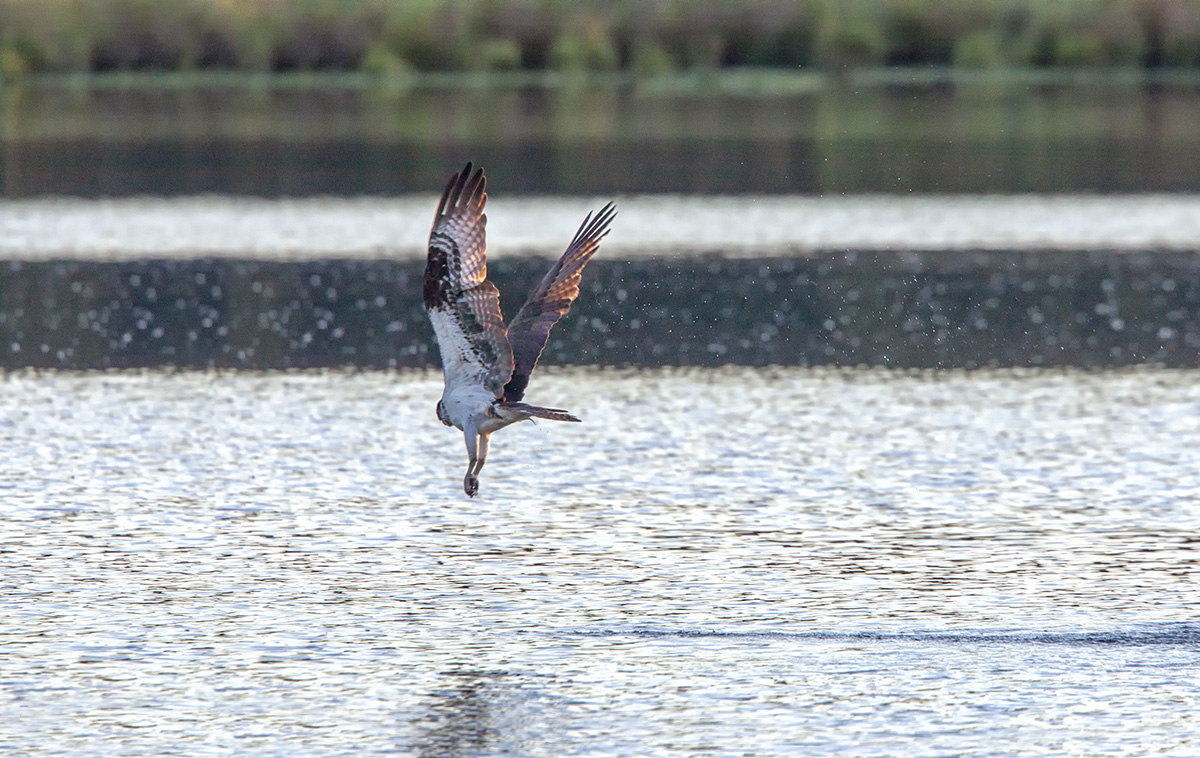
I am cleaning my backup hard drives to remove files to clean up space and to remove files I do not need or duplicates. I found this series of an Osprey fishing at the Celery Farm Natural Area in Allendale, NJ. These were taken at 7 am so there was not a lot of light so I was happy they came out as well as they did because the Canon 1D mkIII was a little “noisy” in low light. The refuge years ago was a Celery Farm and after that they raised carp here before it became a town Natural Area. So you can see a small splash of orange color in the featured image by the Ospreys talons. The Osprey was not able to hold on to the Carp and dropped it before the next image.
 photoartflight