 photoartflight
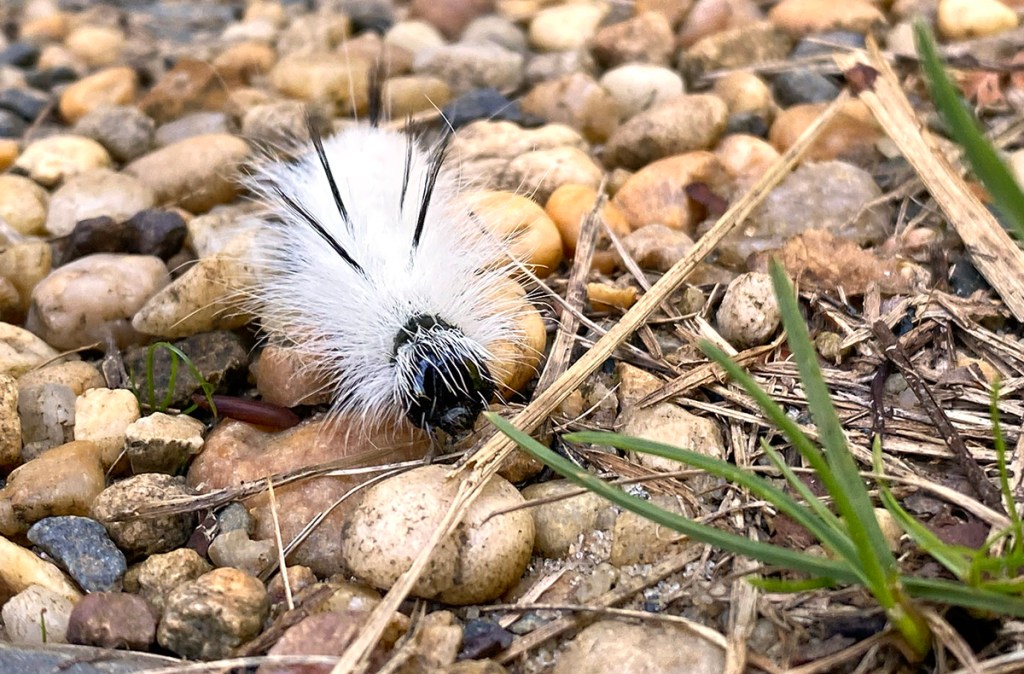
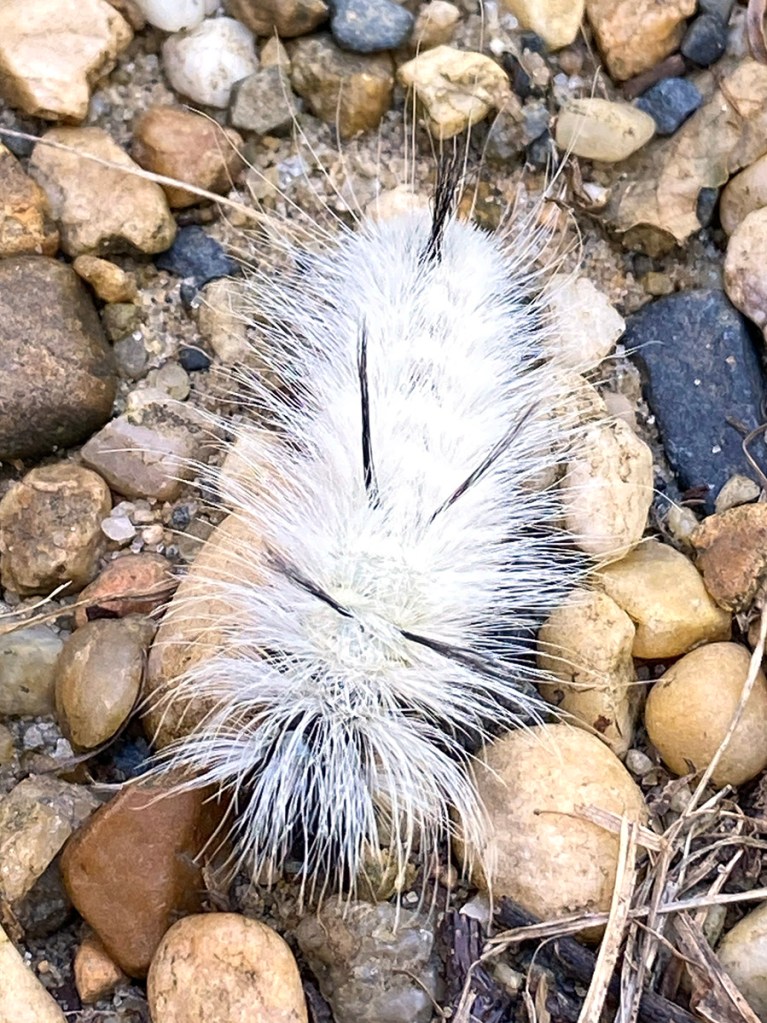
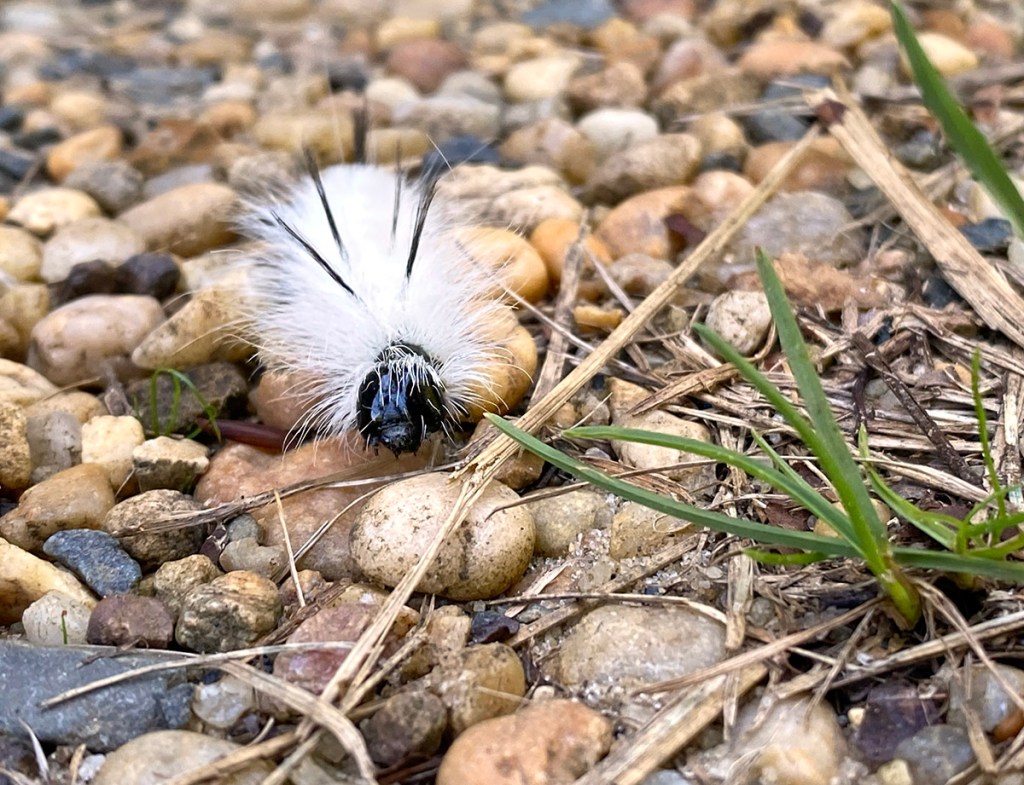
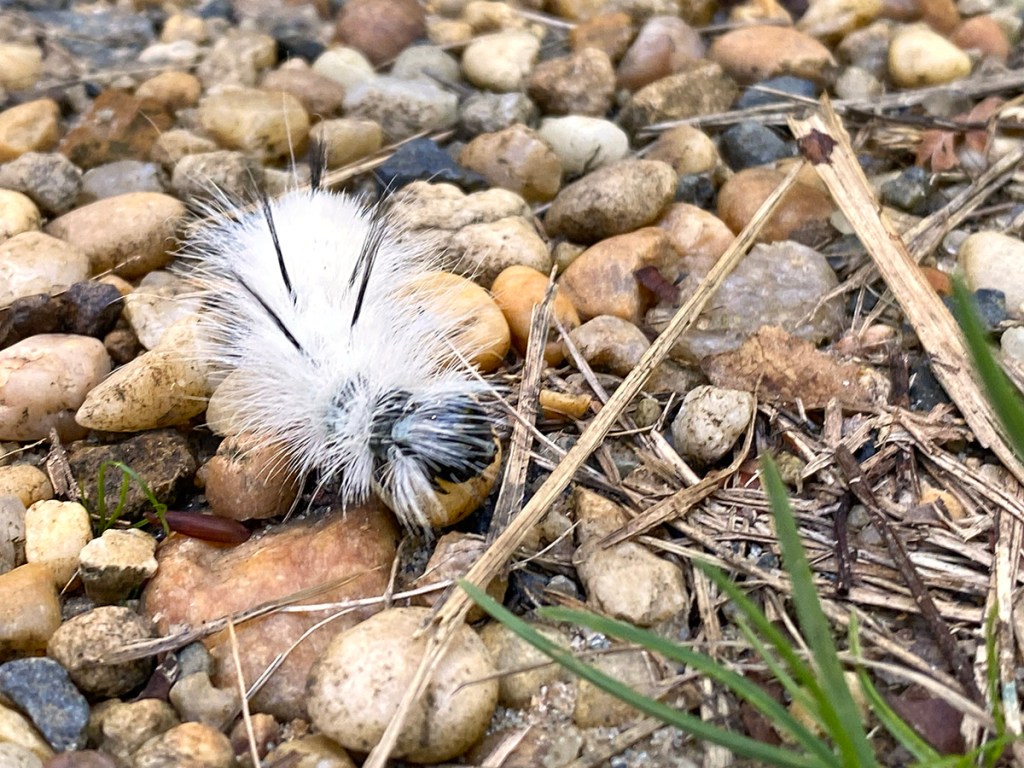
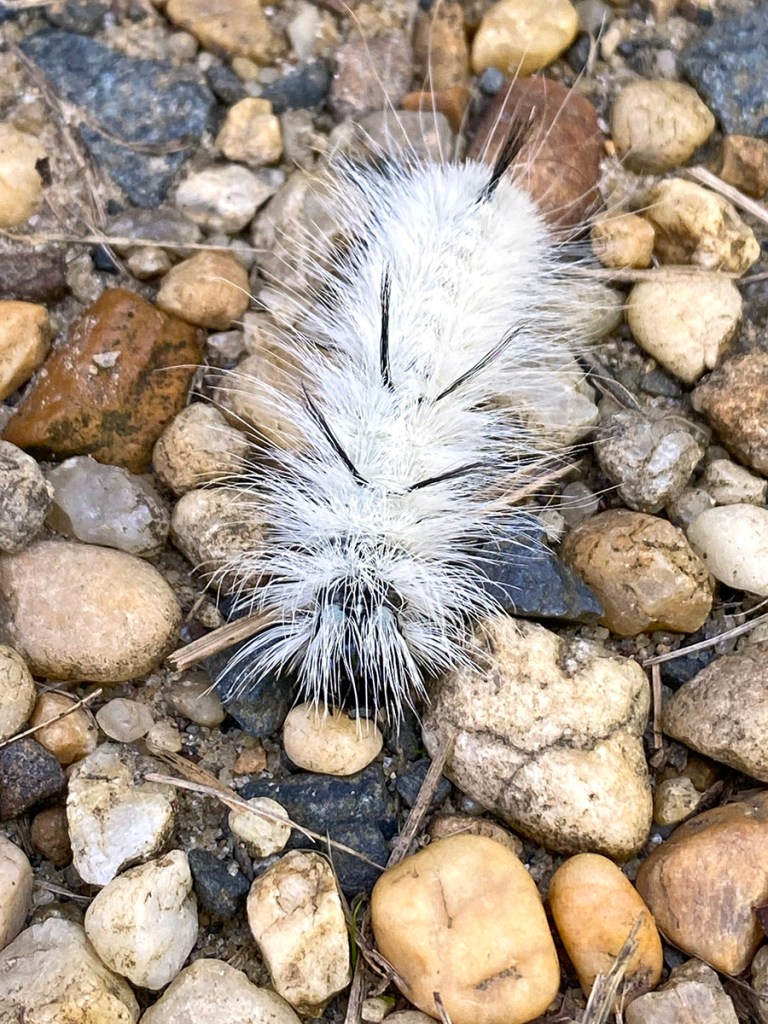
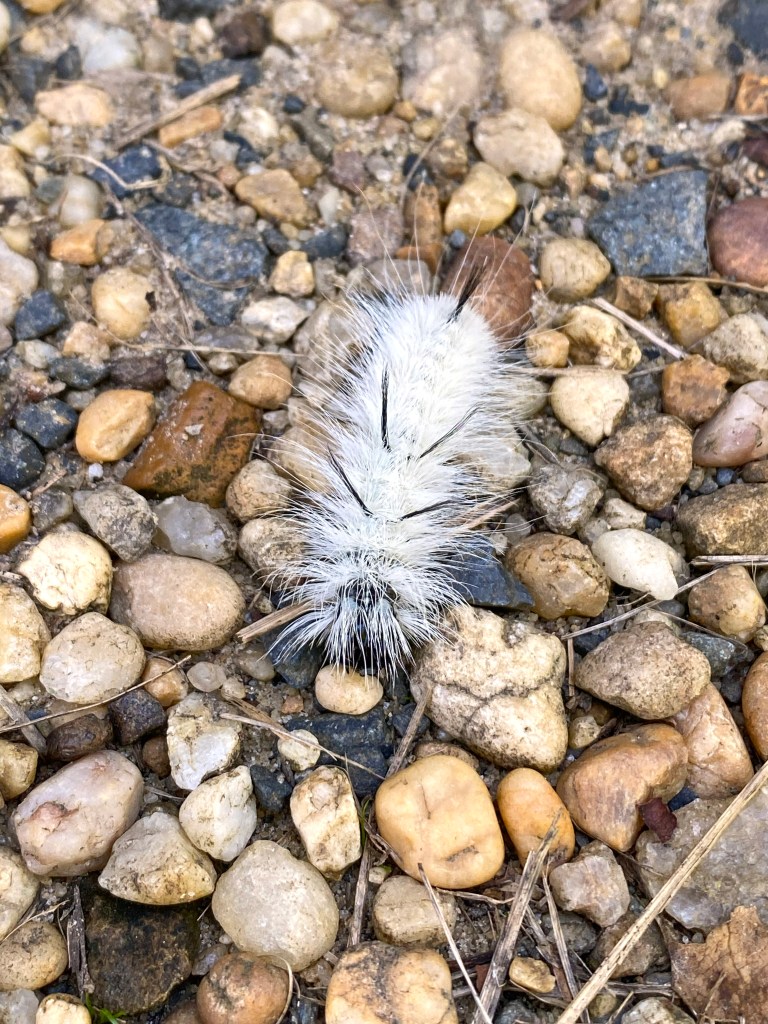
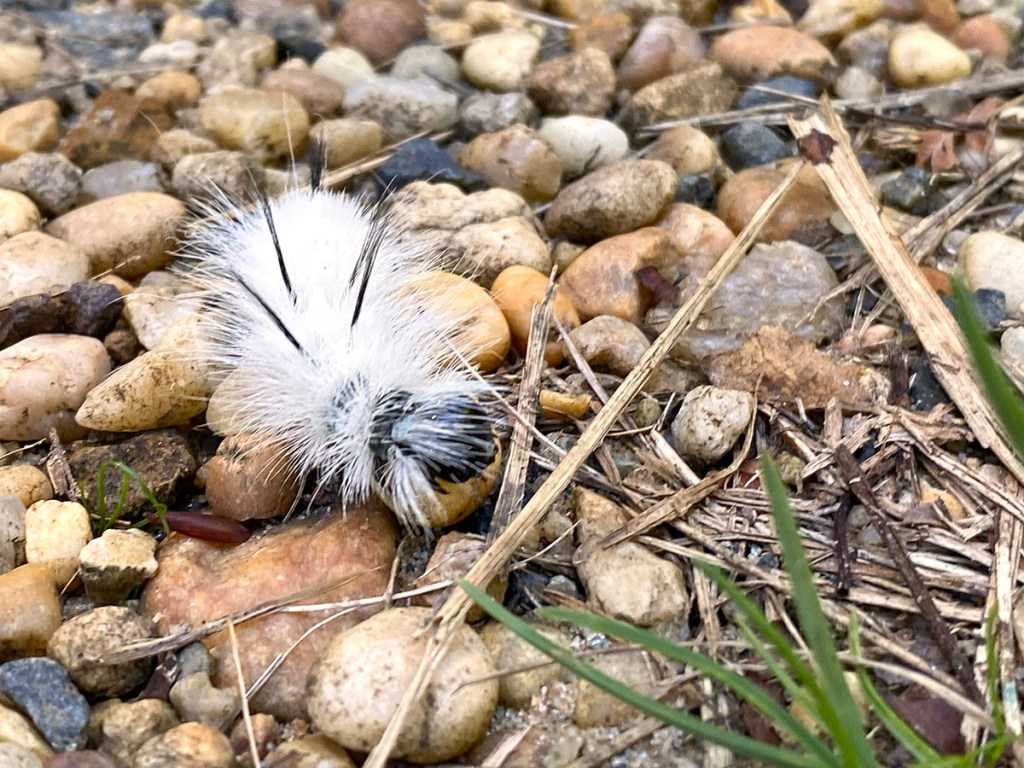
Hickory Tussock Moth Caterpillar
Posted on October 2, 2023
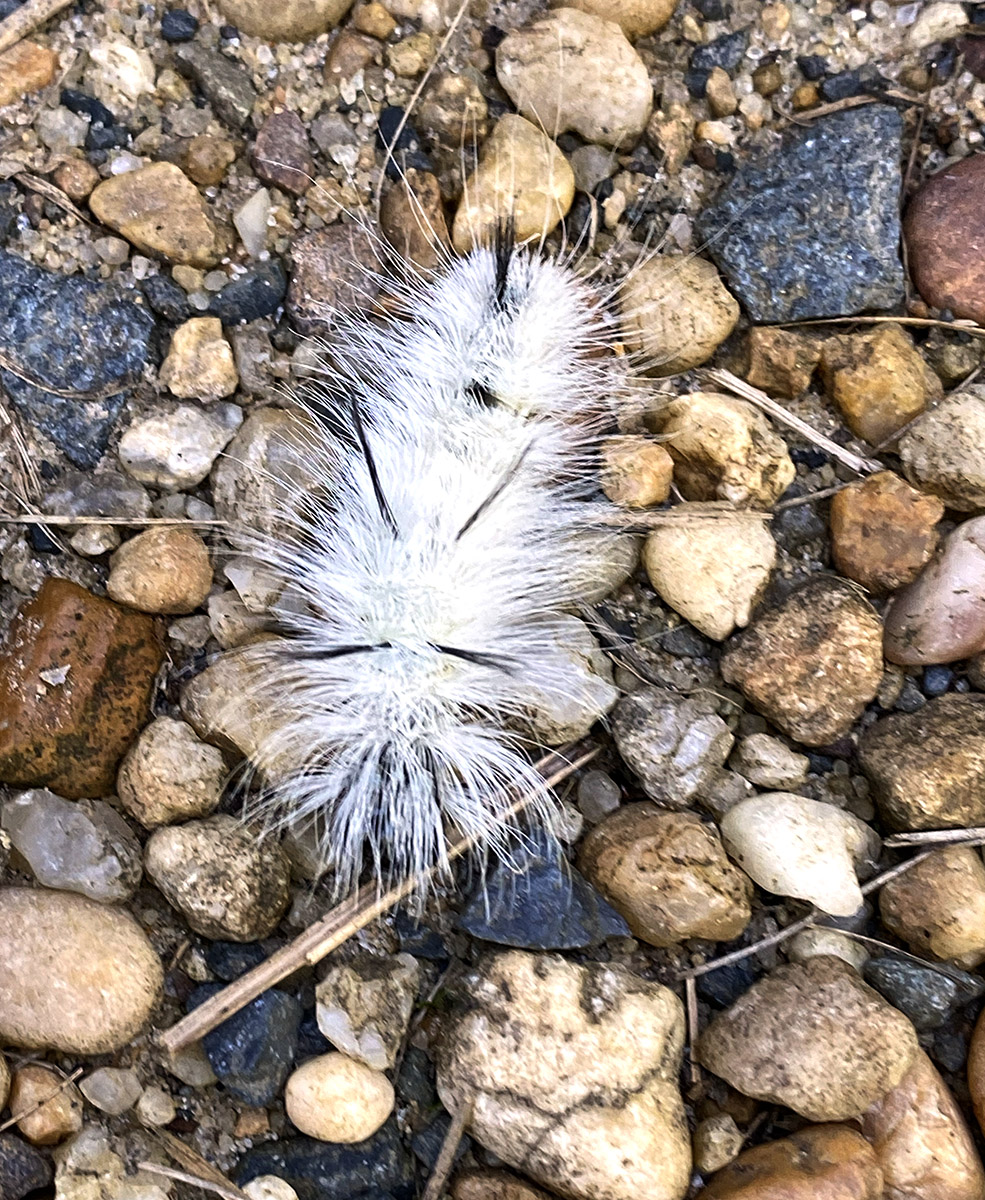
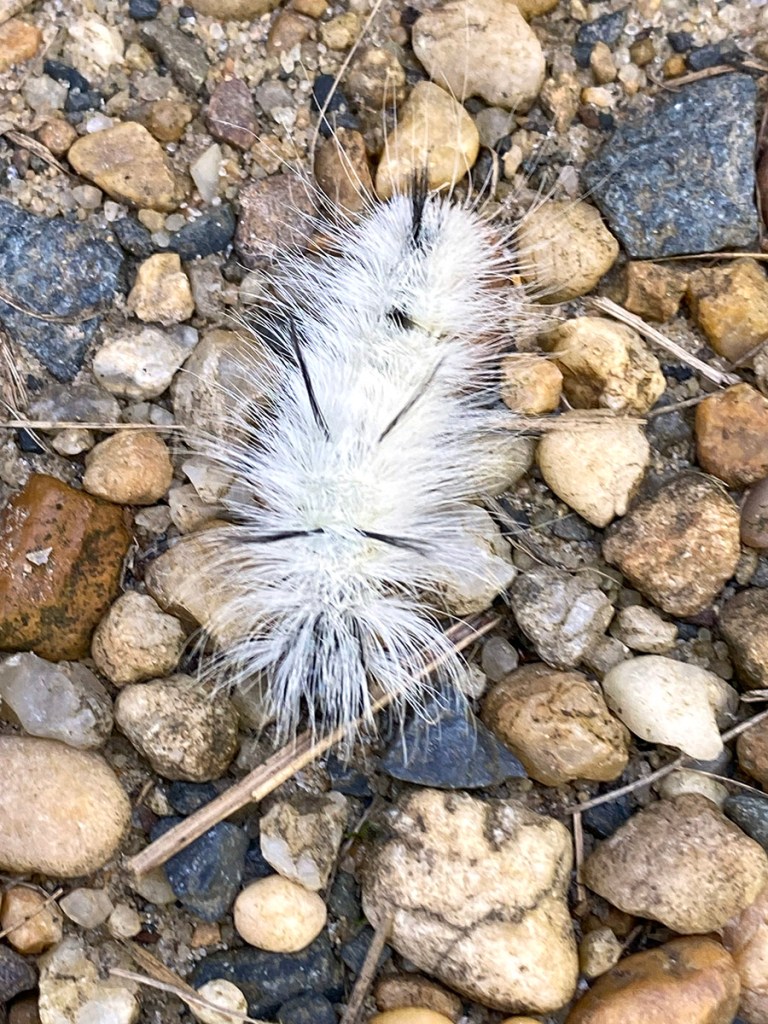
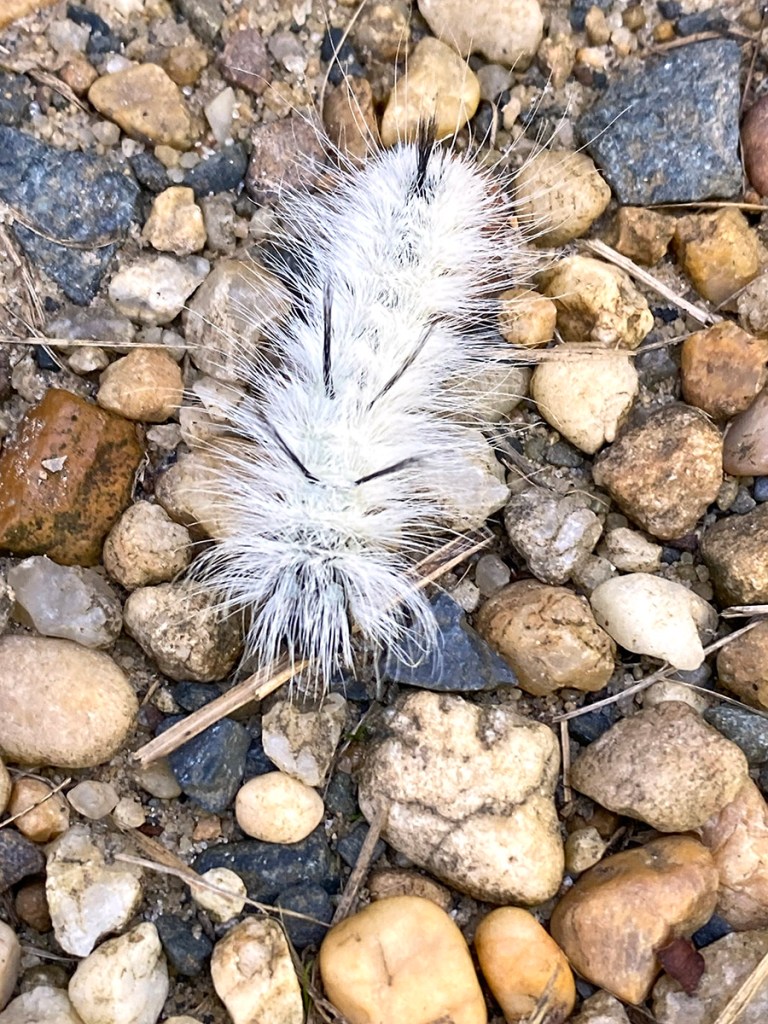
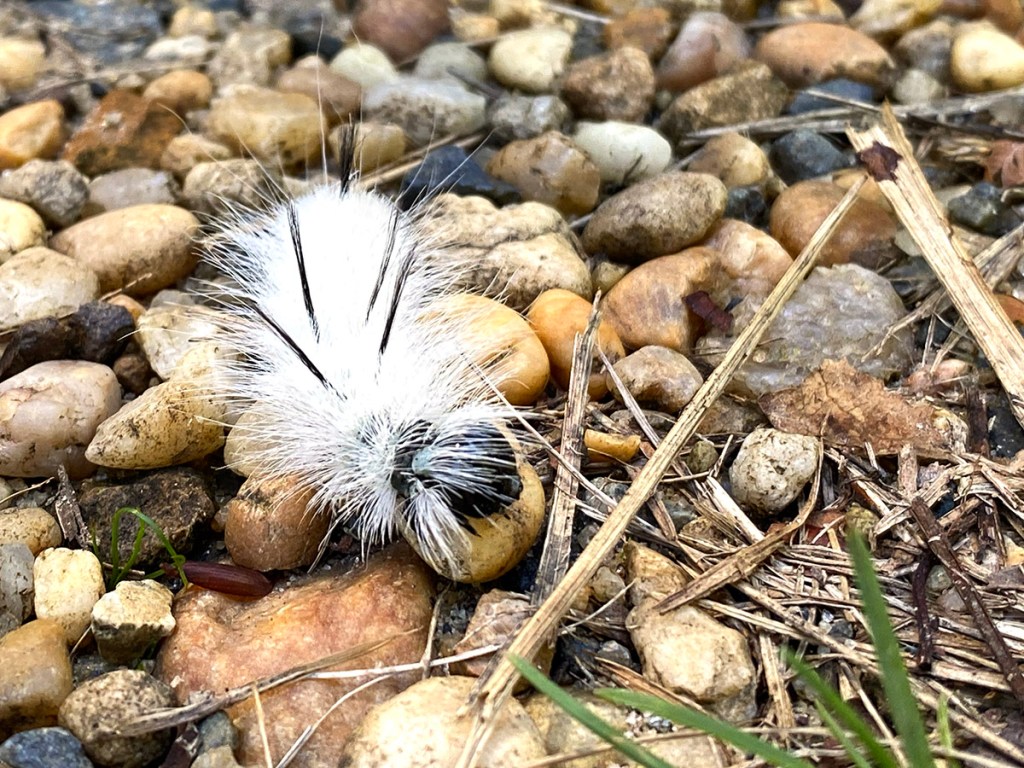
We were taking a walk at the Plainsboro Preserve just to get some exercise so I was only using my iPhone 11Pro for images. We came upon this interesting looking caterpillar on the path. I had never seen one of these caterpillars before. It had a very sharp spikey hairs on the body and looked like a very interesting photo subject. The hickory tussock is the caterpillar of the Hickory Tussock moth (Lophocampa Caryae) which lives in the Eastern half of North America. Eggs are usually laid in May and June on a variety of trees including hickory, walnut, ash, elm, maple and oak. By late summer and early fall the white hairy caterpillars are fairly easy to spot against green foliage. It is covered with white setae or hairs, and a line of black ones runs down its back. It also has four small clusters of longer black setae; two at the front and two at the back, called pencils. If you come upon one DO NOT TOUCH THEM! Touching them would be very painful! All images were taken with my iPhone 11 Pro with the 4.3mm lens & 195mm Digital zoom for a focal length 35mm equivalent of 51mm.
If you come upon one of these do not touch them! Touching them would be very painful!



Caterpillars
Posted on May 18, 2016
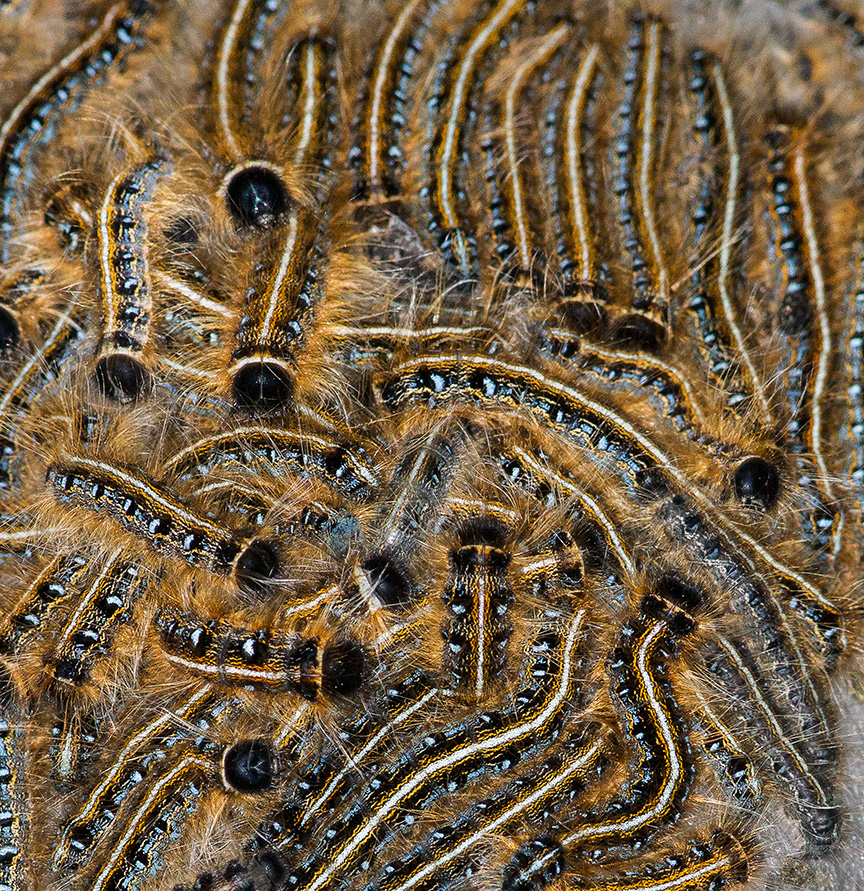
I found this caterpillar nest in a tree in my front yard. I have been watching it, waiting for them to come out to see what happens. I shot a series when I got home from work. It was getting dark so I tried some fill flash to brighten them up a little. Shooting close up with a 300mm lens gives an almost abstract pattern to the closeups. I also shot a few 2 shot vertical panoramas which I assembled in Photoshop.
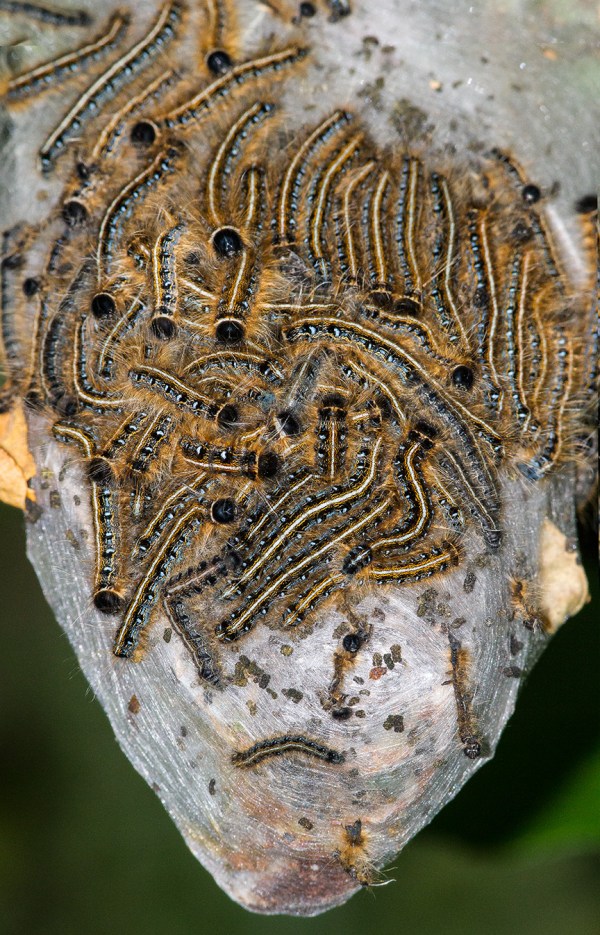


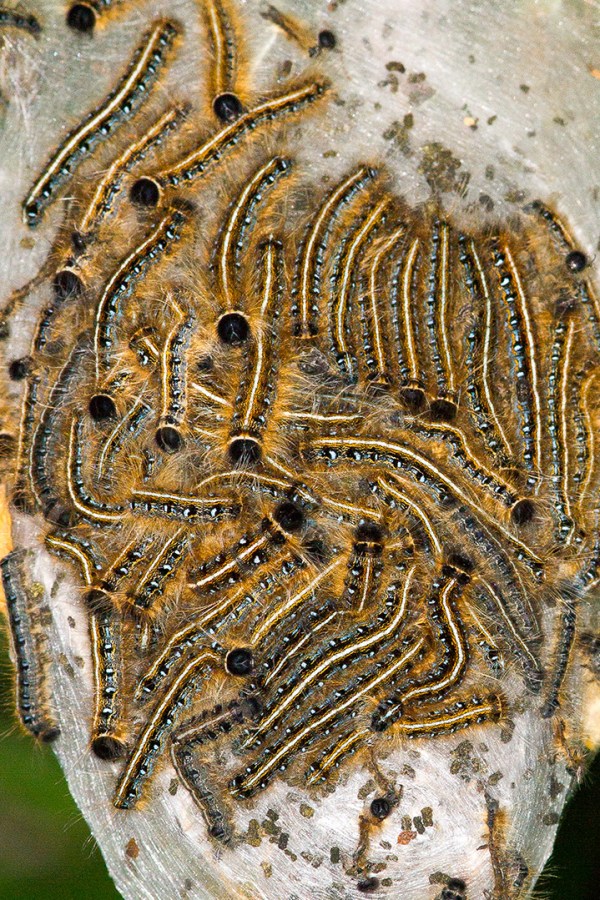
Caterpiller Wreath
Posted on October 17, 2013
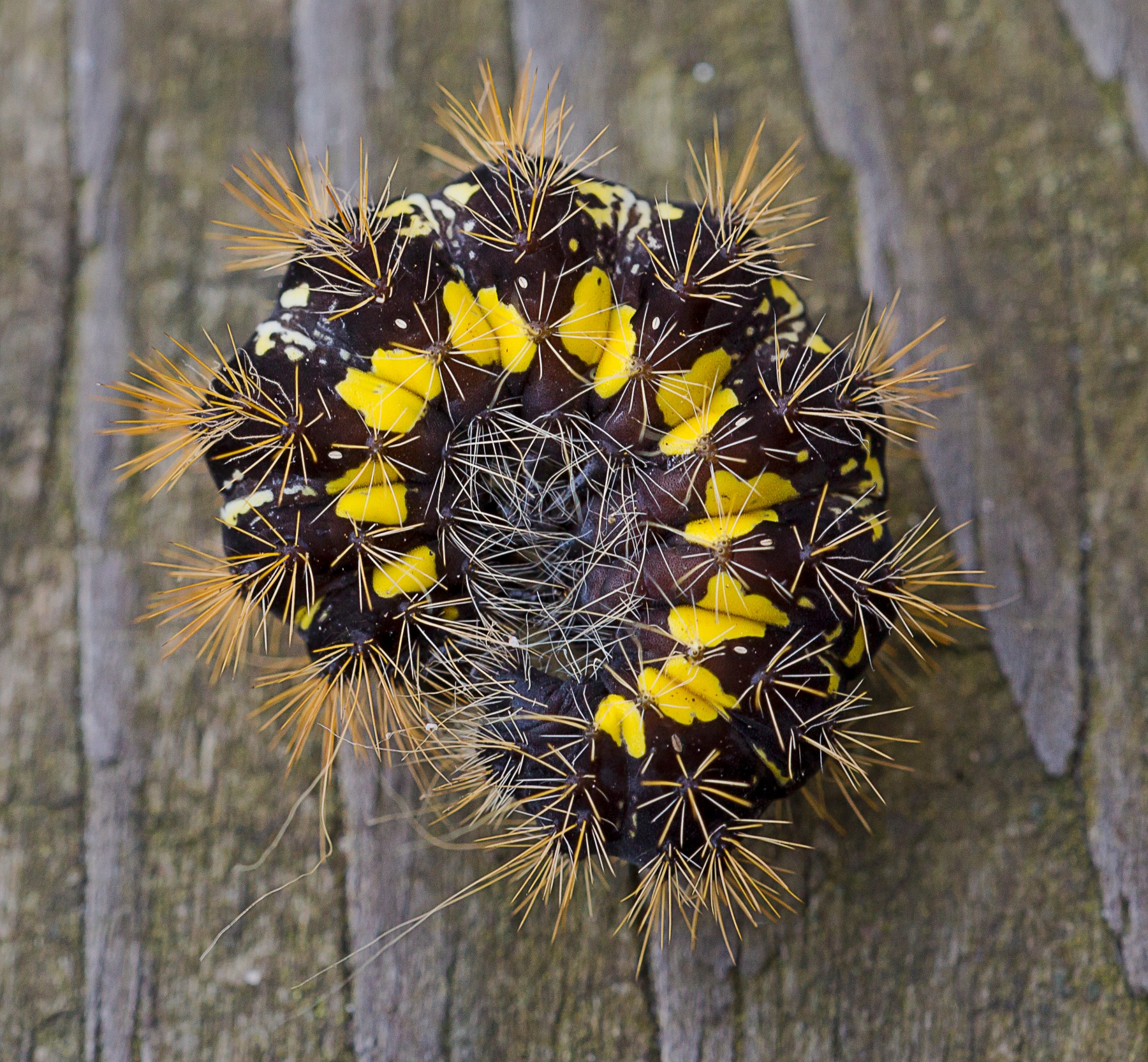
I found this rolled up caterpillar on a bench. I thought it was interesting with the spikes and colors. The caterpillar reminded me of a wreath. Canon 1D MkIV with the Sigma 150mm f/2.8 OS Macro. The caterpillar was in the shade so I used f/8 to get some depth of field for the spikes and tried to shoot straight down with the front of the lens parallel to the caterpillar to get as much in the plane of focus. I ended up with 1/30 of a second exposure at ISO 800 , handheld, so I shot a burst which enabled me to pick the sharpest exposure in the series. I believe it is a Smeared Dagger Moth Caterpillar, a stinging caterpillar. It uses poison filled bristles to defend itself.
 photoartflight