 photoartflight
BIF – White Ibis
Posted on February 22, 2014

One more Bird In Flight for this series. Here are some White Ibises flying in to our location. Here I was using a 300-800mm Sigma DG APO Zoom on a heavy duty Gitzo tripod and Wimberly Gimbal head. This gives me the option of zooming to 300mm to help find my subject then zoom in for my shots. This is a tremendous help in getting the shot. Going to 300mm you have a much wider view to find, frame and zoom in to your subject. If you ever tried to find a fast moving bird flying at 800mm you know what I am saying. The Sigma 300-800mm zoom is about 13 lbs, with the camera, gimbal head and heavy Carbon Fiber Gitzo tripod I am over 25 lbs, so you tend to get set up in a location and wait and see what comes to you or what crosses your path. It is also handy when your subjects get close you can zoom down to continue to photograph them. It seems like there is this unwritten law that whatever lens you have, you need something longer or shorter, so this is my best alternative so far. I usually also have my 400mm with me for faster moving subjects or if I wander away from my tripod setup.
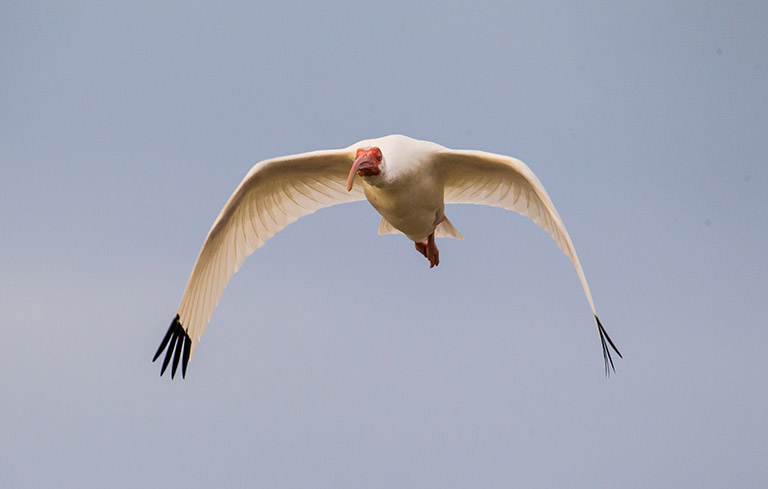
White Ibis Coming In – Wings Down
Canon EOS 1D MkIV, Sigma 300-800 DG APO f/5.6 zoom, f/8, 1/1000 sec, -0.33 exposure compensation, ISO 640

White Ibis Coming In – Wings Up
Canon EOS 1D MkIV, Sigma 300-800 DG APO f/5.6 zoom, f/8, 1/1000 sec, -0.33 exposure compensation, ISO 640

White Ibis Coming In – Being Followed
Canon EOS 1D MkIV, Sigma 300-800 DG APO f/5.6 zoom, f/8, 1/1000 sec, -0.33 exposure compensation, ISO 640

White Ibis Coming In – Front of the Flock
Canon EOS 1D MkIV, Sigma 300-800 DG APO f/5.6 zoom, f/8, 1/1000 sec, -0.33 exposure compensation, ISO 640
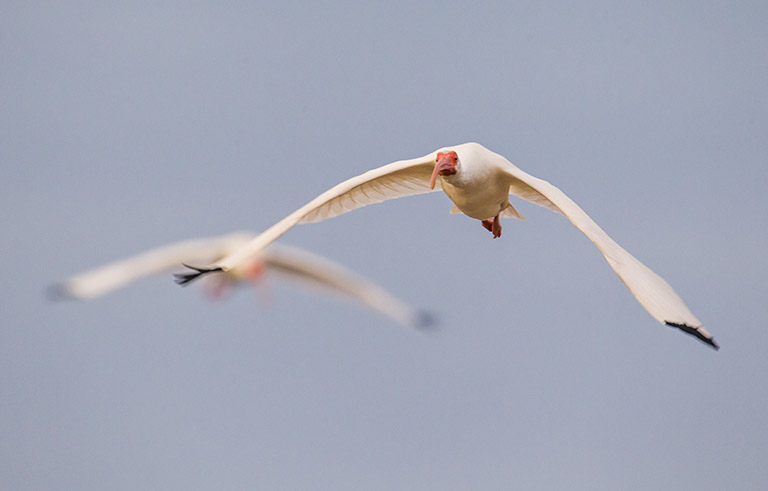
White Ibis Coming In – Pulling Ahead
Canon EOS 1D MkIV, Sigma 300-800 DG APO f/5.6 zoom, f/8, 1/1000 sec, -0.33 exposure compensation, ISO 640

White Ibis Coming In – Wings Up
Canon EOS 1D MkIV, Sigma 300-800 DG APO f/5.6 zoom, f/8, 1/1000 sec, -0.33 exposure compensation, ISO 640
BIF – Osprey
Posted on February 22, 2014

Here is another BIF – Bird in Flight. This time it is an Osprey that was circling over the water then came in closer. Ospreys are a little harder to get good shots because their heads are always turning side to side, looking below, so you might get a nice wing position, but the head is at an odd angle or looking away. I also add some positive exposure compensation for the darker feathers under the wings. You still have to be careful not to go to far and blow out the whites. You have the same problems with Eagles. I then open up the shadows under the wings a little in Photoshop. I usually do not like to use fill flash when photographing flying birds, I prefer to work on my raw files to open up some of the darker areas.

Canon EOS 1D MkIV, Canon 400mm IS DO f/4, Canon Series III 1.4X Teleconverter, f/11, 1/640 sec, +0.67 Exposure Compensation, ISO 400
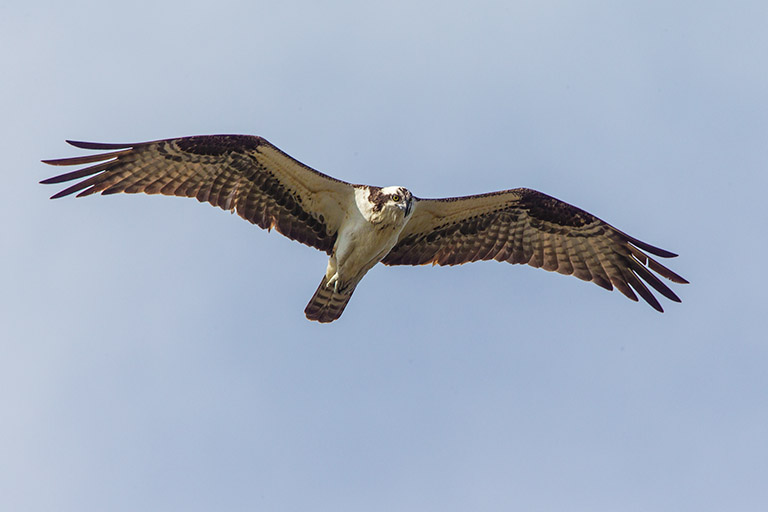
Canon EOS 1D MkIV, Canon 400mm IS DO f/4, Canon Series III 1.4X Teleconverter, f/11, 1/800 sec, +0.33 Exposure Compensation, ISO 400

Canon EOS 1D MkIV, Canon 400mm IS DO f/4, Canon Series III 1.4X Teleconverter, f/11, 1/640 sec, +0.67 Exposure Compensation, ISO 400

Canon EOS 1D MkIV, Canon 400mm IS DO f/4, Canon Series III 1.4X Teleconverter, f/11, 1/640 sec, +0.67 Exposure Compensation, ISO 400

Canon EOS 1D MkIV, Canon 400mm IS DO f/4, Canon Series III 1.4X Teleconverter, f/11, 1/500 sec, ISO 400

BIF – Snowy Egret
Posted on February 18, 2014
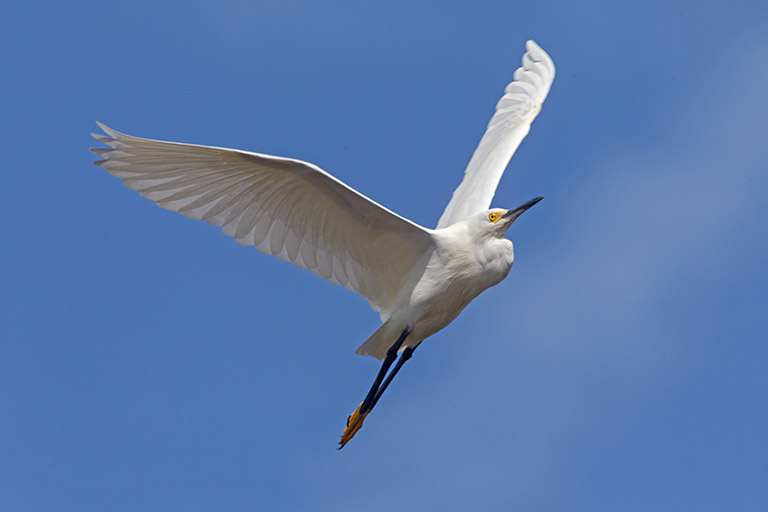
One of my favorite photos to capture are birds in flight (BIF). It is a challenge and rewarding at the same time. Sometimes you can track them coming in towards you so you can get ready for them and compose your shots. Other times they just come upon you and you have little time to react and get a few shots, like this series. My favorite combination for this is the Canon MkIV and the Canon 400mm DO IS f/4 lens, sometimes with a Canon Series III 1.4X teleconverter. The 400mm DO f/4 is a lightweight , shorter in length the a normal 400mm, easy to handle and track on a subject lens, perfect for fast moving subjects such as flying birds. Some do not like the DO series of lenses, but if you learn how to use them and learn how to adjust your files it is a real winner. It is also only 4.3 lbs, so it is relatively lightweight to carry for long periods of time. This Snowy Egret just came out over the trees and was close in so there was little time to react and compose my shots.
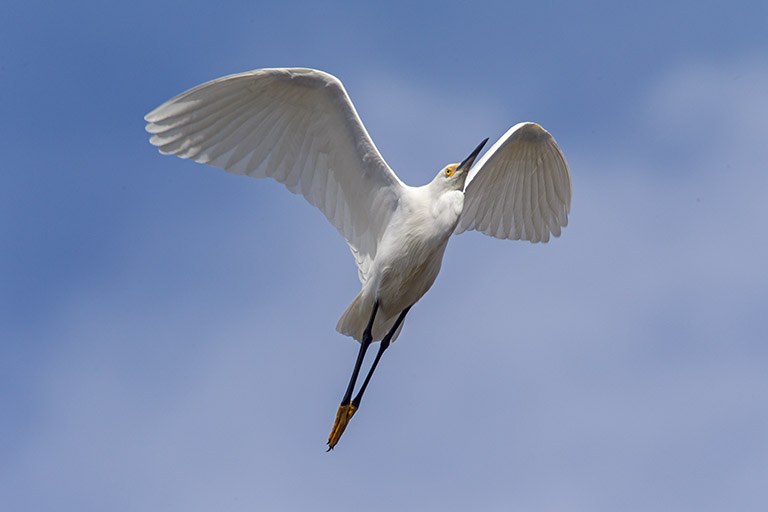
Snowy Egret Getting Closer
Canon EOS 1D MkIV, Canon 400mm DO IS f/4, Canon Series III 1.4X Teleconverter, f/11, 1/1250 sec, ISO 400

Closer
Canon EOS 1D MkIV, Canon 400mm DO IS f/4, Canon Series III 1.4X Teleconverter, f/11, 1/1000 sec, ISO 400

Snowy Egret Almost Overhead
Canon EOS 1D MkIV, Canon 400mm DO IS f/4, Canon Series III 1.4X Teleconverter, f/11, 1/1250 sec, ISO 400
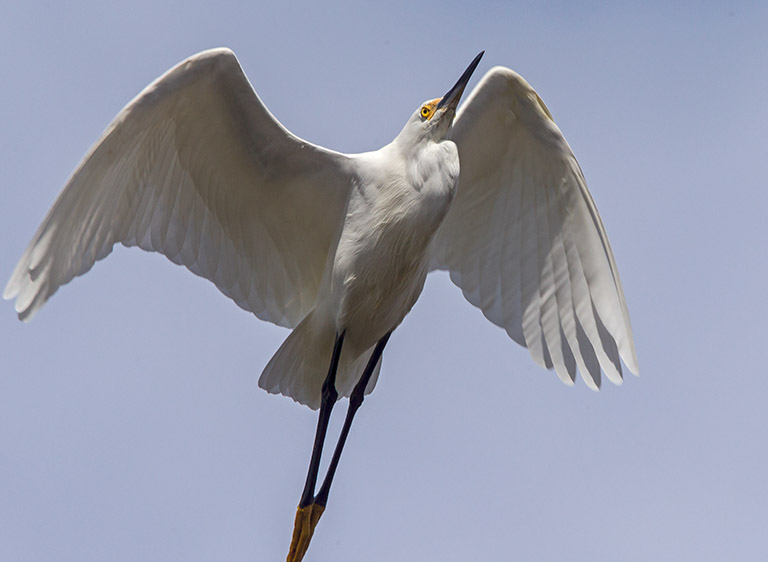
Snowy Egret Overhead
Canon EOS 1D MkIV, Canon 400mm DO IS f/4, Canon Series III 1.4X Teleconverter, f/11, 1/1600 sec, ISO 400
A Study In White
Posted on February 17, 2014

I was following this White Ibis when this Snowy Egret flew in. I was setup with a Sigma 300-800mm zoom which helped, so I could frame my subjects while they were interacting with each other. They just seemed to dance & prance around each other, not seeming to notice the other was there. Usually I use a little minus exposure compensation with white birds, but it was still early in the morning and a little dark. This time I used +0.33 exposure compensation with aperture priority after checking the histogram. This sequence only lasted a little over 2 minutes.
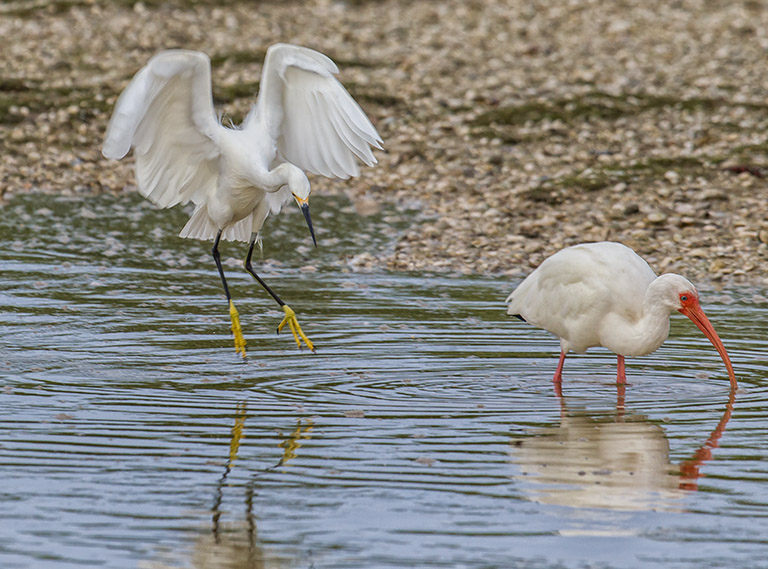
Coming In
Canon EOS 1D MkIV, Sigma 300-800mm DG APO f/5.6 lens @ 687mm, f/8, 1/320 sec., ISO 640, +0.33 exposure compensation, aperture priority.
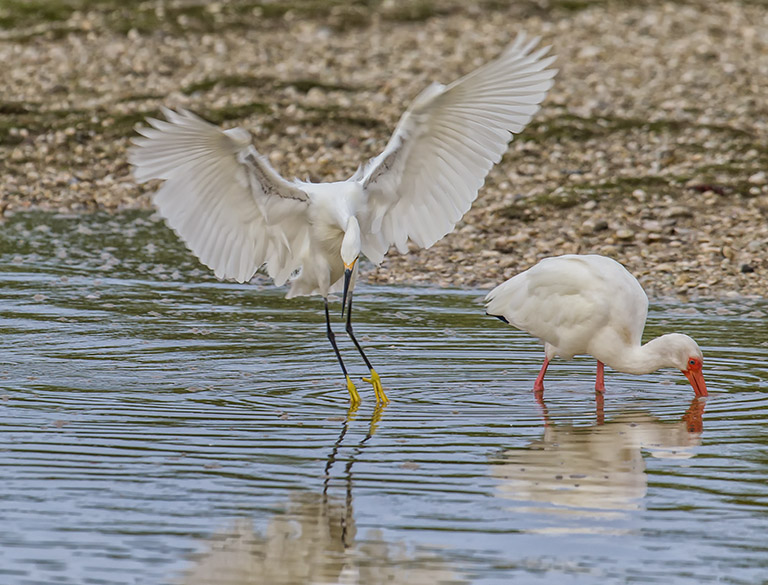
Touchdown w/ Full Wing Spread
Canon EOS 1D MkIV, Sigma 300-800mm DG APO f/5.6 lens @ 687mm, f/8, 1/320 sec., ISO 640, +0.33 exposure compensation, aperture priority.

What’s for Breakfast
Canon EOS 1D MkIV, Sigma 300-800mm DG APO f/5.6 lens @ 687mm, f/8, 1/320 sec., ISO 640, +0.33 exposure compensation, aperture priority.
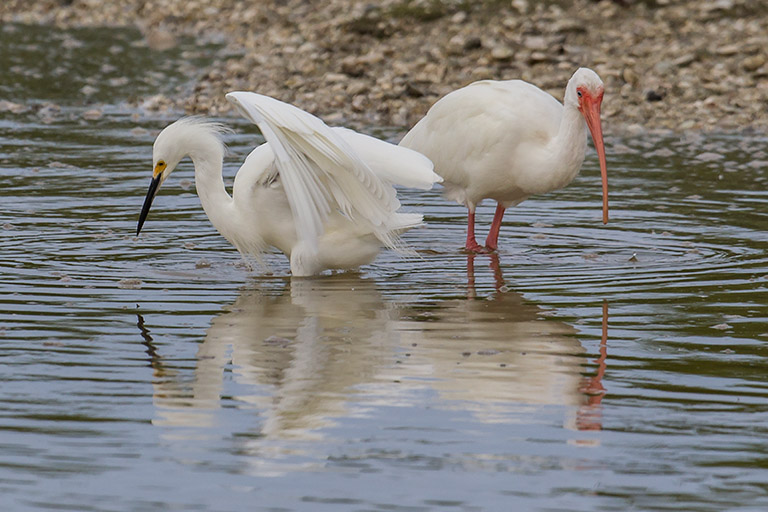
Looking for a Meal
Canon EOS 1D MkIV, Sigma 300-800mm DG APO f/5.6 lens @ 687mm, f/8, 1/400 sec., ISO 640, +0.33 exposure compensation, aperture priority.

Well I found something
Canon EOS 1D MkIV, Sigma 300-800mm DG APO f/5.6 lens @ 687mm, f/8, 1/400 sec., ISO 640, +0.33 exposure compensation, aperture priority.

Still Looking
Canon EOS 1D MkIV, Sigma 300-800mm DG APO f/5.6 lens @ 687mm, f/8, 1/400 sec., ISO 640, +0.33 exposure compensation, aperture priority.
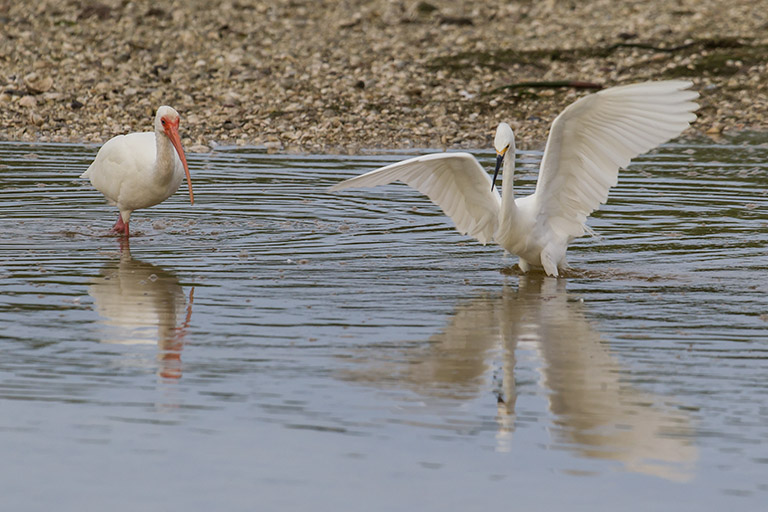
Looking, Looking
Canon EOS 1D MkIV, Sigma 300-800mm DG APO f/5.6 lens @ 687mm, f/8, 1/400 sec., ISO 640, +0.33 exposure compensation, aperture priority.
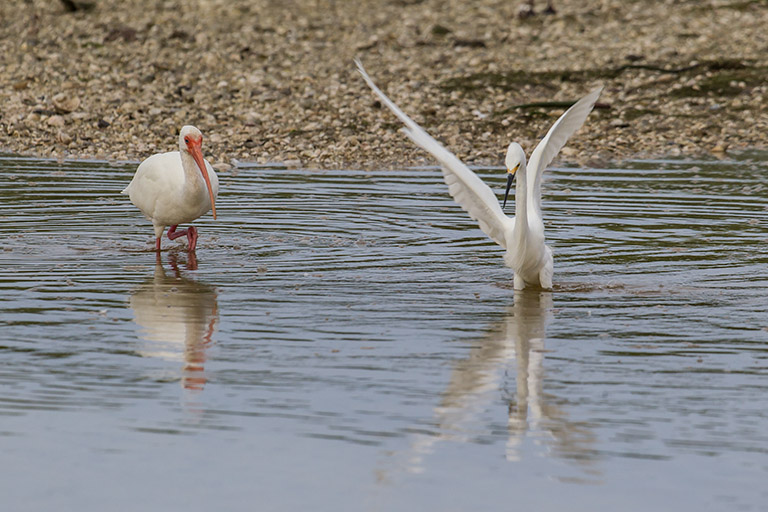
Coming Over
Canon EOS 1D MkIV, Sigma 300-800mm DG APO f/5.6 lens @ 687mm, f/8, 1/400 sec., ISO 640, +0.33 exposure compensation, aperture priority.

Crossing Paths
Canon EOS 1D MkIV, Sigma 300-800mm DG APO f/5.6 lens @ 687mm, f/8, 1/400 sec., ISO 640, +0.33 exposure compensation, aperture priority.
Mangrove Tree Crabs
Posted on February 13, 2014

We found a lot of Mangrove Tree Crabs climbing in the Mangrove branches. They are usually a little under an inch, but we found quite a few larger ones on the branches. It is usually rather dark under the leaves and branches, but with a little fill flash you can see some amazing colors on them. I used canon flash with a flexible bounce reflector. I underexposed the flash by 2/3 rds of a stop so it acted more like a fill flash, more for the getting some detail and colors of the crab. When threatened they can move very quickly, so if you stay too long or get to close you will loose your subject. One day it seemed like there were hundreds in the trees, while on other days we only saw a few.

Hiding
Canon EOS 1D MkIII, Sigma 150 Macro OS f/2.8, Fill Flash – 2/3 stop, handheld, @ f/8, 1/20 sec, ISO 400
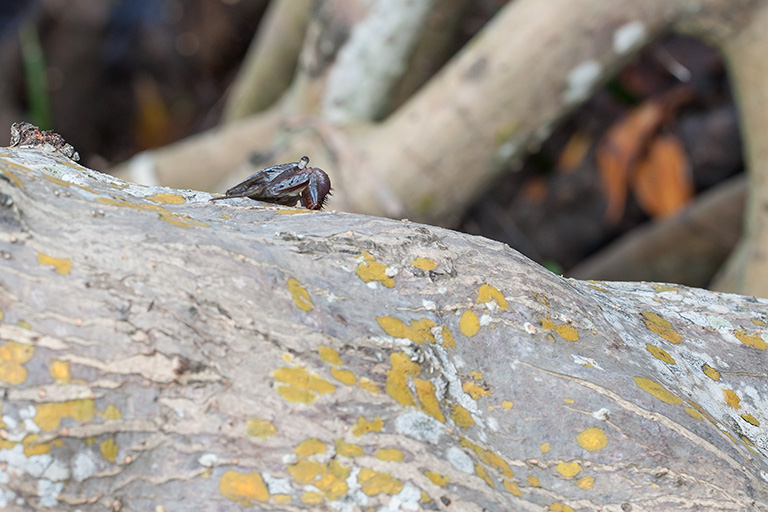
Long Way to Go
Canon EOS 1D MkIII, Sigma 150 Macro OS f/2.8, Fill Flash – 2/3 stop, handheld, @ f/8, 1/30 sec, ISO 400

Little Crab – Big World
Canon EOS 1D MkIII, Sigma 150 Macro OS f/2.8, Fill Flash – 2/3 stop, handheld, @ f/8, 1/30 sec, ISO 400

Long Way to Go
Canon EOS 1D MkIII, Sigma 150 Macro OS f/2.8, handheld, Fill Flash – 2/3 stop, @ f/8, handheld, 1/30 sec, ISO 400

What are you looking at!
Canon EOS 1D MkIII, Sigma 150 Macro OS f/2.8, Fill Flash – 2/3 stop, handheld, @ f/11, 1/6 sec, ISO 400

Climbing Down
Canon EOS 1D MkIII, Sigma 150 Macro OS f/2.8, Fill Flash – 2/3 stop, handheld, @ f/11, 1/6 sec, ISO 400

Blending In
Canon EOS 1D MkIII, Sigma 150 Macro OS f/2.8, Fill Flash – 2/3 stop, handheld, @ f/8, 1/8 sec, ISO 400

Closer
Canon EOS 1D MkIII, Sigma 150 Macro OS f/2.8, Fill Flash – 2/3 stop, handheld, @ f/8, 1/13 sec, ISO 400

Hanging Around
Canon EOS 1D MkIII, Sigma 150 Macro OS f/2.8, Fill Flash – 2/3 stop, handheld, @ f/3.2, 1/125 sec, ISO 400

Going Down
Canon EOS 1D MkIII, Sigma 150 Macro OS f/2.8, Fill Flash – 2/3 stop, handheld, @ f/2.8, 1/125 sec, ISO 400

One Leg Up Reddish Egret
Posted on February 8, 2014

This Reddish Egret was just standing on one leg for about an hour. I was shooting other birds flying in and out, hunting for their meals and interacting with each other. This one was just standing on one leg watching what was going on. I usually do not see them that motionless for that long. At least being that still made for a good subject to photograph.
Canon EOS 1D MkIV, Sigma 300-800mm DG f/5.6 zoom @ 800mm, f/8, 1/500 sec, ISO 640
Reddish Egret
Posted on February 3, 2014

This Reddish Egret was walking not far from the shore, stopping to look around, then moving on again. I was waiting to see if it would start hunting for a meal, but it kept moving slowly along. The Egret takes quite long strides as it walks giving it an almost slow motion look its slow walk.
Header photo, Canon EOS 1D MkIV, Sigma 300-800mm DG lens @800mm, tripod mounted with Wimberly Gimbal Head, f/7.1, 1/500 sec, ISO 640.
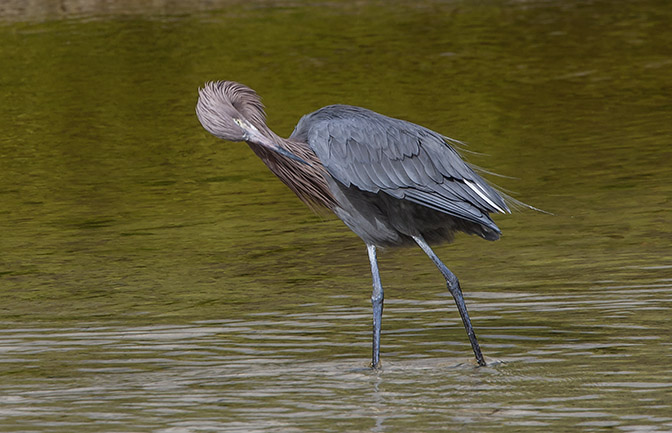
- Got an Itch
Canon EOS 1D MkIV, Canon 400mm DO IS f/4 lens, Canon 1.4X teleconverter, handheld, f/11, 1/200 sec, ISO 400
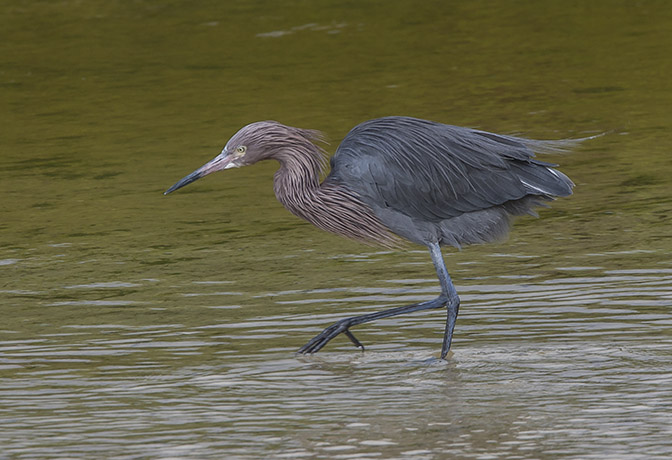
Striding Along
Canon EOS 1D MkIV, Canon 400mm DO IS f/4 lens, Canon 1.4X teleconverter, handheld, f/11, 1/200 sec, ISO 400

Looking Ahead
Canon EOS 1D MkIV, Canon 400mm DO IS f/4 lens, Canon 1.4X teleconverter, handheld, f/11, 1/200 sec, ISO 400
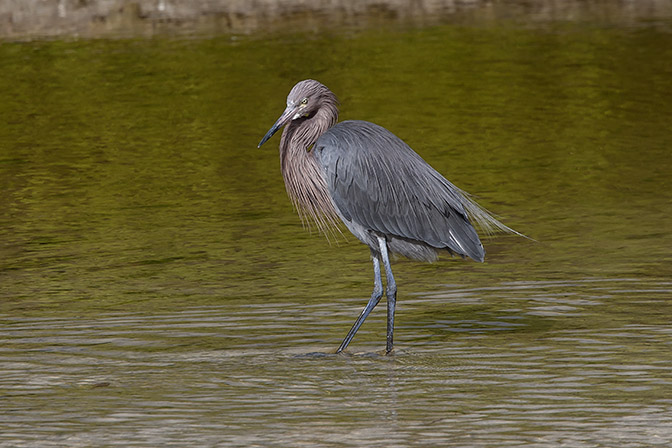
Stopping to Pose
Canon EOS 1D MkIV, Canon 400mm DO IS f/4 lens, handheld, Canon 1.4X teleconverter, handheld, f/11, 1/100 sec, +0.33 Exposure Compensation, ISO 400

Moving Along Again
Canon EOS 1D MkIV, Canon 400mm DO IS f/4 lens, handheld, Canon 1.4X teleconverter, f/11, 1/400 sec, ISO 400
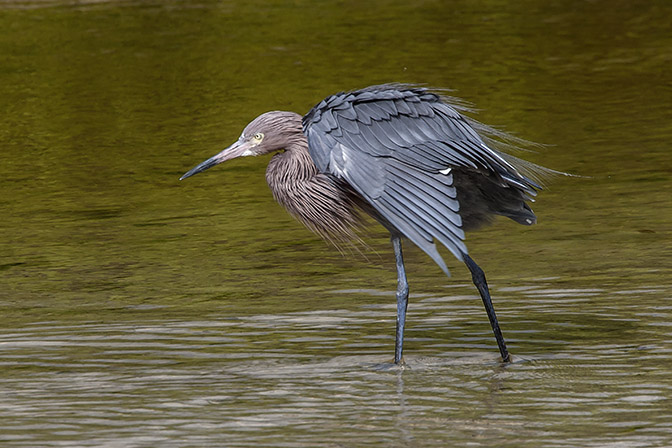

Osprey Fly-By
Posted on January 31, 2014

This Osprey was roosting in the trees nearby and then flew off to look for its meal. This time the Osprey flew towards me which gave me an opportunity to get a few shots before it got out of range to photograph. After it went “fishing”, it came back and landed back in the trees to have its meal.

Going Out for Lunch
Canon EOS 1D MkIV, Canon 400mm DO f/4 IS, Canon 1.4X Teleconverter, Handheld, f/10, 1/2000 sec, ISO 1250, +1 Exposure Compensation

Lunch Served
Canon EOS 1D MkIV, Canon 400mm DO f/4 IS, Canon 1.4X Teleconverter, Handheld, f/10, 1/2500 sec, ISO 1250, +0.67 Exposure Compensation
Uh-Oh!
Posted on January 30, 2014
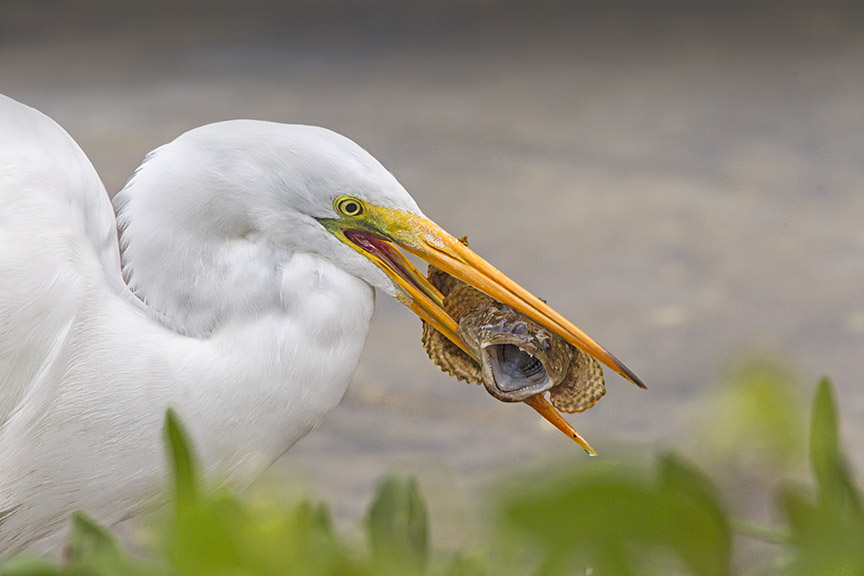
This Great Egret caught his morning meal. The fish just seemed to have a look of surprise or maybe it was the look of the coming doom. It took quite awhile for the Egret to finish its meal and seemed to have difficulty swallowing it down. It kept flipping it in the air and catching it again, maybe for a better position for swallowing the fish. This was early in the morning and still a little dark. I pushed the ISO to 2000, which is about as far as I like to go on a Canon MkIV for noise, and still try to stop the motion of the Egret shaking its prey. I removed as much noise as I thought possible in Adobe Camera Raw. Using a 1.4X teleconverter gave me an f/stop of 5.6, so I added 1 more stop to help give a little more sharpness. I usually do not like using a 1.4X teleconverter wide open, so being “Old School” I used f/8 for a slight increase in sharpness because of the Teleconverter.

Two Mouths
Canon EOS 1D MkIV, Canon 400mm DO f/4 IS, Canon 1.4X Teleconverter, f/8, 1/250 sec, ISO 2000

Eye to Eye
Canon EOS 1D MkIV, Canon 400mm DO f/4 IS, Canon 1.4X Teleconverter, f/8, 1/320 sec, ISO 2000
Sunset Landing
Posted on January 28, 2014
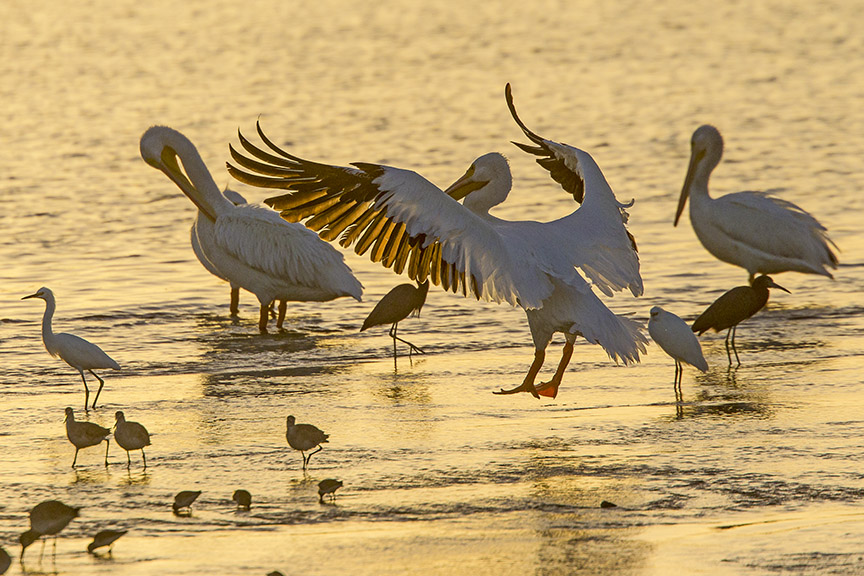
This American White Pelican flew in to the group at the end of the day. The warm light of the setting sun added color and warmth to the photo. I liked the warm glow through the feathers in the wing giving giving added detail to the feathers.
 photoartflight