 photoartflight
Clapper Rail
Posted on January 27, 2014
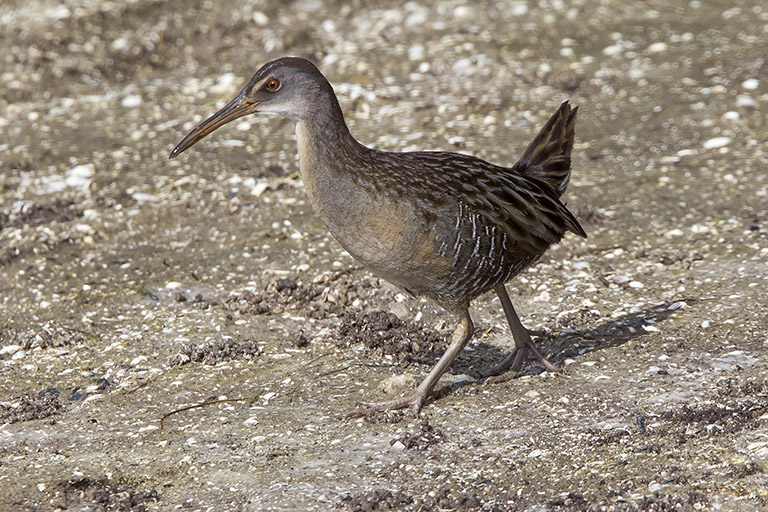
While I photographing a group of birds out in the water, out of the corner of my eye I noticed something moving on the shoreline by the Mangrove roots. I saw this Clapper Rail dart out in the open and look around. I managed to get a couple of quick shots before it disappeared back into the dense roots and vegetation. It was there so briefly and then disappeared that I originally thought it was a Sora. It was not until I was working on my files that I saw it was a Rail and was happy with the few shots that I managed to get.

Clapper Rail
Caon EOS 1D MkIV, Canon 400mm DO f/4 IS lens, Canon 1.4X teleconverter, f/11, 1/800 sec, ISO 400
Tricolored Heron Hunting
Posted on January 26, 2014
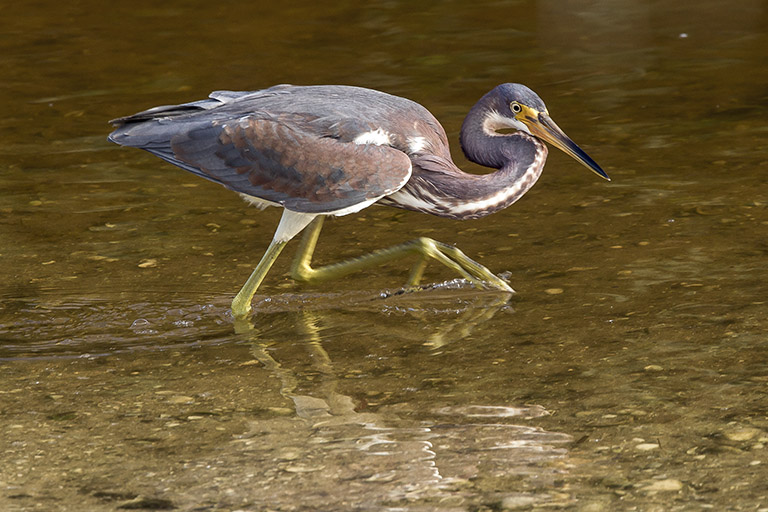
Northern NJ got another snow storm and frigid below normal temperatures, so I thought I would warm up by going through more of my photos from our trip to Florida. This Tricolored Heron was hunting along an inlet that I was walking along. They were formerly called the Louisiana Heron and are a medium sized Heron, smaller than a Great Blue, but larger than the Night Herons. This one was concentrated on walking along the shore giving me an opportunity to get many shots as it walked towards me and then away from me. On the header photo, even at 1/400 sec, I got a little motion blur on the left leg. I still liked the photo though, it gave it a little sense of movement and the bubbles coming up with the rest sharp so it looked a little less static.

Tricolored Heron Taking Wide Strides
Canon EOS 1D MkIV, Canon 400mm DO f/4 lens, Canon 1.4X Teleconverter, f/11, 1/400 sec, ISP 1250, -0.33 exposure compensation
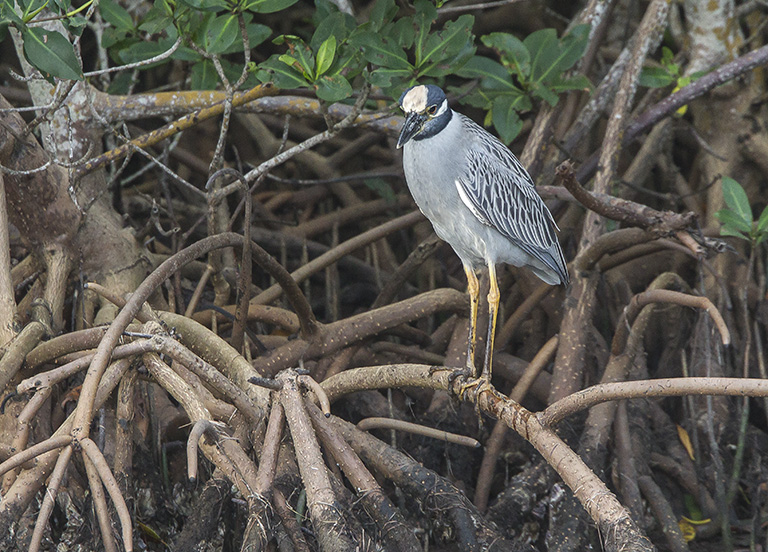
Yellow-crowned Night-heron
Posted on January 23, 2014

I found this Yellow-crowned Night-Heron in the shade on the roots of Mangrove trees. It did not seem to be bothered by my presence so I was able to get a few shots and then moved on so I did not bother the heron. Because it was sitting in the shade I used a -1 exposure compensation with aperture priority to get a proper exposure for the light colored bird in the dark shade. I also used ISO 1250 because I was handholding the camera and wanted a higher shutter speed. Even though it is a stabilized lens, with a 1.4X teleconverter, I wanted the higher shutter speed since the 400mm, with the 1.4X teleconverter and the 1.3X crop factor equals an effective focal length of 728mm.
Great White Egret Swarmed by Gulls
Posted on January 22, 2014

This Egret had just caught a meal and was quickly swarmed by gulls trying to steal its dinner. The Egret kept moving ahead trying to finish the meal but the Gulls kept circling and buzzing him. He eventually got to finish but was continually interrupted. I just thought it was interesting to watch the interaction between the Egret & Gulls.
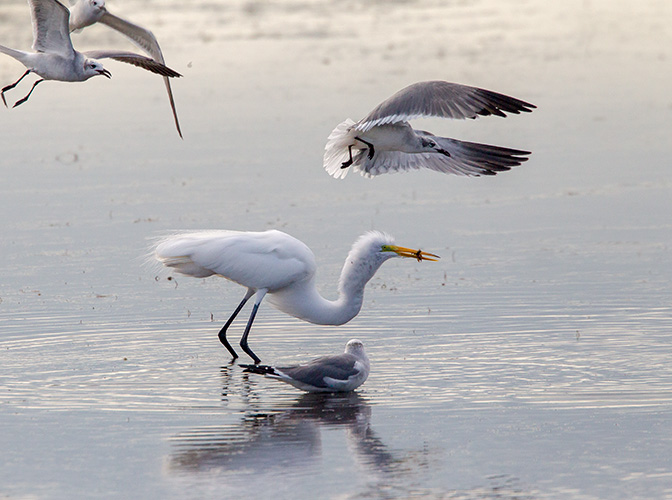
Great Egret trying to evade the Gulls
Canon EOS 1D MkIV, Canon 400mm DO f/4, Canon 1.4X Series II Teleconverter, f/7.1, 1/5000 sec, ISO 1250, +0.33 Exposure Compensation

Great Egret with other Egrets & Ibises, Trying to Finish its Catch
Canon EOS 1D MkIV, Canon 400mm DO f/4, Canon 1.4X Series II Teleconverter, f/7.1, 1/5000 sec, ISO 1250, +0.33 Exposure Compensation

Great Egret trying to move away from the Gulls with its meal
Canon EOS 1D MkIV, Canon 400mm DO f/4, Canon 1.4X Series II Teleconverter, f/7.1, 1/4000 sec, ISO 1250, +0.33 Exposure Compensation

Great Egret Still Dodging the Gulls
Canon EOS 1D MkIV, Canon 400mm DO f/4, Canon 1.4X Series II Teleconverter, f/7.1, 1/4000 sec, ISO 1250, +0.33 Exposure Compensation

Great Egret with Gulls Trying to Steal its Meal
Canon EOS 1D MkIV, Canon 400mm DO f/4, Canon 1.4X Series II Teleconverter, f/7.1, 1/4000 sec, ISO 1250, +0.33 Exposure Compensation
White Ibis Portrait
Posted on January 21, 2014
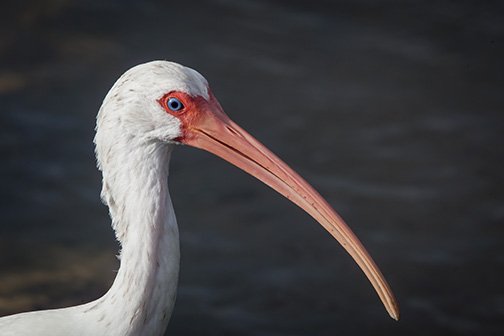
This White Ibis was feeding along the shoreline. The Ibis kept coming closer until it was getting too close to even focus on. I got quite a few shots but I liked the portrait head shot. I especially liked the intensity of the eye and the prominent distinctive shape of the Ibis beak.

White Ibis Working the Shoreline Closeup
Canon EOS1D MkIV, Sigma 300-800mm DG f/5.6 lens, f/8, 1/800 sec, ISO 640

White Ibis Closeup showing the Distinctive beak, legs & feet
Canon EOS1D MkIV, Sigma 300-800mm DG f/5.6 lens, f/8, 1/800 sec, ISO 640
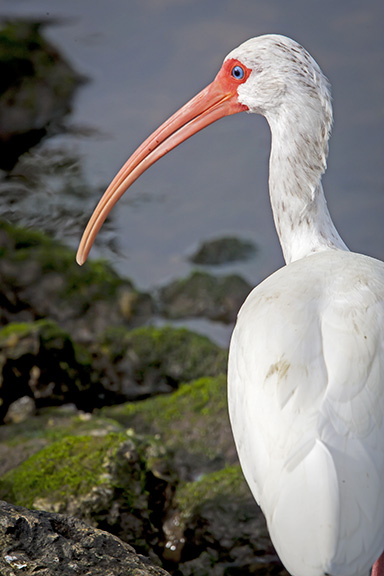
White Ibis Closeup
Canon EOS1D MkIV, Canon 400mm DO f/4, Canon 1.4X Series III Teleconverter, total 560mm
f/11, 1/400 sec, ISO 400
RED-BREASTED MERGANSER
Posted on January 14, 2014
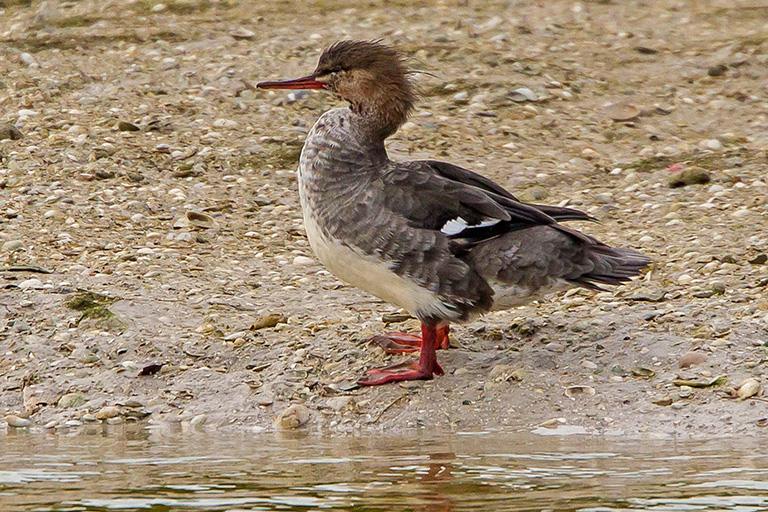
We saw quite a few Red-breasted Mergansers in with the Pelicans, Roseate Spoonbills and Cormorants. They were spending a lot of time diving looking for a meal, scooting around through the other wading birds in the water. This one came on shore after it was done diving around for 20 minutes and was flapping its wings to dry off.
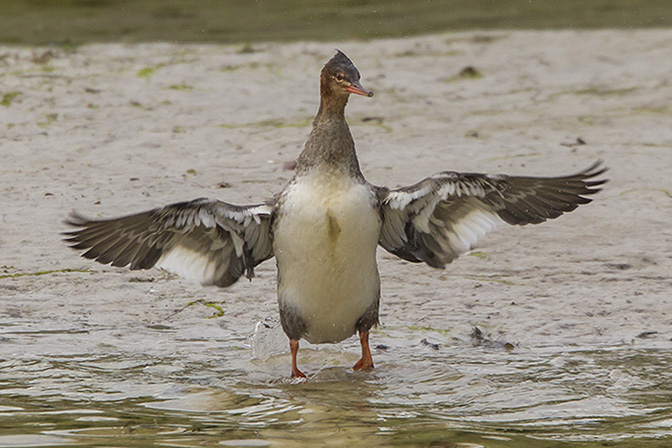
Red-Breasted Merganser
Canon EOS 1D-MkIV, Canon 400 f/4 DO, Canon 1.4X Teleconverter, f/7.1, 1/1250, ISO 1250, +0.33 exposure compensation
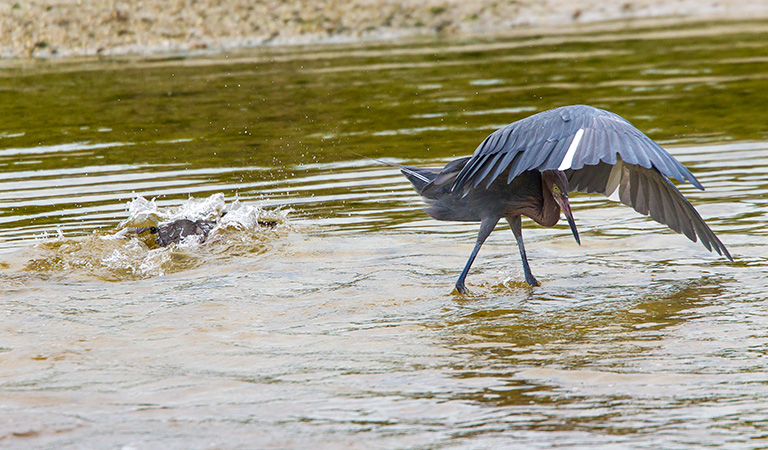
Red-Breasted Merganser Scooting and Diving around a Reddish Egret while the Egret was hunting.
Canon EOS 1D-MkIV, Canon 400 f/4 DO, Canon 1.4X Teleconverter, f/7.1, 1/1600 sec, ISO 1250
Brown Pelicans in Flight
Posted on January 12, 2014
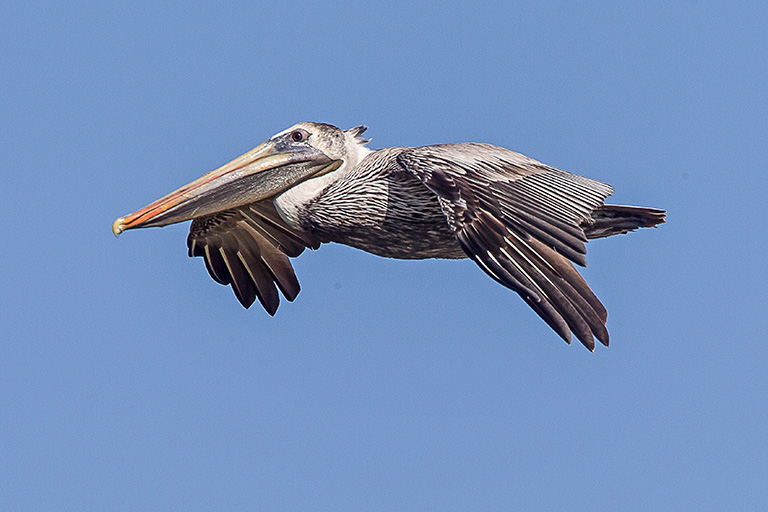
Brown Pelicans seem so bulky and slow, but are quite agile and are amazing flyers, especially for such a large bird. They fly a little slower so they are easier to track, until they go in a dive to get their meal. You can get great textures with the variations in the dark feathers and their colorful head. They are fun to watch as they are very animated and seem almost clown like. You often see them flying fairly low over the water and suddenly they nose dive into the water to shock their prey. It is more spectacular to see them dive from a greater height and they make quite a splash.
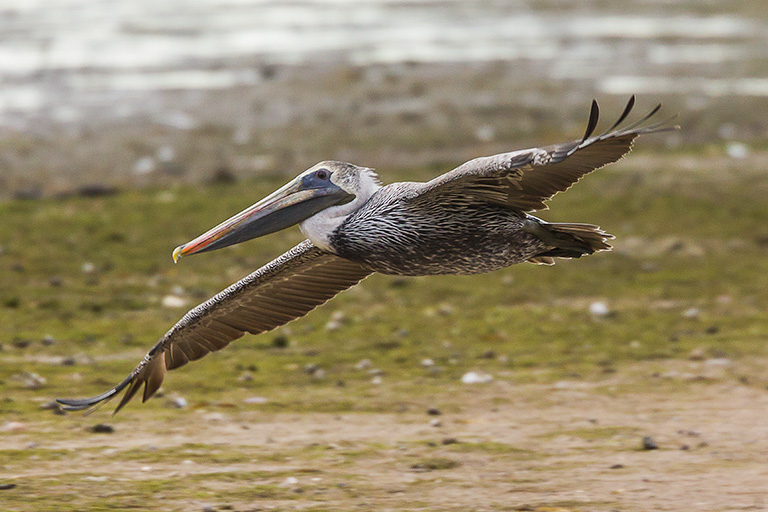
Low Fly By
Canon EOS 1D Mk IV, Canon 400 mm DO f/4, Canon 1.4X Series III Teleconverter, f/7.1, 1/1250 sec, ISO 1250, +0.33 exposure compensation
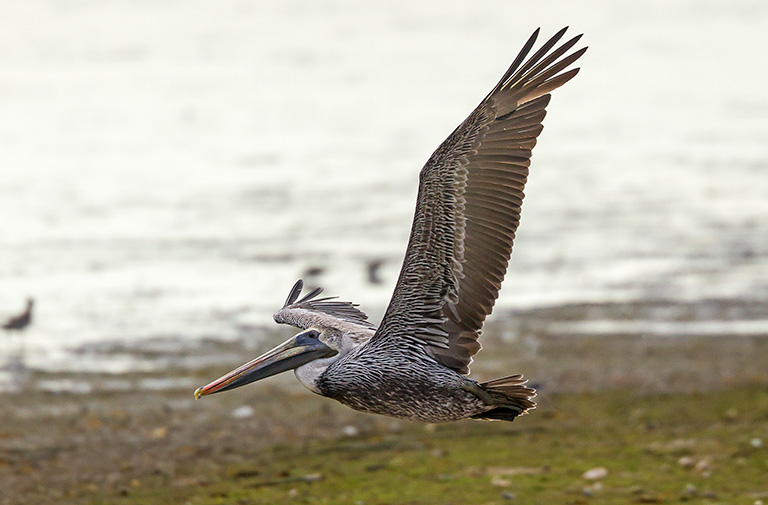
Low Fly By
Canon EOS 1D Mk IV, Canon 400 mm DO f/4, Canon 1.4X Series III Teleconverter, f/7.1, 1/1600 sec, ISO 1250, +0.33 exposure compensation

Looking for a Meal
Canon EOS 1D Mk IV, Canon 400 mm DO f/4, Canon 1.4X Series III Teleconverter, f/7.1, 1/1250 sec, ISO 3200, +0.33 exposure compensation

Finding a Meal – Splashdown
Canon EOS 1D Mk IV, Canon 400 mm DO f/4, Canon 1.4X Series III Teleconverter, f/7.1, 1/3200 sec, ISO 1250, +0.33 exposure compensation
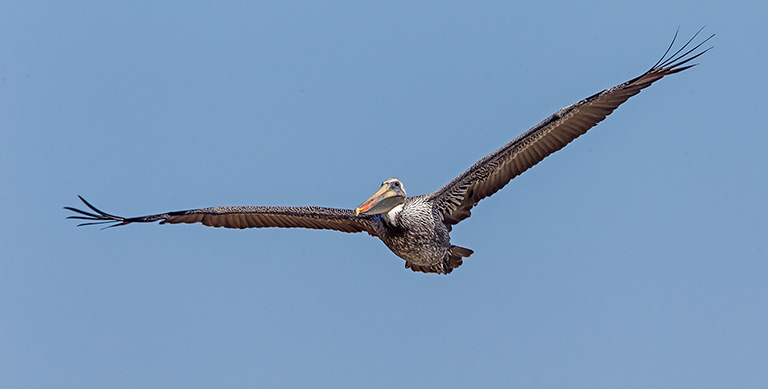
Wingbeats
Canon EOS 1D Mk IV, Canon 400 mm DO f/4, Canon 1.4X Series III Teleconverter, f/11, 1/800 sec, ISO 400, +0.33 exposure compensation
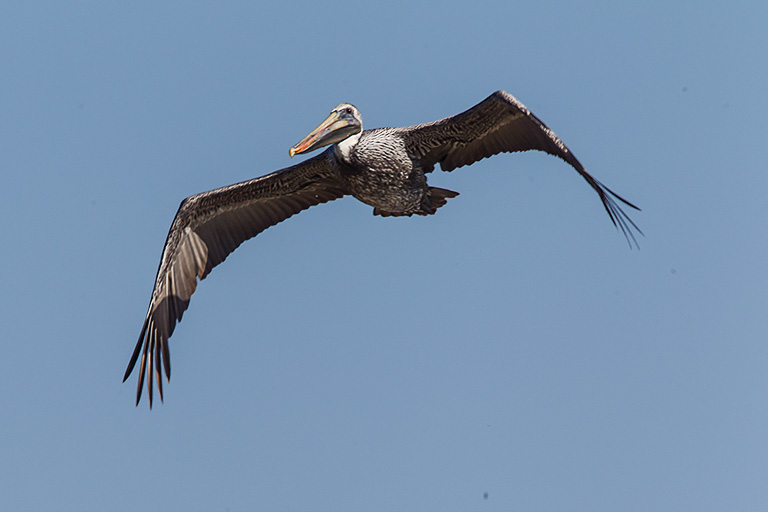
Wingbeats
Canon EOS 1D Mk IV, Canon 400 mm DO f/4, Canon 1.4X Series III Teleconverter, f/11, 1/800 sec, ISO 400, +0.33 exposure compensation
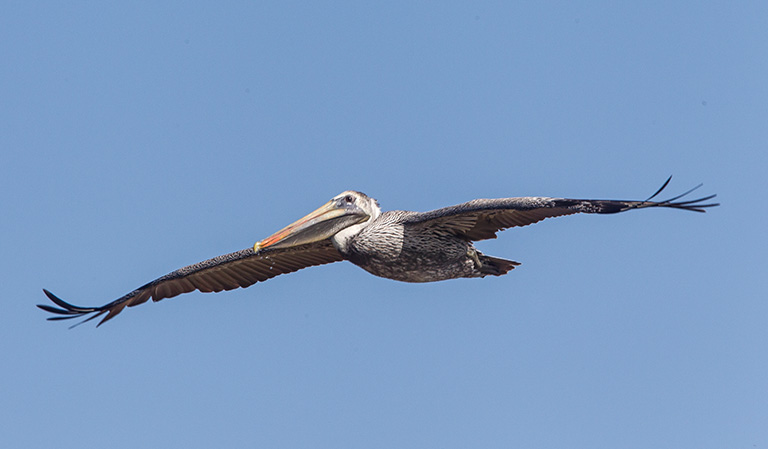
Wingbeats
Canon EOS 1D Mk IV, Canon 400 mm DO f/4, Canon 1.4X Series III Teleconverter, f/11, 1/800 sec, ISO 400, +0.33 exposure compensation

Checking us out
Canon EOS 1D Mk IV, Canon 400 mm DO f/4, Canon 1.4X Series III Teleconverter, f/11, 1/800 sec, ISO 400, +0.33 exposure compensation
Opened up shadow detail in Adobe Camera Raw
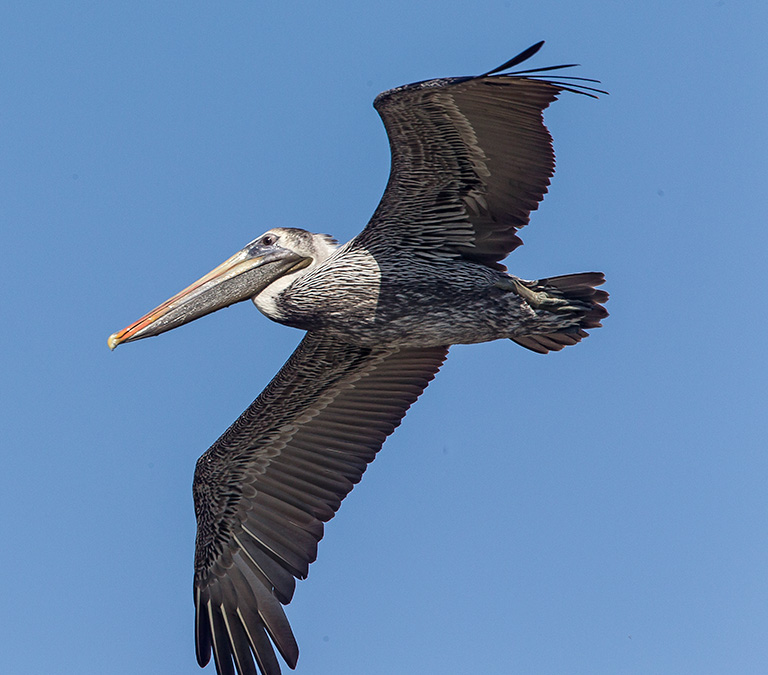
Moving On
Canon EOS 1D Mk IV, Canon 400 mm DO f/4, Canon 1.4X Series III Teleconverter, f/11, 1/800 sec, ISO 400, +0.33 exposure compensation,
Opened up shadow detail in Adobe Camera Raw
Anhinga Portrait
Posted on January 11, 2014
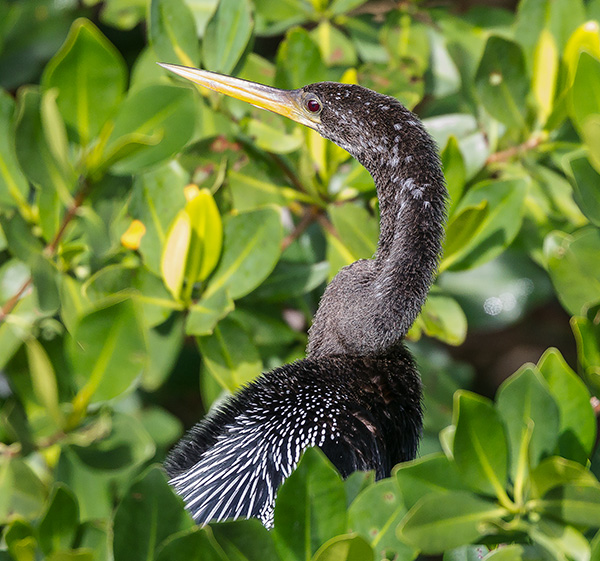
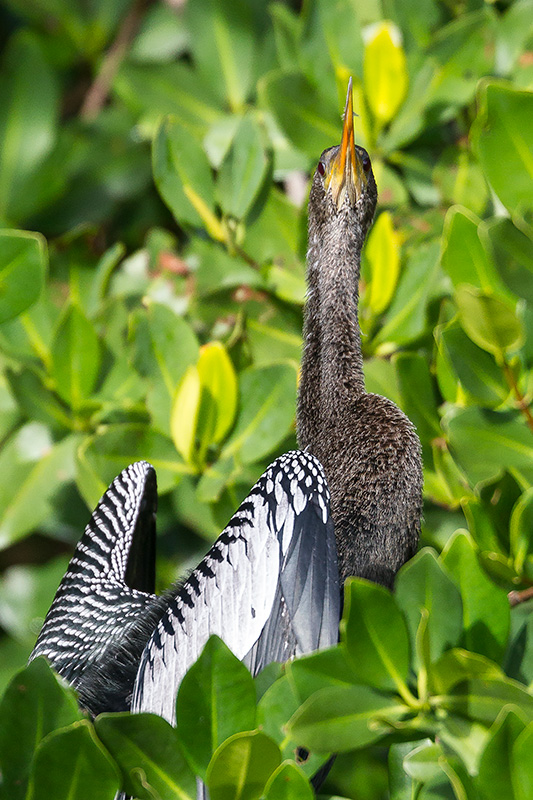
I came across this male Anhinga sitting on a branch, drying himself in the sun. He did not seem to bothered by me and I was able to get fairly close and get some portraits. You can clearly see the very pointed beak which it uses to spear fish under water and it’s red eye.

Canon EOS 1D MkIV, Canon 400mm f/4 DO Lens, Canon 1.4X Series III Teleconverter, f/7.1, 1/400 to 1/800 sec, +0.67 exposure compensation, ISO 1250

Immature Little Blue Heron
Posted on January 9, 2014

I saw this Immature Little Blue Heron looking for a meal along the shoreline. At first I did not pay attention because I was watching an Immature Bald Eagle circling above. I had noticed the white bird close to the shore, out of the corner of my eye and just assumed it was an Egret, then I noticed the blue bill and greenish legs. I was excited because it seems harder to find Immature Little Blues compared to other Immature birds because they seem to be more elusive. It was moving slowly along the shore giving me time to get a few photos before it retreated in the Mangrove roots along the shore. The Little Blue was in a dark area and I was handholding the camera, so I was shooting bursts to try to get a few sharp images out of the sequence since the shutter speed was only 1/40 of a second. I kept the f/stop at f/8 because I was using a 1.4X teleconverter and I wanted to add 1 additional stop to the f/5.6 of the lens with the teleconverter added for a little more sharpness.
Canon EOS 1D MkIV, Canon 400mm DO f/4 lens, Canon 1.4X Series III Teleconverter, 1/40 sec @ f/8, ISO 400, -0.33 Exposure Compensation


Immature Bald Eagle – Canon EOS 1D MkIV, Canon 400mm DO f/4 lens, Canon 1.4X Series III Teleconverter, 1/500 sec @ f/11, ISO 400, +1.33 Exposure Compensation
Mature Little Blue Heron, Canon EOS 1D MkIV, Sigma 300-800mm f/5.6 DG lens @ 572mm, 1/250 sec @ f/8, ISO 400,

Brown Pelicans
Posted on January 2, 2014

Here is a small group of Brown Pelicans on a sand dune at J.N. Ding Darling NWR. They were fairly far out, but I liked the feather detail and textures plus their eyes seem to be looking at you. They were also positioned in an interesting group with the tallest bird on a small tree branch, almost giving a triangular composition of the birds . Canon EOS 1D MkIV, Sigma 300-800mm DG f/5.6 Zoom, @ 731mm, f/8, 1/500 sec, ISO 400. Effective focal length of 950mm with the 1.3 crop sensor of the Canon 1D MkIV.
 photoartflight