 photoartflight
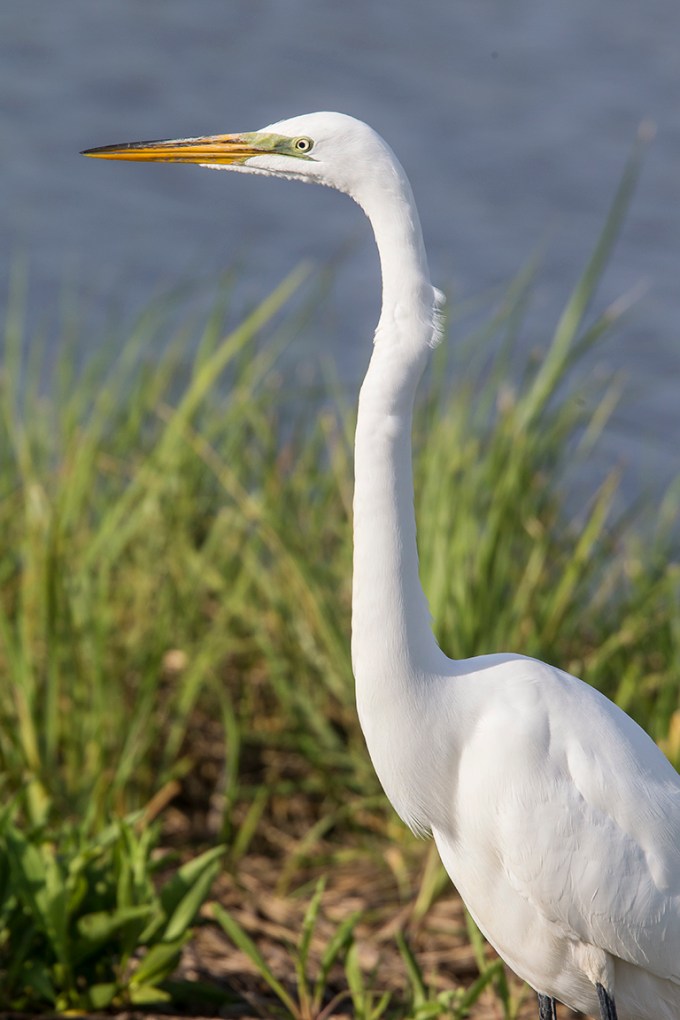
Great Egret – 5 Shot Egret Panorama
Posted on May 29, 2017
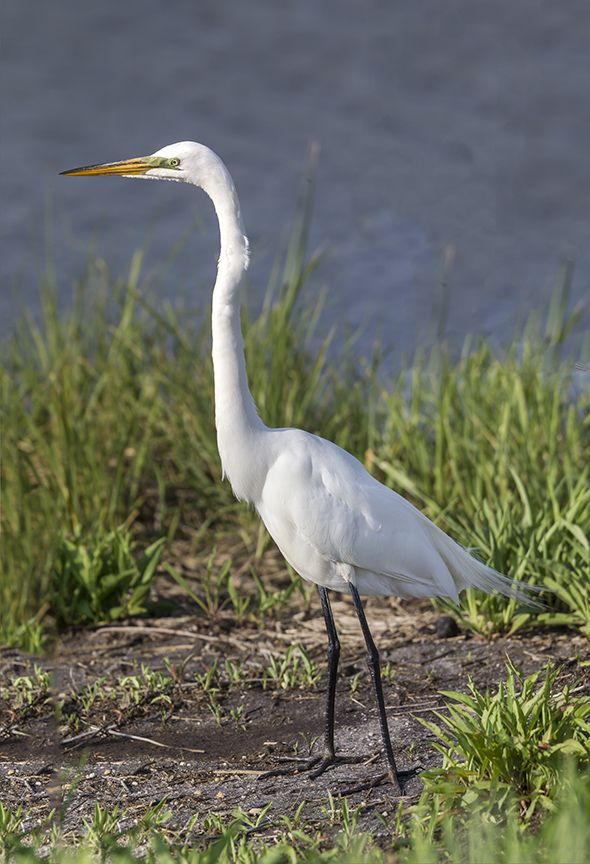
When I am photographing at an area in the car, I usually only use one main lens. At Brigantine I am usually using a 400mm f/4 D.O. Lens with a 1.4x teleconverter. Mainly because there is not time to switch because the subject could be gone and mostly subjects are far away. I have other equipment in the back of the van, usually with a wide angle zoom or a m43 camera with a 14mm – 140mm lens. But on the Wildlife Drive, when I come upon a subject, I do not have time to switch equipment before the subject is gone, so I make do with what I have in my hands. Many times I just shoot a multi-shot series and combine them in Photoshop. This mostly works well, plus I get a much larger file. Doing so many over the years, it seems 2nd nature now. Plus the newer CC PhotoShops work extremely well for assembling these multishot panoramas or stacked images.
Black Skimmers In Flight Panorama
Posted on May 28, 2017

When we were at the Edwin B. Forsythe National Wildlife Refuge a week ago, I tried some in-flight panoramas of the Black Skimmers. I was wondereing if it was possible to shoot a burst of images and pan at the same time. It works, but helps if you have some details in the background that PhotoShop can align the images to, instead of just Blue sky. It is a little harder if they are coming at you. It also helps, because of panning while shooting, to use a fairly high shutter speed. A panning gimbal head on a tripod would be good also, but I was handholding the camera for this series. The featured image was 5 shots, brought into Photoshop, automatically aligning the 5 shots and blending them. The more panos you try, the better they seem to come out. I could get large flocks of birds with a wide lens, but I like the challenge, plus I do not want a lot of extra background top and bottom. Also I tend to print images quite large. I will probably clone out the water tower and buildings later.
Another panorama from the same day, a different flock of Black Skimmers in the water. (With a few gulls in the background)

Black Skimmers and Gulls 6 Shot, overlapping images, panorama, @400mm
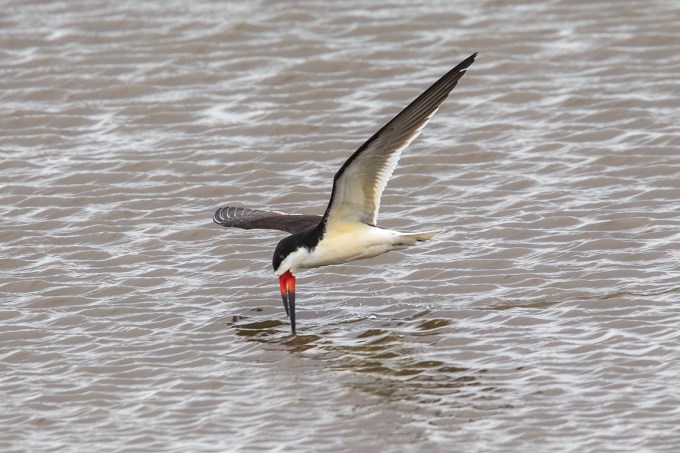
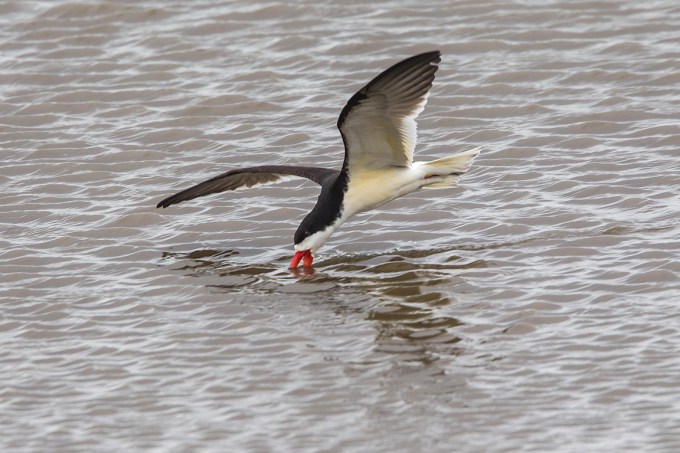
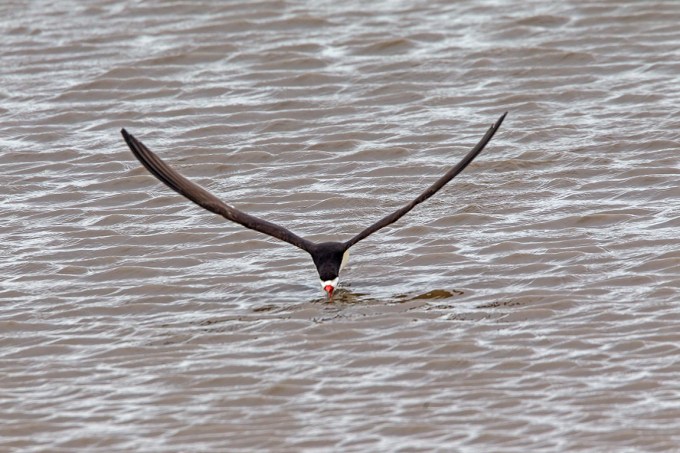
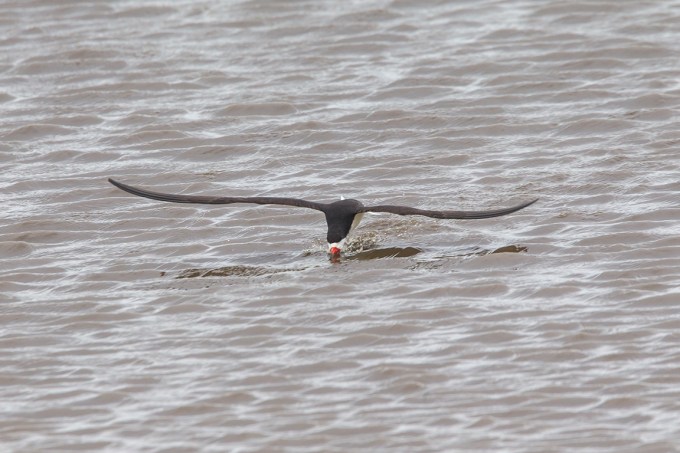
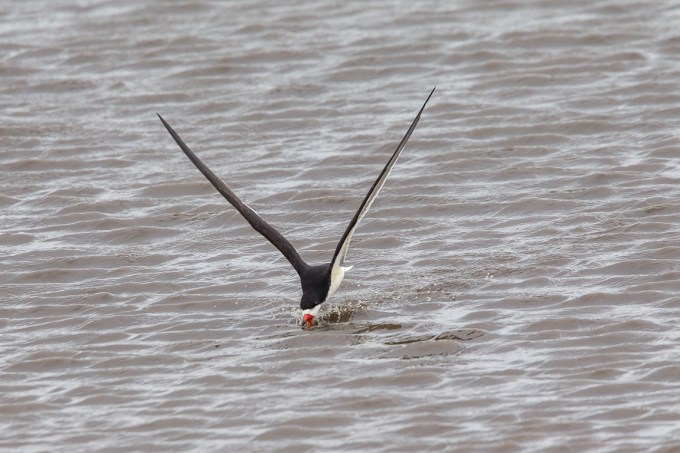
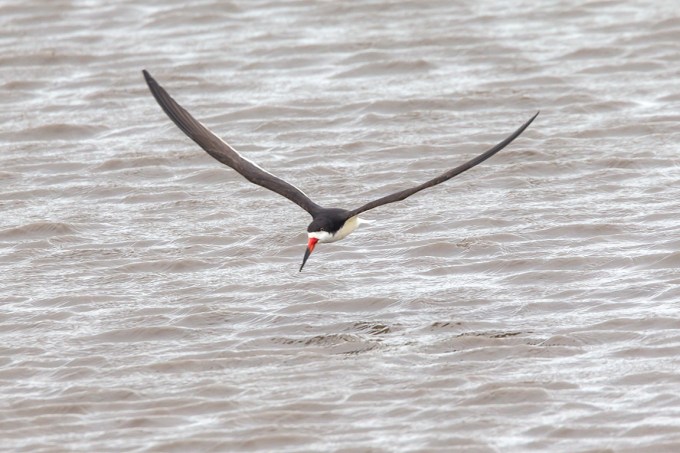
Black Skimmer Fishing
Posted on May 25, 2017

When we were at the Brigantine Division of the Edwin B. Forsythe National Wildlife Refuge in Oceanville, NJ last weekend, the weather did not cooperate with us. It was a very gray day and extremely windy. It was difficult to even open the car doors to get out. There were very few birds flying and those that did were just blown all over. There were Ospreys in all the nests along the Wildlife Drive, but only saw 1 flying very high in the air. There were large groups of Black Skimmers, mostly on the ground, but a few groups took off but were blown all over. I shot a few large groups of Skimmers on the ground also, for a few series of multi-image panoramas. On the way out of the Refuge, I noticed this one lone Black Skimmer fishing close to shore, skimming along. It was still very gray and overcast, but I got a series of shots of the Skimmer as it kept getting closer to us. They show the fishing technique of the Skimmer and how it got its name. When it thinks it has caught something the head bends down and it clamps down on the lower mandible to catch its meal. Many times it is just some debris in the water. It did not catch anything in that pass and it flew off, but it was fun to see.




Sunrise In The Overcast Clouds
Posted on May 23, 2017
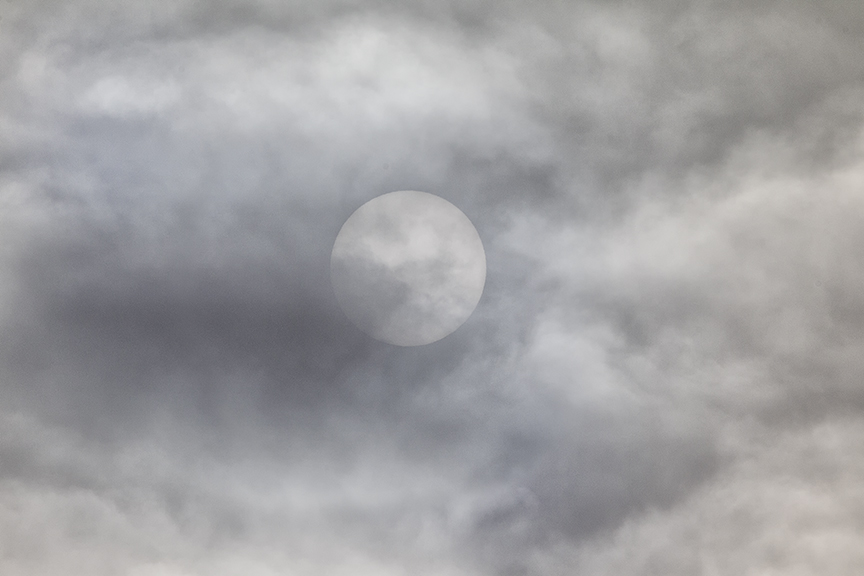
We tried to get to the Edwin B. Forsythe National Wildlife Refuge for the sunrise, but we got there a little after sunrise. But it did not matter since it was a heavy overcast day. Great for closeup shots, but bad for landscapes and distant wildlife. But it was still a fun day out!
Glossy Ibis Along Shoreline
Posted on May 22, 2017
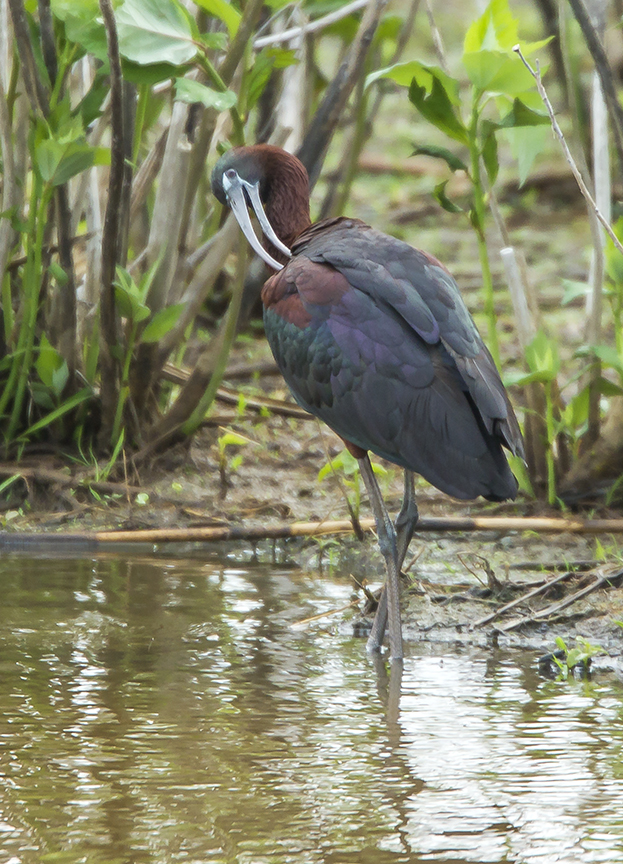
We saw this lone Glossy Ibis at the start of the Wildlife Drive at the Brigantine Division of the Edwin B. Forsythe National Wildlife Refuge in Oceanville NJ. It was rare to see a lone one. Usually you see 3 or more in a group working an area for food. It turned around and started to go out into the water in the channel, then returned and disappeared in the grasses. I wish it had been a sunnier day to bring out more of the colors in the Ibis. The lighting was very dull, so I brightened it up a little and added a little saturation.

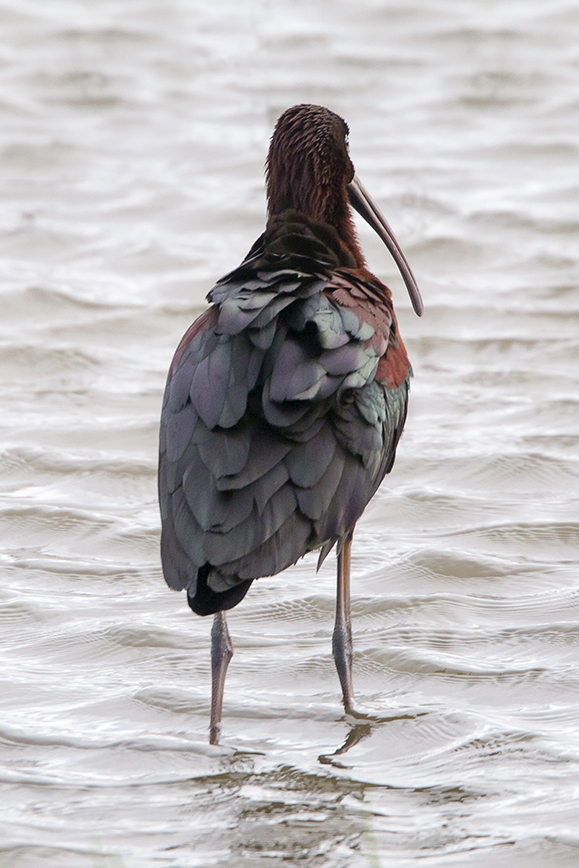
The Ibis started walking out into the water then turned around and went into the grasses along the shore
I found this Glossy Ibis along the shoreline at the start of the Wildlife Drive. It was working the shoreline looking for a meal, plus scratching in between. I got a few images before it wandered off into the grasses. The lighting was very dull, so I brightened it up a little and added a little saturation.
Squawking Willet
Posted on May 21, 2017

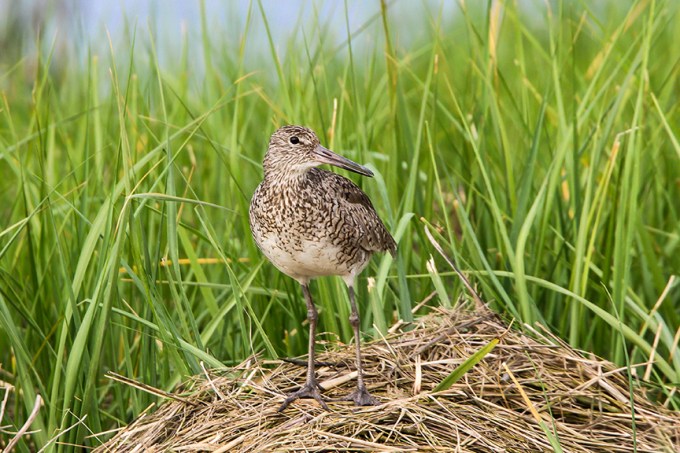
We went to the Edwin B. Forsythe National Wildlife Refuge over the weekend. It was a very gray overcast day. Which worked for closeup images, but was dull for subjects in the distance. But it was a fun day out anyway. This is the first time we have been here since they reopened the completed fixed Wildlife Drive. Before you only could use a very small section then had to turn around. I was surprised to see so many Black Skimmers in large groups. It was so windy it was hard to open the car door, so what was flying usually had a hard time getting where they were trying to go. Some just blew sideways or had very erratic flights. Very difficult to smoothly track in flight subjects. So a lot of my images were of subjects on the ground or in the water. I saw this Willet on a mound in front of some grasses. It posed for a while so I got quite a few images. Shot at 400mm with a 1.4x teleconverter.

Early Morning Cloudscape Panorama
Posted on April 1, 2017

I liked the colors and shapes of these early morning clouds. I did not want to use a wide angle lens because I did not want a lot of foreground and darker sky above the clouds. I used a 400mm lens with a 1.4x teleconverter with a series of 7 overlapping handheld images combined in Photoshop CC2017. This way I can also print it quite large if I wanted.
Great Blue Heron Across Gull Pond
Posted on February 16, 2017
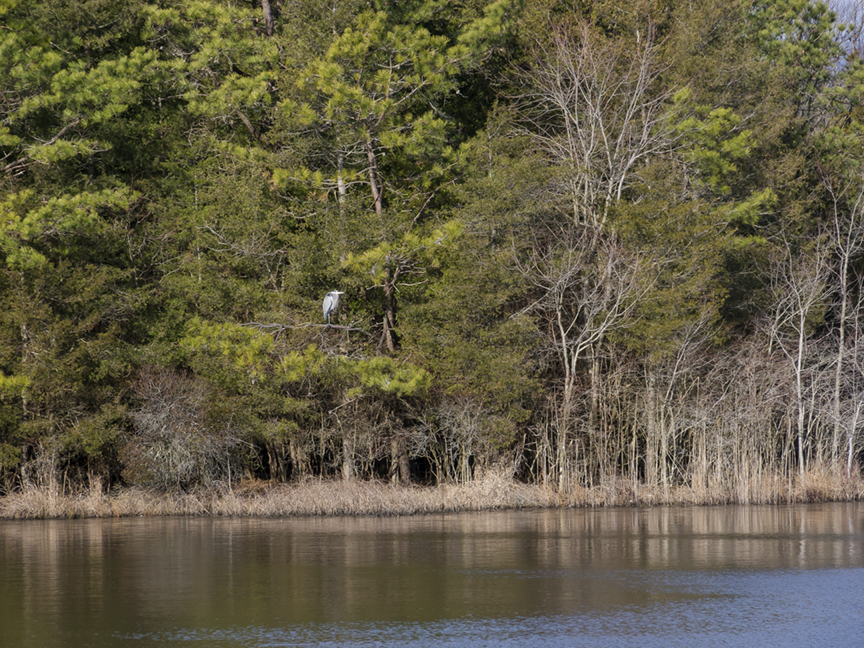
There was not too many birds to photograph, but I liked this lonely Great Blue Heron in one of the trees across Gull Pond. It looked a little lonely but I saw another about to land but banked and flew over the trees.
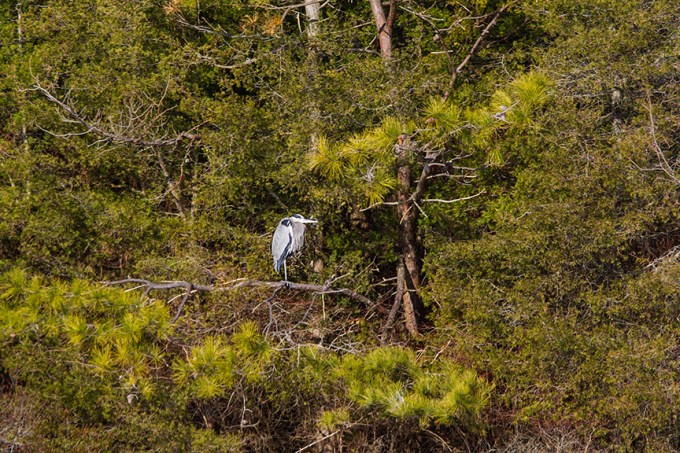
Birdscape – Roosting Great Blue Heron
Osprey With Baby Green Heron Meal
Posted on February 15, 2017

I photographed this Osprey flying at the Brigantine Division of The Edwin B. Forsythe National Wildlife Refuge in New Jersey in the Summer. I had not noticed until now it was carrying a young Little Green Heron in its claws, bringing it back to the nest.
Snow Geese In Early Morning Waking Up
Posted on February 14, 2017
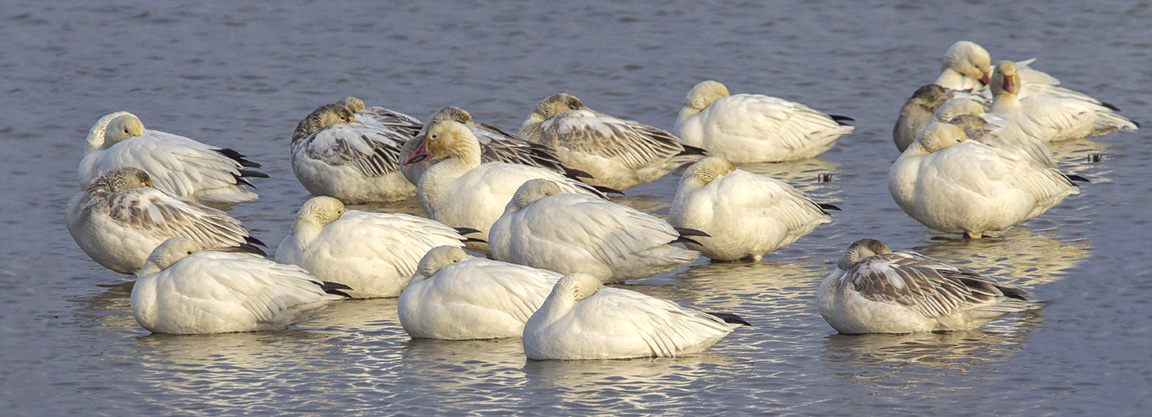
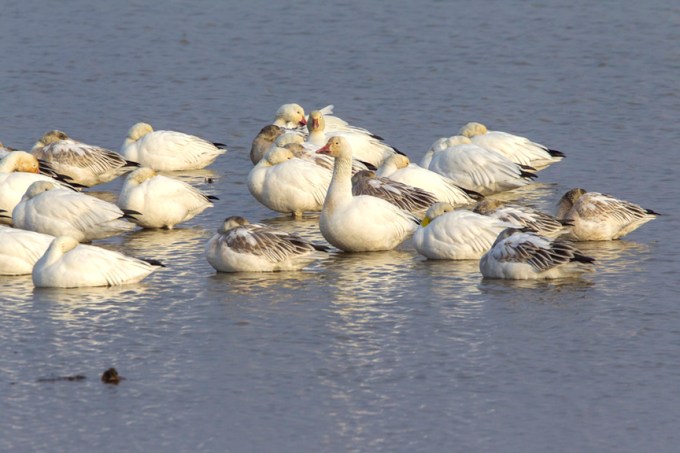
We had found these Snow Geese early in the morning. It seemed that they were just waking up and getting ready for their day.

 photoartflight