 photoartflight
Brigantine Sunrise Panorama
Posted on December 19, 2019
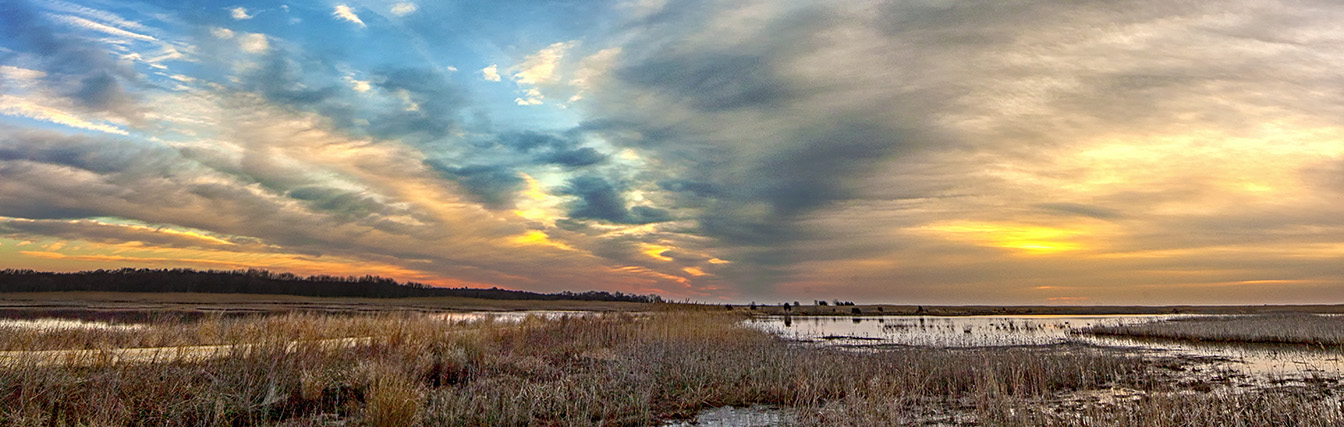
I am still going through images I photographed in past visits to my favorite areas and I am slowly working through adjusting my files. The featured image is a sunrise from the Edwin B. Forsythe National Wildlife Refuge in Oceanville, New Jersey. I was using a 12 – 24mm zoom @ 12mm. I shot 6 overlapping images with a lot of overlapping on each because I was shooting wide @ 12mm. If you do more shots when shooting @12mm they overlap more, so it seems to blend better automatically in Photoshop.
90 Cormorants Panorama From Brigantine
Posted on December 18, 2019

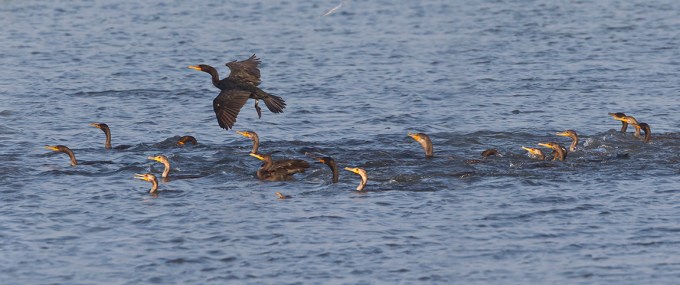
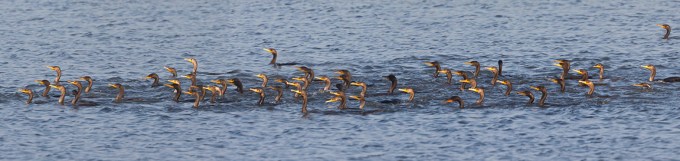
Now that I am retired, I have time to work on files from years ago that I had not finished or even gotten around to. The featured image is a 10 image panorama of a large group of Cormorants swimming down one of the channels along the Wildlife Drive at the Edwin B. Forsythe National Wildlife Refuge in Oceanville, NJ. I was on the Wildlife Drive photographing ducks when this group came by. I shot a series of 12 handheld overlapping images to get them all in as they were going by. There are 90 Cormorants visible but there are a few underwater, that surfaced after I had shot that area as I continued photographing the series. For some reason I always photograph my series for panoramas from left to right. Also most of my panoramas are handheld. Mainly because I am photographing something else when I notice an image that I think would make an interesting panorama. Photoshop usually does a good job aligning the images. For this image I was using a Canon 400mm DO Lens with a Canon 1.4X Teleconverter on a 1D MkIV body.
When shooting “moving” panoramas, I tend to try to overlap even more on each section. This helps when one section might have an element that is not what I wanted or liked and I would still have enough images to overlap for a finished image.
The finished panorama with black border (below) is 86 inches long x 21 inches high @ 250 ppi. If I ever print it, it would go even larger @ 150 or 200ppi.

Cropped in sections from the panorama to show detail below.
Hawk Tree Top Take-Off
Posted on December 16, 2019
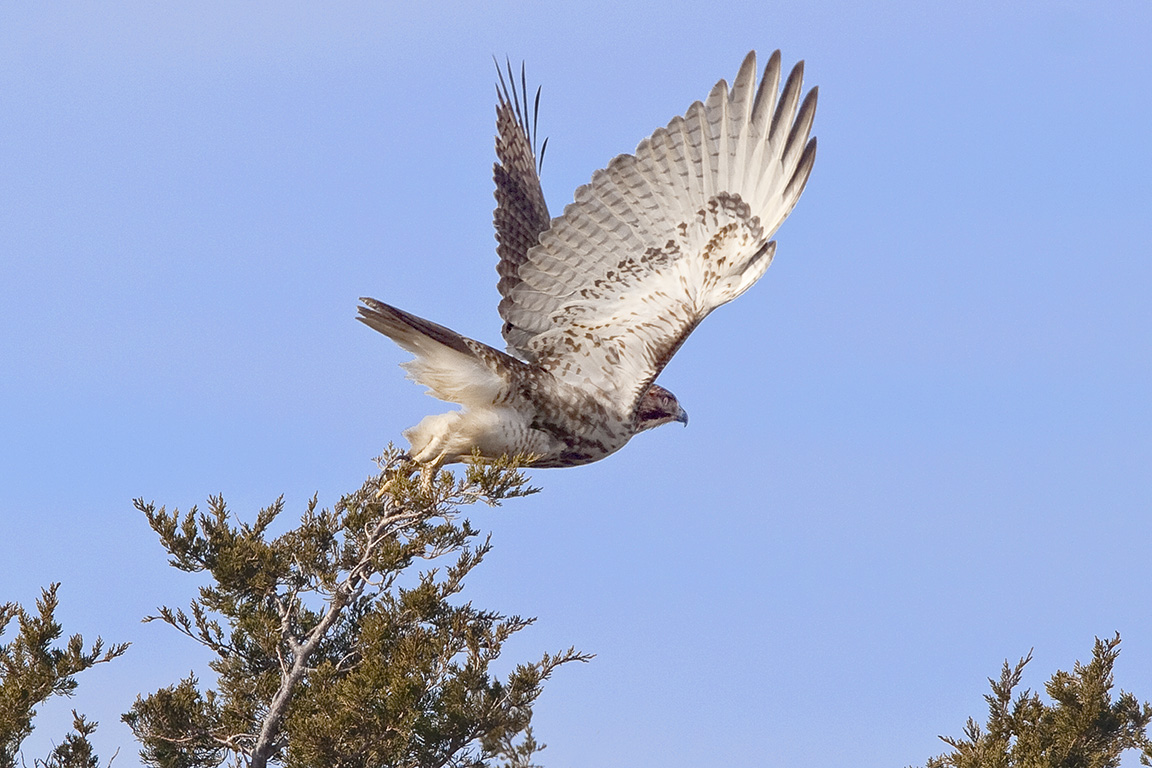
 We noticed a hawk in the trees by the turnaround along the two way section of the Wildlife Drive at the Edwin B. Forsythe National Wildlife Refuge In Oceanville, NJ. I was photographing the hawk as it was looking around and also at me. Then it moved to the top of another tree. After a while it flew off and was able to get a few shots of the takeoff. I was using a Canon 7D with a Canon 400mm DO lens and Canon 1.4x Teleconverter. (FIeld of View – sort of equivalent would be 896mm on Full Frame Camera). I always have trouble ID’ing hawks. Do not know why. Let me know!


Hawk starring at me while I was photographing it.
Ring-Billed Gull On Ice
Posted on December 14, 2019

I photographed this Ring-billed Gull (2nd Winter plumage) as it was foraging for food on the ice at the Brigantine Division of the Edwin B. Forsythe National Wildlife Refuge, in Oceanville NJ. This series was from a few years ago. I am cleaning / organizing my arrays of hard disks to remove files to free up more storage space. I liked the featured image because the Gull looked like it was lonely on it’s own little ice island. It then continued to move around the ice behind the small ice island looking for food. I usually do not photograph Gulls, but thought this Gull was interesting because of the ice and the little ice island in the clear water. All images taken with 400mm Canon f/4 DO lens.


This ice almost looks like the gull is walking on water


Common Merganser Starting Take Off At Brigantine
Posted on December 13, 2019
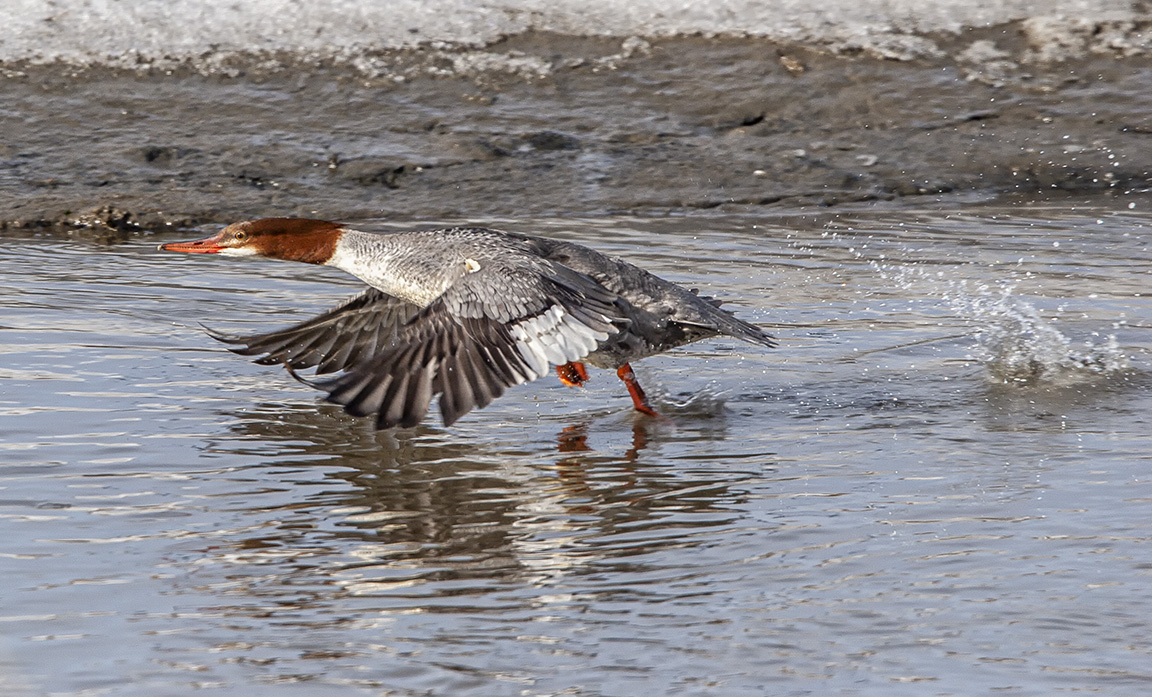
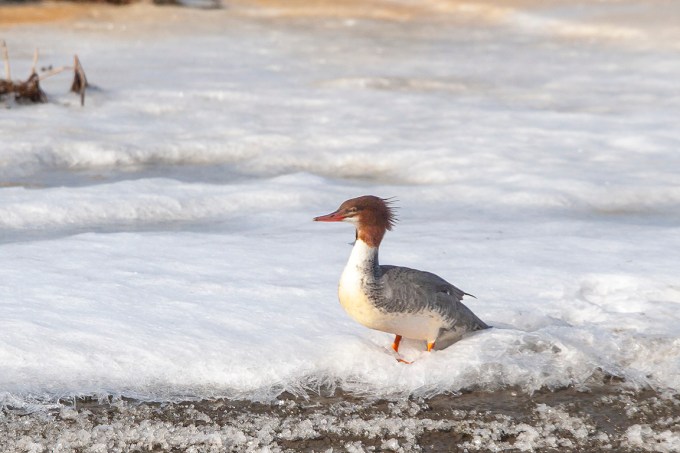
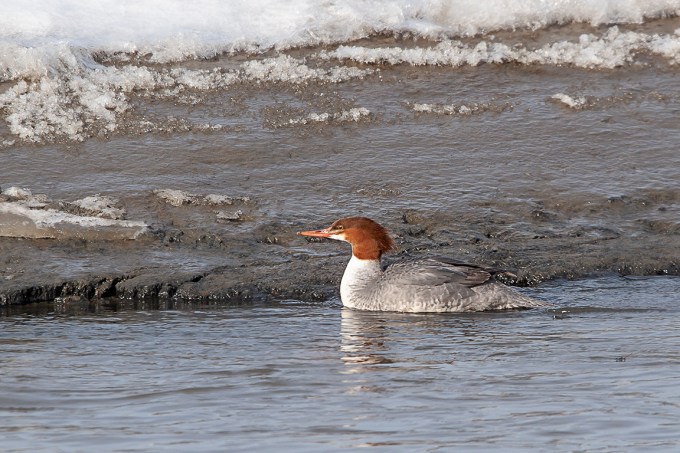
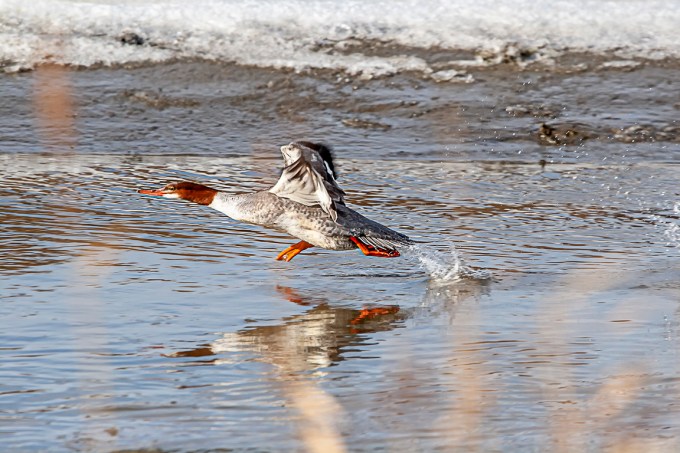
Here are some more images taken many years ago at the Edwin B. Forsythe National Wildlife Refuge, Brigantine Division in Oceanville New Jersey. I was surprised to see some Common Merganser Ducks back then, especially in December with snow. But they were fun to photograph, especially the Merganser’s interesting takeoff series. All were taken with a 400mm Canon DO lens.
28 Great Blue Heron Landscape Panorama
Posted on December 11, 2019

Since the weather got colder I have been going through old files that I have not worked on before. I started with files from about 10 years ago taken at the Edwin B. Forsythe National Wildlife Refuge, Brigantine Division in Oceanville, NJ. The featured image is a panorama made with 14 images shot back then with a Canon EOS1D MkIII with a 400mm Canon DO lens showing 28 Great Blue Herons. Images (Raw files) shot handheld, and final image assembled,aligned and blended in Photoshop.

Example of 1 image of the 14 images used for the panorama

Smaller Panorama showing 11 Great Blue Herons. I tried first with 5 images before working on the larger version (Can you find the 11?)
Black Skimmer Panoramas
Posted on July 30, 2019

It is a challenge to photograph flying birds for a panorama. After some practice the success rate goes up (hopefully). Basically you shoot a burst of images as you try to cover the area of birds flying you want. Also panning as you shoot, going in the direction they are flying. I found that shooting with a wide angle lens for a large group of birds flying does not give you as much detail as shooting them with a telephoto lens for a panorama. A pretty high shutter speed is also helpful. You might have a few touch-up areas or overlaps to fix once you assemble the base Panorama.
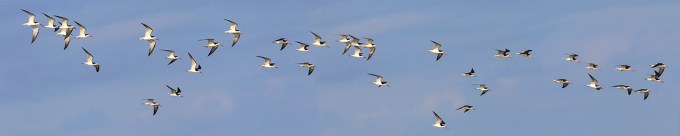 The panoramas below are a group of Black Skimmers on or close to the shoreline. This is a little easier because most of them are not moving, but again you might need a few touch-ups here or there.

Black Skimmers, 4 images, 400mm f/4 DO lens
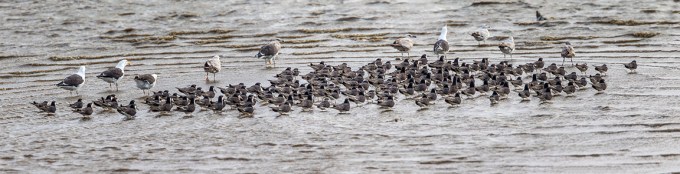
Black Skimmer Panorama, 7 images @ 400mm & 1.4X Teleconverter
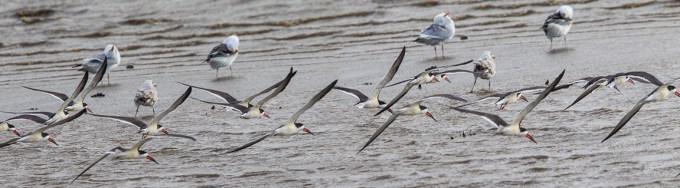
Black Skimmer Panorama, Early Morning, Bad Light, 2 images @ 400mm w/ 1.4X Teleconverter
Black Skimmers At Brigantine
Posted on July 28, 2019

More Black Skimmers fishing at the Brigantine Division of the Edwin B. Forsythe National Wildlife Refuge in Oceanville New Jersey. These were photographed @ 600mm with the Tamron 150 – 600mm lens on a Canon R. They are cropped in a little to concentrate on the Skimmer.

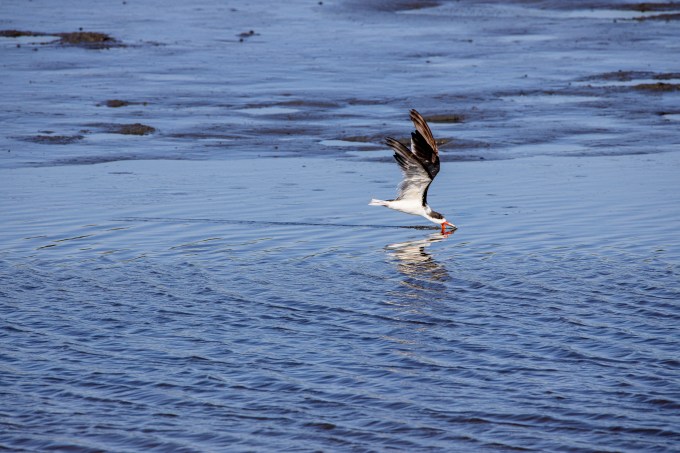
Wider View of Black Skimmer fishing


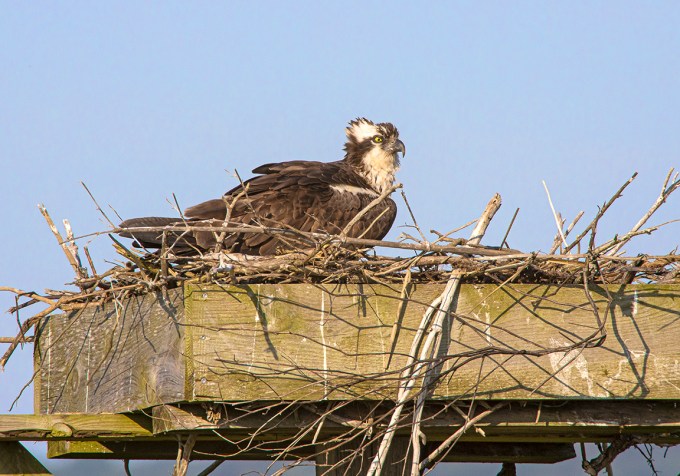
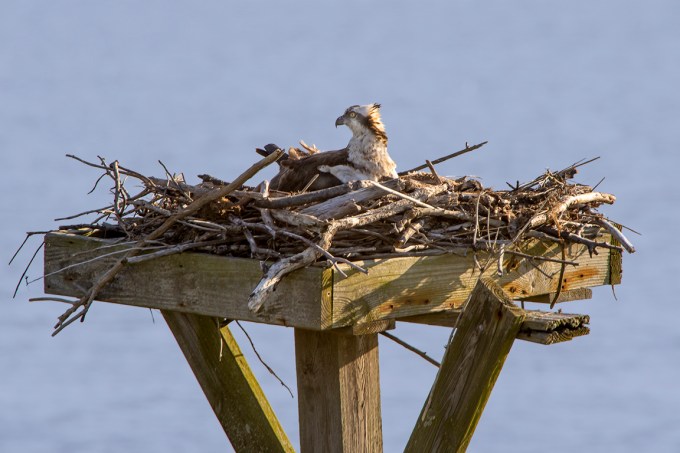
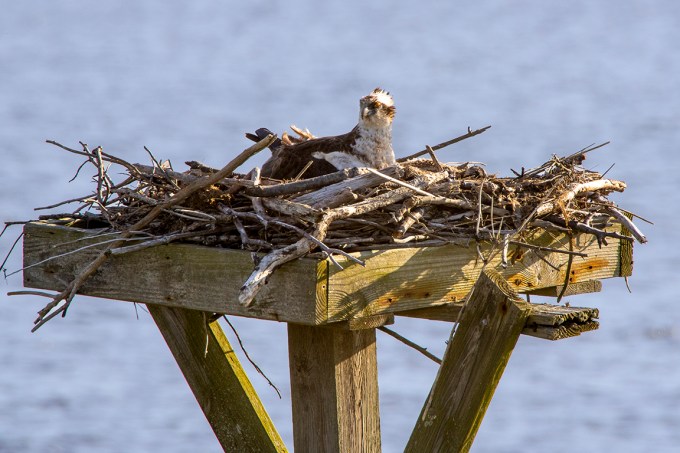
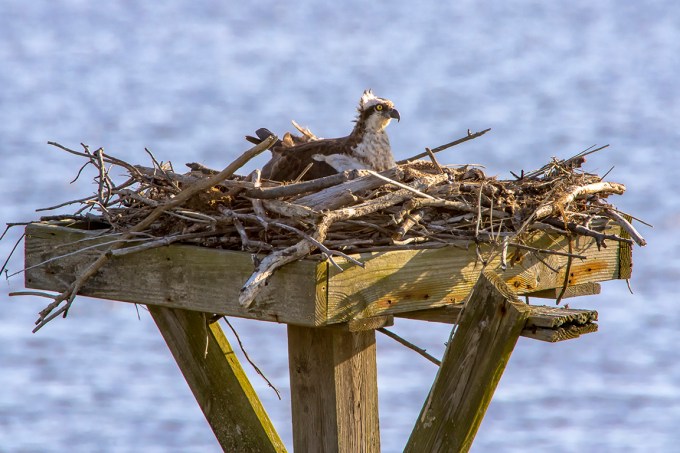
Osprey Nests On Platforms @ 1200mm
Posted on July 27, 2019

A series of Osprey Platforms with nest images from the Edwin B. Forsythe NWR in Oceanville, NJ. I was using a Tamron 150-600mm lens with a 2X teleconverter to get closer to the Osprey Platforms. Then cropped in a little for a tighter composition. You can see the nests are not the neatest or cleanest when you are looking that close, but are still interesting. Also it is interesting when an Osprey sees you photographing them they really stare you down! The Canon R, even with a 2X teleconverter on a Tamron 150-600mm auto focuses quite quickly and right on focus. The Canon R will autofocus even with stacked 2x & 1.4X (or 1.7x) teleconverters. Did not try stacking 2X Teleconverters. I have also found that when stacking teleconverters I usually stop down a little more to help with sharpness.
Brigantine Cloud Panoramas
Posted on July 26, 2019
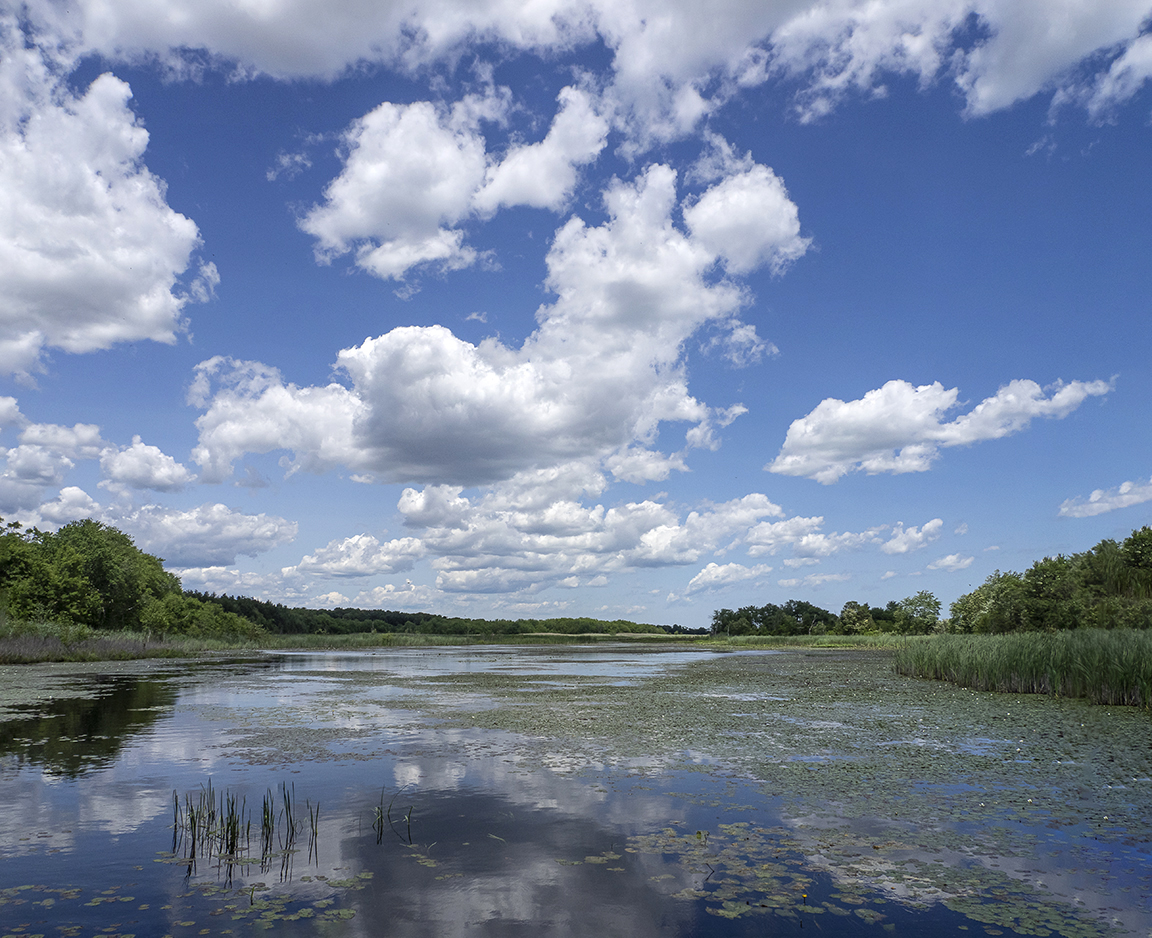
I finally had a chance to work on some panoramas I shot last month at the Edwin B. Forsythe National Wildlife Refuge, Brigantine Division in Oceanville NJ. The cloud formations on this day were amazing. So I had a lot of choices for working with series panoramas while we were there. Lately I have been using an Olympus m43 Camera with a 14mm – 140mm zoom for landscapes or general info shots and the Canon R with a 400mm DO lens or the Tamron 150-600mm for Wildlife. It is a lot easier to carry a smaller m43 camera with a wide zoom range along with the heavier full frame camera with longer lenses, instead of 2 large camera bodies. The m43 format with a 14-140mm zoom seems a little harder to do multi-image panoramas @14mm but after working with it for quite a while I am getting more usable & predictable panoramas. Sort of a learning curve I guess. Basically I overlap the images more. At 14mm with m43 format it is sort of the equivalent (field of view) of 28mm on a full frame DSLR. All the images here are shot at 14mm but go from 2 to 8 images for each photo panorama. Some were vertical images and some were horizontal images for each image.

2 – 14mm Horizontal images panorama

Panorama- 4 Vertical Images @14mm

Panorama – 3 vertical images stacked @ 14mm

3 horizontal images stacked @14mm

Panorama – 4 horizontal images @14mm

2 horizontal images stacked @ 14mm

2 Horizontal images @14mm Stacked

2 Horizontal images – Atlantic City on left @14mm

2 Horizontal Images Stacked @ 14mm

2 Horizontal Images Stacked – Osprey Platform @ 14mm

2 Horizontal images Stacked @14mm
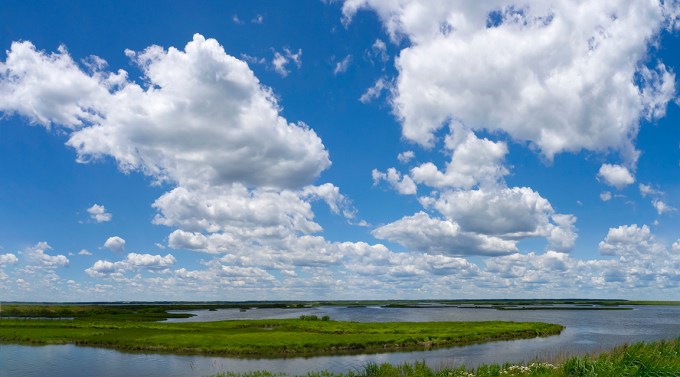
2 -Horizontal Images @14mm

3 – Horizontal Images Stacked @14mm

2 – 14mm Horizontal Images Stacked

7 – 14mm Images stacked

Two Trees – 3 Images Vertical Stacked

Brigantine Landscape- 3 Horizontal Images Stacked @14mm

Brigantine Landscape w/ Clouds – 2 Horizontal Images @14mm

Brigantine 3 Vertical Images @14mm

Brigantine – 2 Horizontal Images @ 14mm

Brigantine NWR 2 Image panorama

Brigantine NWR – 3 Image panorama @14mm

7 image panorama – 7 – 12mm vertical images combined in Photoshop

2 Vertical Images @14mm
 photoartflight