 photoartflight
Curlews Across The Channel
Posted on June 13, 2017

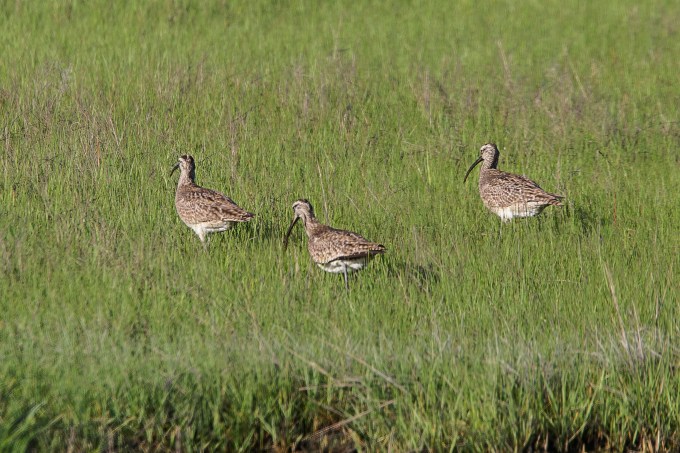
I saw this group of Curlews across the water channel along the Wildlife Drive. Usually I only see one working an area, but here I saw 3 working an area for a meal. The one on the left caught something, not sure what it was but usually when they peck at the ground or forage in grasses they are going after grasshoppers, beetles or other insects. If you see them going deeper with their long bills they are foraging for earthworms, shrimp, clams, etc. This group was just slowly walking and pecking at the ground. But it was fun to see a small group working an area out in the open.

Nature Still Life Images From Our Walk
Posted on May 7, 2015

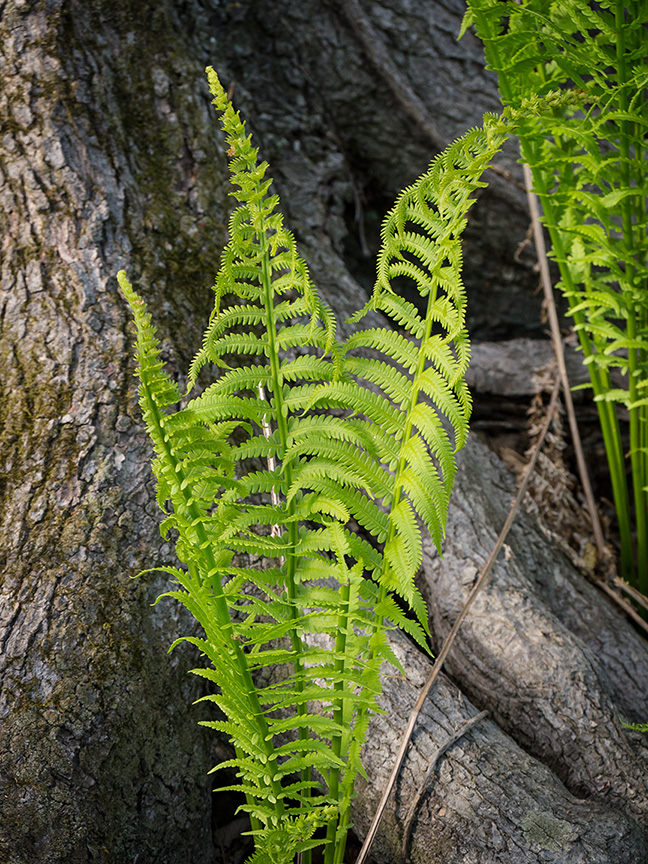
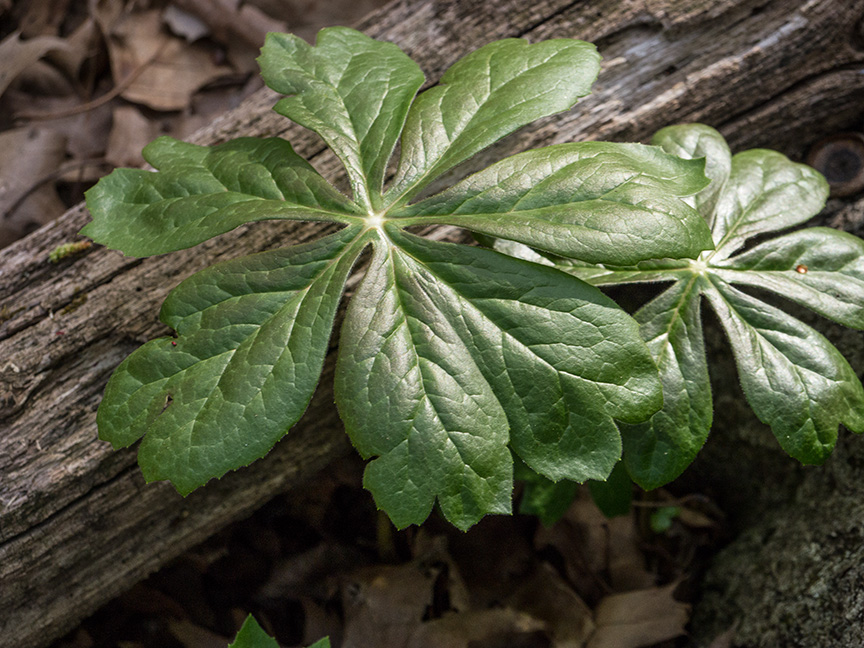
We have been trying to get out and walk more so we were trying the Nature Walk at a local Wildlife Center. It goes through a heavily treed area with ponds and marshy areas, with lots of different plants along the way. I enjoy picking out still life images from what we find along our walk. It can be branches with dried leaves, a feather laying on the ground or almost anything that catches my eye. I especially like shooting 2 to 5 shot panoramas of fallen tree branches. Some have an amazing variety of textures, colors, shadows, etc. Also look for a tree with interesting tree roots, shadows or shapes. Sometimes you find a spot of color when everything else is drab. Look for sunlight highlighting an area of interest. Strong highlighting adds textures or highlights interesting shapes. It is also interesting to look for subjects for some extreme closeups such as 1X to 8X, but that is for a different blog post. To sum it up, it is like a treasure hunt and your techniques can enhance what you find. It also helps you see more and broaden your visual skills. On a walk I usually take 2 cameras, one lightweight m43 with a 14-140mm lens (35mm equiv. of 28mm to 280mm) and a Canon 1D MkIV with either a long lens or a 150mm macro. It depends on how much I want to carry.
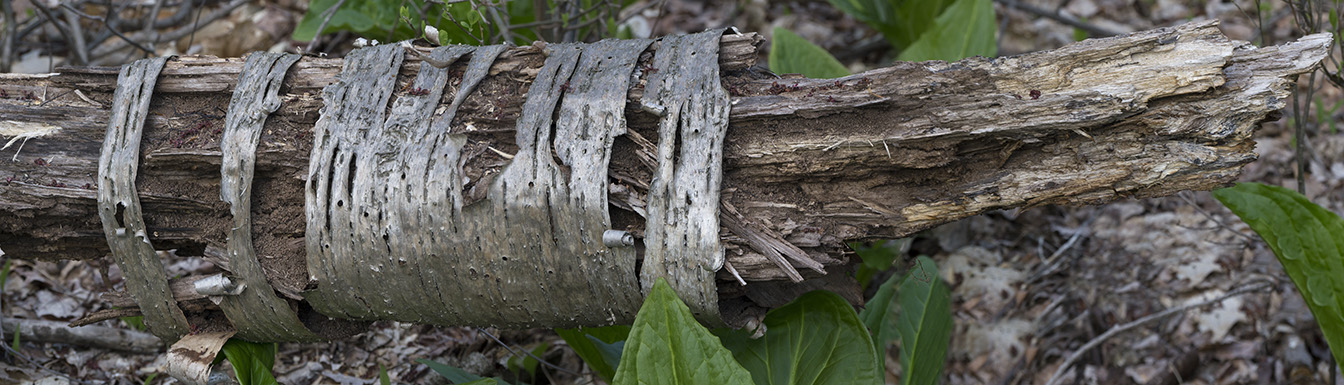
3 shot panorama







Immature White Ibis
Posted on March 3, 2014

We saw quite a few Immature White Ibises. You might think that they are Immature Glossy Ibises, but they have some white on the belly and rump with splotchy mottling. This one was feeding along the shore and did not seem to be bothered by my presence enabling me to get some closeup shots. He walked up to me so I did not think I was bothering him. After he ate his shrimp he moved on.
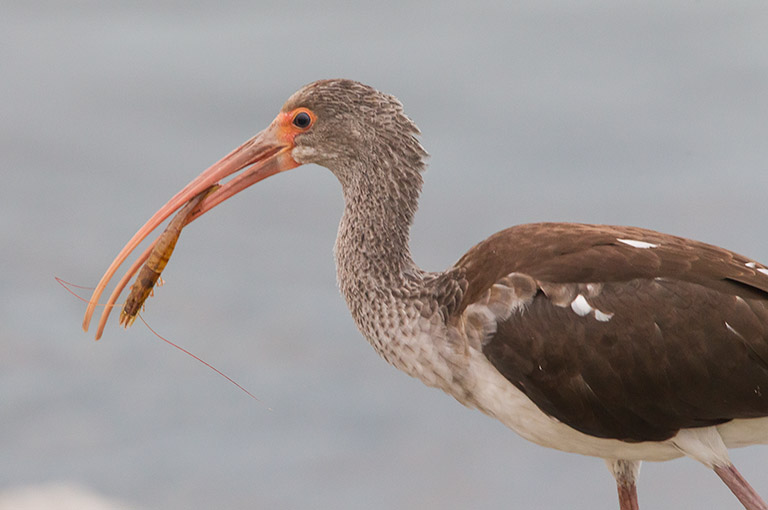
Ibis with Shrimp
Canon EOS 1D MkIV, Canon 400mm DO IS f/4 lens, Canon 1.4X Series III Teleconverter, @ f/8, 1/160 sec, ISO 2000
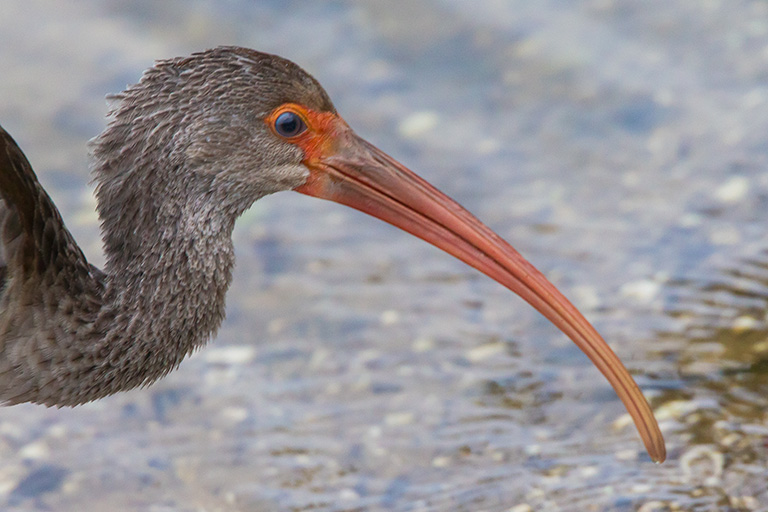
What a Beak!
Canon EOS 1D MkIV, Canon 400mm DO IS f/4 lens, Canon 1.4X Series III Teleconverter, @ f/8, -0.33 exposure compensation, 1/200 sec, ISO 2000

No Meal Under Here!
Canon EOS 1D MkIV, Canon 400mm DO IS f/4 lens, Canon 1.4X Series III Teleconverter, @ f/8, -0.33 exposure compensation, 1/200 sec, ISO 2000
Pelicans, Pelicans and more Pelicans, Oh My!
Posted on March 1, 2014

Pelicans are fun to watch and give you a lot of photo opportunities. Sometimes they seem almost comical, other times just plain clutzy! There was quite a large group where we were set up and with the Sigma 300-800mm I could pick my group and zoom in or out depending on the action, or lack of action, going on. I also had the 400mm DO with a 1.4X teleconverter over my shoulder in case something flew by closer.

Look at what I caught!
Canon EOS 1D MkIV, Sigma 300-800mm DG EX lens @ 800mm, f/8, 1/640 sec, ISO 640

Not Easy to go Down
Canon EOS 1D MkIV, Sigma 300-800mm DG EX lens @ 800mm, f/8, 1/640 sec, ISO 640
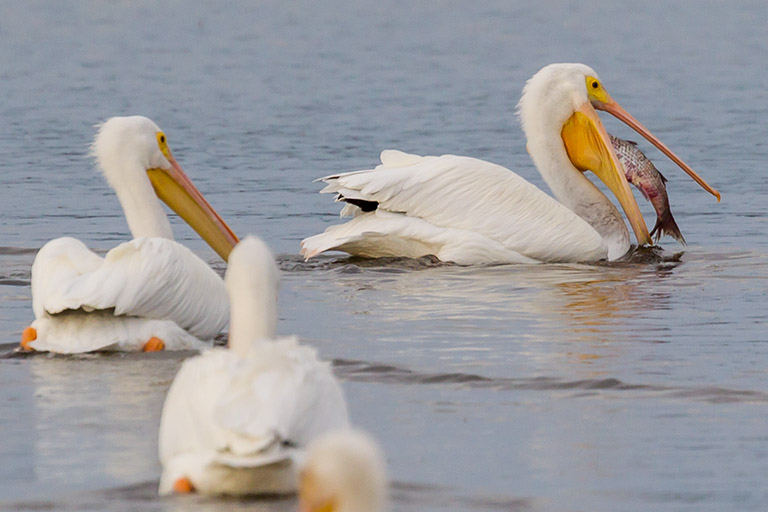
Maybe Need More Water
Canon EOS 1D MkIV, Sigma 300-800mm DG EX lens @ 800mm, f/8, 1/640 sec, ISO 640
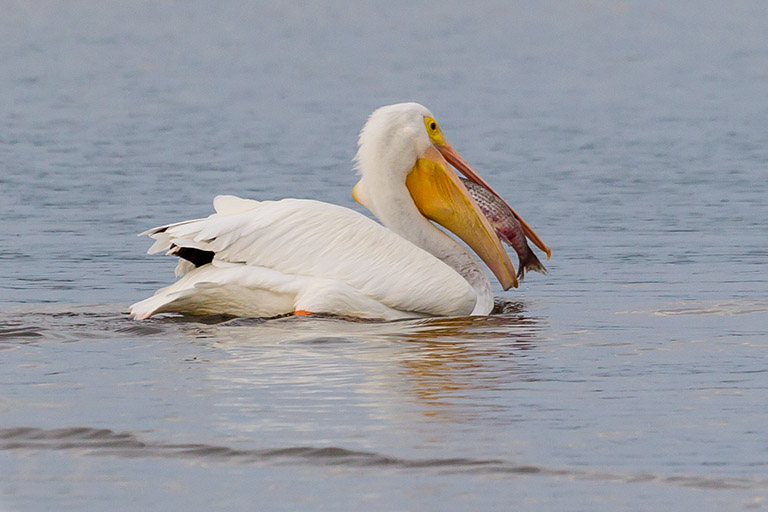
Still Not Going Down
Canon EOS 1D MkIV, Sigma 300-800mm DG EX lens @ 800mm, f/8, 1/640 sec, ISO 640

Double Itch
Canon EOS 1D MkIV, Sigma 300-800mm DG EX lens @ 800mm, f/11, 1/800 sec, -0.33 exposure compensation, ISO 400

Seeing Eye to Eye
Canon EOS 1D MkIV, Sigma 300-800mm DG EX lens @ 800mm, f/11, 1/2500 sec, -0.33 exposure compensation, ISO 400
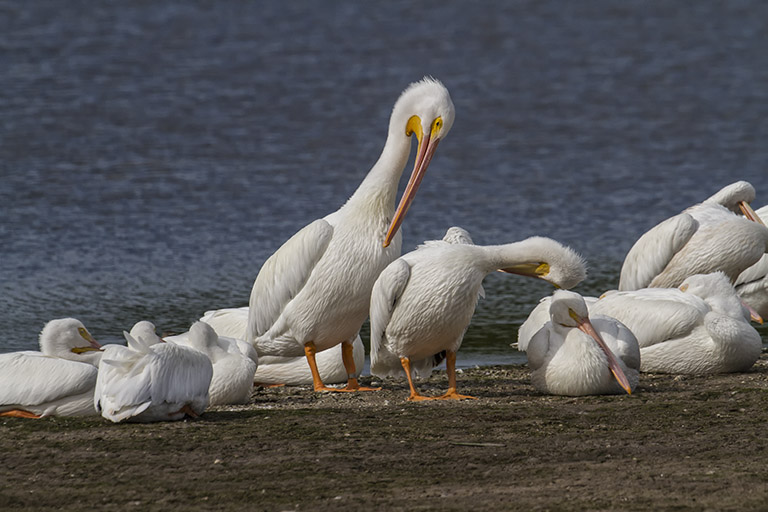
Still Scratching
Canon EOS 1D MkIV, Sigma 300-800mm DG EX lens @ 800mm, f/11, 1/1600 sec, -0.33 exposure compensation, ISO 640

American White Pelican Fly By
Canon EOS 1D MkIV, Canon 400 DO IS f/4, Canon 1.4X Series III Teleconverter, 560mm, f/11, 1/800 sec, +0.33 exposure compensation, ISO 400
BIF – Anhinga
Posted on February 28, 2014

Another from the Birds in Flight Series. This time a female Anhinga. They are quite fast flyers so I was only able to get a few shots this time as she flew by.

Cormorant Fly By
Canon EOS 1D MkIV, Sigma 300-800mm DG APO f/5.6 @ 560mm, f/11. 1/500 sec, + 1 exposure compensation, ISO 400

Cormorant Fly By
Canon EOS 1D MkIV, Sigma 300-800mm DG APO f/5.6 @ 560mm, f/11. 1/500 sec, + 1 exposure compensation, ISO 400
Cormorants
Posted on February 25, 2014

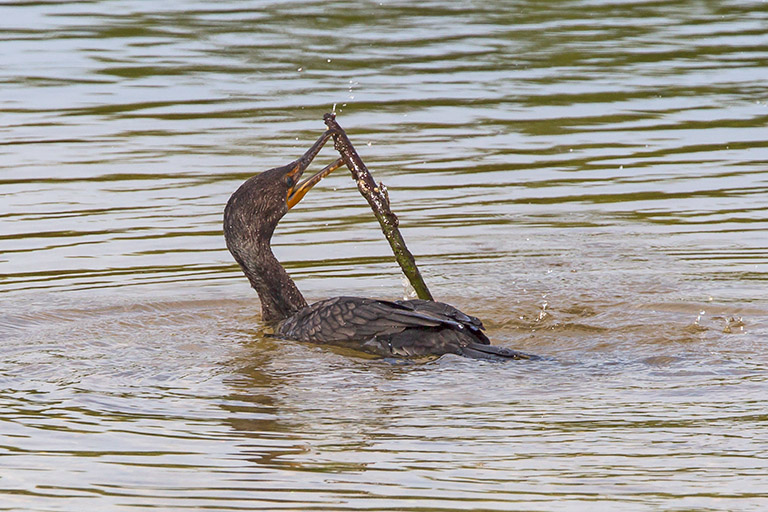
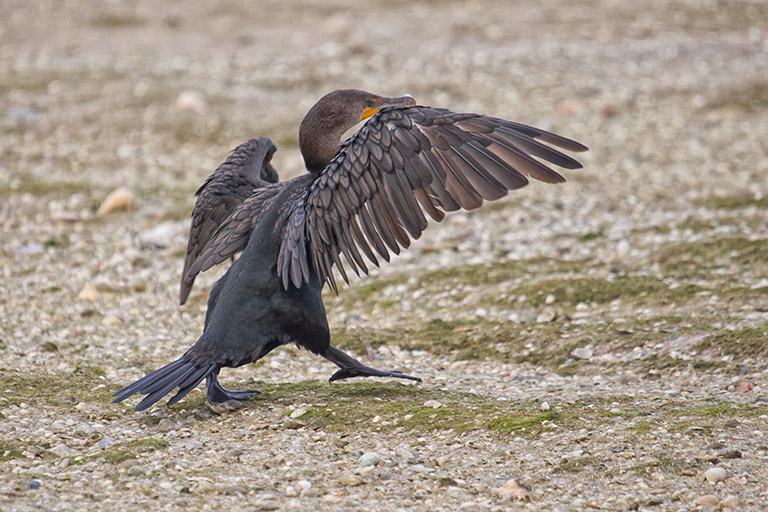
We were watching a number of Cormorants scattered about in front of us. You never quite know what they are going to do, so I tried to keep an eye open to see which one would do something interesting. Here are a series of different Cormorants in a variety of activities.


BIF – Brown Pelicans
Posted on February 23, 2014
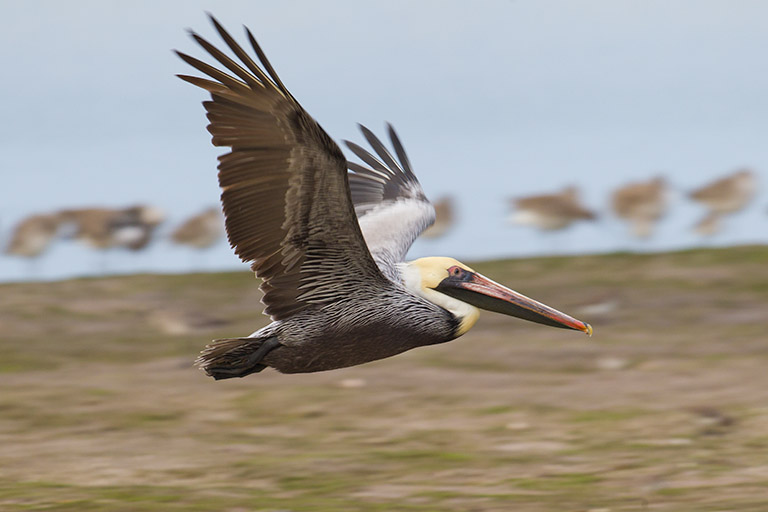
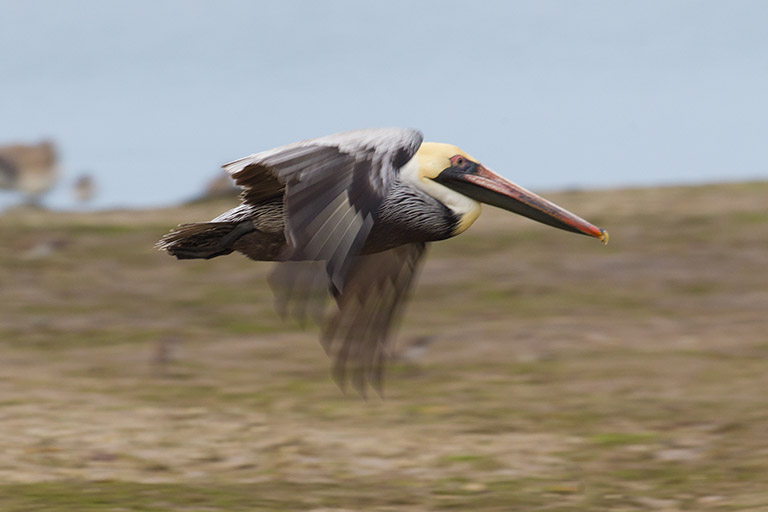
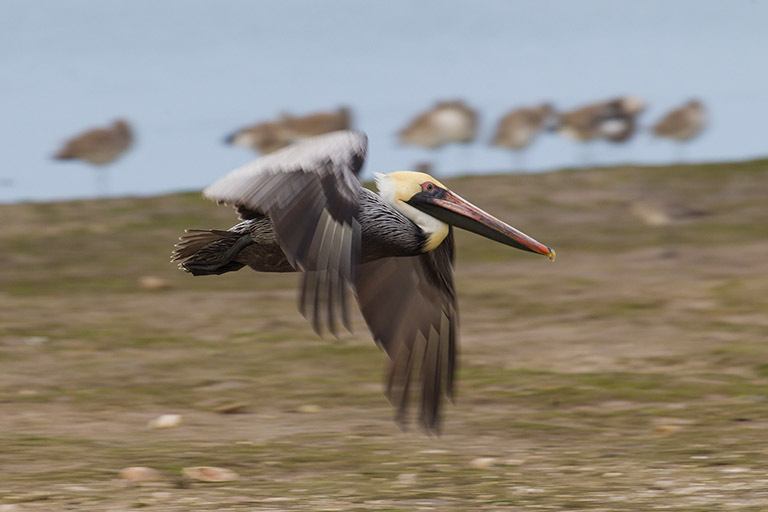
Birds In Flight – A Brown Pelican Low Altitude Fly By this time. I was watching this Brown Pelican making a lap farther out then he circled in and flew in front of us. I was able to get a small burst as it flew by. Usually I like them with the sky as a background, but it is interesting looking at the wing positions, and wing patterns as they are flying by.

Brown Pelican Low FlyBy
Canon EOS 1D MkIV, Sigma 300-800mm DG APO f/5.6 lens @ 687mm, f/8, 1/250 sec, + 0.33 exposure compensation, ISO 640
Brown Pelican Low FlyBy
Canon EOS 1D MkIV, Sigma 300-800mm DG APO f/5.6 lens @ 687mm, f/8, 1/200 sec, + 0.33 exposure compensation, ISO 640

Brown Pelican Low FlyBy
Canon EOS 1D MkIV, Sigma 300-800mm DG APO f/5.6 lens @ 687mm, f/8, 1/200 sec, + 0.33 exposure compensation, ISO 640
Brown Pelican Low FlyBy
Canon EOS 1D MkIV, Sigma 300-800mm DG APO f/5.6 lens @ 687mm, f/8, 1/250 sec, + 0.33 exposure compensation, ISO 640
BIF – Snowy Egret
Posted on February 18, 2014
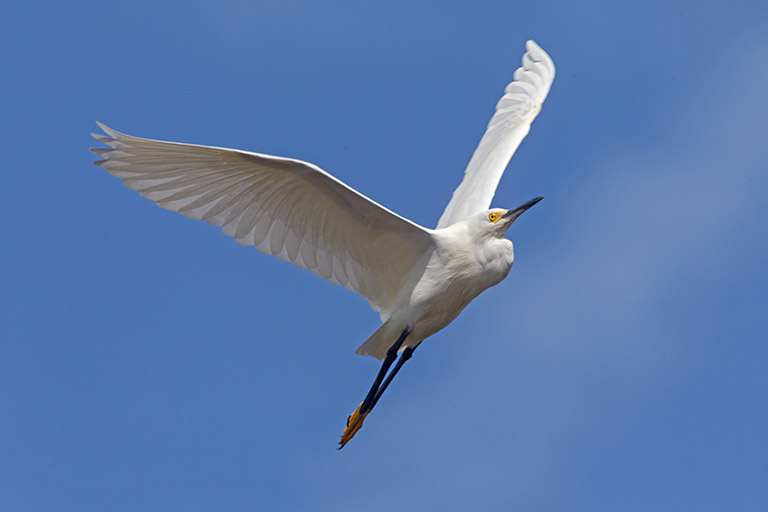
One of my favorite photos to capture are birds in flight (BIF). It is a challenge and rewarding at the same time. Sometimes you can track them coming in towards you so you can get ready for them and compose your shots. Other times they just come upon you and you have little time to react and get a few shots, like this series. My favorite combination for this is the Canon MkIV and the Canon 400mm DO IS f/4 lens, sometimes with a Canon Series III 1.4X teleconverter. The 400mm DO f/4 is a lightweight , shorter in length the a normal 400mm, easy to handle and track on a subject lens, perfect for fast moving subjects such as flying birds. Some do not like the DO series of lenses, but if you learn how to use them and learn how to adjust your files it is a real winner. It is also only 4.3 lbs, so it is relatively lightweight to carry for long periods of time. This Snowy Egret just came out over the trees and was close in so there was little time to react and compose my shots.
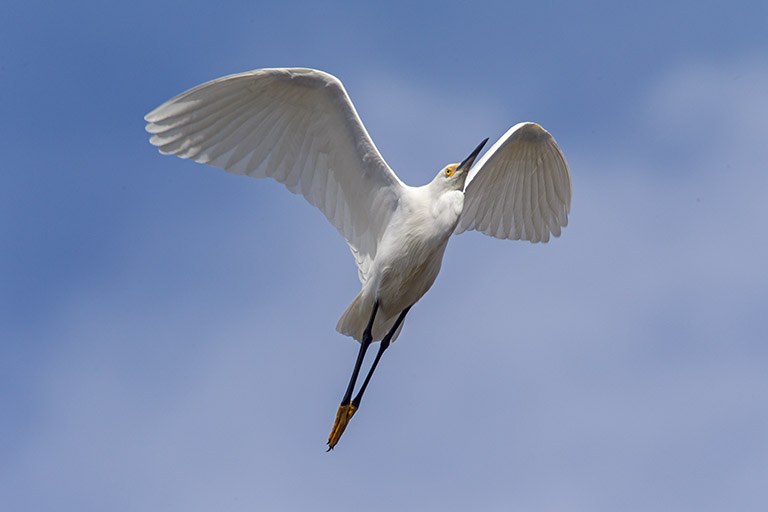
Snowy Egret Getting Closer
Canon EOS 1D MkIV, Canon 400mm DO IS f/4, Canon Series III 1.4X Teleconverter, f/11, 1/1250 sec, ISO 400

Closer
Canon EOS 1D MkIV, Canon 400mm DO IS f/4, Canon Series III 1.4X Teleconverter, f/11, 1/1000 sec, ISO 400

Snowy Egret Almost Overhead
Canon EOS 1D MkIV, Canon 400mm DO IS f/4, Canon Series III 1.4X Teleconverter, f/11, 1/1250 sec, ISO 400
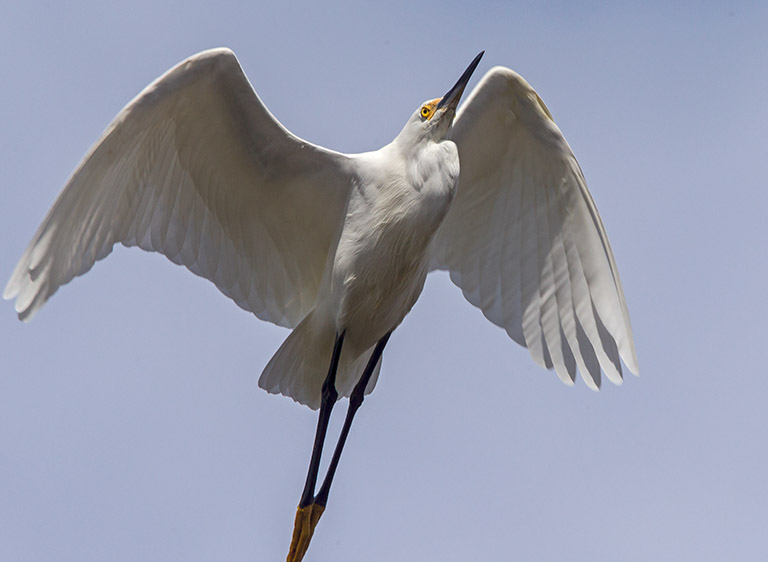
Snowy Egret Overhead
Canon EOS 1D MkIV, Canon 400mm DO IS f/4, Canon Series III 1.4X Teleconverter, f/11, 1/1600 sec, ISO 400
A Study In White
Posted on February 17, 2014

I was following this White Ibis when this Snowy Egret flew in. I was setup with a Sigma 300-800mm zoom which helped, so I could frame my subjects while they were interacting with each other. They just seemed to dance & prance around each other, not seeming to notice the other was there. Usually I use a little minus exposure compensation with white birds, but it was still early in the morning and a little dark. This time I used +0.33 exposure compensation with aperture priority after checking the histogram. This sequence only lasted a little over 2 minutes.
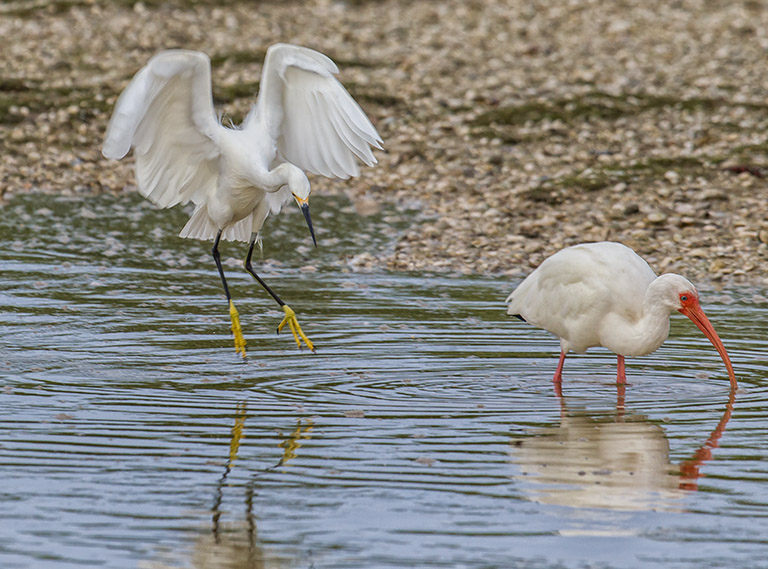
Coming In
Canon EOS 1D MkIV, Sigma 300-800mm DG APO f/5.6 lens @ 687mm, f/8, 1/320 sec., ISO 640, +0.33 exposure compensation, aperture priority.
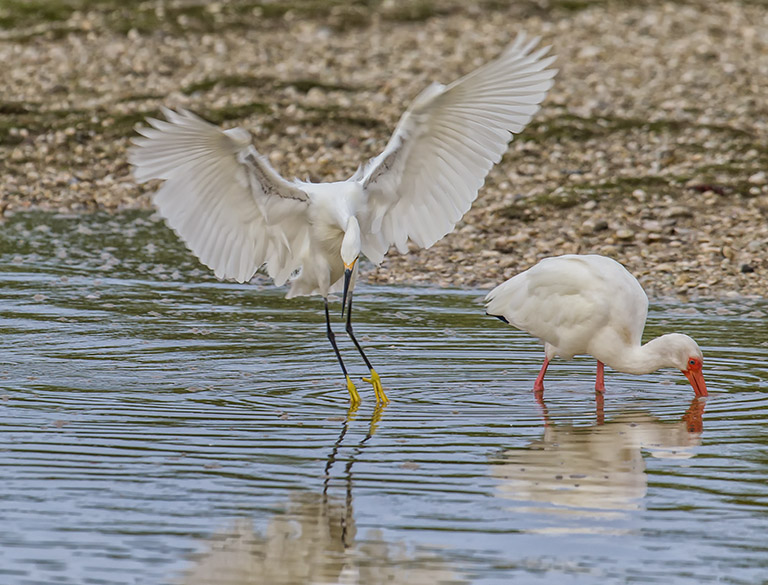
Touchdown w/ Full Wing Spread
Canon EOS 1D MkIV, Sigma 300-800mm DG APO f/5.6 lens @ 687mm, f/8, 1/320 sec., ISO 640, +0.33 exposure compensation, aperture priority.

What’s for Breakfast
Canon EOS 1D MkIV, Sigma 300-800mm DG APO f/5.6 lens @ 687mm, f/8, 1/320 sec., ISO 640, +0.33 exposure compensation, aperture priority.
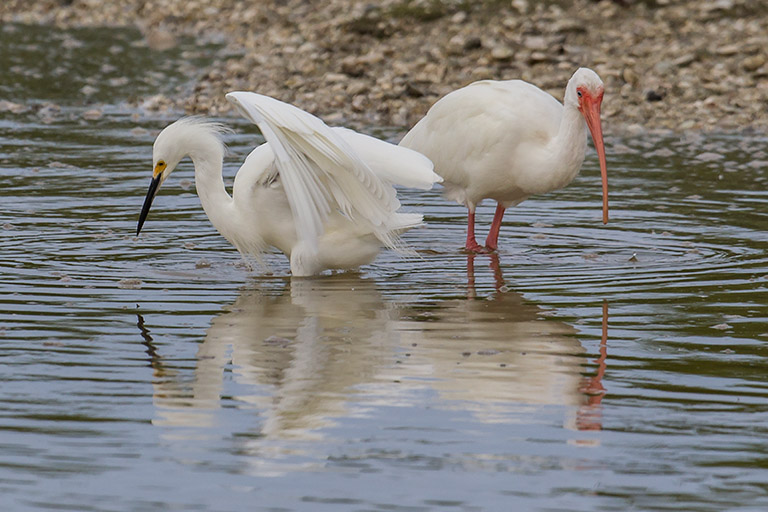
Looking for a Meal
Canon EOS 1D MkIV, Sigma 300-800mm DG APO f/5.6 lens @ 687mm, f/8, 1/400 sec., ISO 640, +0.33 exposure compensation, aperture priority.

Well I found something
Canon EOS 1D MkIV, Sigma 300-800mm DG APO f/5.6 lens @ 687mm, f/8, 1/400 sec., ISO 640, +0.33 exposure compensation, aperture priority.

Still Looking
Canon EOS 1D MkIV, Sigma 300-800mm DG APO f/5.6 lens @ 687mm, f/8, 1/400 sec., ISO 640, +0.33 exposure compensation, aperture priority.
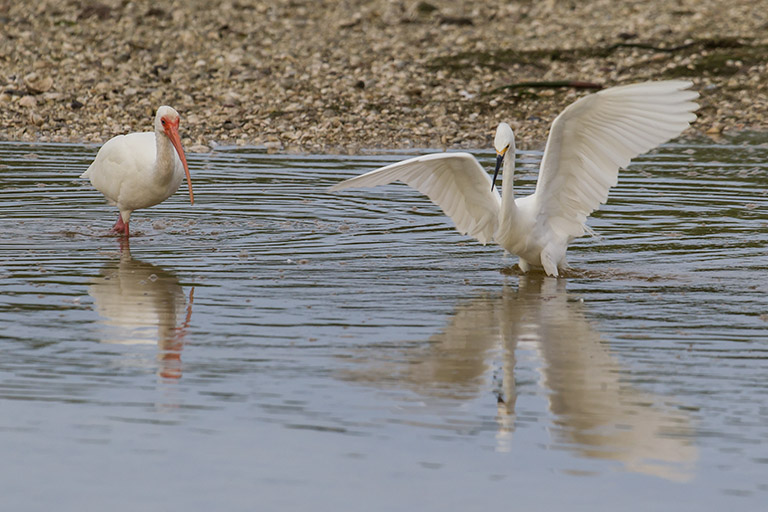
Looking, Looking
Canon EOS 1D MkIV, Sigma 300-800mm DG APO f/5.6 lens @ 687mm, f/8, 1/400 sec., ISO 640, +0.33 exposure compensation, aperture priority.
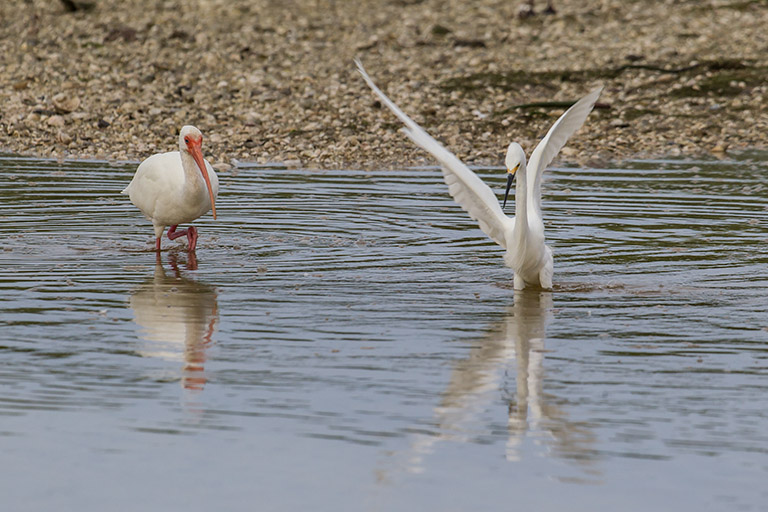
Coming Over
Canon EOS 1D MkIV, Sigma 300-800mm DG APO f/5.6 lens @ 687mm, f/8, 1/400 sec., ISO 640, +0.33 exposure compensation, aperture priority.

Crossing Paths
Canon EOS 1D MkIV, Sigma 300-800mm DG APO f/5.6 lens @ 687mm, f/8, 1/400 sec., ISO 640, +0.33 exposure compensation, aperture priority.
 photoartflight