 photoartflight
Mangrove Tree Crabs
Posted on February 13, 2014

We found a lot of Mangrove Tree Crabs climbing in the Mangrove branches. They are usually a little under an inch, but we found quite a few larger ones on the branches. It is usually rather dark under the leaves and branches, but with a little fill flash you can see some amazing colors on them. I used canon flash with a flexible bounce reflector. I underexposed the flash by 2/3 rds of a stop so it acted more like a fill flash, more for the getting some detail and colors of the crab. When threatened they can move very quickly, so if you stay too long or get to close you will loose your subject. One day it seemed like there were hundreds in the trees, while on other days we only saw a few.

Hiding
Canon EOS 1D MkIII, Sigma 150 Macro OS f/2.8, Fill Flash – 2/3 stop, handheld, @ f/8, 1/20 sec, ISO 400
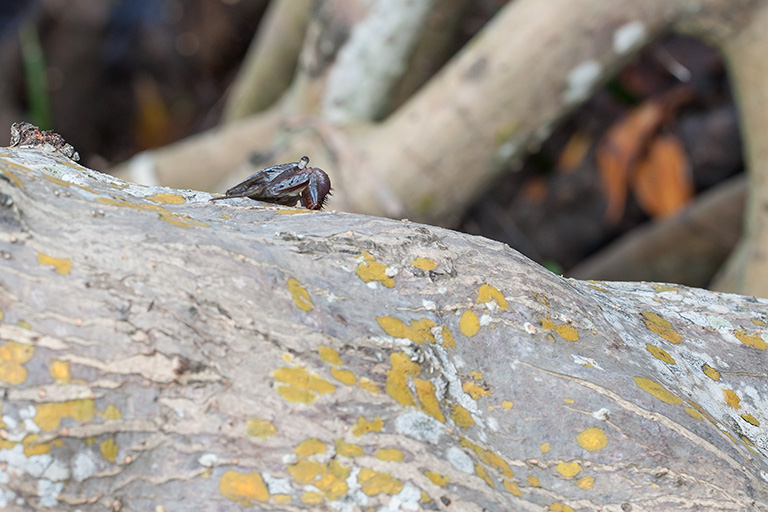
Long Way to Go
Canon EOS 1D MkIII, Sigma 150 Macro OS f/2.8, Fill Flash – 2/3 stop, handheld, @ f/8, 1/30 sec, ISO 400

Little Crab – Big World
Canon EOS 1D MkIII, Sigma 150 Macro OS f/2.8, Fill Flash – 2/3 stop, handheld, @ f/8, 1/30 sec, ISO 400

Long Way to Go
Canon EOS 1D MkIII, Sigma 150 Macro OS f/2.8, handheld, Fill Flash – 2/3 stop, @ f/8, handheld, 1/30 sec, ISO 400

What are you looking at!
Canon EOS 1D MkIII, Sigma 150 Macro OS f/2.8, Fill Flash – 2/3 stop, handheld, @ f/11, 1/6 sec, ISO 400

Climbing Down
Canon EOS 1D MkIII, Sigma 150 Macro OS f/2.8, Fill Flash – 2/3 stop, handheld, @ f/11, 1/6 sec, ISO 400

Blending In
Canon EOS 1D MkIII, Sigma 150 Macro OS f/2.8, Fill Flash – 2/3 stop, handheld, @ f/8, 1/8 sec, ISO 400

Closer
Canon EOS 1D MkIII, Sigma 150 Macro OS f/2.8, Fill Flash – 2/3 stop, handheld, @ f/8, 1/13 sec, ISO 400

Hanging Around
Canon EOS 1D MkIII, Sigma 150 Macro OS f/2.8, Fill Flash – 2/3 stop, handheld, @ f/3.2, 1/125 sec, ISO 400

Going Down
Canon EOS 1D MkIII, Sigma 150 Macro OS f/2.8, Fill Flash – 2/3 stop, handheld, @ f/2.8, 1/125 sec, ISO 400

One Leg Up Reddish Egret
Posted on February 8, 2014

This Reddish Egret was just standing on one leg for about an hour. I was shooting other birds flying in and out, hunting for their meals and interacting with each other. This one was just standing on one leg watching what was going on. I usually do not see them that motionless for that long. At least being that still made for a good subject to photograph.
Canon EOS 1D MkIV, Sigma 300-800mm DG f/5.6 zoom @ 800mm, f/8, 1/500 sec, ISO 640
Snowy Egret Portrait
Posted on February 5, 2014
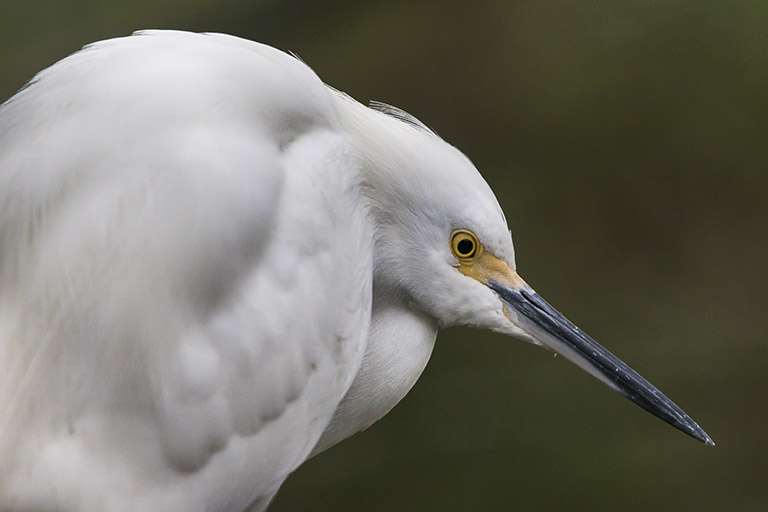
I found this Snowy Egret at the St. Augustine Alligator Farm Rookery. It was in the branches of a tree along the boardwalk path in the Rookery. It was close to the walk but in the dark shadows under the branches of the tree. I opened up my aperture and raised the ISO to 1600 since I was also trying to get birds in flight flying in to roost in the gray drizzly evening. The Snowy was a little wet from a drizzle and was getting ready for the evening. It did not seem bothered by my presence, but it kept an eye on me. I took a series of shots, then moved on so I did not bother him.
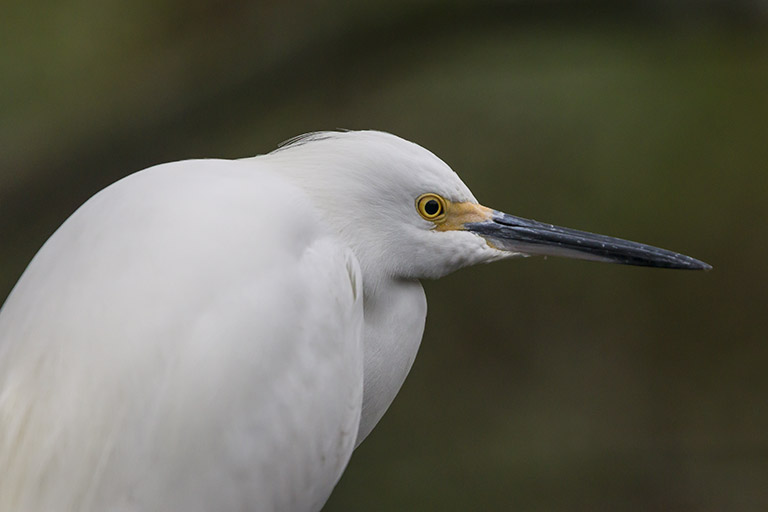
Canon EOS 1D MkIV, Canon 400mm DO f/4 IS, handheld, f/4.5, 1/000 sec, ISO 1600
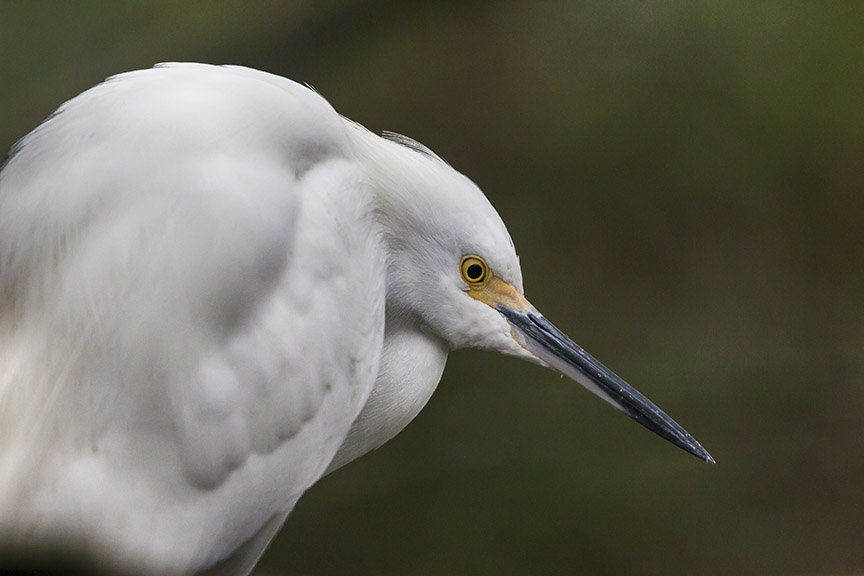
Canon EOS 1D MkIV, Canon 400mm DO f/4 IS, handheld, f/4.5, 1/000 sec, ISO 1600
Rainy Day
Posted on February 3, 2014
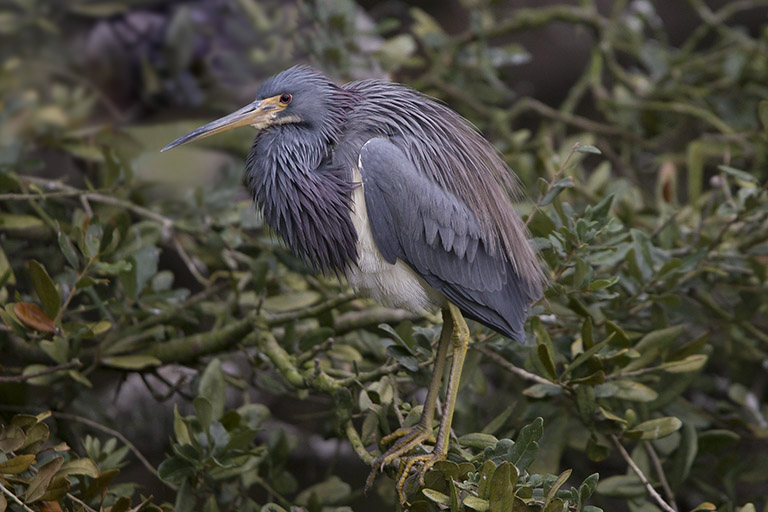
I came upon this Tricolored Heron sitting on a branch, feathers puffed out because of the drizzly rain. I thought the heron looked interesting because of the different look of the feathers and the larger look of the body. A different look from how I usually find them.

Another Wet Tricolored Heron
Canon EOS 1D MkIV, Canon 400mm DO f/4 IS, handheld @ f/4.5, 1/200 sec. , ISO 1600
Uh-Oh!
Posted on January 30, 2014
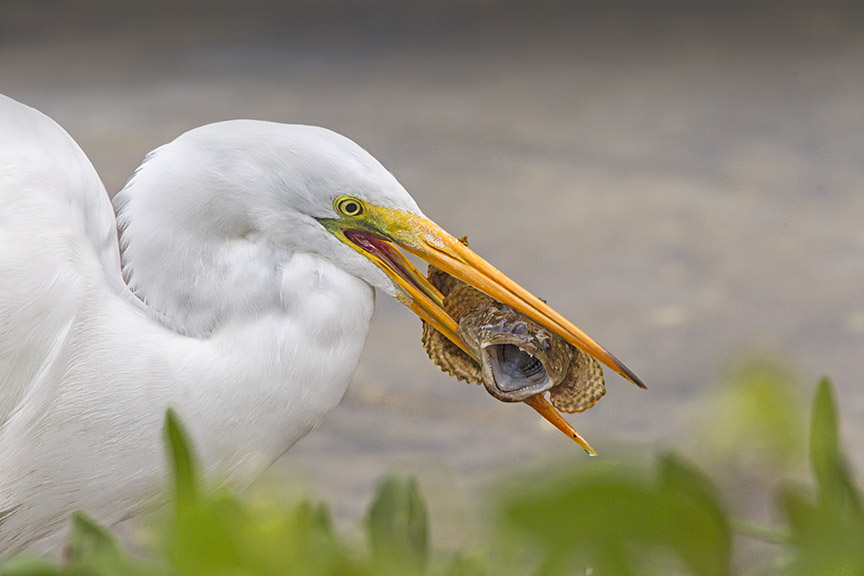
This Great Egret caught his morning meal. The fish just seemed to have a look of surprise or maybe it was the look of the coming doom. It took quite awhile for the Egret to finish its meal and seemed to have difficulty swallowing it down. It kept flipping it in the air and catching it again, maybe for a better position for swallowing the fish. This was early in the morning and still a little dark. I pushed the ISO to 2000, which is about as far as I like to go on a Canon MkIV for noise, and still try to stop the motion of the Egret shaking its prey. I removed as much noise as I thought possible in Adobe Camera Raw. Using a 1.4X teleconverter gave me an f/stop of 5.6, so I added 1 more stop to help give a little more sharpness. I usually do not like using a 1.4X teleconverter wide open, so being “Old School” I used f/8 for a slight increase in sharpness because of the Teleconverter.

Two Mouths
Canon EOS 1D MkIV, Canon 400mm DO f/4 IS, Canon 1.4X Teleconverter, f/8, 1/250 sec, ISO 2000

Eye to Eye
Canon EOS 1D MkIV, Canon 400mm DO f/4 IS, Canon 1.4X Teleconverter, f/8, 1/320 sec, ISO 2000
Clapper Rail
Posted on January 27, 2014
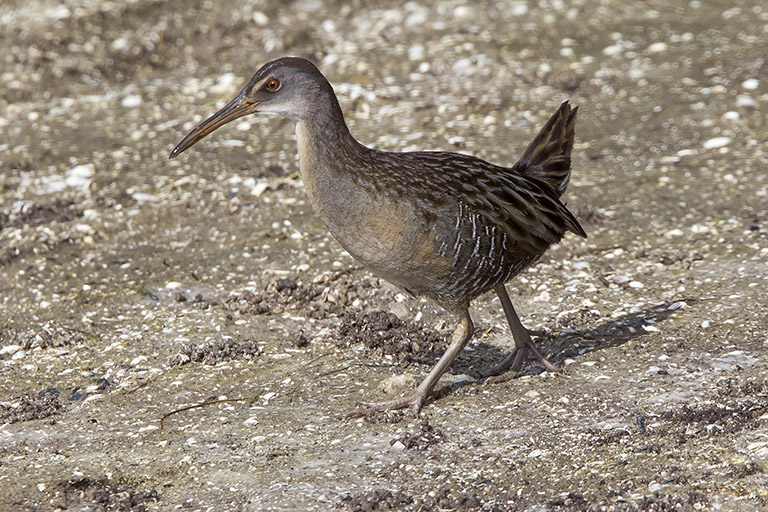
While I photographing a group of birds out in the water, out of the corner of my eye I noticed something moving on the shoreline by the Mangrove roots. I saw this Clapper Rail dart out in the open and look around. I managed to get a couple of quick shots before it disappeared back into the dense roots and vegetation. It was there so briefly and then disappeared that I originally thought it was a Sora. It was not until I was working on my files that I saw it was a Rail and was happy with the few shots that I managed to get.

Clapper Rail
Caon EOS 1D MkIV, Canon 400mm DO f/4 IS lens, Canon 1.4X teleconverter, f/11, 1/800 sec, ISO 400
Great Egret – Shy, Bad Feather Day or Just Wet from the Rain?
Posted on January 26, 2014
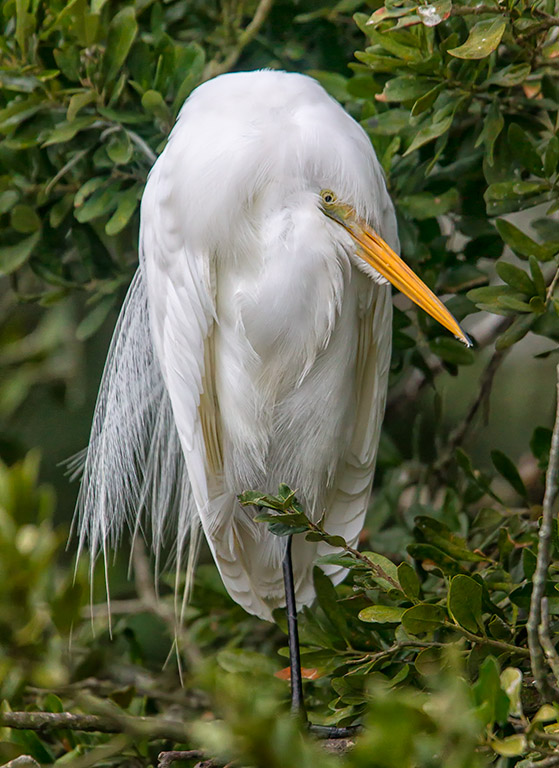
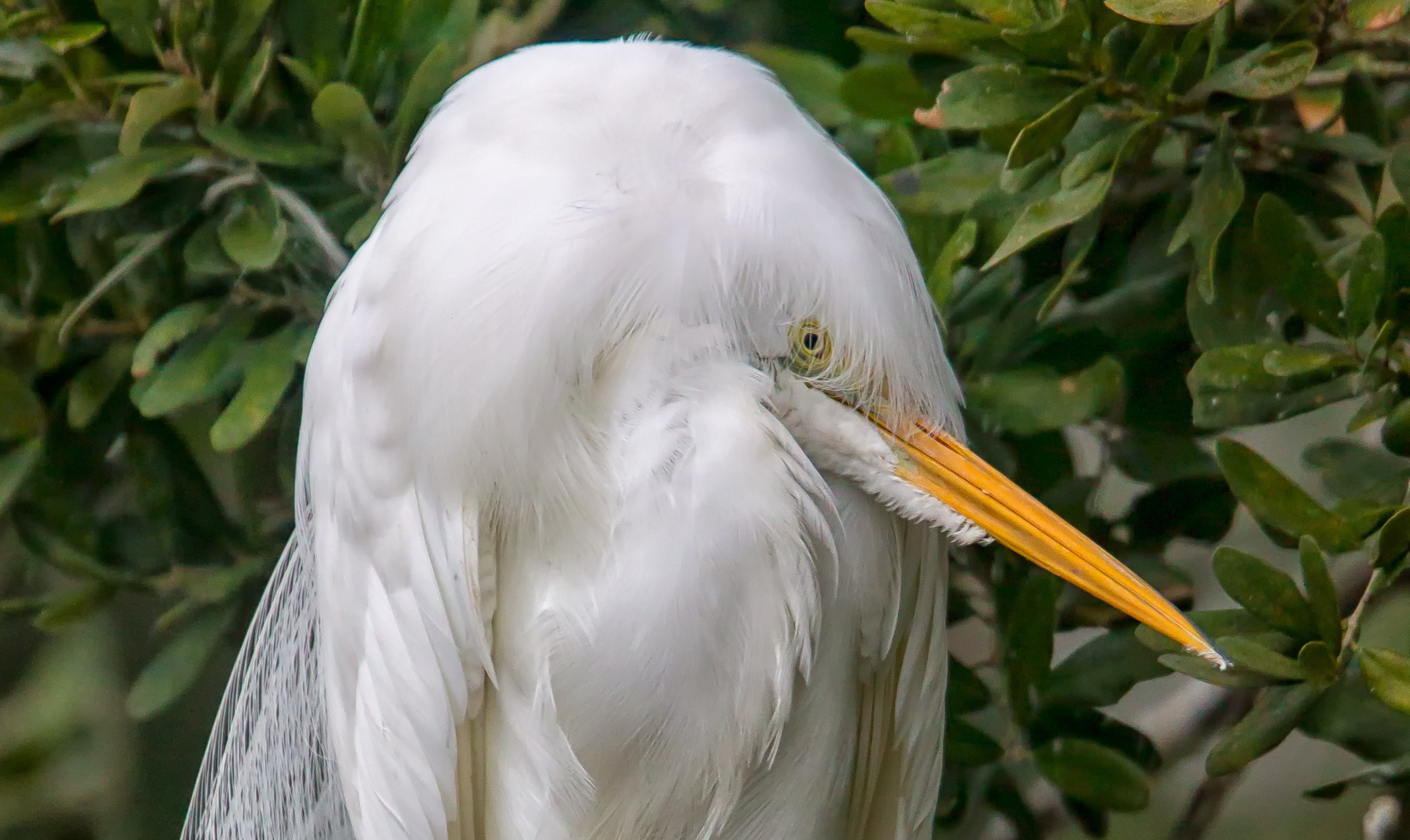
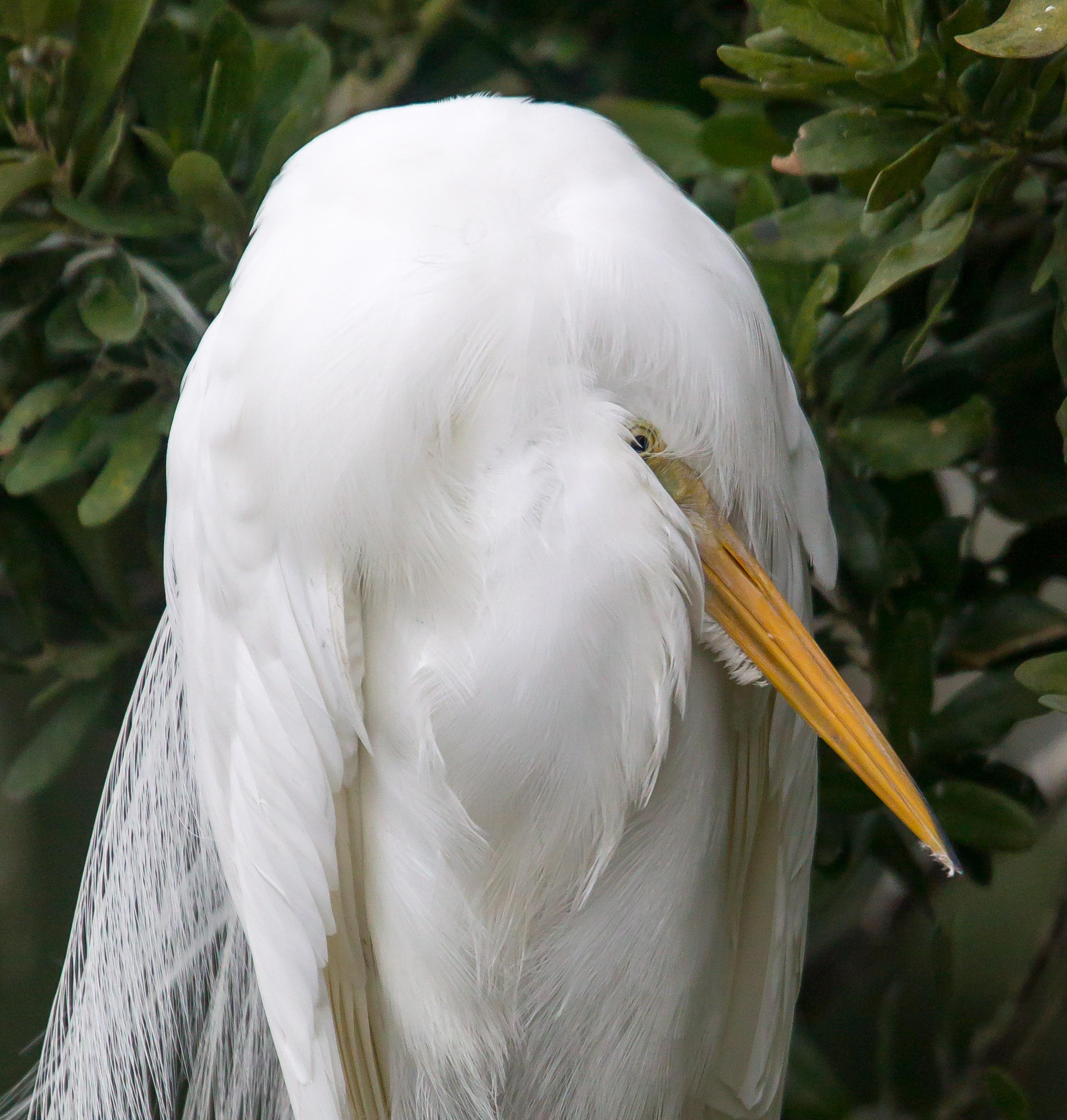
Found this Great Egret along the Rookery at the St. Augustine Alligator Farm. The Rookery at the St. Augustine Alligator Farm is a great place to get closeup shots of wild birds in their natural habitat. The alligators are below the boardwalk, a lot of birds build nests right above the board walk in the surrounding trees, because they feel safe from predators. I saw about 20 nesting in one tree alone. The only problem they have is the occasional meal they provide the alligators if they are too close on the ground. The best times are early in the morning before they fly out or later in the day when they come back to roost. Sometimes the nests are so close you can get great shots with even a 200mm lens. We were trying to get there on our way home, but got delayed and did not get there until they were almost closing. It also started to lightly rain and got darker. We went in anyway and I got quite a few interesting shots, even with the lack of light, gray skies and the rain. I used a high ISO and opened up the lens to help stop the action, ( More my movement from handholding the camera on the gray day, The Egret was standing very still).

Egret Eye Closeup
Canon EOS 1D MkIV, Canon 400mm DO f/4 lens, f/4.5, 1/640 sec, ISO 1600
Egret Closeup
Canon EOS 1D MkIV, Canon 400mm DO f/4 lens, f/4.5, 1/640 sec, ISO 1600
Egret Portrait
Canon EOS 1D MkIV, Canon 400mm DO f/4 lens, f/4.5, 1/640 sec, ISO 1600
Tricolored Heron Hunting
Posted on January 26, 2014
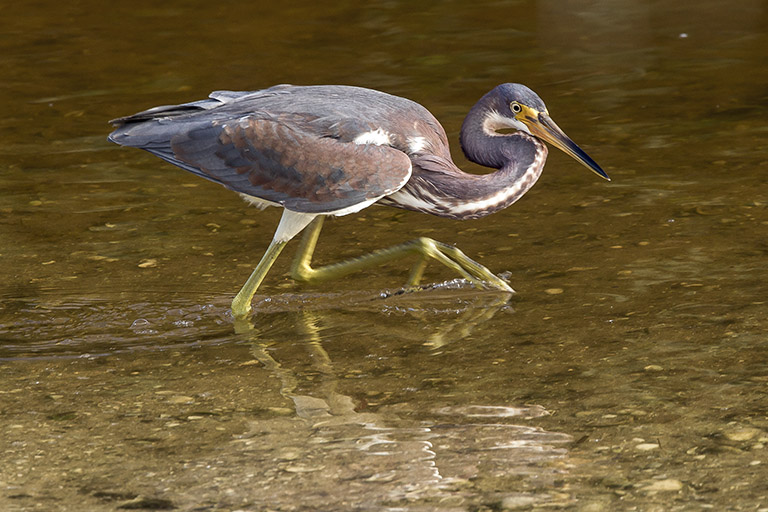
Northern NJ got another snow storm and frigid below normal temperatures, so I thought I would warm up by going through more of my photos from our trip to Florida. This Tricolored Heron was hunting along an inlet that I was walking along. They were formerly called the Louisiana Heron and are a medium sized Heron, smaller than a Great Blue, but larger than the Night Herons. This one was concentrated on walking along the shore giving me an opportunity to get many shots as it walked towards me and then away from me. On the header photo, even at 1/400 sec, I got a little motion blur on the left leg. I still liked the photo though, it gave it a little sense of movement and the bubbles coming up with the rest sharp so it looked a little less static.

Tricolored Heron Taking Wide Strides
Canon EOS 1D MkIV, Canon 400mm DO f/4 lens, Canon 1.4X Teleconverter, f/11, 1/400 sec, ISP 1250, -0.33 exposure compensation
Yellow-crowned Night-heron
Posted on January 23, 2014

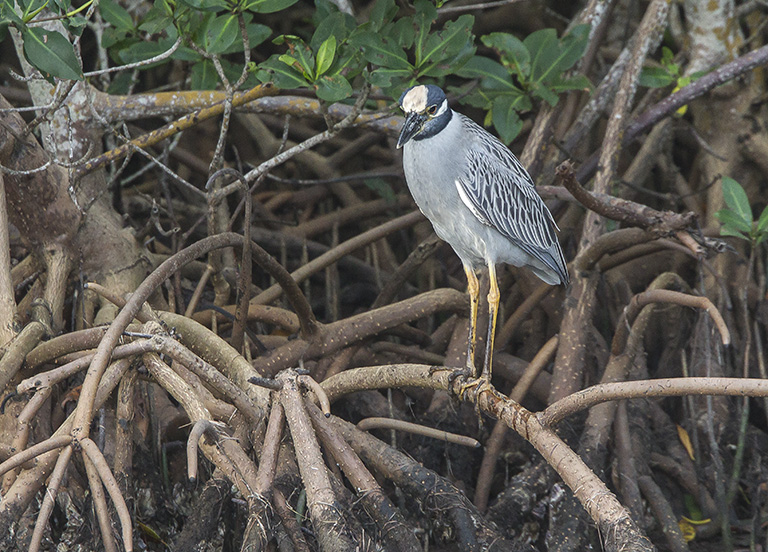
I found this Yellow-crowned Night-Heron in the shade on the roots of Mangrove trees. It did not seem to be bothered by my presence so I was able to get a few shots and then moved on so I did not bother the heron. Because it was sitting in the shade I used a -1 exposure compensation with aperture priority to get a proper exposure for the light colored bird in the dark shade. I also used ISO 1250 because I was handholding the camera and wanted a higher shutter speed. Even though it is a stabilized lens, with a 1.4X teleconverter, I wanted the higher shutter speed since the 400mm, with the 1.4X teleconverter and the 1.3X crop factor equals an effective focal length of 728mm.
Great White Egret Swarmed by Gulls
Posted on January 22, 2014

This Egret had just caught a meal and was quickly swarmed by gulls trying to steal its dinner. The Egret kept moving ahead trying to finish the meal but the Gulls kept circling and buzzing him. He eventually got to finish but was continually interrupted. I just thought it was interesting to watch the interaction between the Egret & Gulls.
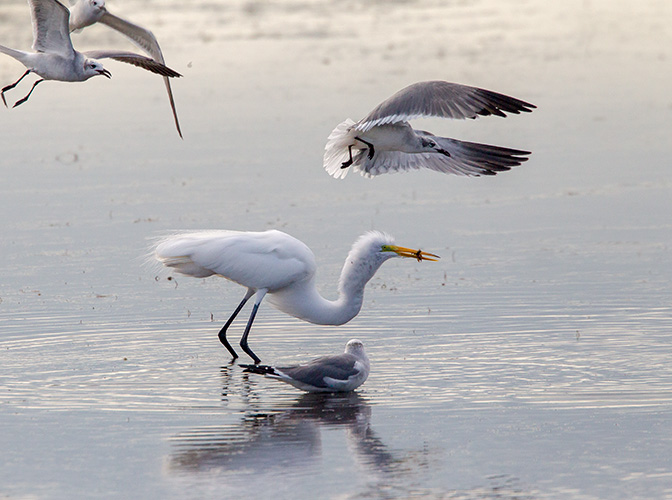
Great Egret trying to evade the Gulls
Canon EOS 1D MkIV, Canon 400mm DO f/4, Canon 1.4X Series II Teleconverter, f/7.1, 1/5000 sec, ISO 1250, +0.33 Exposure Compensation

Great Egret with other Egrets & Ibises, Trying to Finish its Catch
Canon EOS 1D MkIV, Canon 400mm DO f/4, Canon 1.4X Series II Teleconverter, f/7.1, 1/5000 sec, ISO 1250, +0.33 Exposure Compensation

Great Egret trying to move away from the Gulls with its meal
Canon EOS 1D MkIV, Canon 400mm DO f/4, Canon 1.4X Series II Teleconverter, f/7.1, 1/4000 sec, ISO 1250, +0.33 Exposure Compensation

Great Egret Still Dodging the Gulls
Canon EOS 1D MkIV, Canon 400mm DO f/4, Canon 1.4X Series II Teleconverter, f/7.1, 1/4000 sec, ISO 1250, +0.33 Exposure Compensation

Great Egret with Gulls Trying to Steal its Meal
Canon EOS 1D MkIV, Canon 400mm DO f/4, Canon 1.4X Series II Teleconverter, f/7.1, 1/4000 sec, ISO 1250, +0.33 Exposure Compensation
 photoartflight