 photoartflight
Great Egret Wing Positions
Posted on January 6, 2018
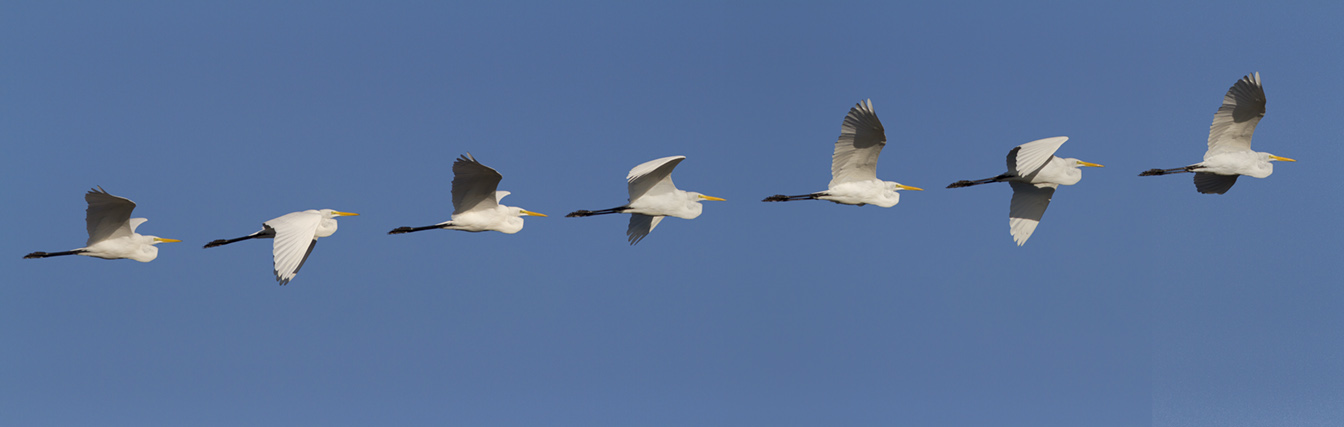
While I was photographing at Ding Darling NWR in Sanibel, FL, this Great Egret flew by where I was photographing White Pelicans. It flew in front of me from left to right. As I was adjusting my files I thought it would make an interesting image showing the different wing positions as it flew by. I did not have the camera set at a high frame rate, but I thought it was still interesting.
In Camera Raw I selected the whole series, made my adjustments and opened them in Photoshop, each on its own layer in the original file. I selected the blue background and inversed the selection to select the Egret on each one. I made a new file that would fit them all in horizontally. I selected a blue sky color from the first of the series and a blue sky color from the last of the series and graduated the color from left to right for the background sky. Then added a slight bit of noise into the sky.
Now that I had my sky background, I went back to each Egret image and selected the layer of each Egret and put that Egret image in a new layer, in sequence to show the wing position sequences. If I was at a higher frame rate I would have gotten more wing positions, but I still had fun putting it together.
Sunrise At BWR
Posted on July 13, 2017

A 2 image vertical panorama shot at 24mm and assembled in Photoshop. On this day we arrived right at sunrise. So we went just a short way down the Wildlife Drive to an open water area to catch the sun just rising over the horizon. I shot multiple versions, horizontal and vertical, but liked this version best with more foreground along the shore.
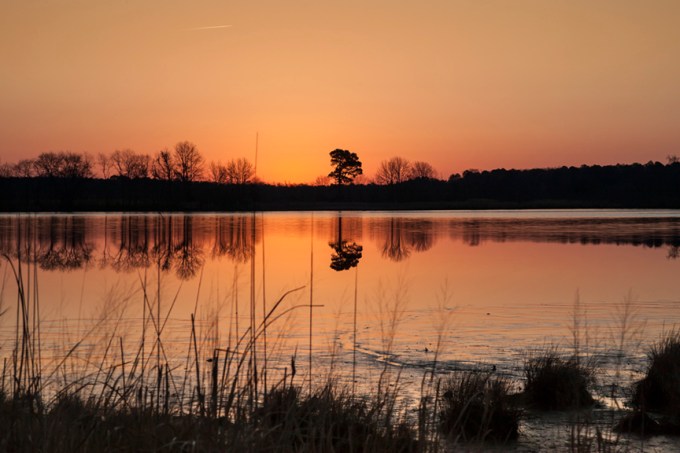
Pre-dawn waiting for sunrise & checking exposure, @ 24mm

Vertical composition, single shot, focused for the far shoreline @24mm.
More Cloudscapes From Davidson Mill Pond
Posted on June 11, 2017
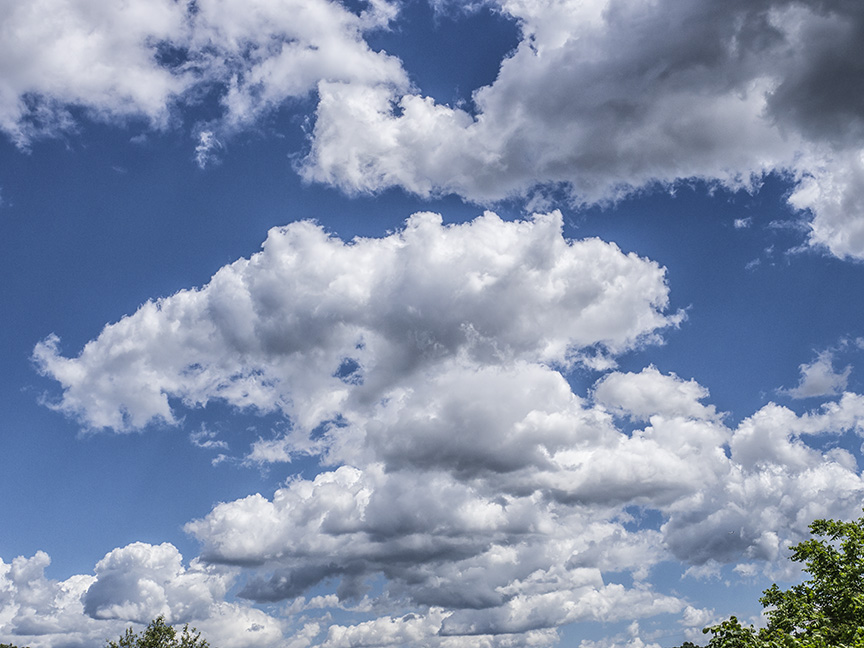
Here are a few more panoramas from our outing to Davidsons Mill Pond Park. Some are regular panoramas, and some are stacked multi-row panoramas, like the featured image.

5 image panorama, 14mm, m43 camera

4 image stacked pano, 2 img x 2 img
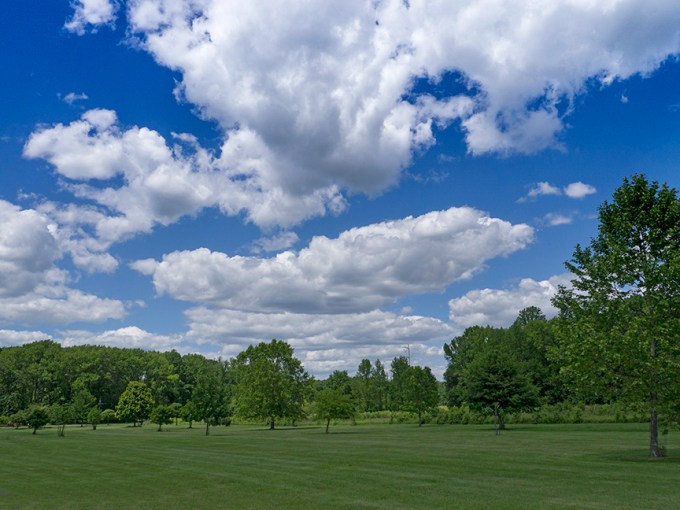
6 img multi stack pano @14mm, m43 camera

4 img multi stack pano, horizontal, combined in 2 rows of 2 @14mm, m43 camera
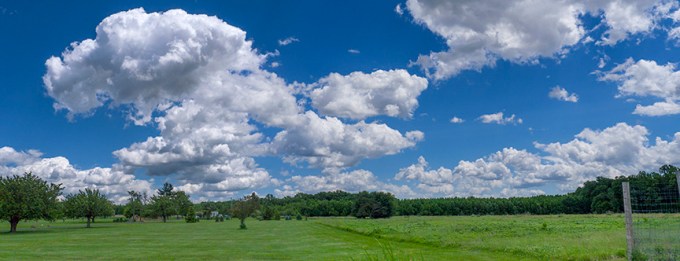
4 img pano @14mm, m43 camera
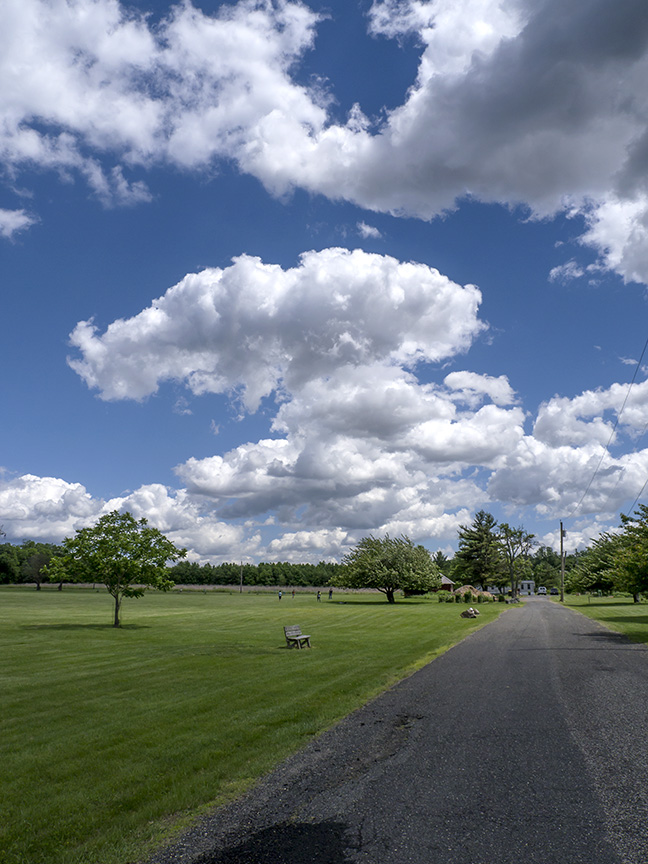
3 images, horizontal, stacked vertically, @14mm, m43 camera

2 images, horizontal format, stacked vertically, 14mm, m43 camera

2 images, horizontal format, stacked vertically, 14mm, m43 camera
Great Egret – 5 Shot Egret Panorama
Posted on May 29, 2017
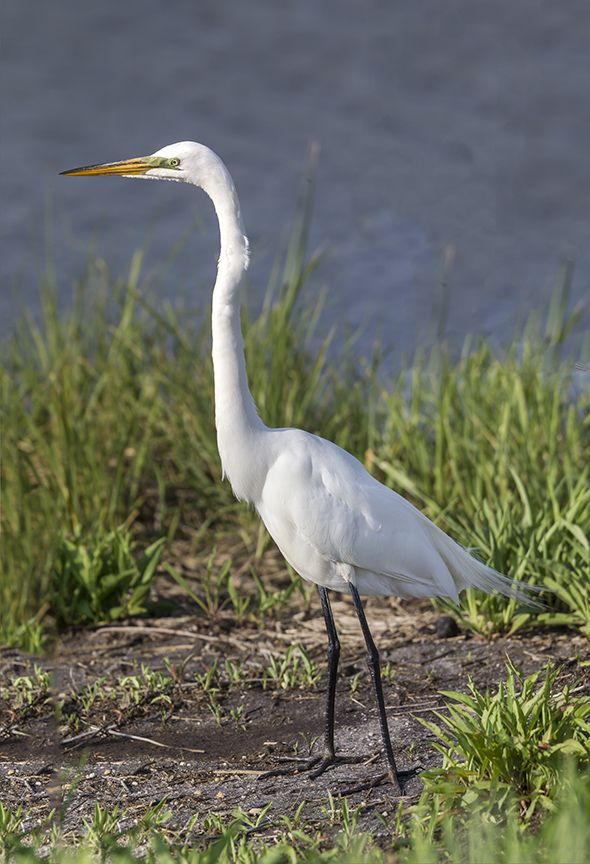
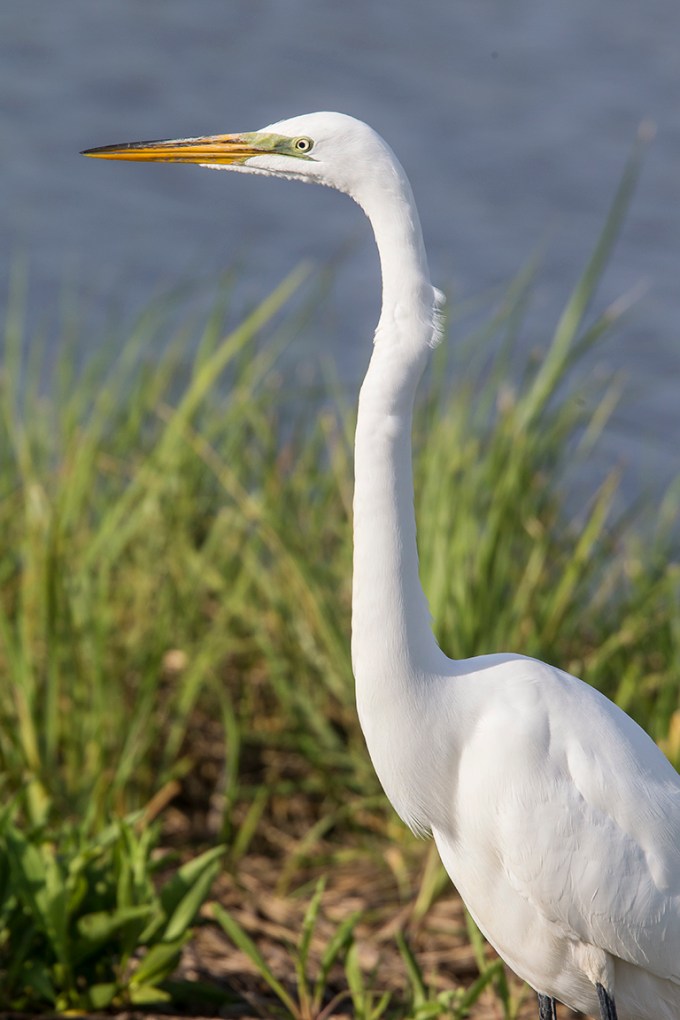
When I am photographing at an area in the car, I usually only use one main lens. At Brigantine I am usually using a 400mm f/4 D.O. Lens with a 1.4x teleconverter. Mainly because there is not time to switch because the subject could be gone and mostly subjects are far away. I have other equipment in the back of the van, usually with a wide angle zoom or a m43 camera with a 14mm – 140mm lens. But on the Wildlife Drive, when I come upon a subject, I do not have time to switch equipment before the subject is gone, so I make do with what I have in my hands. Many times I just shoot a multi-shot series and combine them in Photoshop. This mostly works well, plus I get a much larger file. Doing so many over the years, it seems 2nd nature now. Plus the newer CC PhotoShops work extremely well for assembling these multishot panoramas or stacked images.
Black Skimmers In Flight Panorama
Posted on May 28, 2017

When we were at the Edwin B. Forsythe National Wildlife Refuge a week ago, I tried some in-flight panoramas of the Black Skimmers. I was wondereing if it was possible to shoot a burst of images and pan at the same time. It works, but helps if you have some details in the background that PhotoShop can align the images to, instead of just Blue sky. It is a little harder if they are coming at you. It also helps, because of panning while shooting, to use a fairly high shutter speed. A panning gimbal head on a tripod would be good also, but I was handholding the camera for this series. The featured image was 5 shots, brought into Photoshop, automatically aligning the 5 shots and blending them. The more panos you try, the better they seem to come out. I could get large flocks of birds with a wide lens, but I like the challenge, plus I do not want a lot of extra background top and bottom. Also I tend to print images quite large. I will probably clone out the water tower and buildings later.
Another panorama from the same day, a different flock of Black Skimmers in the water. (With a few gulls in the background)

Black Skimmers and Gulls 6 Shot, overlapping images, panorama, @400mm
Plainsboro Preserve 400mm Landscape
Posted on February 26, 2017

While I was waiting for the Loon to work its way down the shoreline, I decided to work on this landscape panorama. I liked how the green evergreen trees stood out among the bare leafless trees with the nice blue water as a solid base element. I was setup with a 400mm lens, so I shot 2 rows of 4 images, handheld, for a top series and a bottom series. Combined in Photoshop CC2017. The new Photoshops do a nice job for handheld panos. Every now and then I might need to touch up an area here or there, but usually Photoshop does fine and no other work needed.
Gull Pond Panorama
Posted on February 11, 2017
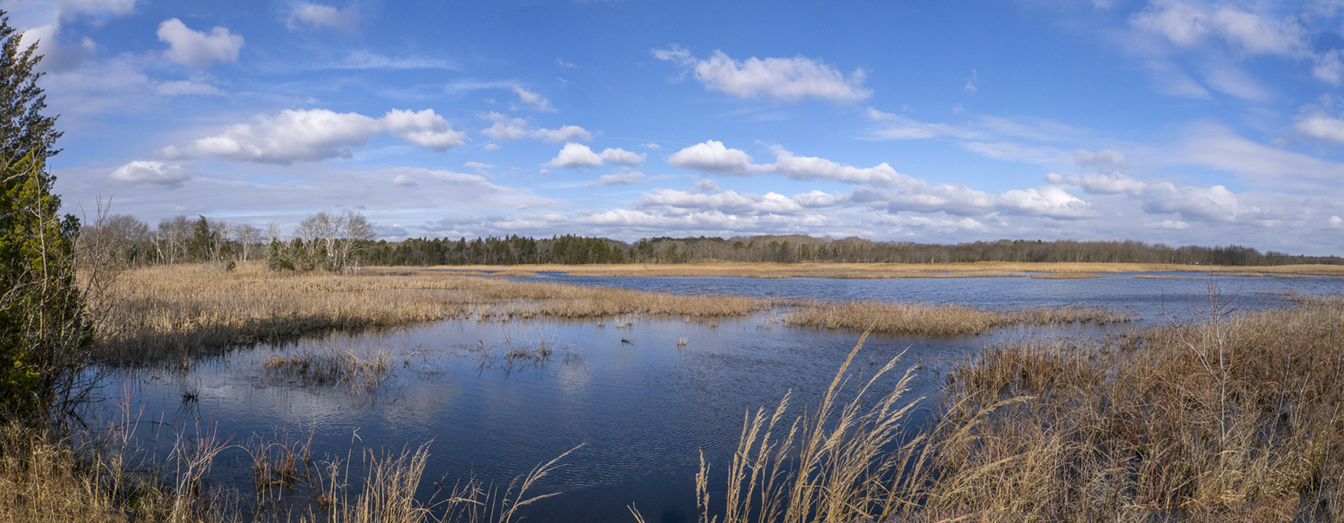
When I am shooting with a long lens, quite often I also carry a m43 Camera with a 14-140mm lens. It comes in handy for “grab” shots when the longer lens is too long, and is lighter to carry then 2 bigger cameras. With this lens I can go fairly wide to fairly long, 28mm to 280mm with close focus (35mm sort of equivalent) in a small light weight package. Also I do not like changing lenses on a windy day out in the field. This is a six shot (vertical framing) panorama, assembled in Photoshop.
Before we left the clouds really came in and “brightened up” the landscapes with more dimension. Just a plain blue or overcast sky is just boring.
Usually there are Gulls, Swans, a few Great Blue Herons or a variety of ducks, etc. here but it was a slow day for wildlife.
I have posted quite a few panoramas lately, but that was most of the opportunities I had on this visit.

3 image panorama, 17mm m43 camera
Brigantine Division Winter Landscape
Posted on February 6, 2017

This is a 7 shot handheld panorama from the Wildlife Drive at the Edwin B. Forsythe National Wildlife Refuge in Oceanville NJ. The sun came out and the heavy cloud cover disappeared to give us a nice blue sky with fluffy clouds. Since there was not a lot of activity with birds closely, I switched to a 12-24mm lens, shooting a series of shots for a variety on panoramas. The featured image was shot at 12mm shooting out towards the North Pool. I am still getting use to Photoshop cc 2017 for panoramas. Sometimes it seems to do a few strange things to the images. I used to use CS6 Extended which also sometimes did strange things, but I was used to it!
The following are just a few more panoramas. There was not much action for birds, so I switched to landscapes. The clouds and sky were awesome for a while, so I shot quite a few assorted landscapes and panoramas.

3 overlapping vertical shots for a semi horizontal panorama @ 12mm

5 overlapping horizontal shots for a vertical panorama @12mm
Snow Geese Panorama
Posted on February 5, 2017

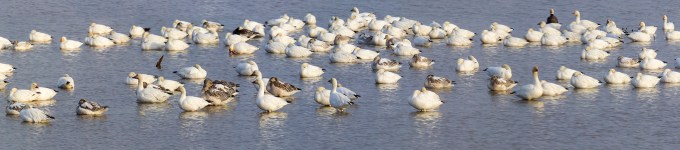
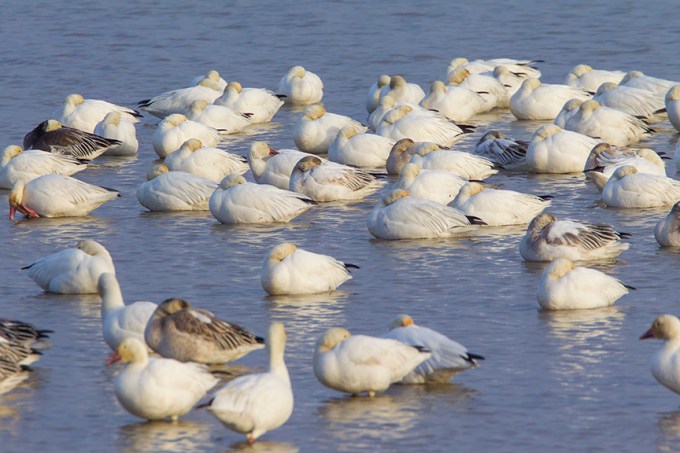
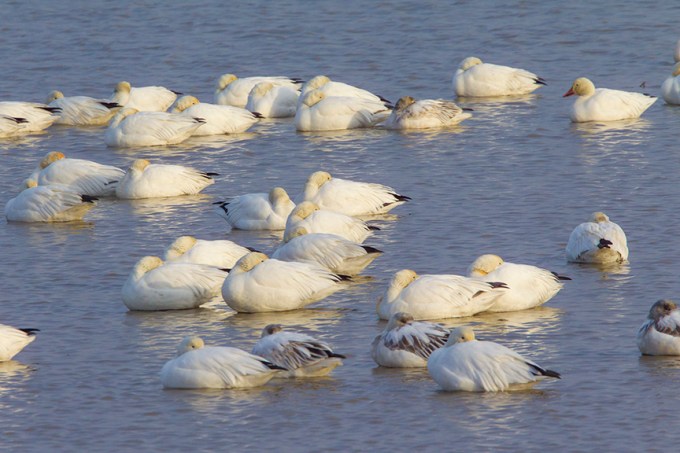
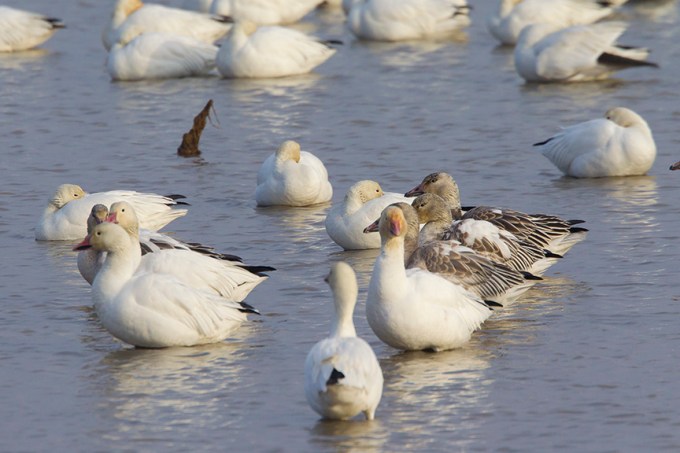
We went to the Edwin B. Forsyth National Wildlife Refuge in Oceanville, NJ to see what we could find. Most of the Wildlife Drive is closed for road repairs so we were limited to the areas we could go, which is probably only about 1/10th or less of where we used to go. But it was still fun to look for the usual Winter subjects.They are known for huge flocks of Snow Geese in the Winter months and I was hoping to see some Snow Geese, but they are usually farther into the Refuge than we could go because of the Drive closure. When we got to the Refuge the weather changed to a heavy gray cloud cover, so I was not hopeful for interesting images. Right where we had to turn around because of the road work we found a group of a couple hundred Snow Geese. It was not thousands, but it was still quite a few. It was overcast but I still shot a series of handheld shots for a Snow Geese panorama. It started to brighten up a little as I was photographing them so I tried a few different Panoramas, some of just sections of the main group. And a few of just a section of the main group. The featured image is my largest panorama of 14 images shot with 400mm lens with a 1.4X teleconverter. The followings images are smaller panoramas or individual images of the group. I also used a m43 Panasonic for a few images.




Blackwater Landscapes Along The Wildlife Drive
Posted on December 6, 2016
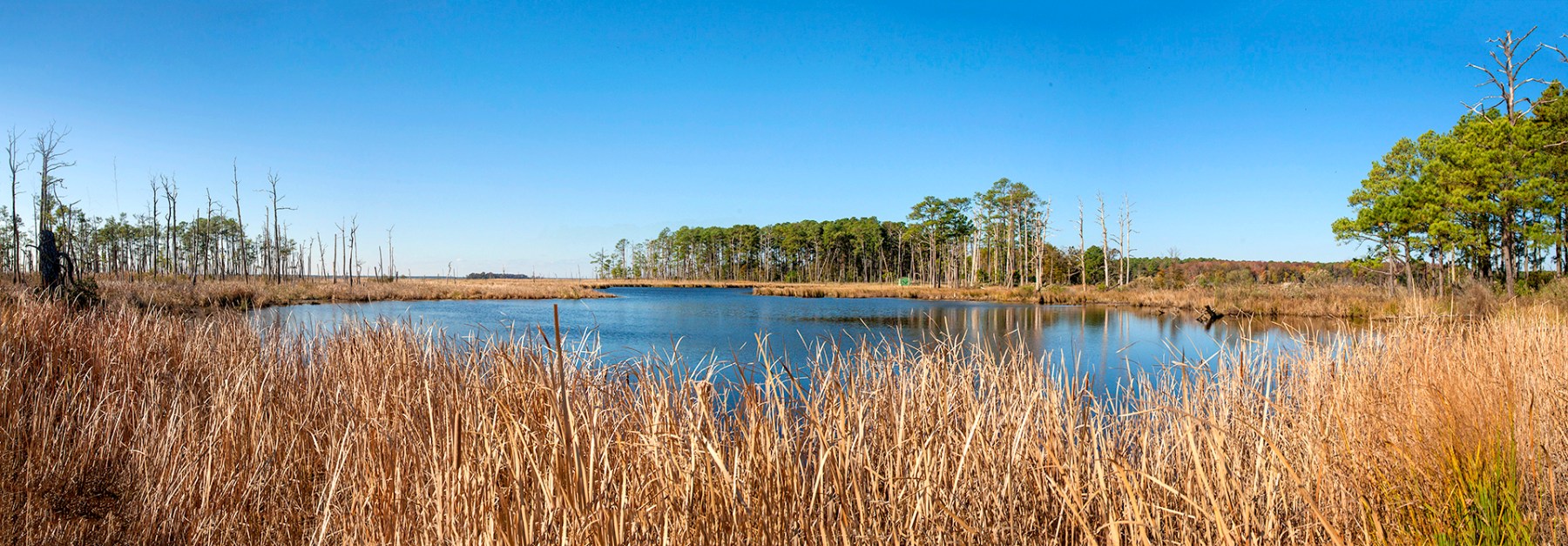
Usually we go to Blackwater NWR (Maryland) for photographing Eagles, Ospreys and other Birds & Wildlife. Or if we stay til dark, they have very colorful sunsets, being close to the coast. But lately I have been photographing more of the landscapes along the Wildlife Drive. Also gives some practice trying HDR techniques or Panoramas. The eagle population is still growing as many Eagles are returning to the Refuge for the Winter. Next I have to try views along the trails. Usually when I am on the trails I have long lenses with me to capture birds in the trees. At this time of year the Ospreys have left and the Eagles are gaining numbers as many come down from Canada.
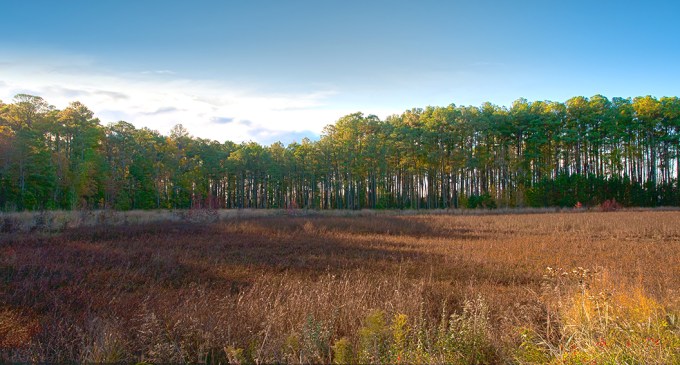
The featured image was a 5 shot panorama, over lapping images, shot at 24mm. The next image is a 6 image HDR bracketed panorama image assembled in Photoshop. 3 bracketed exposures for each of the 2 sections, combined in Photoshop. Still trying to get use to CC 2017 Photoshop, from my usual CS6 workflow.
 photoartflight