 photoartflight
Two Ospreys – Tree Toppers
Posted on August 7, 2018

Towards the end of the Wildlife Drive at the Blackwater National Wildlife Refuge, there is a large strip of trees jutting out into the water, parallel to the end of the Wildlife Drive. Some of the trees are dead trees which act as very tall snags for the birds to roost. You can usually find a few Eagle nests near the top of some of the trees with leaves. Also Eagles seem to like roosting there. But on this day Ospreys seemed to like the tall trees. There are a few Osprey nests behind these trees plus one Osprey Platform in the water to the left of the trees.
The featured image is made from 5 horizontal images, stacked vertically, handheld, assembled in Photoshop, taken with a Canon 400mm f/4 DO lens with a Canon Series III teleconverter.
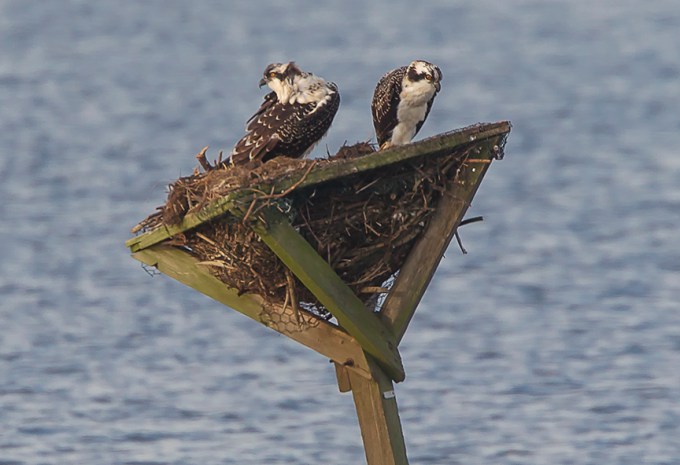
Osprey Platform in water to the left of the line of trees.
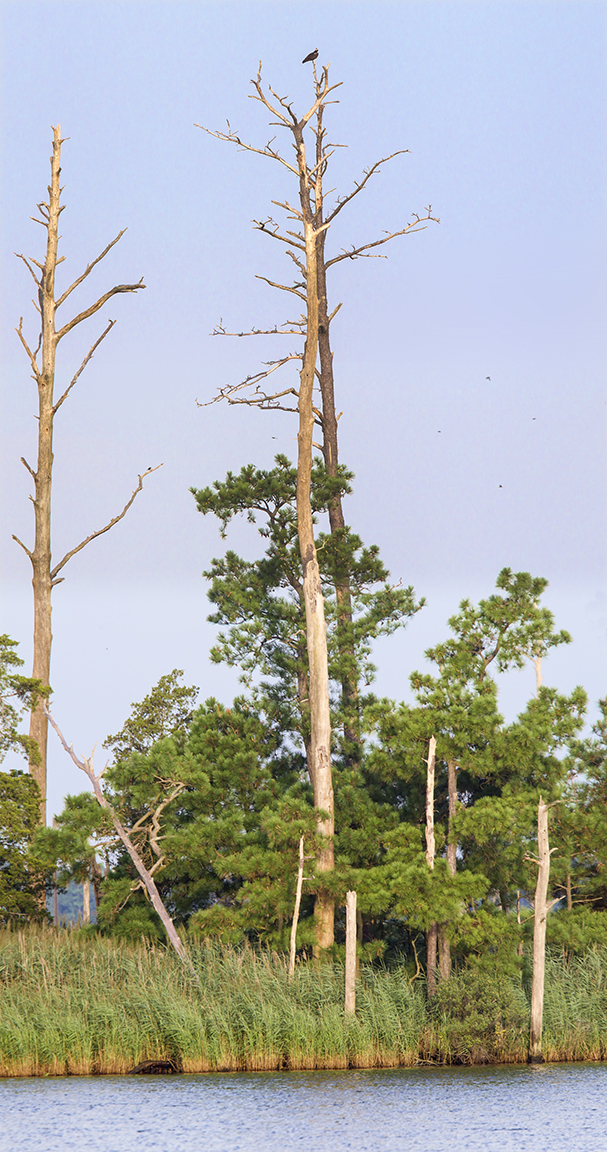
One lonely Osprey on treetop. again 400mm w/ 1.4x teleconverter, 5 shots handheld.
Cloud Panoramas From Blackwater National Wildlife Refuge
Posted on July 31, 2018
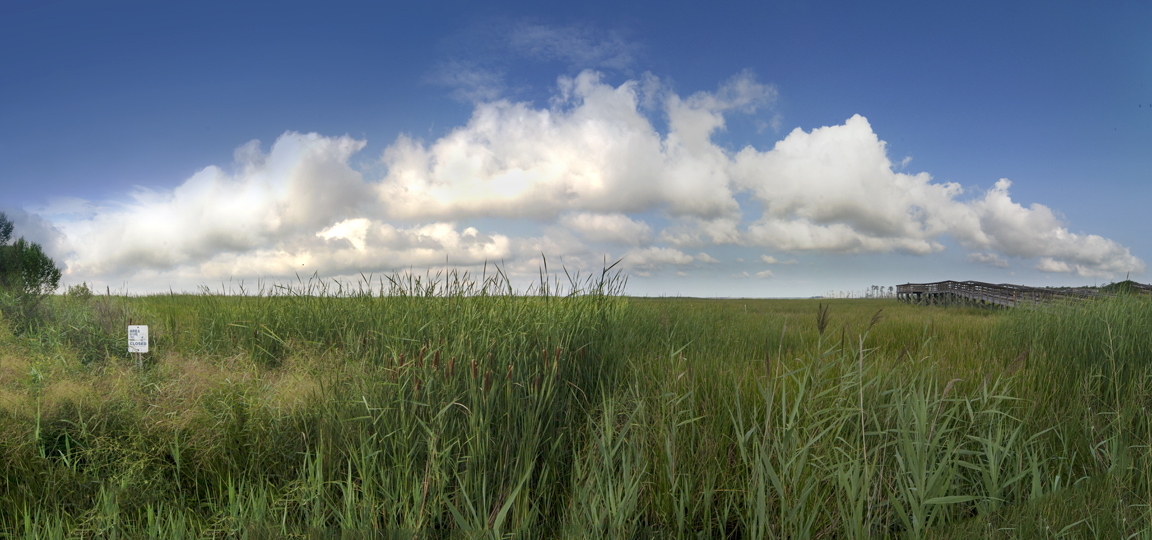
We went to the Blackwater National Wildlife Refuge outside of Cambridge, Maryland to see what subjects we could find to photograph. These images were taken along the Wildlife Drive. The Eagles were scarce, only saw a few in the distance, but we kind of expected that. But in the Winter months Blackwater has one of the highest numbers of Eagles in the Northeast. So we were concentrating on Dragonflies, other birds, panoramas and sunrises & sunsets. The featured image was 4 Horizontal shots @24mm, assembled in Photoshop. With wide angle lenses for panoramas, I tend to overlap more than when using long telephoto lenses. The wider the focal length the more overlapping shots I do. These images were shot on or near the long Observation Platform along the 4 mile Wildlife Drive. The above featured image was 4 horizontal shots @ 24mm. On the right side of the featured image you can see part of the Observation Platform. These images were taken with the Canon 24-105mm lens or the Sigma 12-24mm lens. The Blackwater NWR includes more than 28,000 acres of tidal marsh, mixed hardwood and loblolly pine forests, managed freshwater wetlands and croplands. The Blackwater & Little Blackwater Rivers flow through the refuge so I guess that is where they got the name Blackwater NWR.

3 Horizontal Images @ 24mm
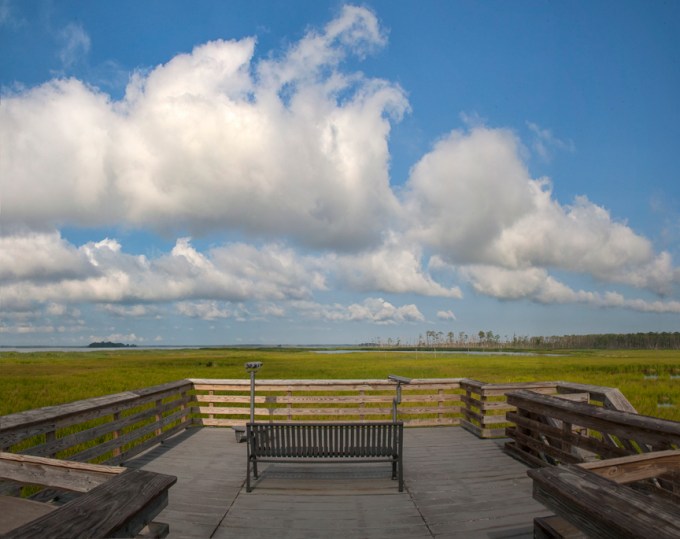
3 Vertical Images Combined For Horizontal Image @ 24mm
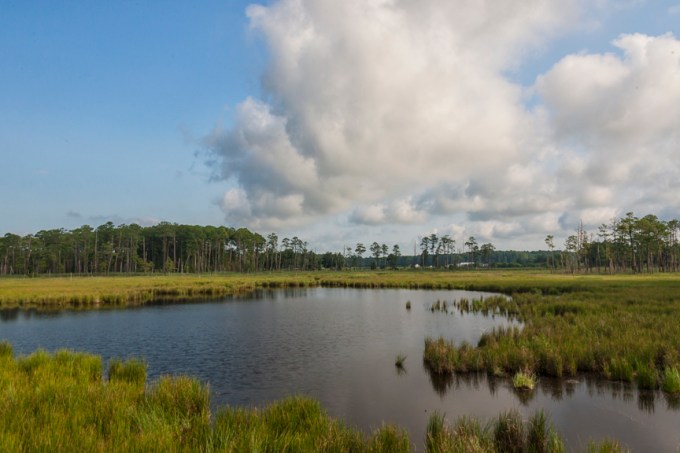
4 Vertical Images Combined For Horizontal Final Image @24mm
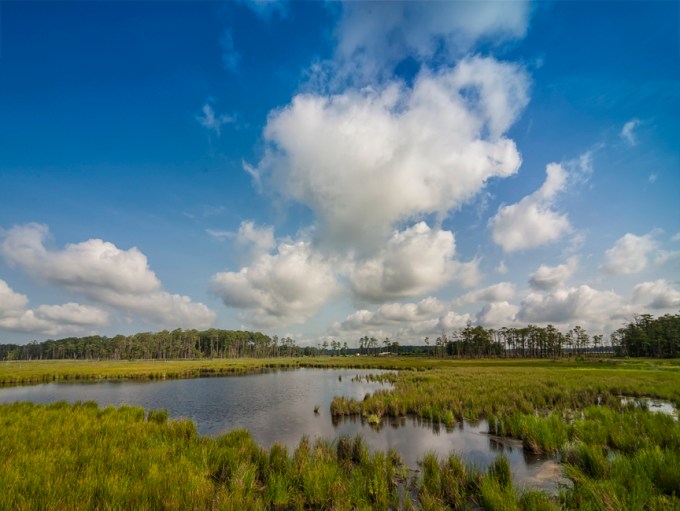
3 Vertical Images Combined for Horizontal Final Image @ 24mm

4 Vertical Images Combined For Vertical Image @ 12mm
Raindrop on Evergreen Branch
Posted on July 24, 2018

I went outside after a rain to look for raindrops on flowers or leaves. On the evergreen by the sidewalk, I noticed this strand of a web with a large raindrop on it. There were a few smaller drops on the left part of the web strand to the left. This was 3 images shot with a close focusing 300mm lens. I like using the 300mm more for this type of shot than using a traditional macro. It gives me more working distance and a softer background than my typical macro lenses. Even my 150mm, 180mm or 200mm macros do not give me the same “look” that I wanted.
After the featured image I shot a series of 4 horizontal images along the top of the same branch. It seemed like there were a lot of water drops on the branches. It looked like the rain ran down the lower needles and ended on the tip of the needles.

4 image horizontal panorama from same above tree
Sunset On The Golf Course
Posted on July 15, 2018

It was supposed to be a nice sunset so we took a walk on the Golf Course in our community. These are a series of panoramas / image blends combined in Photoshop from 2 to 7 images each. I used a Canon 24 – 105mm zoom lens, handheld, at various focal lengths. I also tend to try to overlap images more for panoramas. We also were in different areas for the series as we were walking and moving towards the sunset. The featured Image was 2 images @ 105mm. Being in NJ, you will also see a few with jet contrails in the clouds. It is tough in New Jersey to get a sky sometimes without them and I had a limited time to shoot the series so I left them in.

7 Image Pano / blend @ 35mm, horizontal images, Pano assembled in PhotoShop.
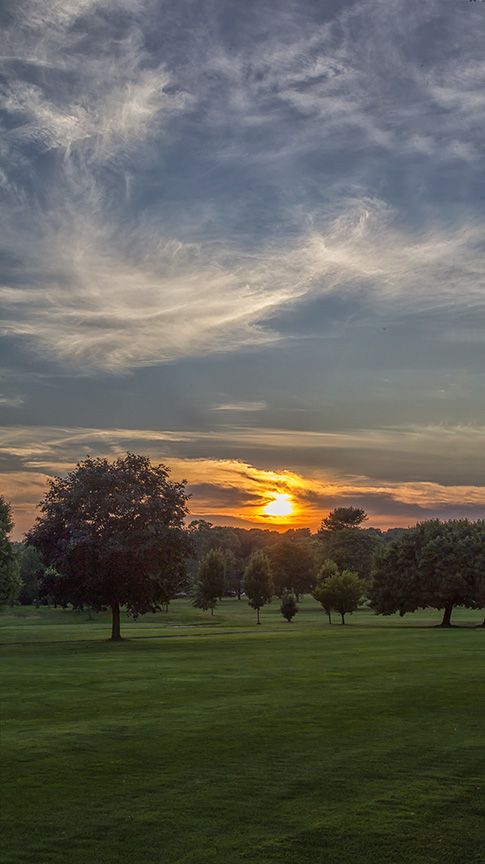
3 Image Pano / blend @ 45mm, vertical images, Pano assembled vertically in PhotoShop

5 Image Pano / blend @ 32mm, horizontal images, Pano assembled in PhotoShop

3 Image Pano / blend @ 88mm, vertical images, Pano assembled in PhotoShop
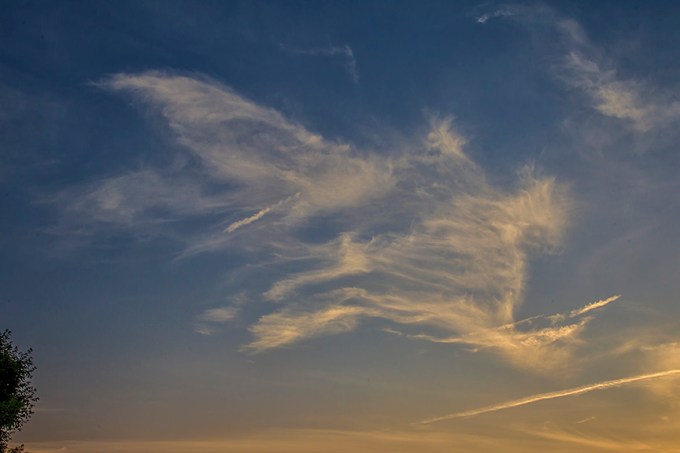
2 Image Pano / blend @ 45mm, horizontal images, Pano assembled in PhotoShop
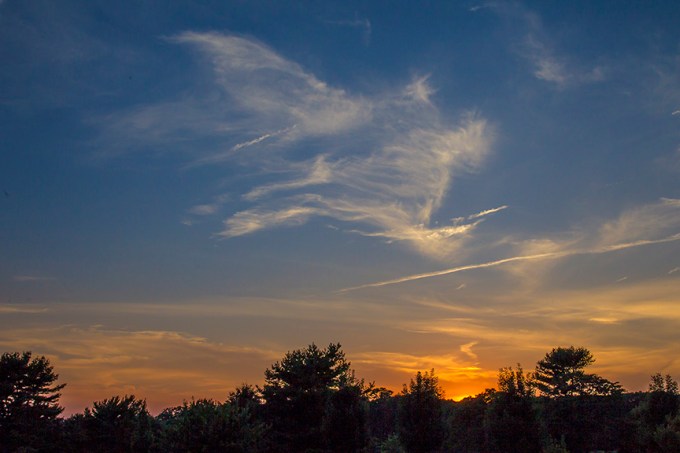
2 Image Pano / blend @ 32mm, horizontal images, Pano assembled in PhotoShop. Concentrating – Centered on the main cloud
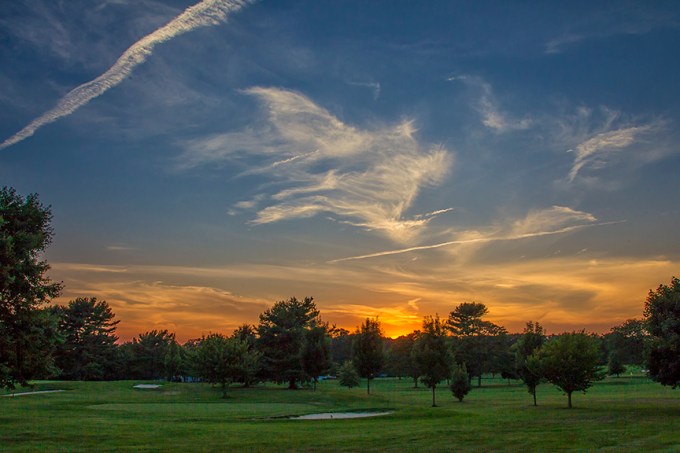
2 Image Pano / blend @ 24mm, horizontal images, Pano assembled in PhotoShop

2 Image Pano / blend @ 24mm, vertical images, Pano assembled in PhotoShop

2 Image Pano / blend @ 24mm, horizontal images, Pano assembled in PhotoShop
Smiling Blue Dasher Dragonfly
Posted on July 6, 2018

For some reason Blue Dasher Dragonflies seem to look like they are smiling when you see them head on, giving an impression of a Happy Dragonfly. This Blue Dasher was out in a pond at a public county park, probably 6 to 8 feet from the shoreline. The featured image is a 4 shot Image Stack, manually focused and assembled in Photoshop. I used a combination of a 400mm lens, an extension tube, then a 1.4x teleconverter to actually enlarge the image on the sensor with the extension tube added. Sometimes I add another extension tube between the teleconverter and the camera body which enlargens the image on the sensor even more. But narrows your focus range even more and you tend to need a fill flash because of loss of light reaching the sensor to get a usable exposure for a subject that is somewhat moving its head or wings or its perch is moving in a breeze. Plus the added extension tubes also takes away light reaching the sensor. Sort of like the “Old” days when you were using a 4×5 or 8×10 view camera when you had the bellows racked out and had to adjust your exposure because of light loss from the distance of the lens and the film plane. By moving teleconverter and extension tubes you can get a variety of focus windows and enlargement of your final image on the sensor.
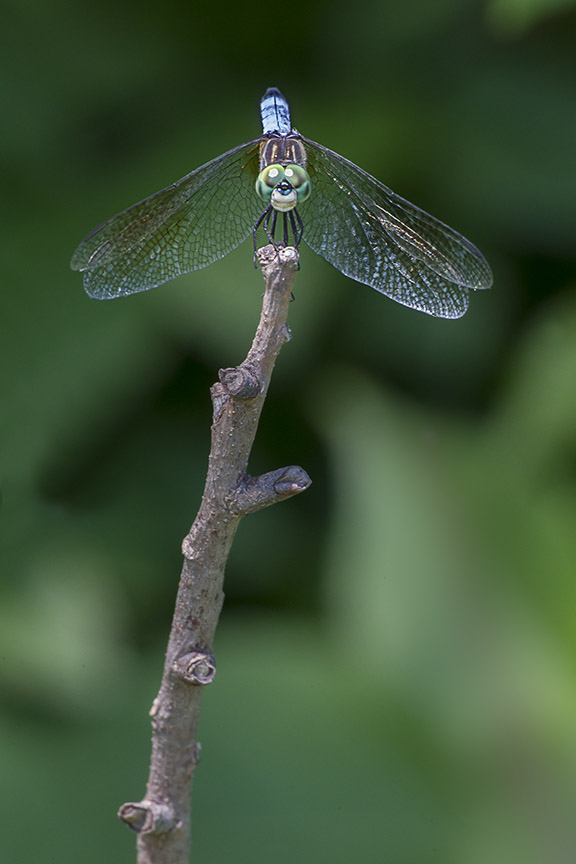
Blue Dasher 4 img Stack for Blue Dasher, then 4 image pano for the stick the Dasher was on. So 2 techniques used for final image.

Older shot showing similar Setup with one 1.4x teleconverter plus fill flash needed for using two separated extension tubes.
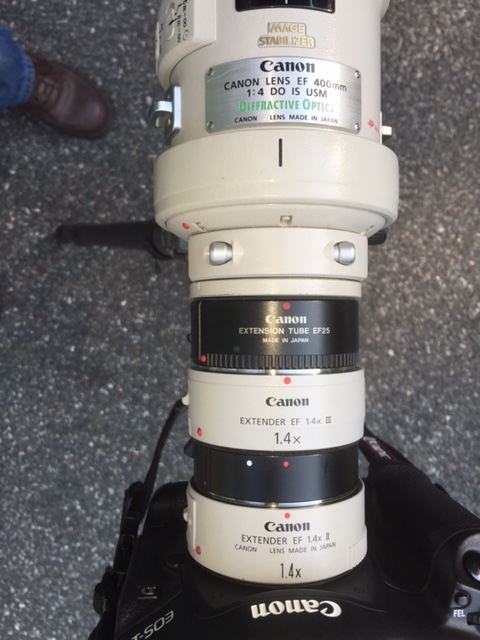
Another extreme setup with 2 extension tubes and 2 teleconverters. This really enlargens the image on the sensor but you need a fill flash or a very high ISO setting and has a very limited focus window.
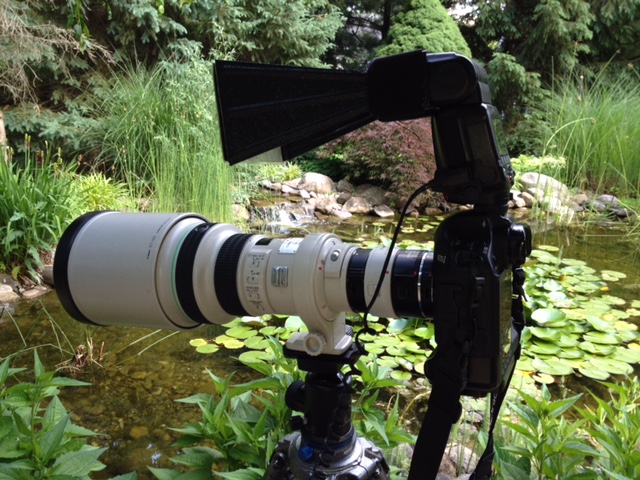
Dragonfly setup at my old pond
Plant Panorama
Posted on June 20, 2018

I liked the shape and curves of this plant. But I wanted a clean background, so I used a long lens but shot wide open so I had a soft clean green background. Also 3 overlapping images which I then assembled in Photoshop. I did not want to back up and get it in one shot because then I would also have more depth of field which means more background detail which I did not want. The closer you get with a long lens, the smoother the background when you shoot with the aperture wide open. I liked the curves and details on the plant and the arched shape. Shot with a close focusing 300mm lens @ f/4.
Pre-Sunrise Clouds – 24 Shot Panorama @ 400mm
Posted on June 18, 2018

I like going to the Blackwater National Wildlife Refuge in Maryland for their colorful Sunrises and Sunsets. (Also for Eagles & Ospreys and…) On this day the clouds were very interesting so I was shooting a few different versions, compositions, focal lengths and Camera/lens combos. Then I noticed a thin long length of colorful clouds above the trees but below the main larger clouds. So I tried a 400mm with a 1.4X Teleconverter pano version. I shot 24 images with that combo, with large overlaps on each shot, all handheld. This is the Featured Image above. I used a lot of overlapping images because it usually lines up better, especially when the camera is handheld. If I do not need them I can just use a few instead. Below are more versions with different camera and lens combinations. Also some eagles that flew by in the colorful sky adding some interest and a subject in the colorful sky. In the featured image about 2/3rds over to the right there is a small dot below the clouds. That was another Bald Eagle flying through and I decided to leave it and not clone it out.
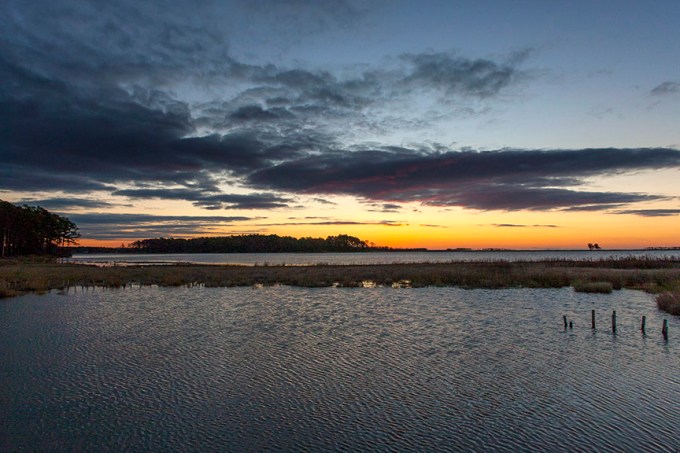
Blackwater NWR PreSunrise @ 24mm (2 image blend for foreground detail)

Blackwater NWR Sunrise, 2 Image pano @ 24mm
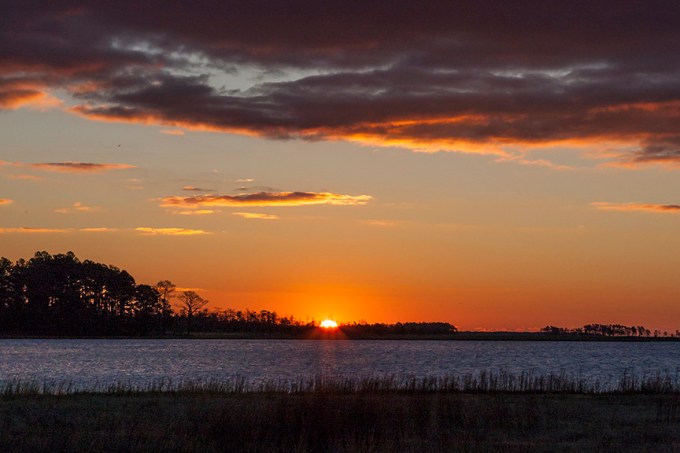
Blackwater NWR Sunrise @ 400mm, Canon 400mm DO lens

Blackwater NWR Sunrise @ 400mm, Canon 400mm DO lens w/ Canon 1.4X Teleconverter

Immature Bald Eagle Soaring in the Sunrise, Canon 400mm DO w/ 1.4X Teleconverter
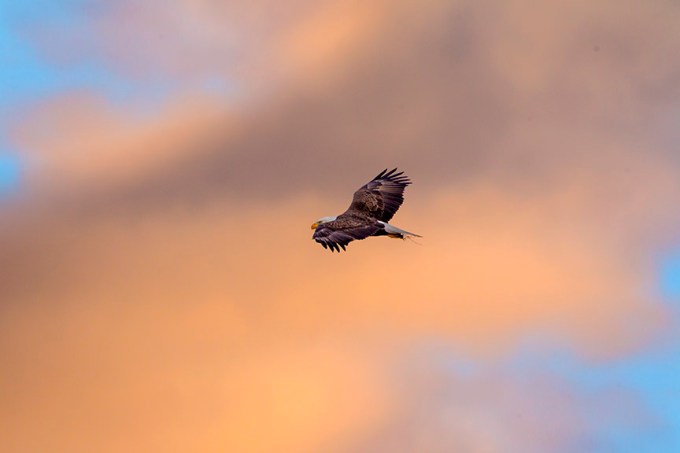
Closer Bald Eagle Flying in the Sunrise, Canon 400mm DO w/ 1.4X Teleconverter
Day Lily 4 Shot Panorama & Focus Stacking
Posted on June 12, 2018

I used 4 photos shot at different focus points and narrow depth of field to get a soft background along with sharp detail on my flower subjects. Shot with a handheld Sigma 150mm macro lens @ f/5.6. Assembled in Photoshop for both the blending of images and then the panorama.
Water Drops on Leaf
Posted on June 8, 2018
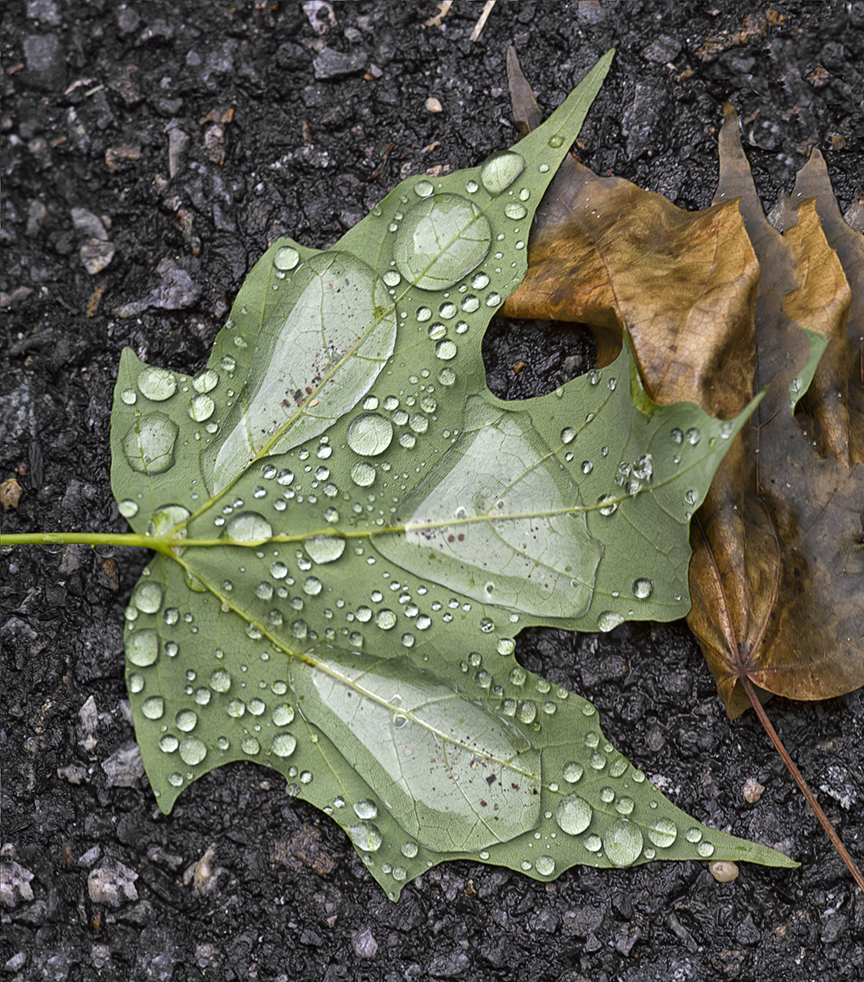
I was looking for water drops after a heavy rain in the yard last year. I saw this leaf with lots of different size droplets and photographed the leaf with a close focusing 300mm f/4 in 2 horizontal images stacked. I used Photoshop to combine the images and then brought out more detail in the Drops. Then went on to photograph the water drops on leaves. I also used a High Pass sharpening technique on a separate layer in Photoshop.

Day Lily leaves with water drops

Meeting House 4 Image Verical Panorama
Posted on May 27, 2018

This is a 4 Image vertical panorama of the Meeting House in the condo community we live in now. It is a multi-use building for the whole community and it reminds me of areas I used to like to photograph in New England when our children were small. They liked Old Sturbridge Village in Massachusetts among others. I tried a variety of ways to photograph this building to see which way I liked it best plus it gave me an opportunity to practice or try different effects and combinations.
For this image I shot 4 images, handheld, vertically at 24mm. I used a lot of overlap on each image because I was shooting at 24mm (vertically). It helps having a lot of overlap in the images when using a 24mm, it seems like Photoshop handles it better and you get less “distortion” in the combining of the separate images.
On this version the clouds were amazing, so I continued up to include a lot of clouds & sky.
It seems like the more you do of these panoramas the more you learn and have a higher success rate. Also if you are just walking around and traveling “light” with just one lens, it gives you more options for photo subjects.
 photoartflight