 photoartflight
Another Blackwater NWR Bald Eagle
Posted on February 21, 2024

Blackwater National Wildlife Refuge (NWR) is one of my favorite places to photograph. As I have written in other posts here Blackwater NWR is a large NWR so many of the photo opportunities are far off in the distance. So you have to have long telephoto lenses to capture many of the Birds & other Wildlife you come upon here. After photographing at Blackwater for more than 15 years I have come up with ways to get interesting images of distant birds & wildlife. The Featured Image was taken with a Canon 1D mkIV with a 2X Teleconverter. The Canon 1D mkIV sensor has a 1.3x crop factor so with a 400mm lens & 2x teleconverter the actual focal length is more like using a lens with a focal length of 1040mm. If I want more reach I would use a Canon 7D with a 1.6x crop factor and with a 2x Teleconverter focal length is ~1280mm. I am testing how these actions work with my 150-600mm with a 2x Teleconverter for 1920mm. Also I have made Photoshop actions to up-rez images even more with very successful results. I have also added some other lenses to try these Photoshop actions on.
Great Blue Heron Landing
Posted on December 19, 2021
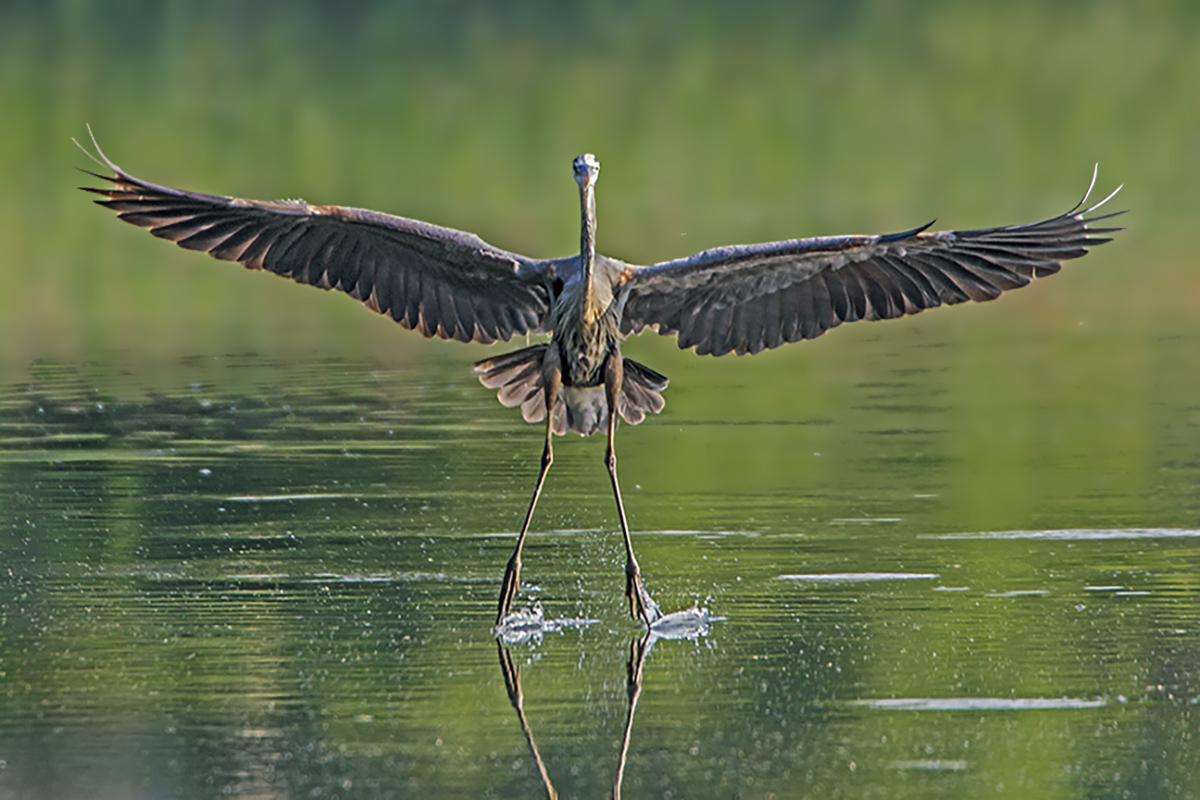
A series of images of a Great Blue Heron coming in for a landing at Lake Appert in the Celery Farm Natural Area in Allendale, New Jersey. It was interesting since it was coming in directly in front of me as I was photographing the Heron! Images were taken with a 400mm DO lens with a 2X Teleconverter on a Canon 1D mkIV.


Great White Egret Swarmed by Gulls
Posted on January 22, 2014

This Egret had just caught a meal and was quickly swarmed by gulls trying to steal its dinner. The Egret kept moving ahead trying to finish the meal but the Gulls kept circling and buzzing him. He eventually got to finish but was continually interrupted. I just thought it was interesting to watch the interaction between the Egret & Gulls.
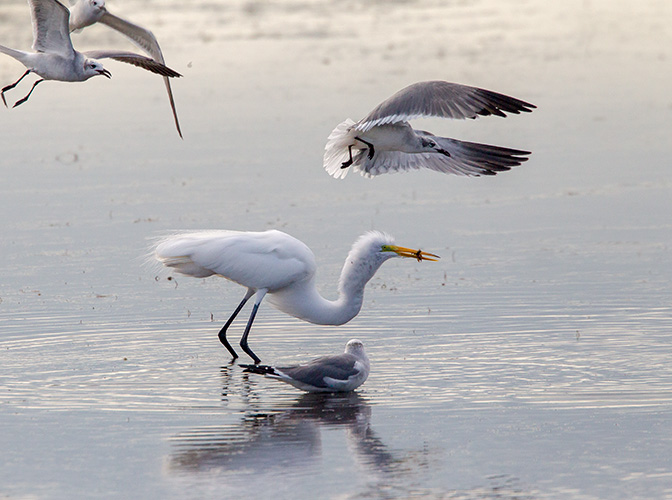
Great Egret trying to evade the Gulls
Canon EOS 1D MkIV, Canon 400mm DO f/4, Canon 1.4X Series II Teleconverter, f/7.1, 1/5000 sec, ISO 1250, +0.33 Exposure Compensation

Great Egret with other Egrets & Ibises, Trying to Finish its Catch
Canon EOS 1D MkIV, Canon 400mm DO f/4, Canon 1.4X Series II Teleconverter, f/7.1, 1/5000 sec, ISO 1250, +0.33 Exposure Compensation

Great Egret trying to move away from the Gulls with its meal
Canon EOS 1D MkIV, Canon 400mm DO f/4, Canon 1.4X Series II Teleconverter, f/7.1, 1/4000 sec, ISO 1250, +0.33 Exposure Compensation

Great Egret Still Dodging the Gulls
Canon EOS 1D MkIV, Canon 400mm DO f/4, Canon 1.4X Series II Teleconverter, f/7.1, 1/4000 sec, ISO 1250, +0.33 Exposure Compensation

Great Egret with Gulls Trying to Steal its Meal
Canon EOS 1D MkIV, Canon 400mm DO f/4, Canon 1.4X Series II Teleconverter, f/7.1, 1/4000 sec, ISO 1250, +0.33 Exposure Compensation
Brown Pelicans in Flight
Posted on January 12, 2014
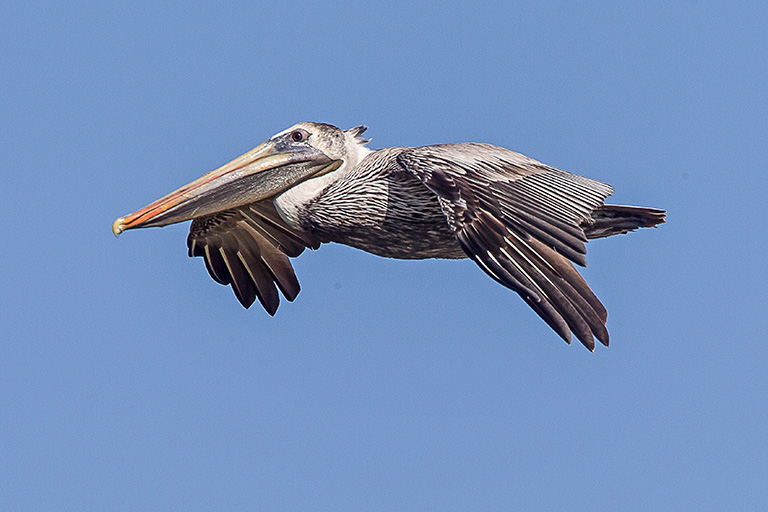
Brown Pelicans seem so bulky and slow, but are quite agile and are amazing flyers, especially for such a large bird. They fly a little slower so they are easier to track, until they go in a dive to get their meal. You can get great textures with the variations in the dark feathers and their colorful head. They are fun to watch as they are very animated and seem almost clown like. You often see them flying fairly low over the water and suddenly they nose dive into the water to shock their prey. It is more spectacular to see them dive from a greater height and they make quite a splash.
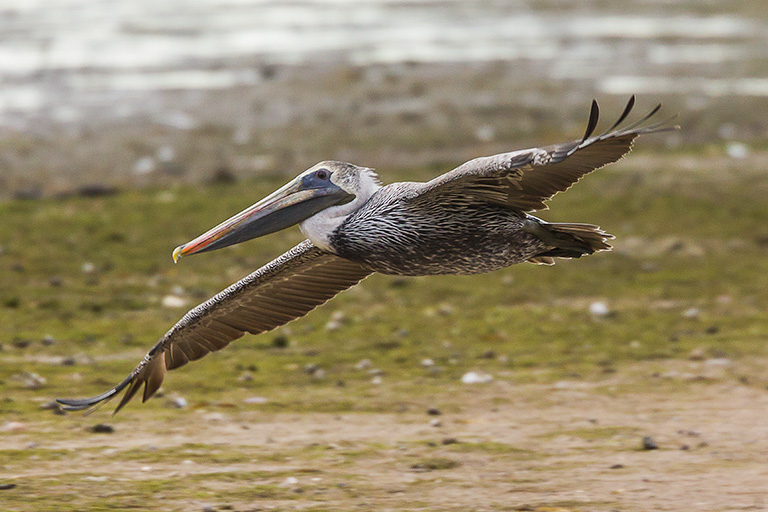
Low Fly By
Canon EOS 1D Mk IV, Canon 400 mm DO f/4, Canon 1.4X Series III Teleconverter, f/7.1, 1/1250 sec, ISO 1250, +0.33 exposure compensation
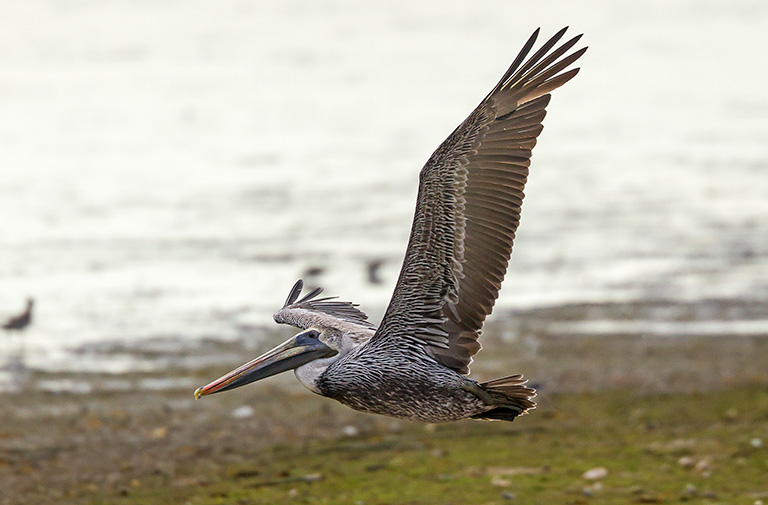
Low Fly By
Canon EOS 1D Mk IV, Canon 400 mm DO f/4, Canon 1.4X Series III Teleconverter, f/7.1, 1/1600 sec, ISO 1250, +0.33 exposure compensation

Looking for a Meal
Canon EOS 1D Mk IV, Canon 400 mm DO f/4, Canon 1.4X Series III Teleconverter, f/7.1, 1/1250 sec, ISO 3200, +0.33 exposure compensation

Finding a Meal – Splashdown
Canon EOS 1D Mk IV, Canon 400 mm DO f/4, Canon 1.4X Series III Teleconverter, f/7.1, 1/3200 sec, ISO 1250, +0.33 exposure compensation
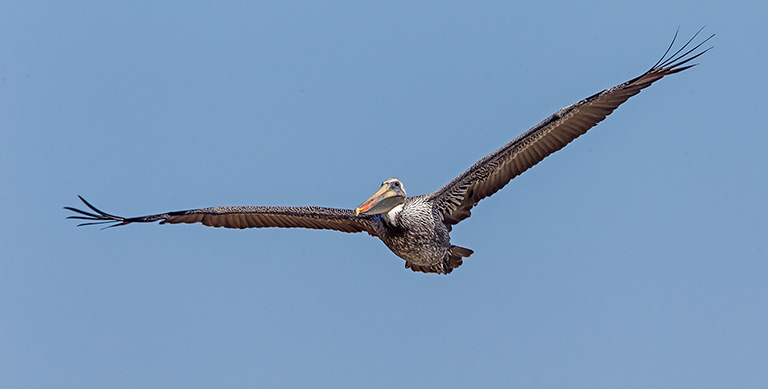
Wingbeats
Canon EOS 1D Mk IV, Canon 400 mm DO f/4, Canon 1.4X Series III Teleconverter, f/11, 1/800 sec, ISO 400, +0.33 exposure compensation
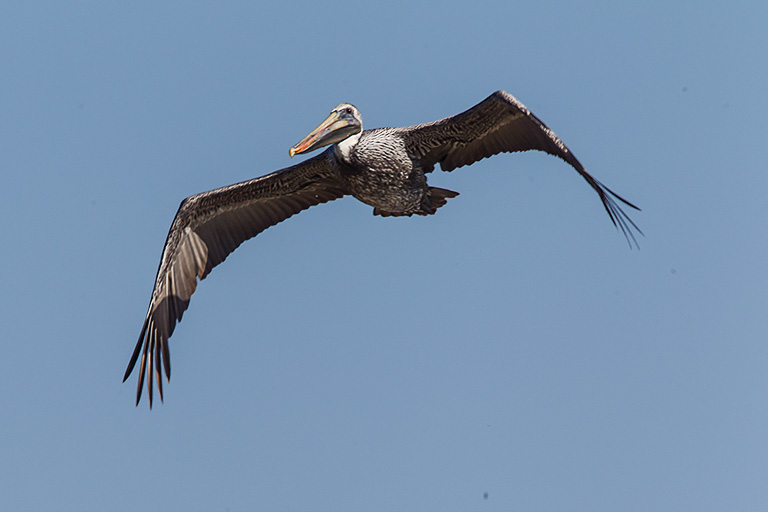
Wingbeats
Canon EOS 1D Mk IV, Canon 400 mm DO f/4, Canon 1.4X Series III Teleconverter, f/11, 1/800 sec, ISO 400, +0.33 exposure compensation
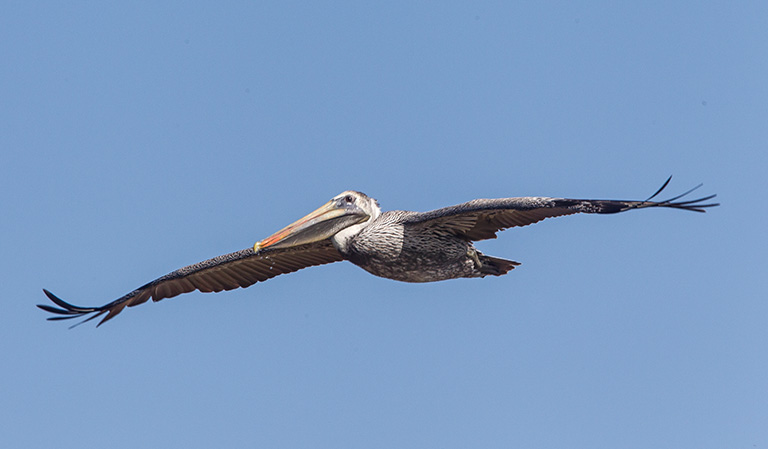
Wingbeats
Canon EOS 1D Mk IV, Canon 400 mm DO f/4, Canon 1.4X Series III Teleconverter, f/11, 1/800 sec, ISO 400, +0.33 exposure compensation

Checking us out
Canon EOS 1D Mk IV, Canon 400 mm DO f/4, Canon 1.4X Series III Teleconverter, f/11, 1/800 sec, ISO 400, +0.33 exposure compensation
Opened up shadow detail in Adobe Camera Raw
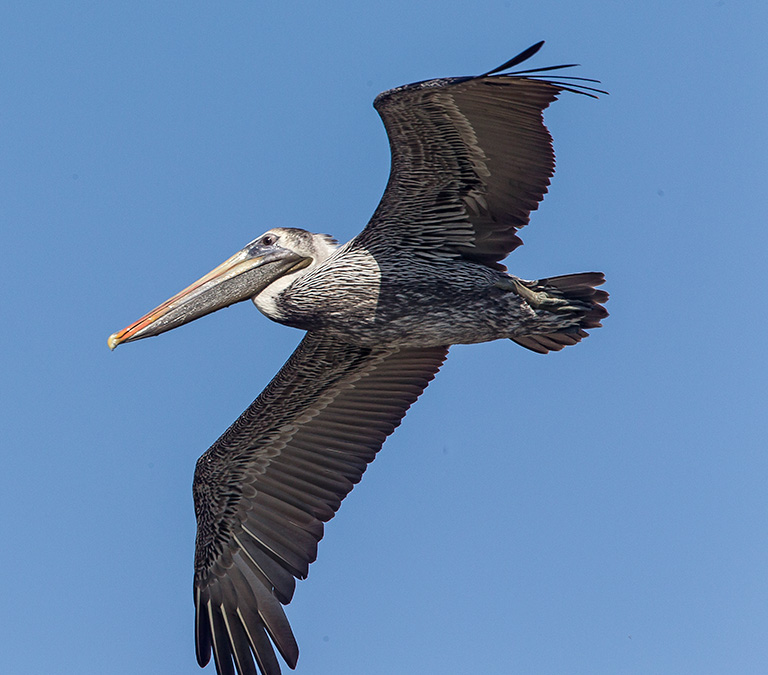
Moving On
Canon EOS 1D Mk IV, Canon 400 mm DO f/4, Canon 1.4X Series III Teleconverter, f/11, 1/800 sec, ISO 400, +0.33 exposure compensation,
Opened up shadow detail in Adobe Camera Raw
Immature Little Blue Heron
Posted on January 9, 2014

I saw this Immature Little Blue Heron looking for a meal along the shoreline. At first I did not pay attention because I was watching an Immature Bald Eagle circling above. I had noticed the white bird close to the shore, out of the corner of my eye and just assumed it was an Egret, then I noticed the blue bill and greenish legs. I was excited because it seems harder to find Immature Little Blues compared to other Immature birds because they seem to be more elusive. It was moving slowly along the shore giving me time to get a few photos before it retreated in the Mangrove roots along the shore. The Little Blue was in a dark area and I was handholding the camera, so I was shooting bursts to try to get a few sharp images out of the sequence since the shutter speed was only 1/40 of a second. I kept the f/stop at f/8 because I was using a 1.4X teleconverter and I wanted to add 1 additional stop to the f/5.6 of the lens with the teleconverter added for a little more sharpness.
Canon EOS 1D MkIV, Canon 400mm DO f/4 lens, Canon 1.4X Series III Teleconverter, 1/40 sec @ f/8, ISO 400, -0.33 Exposure Compensation


Immature Bald Eagle – Canon EOS 1D MkIV, Canon 400mm DO f/4 lens, Canon 1.4X Series III Teleconverter, 1/500 sec @ f/11, ISO 400, +1.33 Exposure Compensation
Mature Little Blue Heron, Canon EOS 1D MkIV, Sigma 300-800mm f/5.6 DG lens @ 572mm, 1/250 sec @ f/8, ISO 400,

Blackwater NWR Bald Eagle
Posted on December 20, 2013
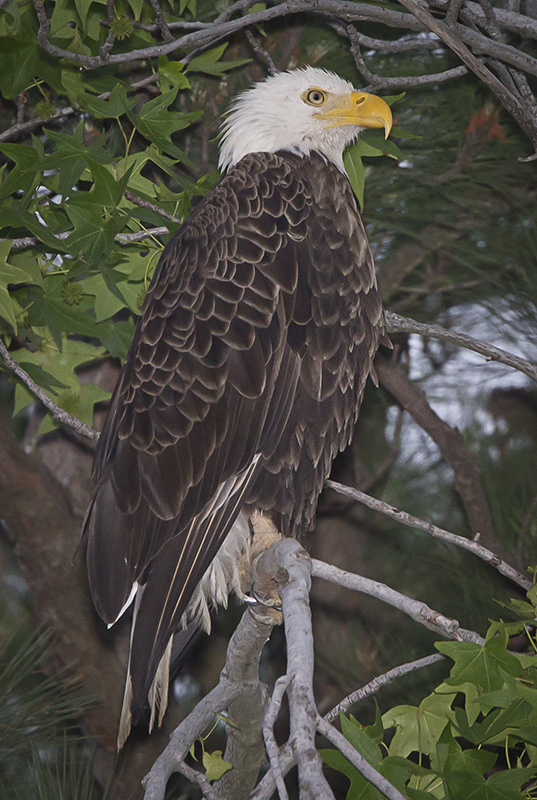
This Bald Eagle was sitting in a tree along the Wildlife Drive. He was back on the branch in the shadows. Usually they seem a little skittish when you come upon them along the drive, but he did not seem to pay any attention to us. I used a flash with a Better Beamer to brighten him up somewhat. I set the flash to – 1 f/stop and set the camera to -1.33 exposure compensation in aperture priority.Canon EOS 1D MkIV, 1/125 sec @ f/11, 2500 ISO,400mm f/4 DO with Canon 1.4X teleconverter, effective focal length of 728mm.
Red-Winged Blackbird Flocks at Blackwater NWR
Posted on December 11, 2013

In the colder months there are huge flocks of Red-winged Blackbirds flying through the Blackwater National Wildlife Refuge outside of Cambridge Maryland. The number of Bald Eagles increase also during the colder months to approximately 150. When the water freezes over the Eagles sometimes are seen taking Red-winged Blackbirds or Canada Geese for their meals. Here are some photos of the flocks of Red-winged Blackbirds flying through the refuge and also photos of Eagles guarding their lunch.
Canon 20D, Sigma 300-800 f/5.6 zoom @ 731mm (1170mm with 1.6 crop factor of 20D sensor), 1/2000 sec @ f/8, ISO 400, aperture priority, -0.33 exposure compensation.

Canon 7D, EF400mm f/4 DO IS USM +1.4x teleconverter, 560mm (896mm with 1.6 crop factor of 7D sensor), @ f/8, 1/2500 sec, ISO 400, Aperture Priority, -0.33 exposure compensation.


Eagle w/Red-winged blackbird, Canon EOS 7D, Sigma 300-800mm f/5.6 zoom @ 1023mm with 1.6X crop factor of 7D sensor), 1/2500 sec, f/8, ISO 400.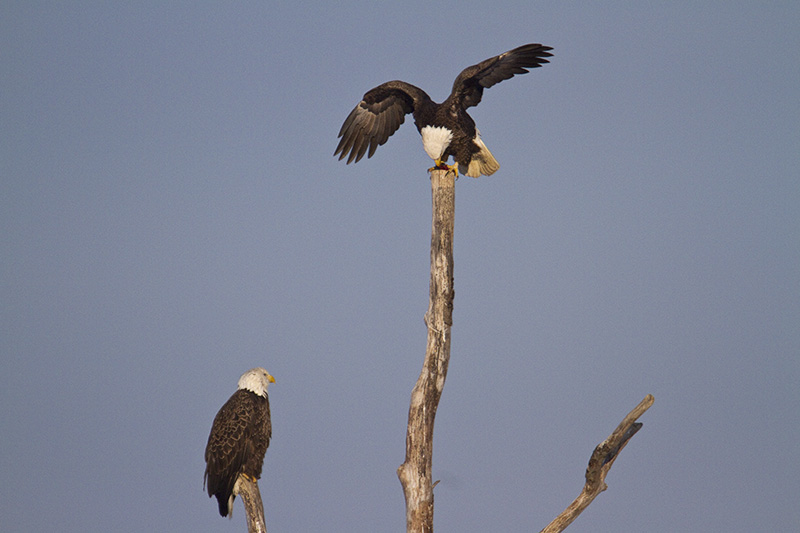

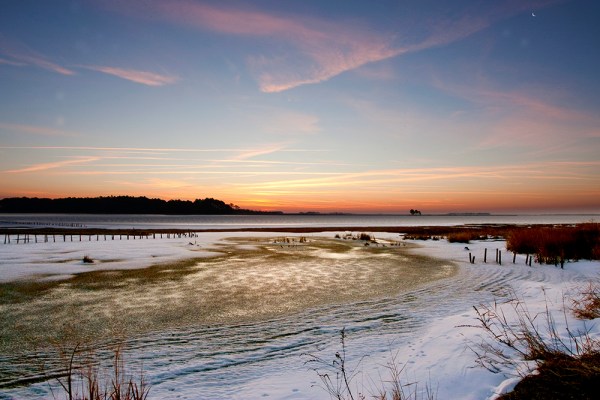


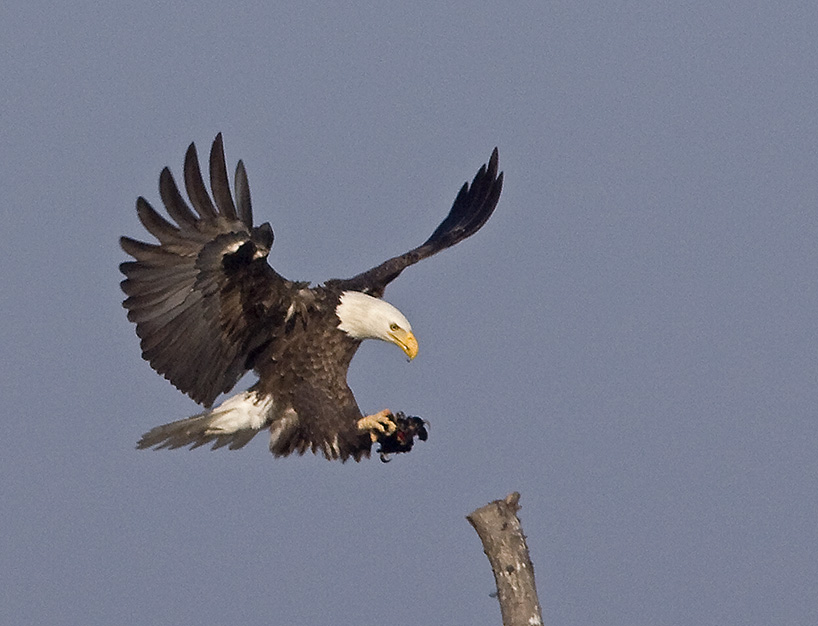
Red-winged blackbirds flying by the snag at sunset.
Red-winged Blackbirds scattering after Eagle swooped in for a meal.
One of the Last to Leave
Posted on December 10, 2013

I took a walk around the Celery Farm Natural Area in Allendale NJ, early Sunday morning. The lake and streams were pretty much frozen over. It was 27˚ and was very quiet around the frozen lake. I came upon this Great Blue Heron along this little stream of moving water. It was one of the only unfrozen sections with open water. I think he was looking for a meal and seemed totally unconcerned with me being close by. I took a few shots and then moved on so I did not disturb or stress him. Canon EOS 1D MkIV, 70-300mm DO IS f/4-5.6 @ 200mm, f/8 , @ 1/50 sec, ISO 1250, -0.67 exposure compensation.
This Great Blue Heron had a couple of friends keeping him company in this small section of open water.

800mm Fly By
Posted on December 4, 2013
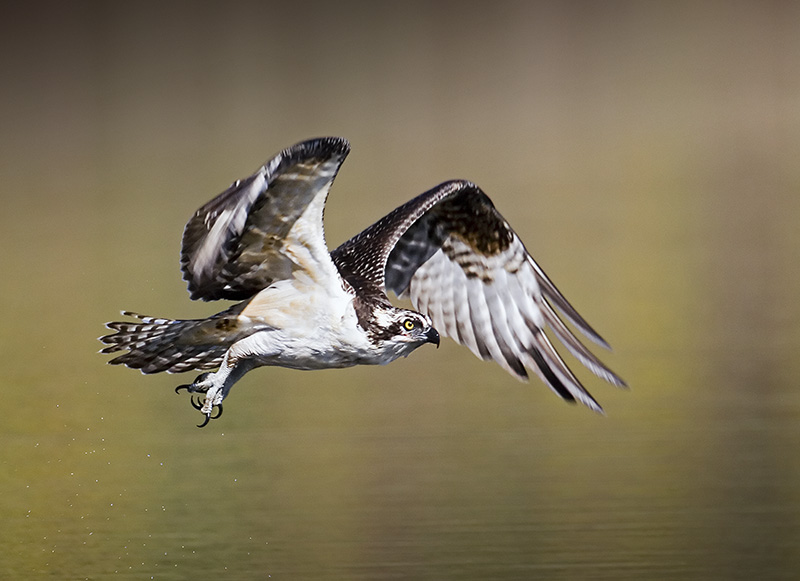
Again from the archives, This Osprey had just hit the water, missed his catch and flew across in front of me. I was tracking him hoping he would come up with a fish, but I liked the small water droplets in his wake and the wing position even without his catch. I was using a Sigma 300-800mm zoom at 800mm, with a Canon EOS 1Ds MkII on a Wimberly Gimbel head. The Sigma is a non stabilized lens so you have to be careful and use long lens techniques, especially at 800mm, to get sharp images. I have a series of images, but was my favorite.
Swan Babies
Posted on December 3, 2013
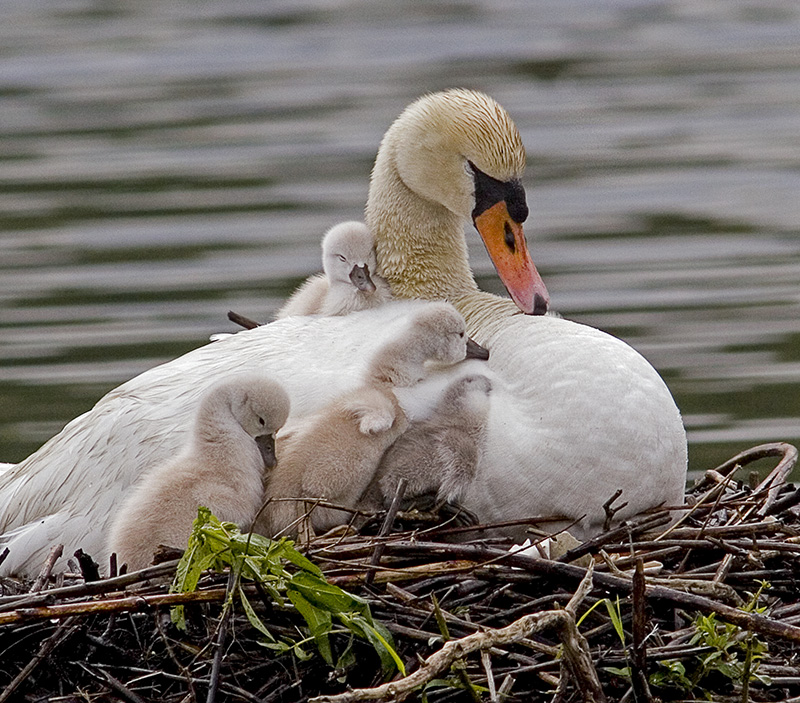
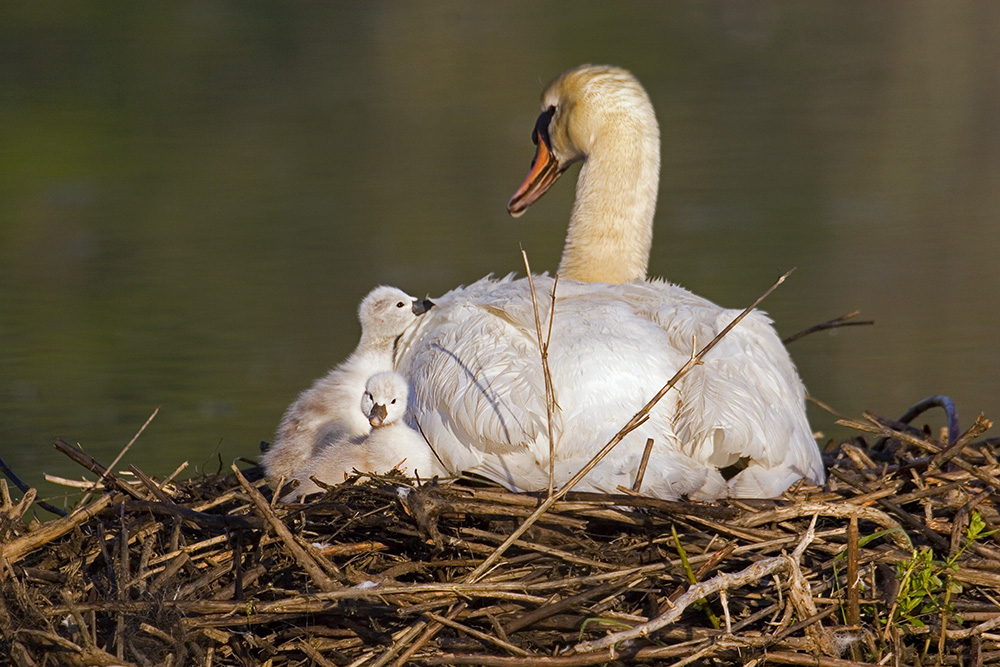
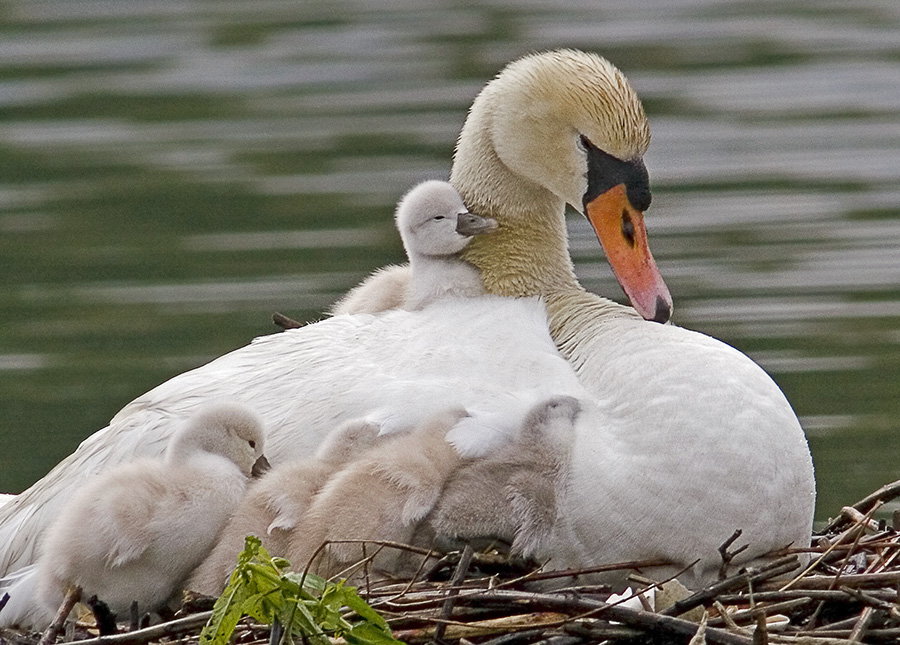
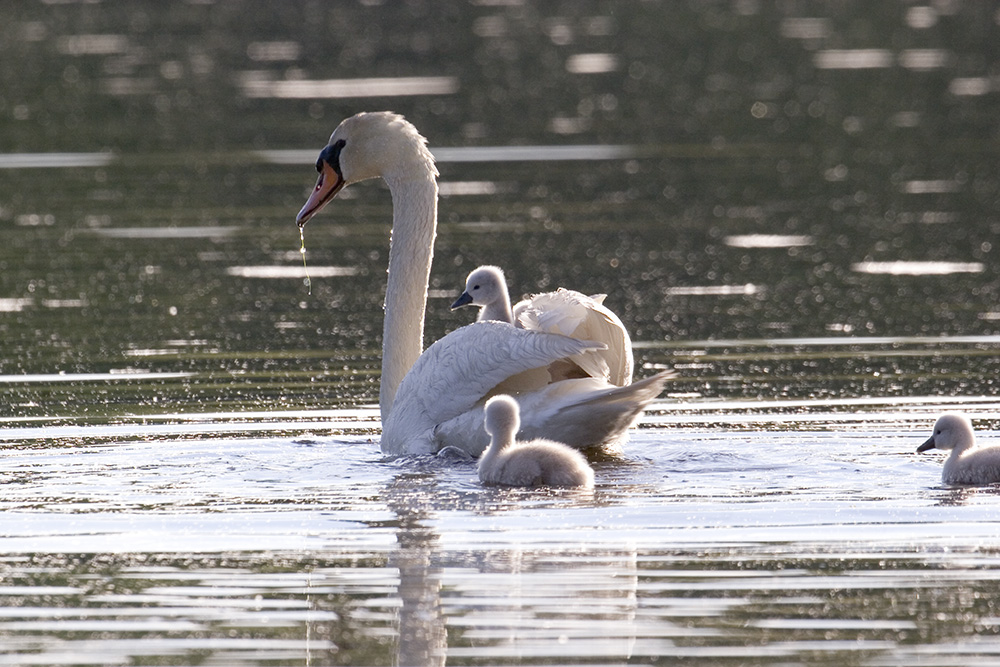
It is getting colder here in New Jersey, so I was going back through the archives to clean out files. I found these images of this Mute Swan nest and the Swan Cygnets from the Celery Farm Natural Area in Allendale NJ. I used a Canon 20D with a 1.6X crop with the Sigma 300-800mm f/5.6 zoom which gave the reach I needed to photograph the Swan Babies on the nest. With the 1.6 crop sensor it has an effective focal length of 1280mm. I used a -0.33 exposure compensation with aperture priority so I would not blow out the whites on the Swans. In some of the photos you can see the egg pieces from a freshly hatched cygnet. Hope ou enjoy them.
Canon 20D, Canon 100-400mm f/4-5.6 @ 100mm, effective focal length 160mm





 photoartflight